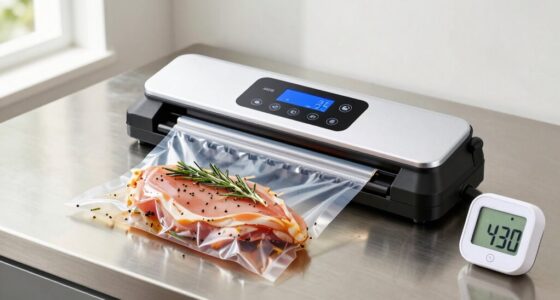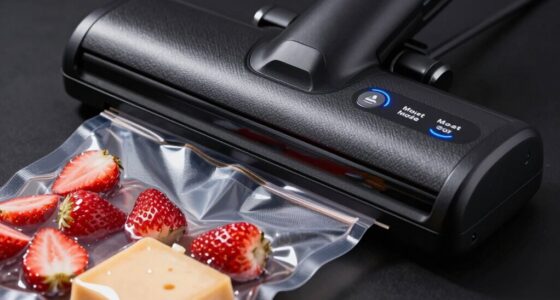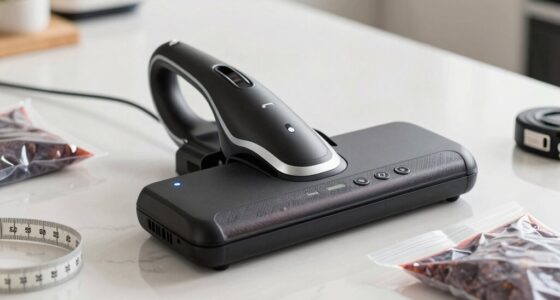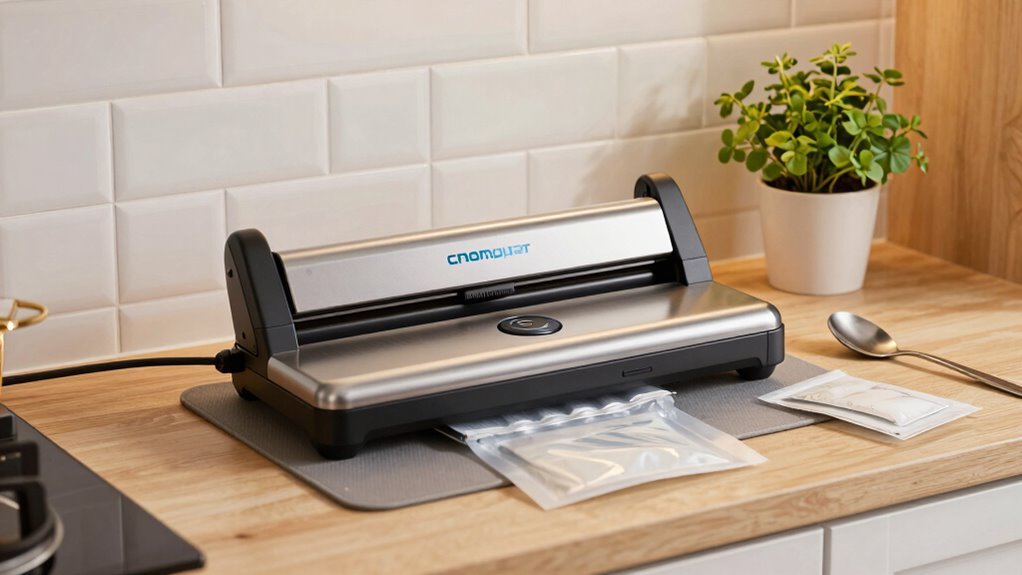
To prevent overheating and mess in your small kitchen, place your chamber vacuum sealer on a flat, stable surface away from heat sources, water, and clutter. Make certain there’s at least a few inches of clearance around it for proper airflow and easy access. Keep it clean after each use and store accessories nearby in an organized manner. Checking electrical cords regularly helps avoid safety issues. If you’re interested in more tips, you’ll find them useful as you continue optimizing your setup.
Key Takeaways
- Place the vacuum sealer on a flat, stable surface away from heat sources and direct sunlight.
- Maintain at least a few inches of clearance around the machine for proper airflow and ventilation.
- Regularly clean the exterior and sealing chamber to prevent debris buildup and overheating.
- Avoid placing the sealer near water sources or humid areas to prevent electrical issues.
- Store accessories organized nearby and cover the machine when not in use to keep it clean and protected.
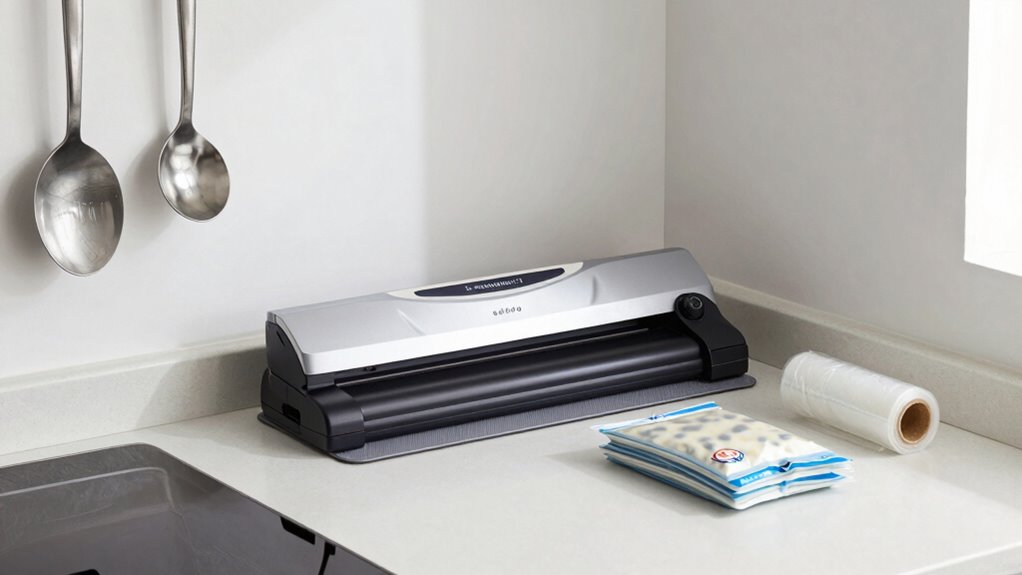
Are you struggling to maximize space in your small kitchen? One of the most effective ways to do this is by carefully choosing where to place your chamber vacuum sealer. Proper placement isn’t just about convenience; it’s vital for avoiding overheating and messes that can clutter your limited space. To keep your vacuum sealer running smoothly, you need to prioritize vacuum sealer maintenance and follow ideal storage tips.
Maximize small kitchen space by smartly placing and maintaining your vacuum sealer to prevent clutter and overheating.
First, consider placing your chamber vacuum sealer on a flat, stable surface away from heat sources such as stovetops, ovens, or direct sunlight. Overheating is a common issue that can cause the machine to shut down unexpectedly or even damage its internal components. By positioning it away from heat, you help guarantee it operates at a safe temperature, extending its lifespan. Additionally, avoid placing it near water sources or humid areas, which could lead to moisture buildup and potential electrical issues.
Next, give the vacuum sealer enough clearance on all sides. Most models require at least a few inches of space around the machine for proper ventilation. Adequate airflow helps prevent overheating during extended sealing sessions. If your small kitchen has limited counter space, consider installing a wall-mounted bracket or storing the vacuum sealer in a dedicated cabinet when not in use. Just be sure that the placement allows for easy access and isn’t cramped, which can restrict airflow and cause overheating.
Incorporating ideal storage tips is vital for maintaining your vacuum sealer’s longevity. Always clean the machine after each use, wiping down the exterior and ensuring the sealing chamber is free of debris or food particles. Regular vacuum sealer maintenance prevents buildup that could impair sealing performance or cause malfunctions. Store sealing bags and accessories in a dedicated, organized drawer or container nearby so that everything is easily accessible. Keeping accessories in designated storage not only saves space but also helps prevent clutter, which is especially important in small kitchens.
Finally, periodically check the power cord and plug for damage. A damaged cord can lead to electrical issues or pose safety hazards, so replace or repair it promptly. When not in use for long periods, consider covering the vacuum sealer with a dust cover or cloth to prevent dust accumulation that might interfere with its operation. Additionally, understanding your vacuum sealer’s modern appliance technology can help you optimize its placement and maintenance for better performance and longevity.
Frequently Asked Questions
Can the Vacuum Sealer Be Used on All Types of Food?
Yes, you can use the vacuum sealer on most types of food, thanks to its sealing versatility. It works well with fruits, vegetables, meats, cheeses, and even delicate items like bread. However, be mindful of food compatibility; avoid sealing foods with sharp bones or liquids that might cause leaks. Properly prepping your food guarantees the sealer functions effectively and prevents damage, maximizing its sealing versatility.
How Long Does a Typical Vacuum Sealer Last?
A typical vacuum sealer lasts around 3 to 5 years, depending on sealer durability and usage. Factors like how often you use it, the quality of the machine, and proper maintenance can extend its lifespan. To maximize longevity, clean the seals regularly and avoid overworking the motor. With proper care, your sealer can serve you well for several years, providing reliable food preservation.
Is It Safe to Operate Near Water or in Humid Areas?
You shouldn’t operate your vacuum sealer near water or in humid areas, as water safety and humidity concerns can cause electrical shorts or damage. Moisture can compromise the device’s internal components, increasing the risk of malfunction or even fire. For safe use, place your sealer in a dry, well-ventilated spot, away from sinks or humid environments, to guarantee longevity and safe operation.
What Maintenance Is Required to Keep It Functioning Properly?
To keep your chamber vacuum sealer functioning properly, you should follow regular cleaning routines to remove debris and prevent buildup. Check and clean the seals and sensors frequently, and replace the blade if you notice dullness or damage. Proper maintenance guarantees efficient sealing and prolongs the device’s lifespan. Avoid water exposure during cleaning, and always unplug the unit before performing any maintenance tasks.
Can I Use the Sealer for Liquids or Only Solids?
You can definitely use your chamber vacuum sealer for liquids, but you need to handle it carefully. It’s food compatible with both liquids and solids, but for liquid sealing, freeze the liquids first to prevent spills and guarantee a tight seal. This method helps avoid messes and makes the process smoother. Always check your sealer’s instructions for specific liquid sealing tips to keep everything working properly.
Conclusion
By following these placement rules, you’ll turn your small kitchen into a well-oiled machine, where your vacuum sealer hums smoothly like a contented bee in a tidy hive. Keep it cool, avoid clutter, and let your device breathe freely—this way, it’ll serve you faithfully without overheating or mess. Think of your setup as a symphony, each piece in harmony, creating a seamless culinary melody that’s both efficient and enjoyable.