
🔍 Read the full analysis: Frittata Di Pasta: Naples' Genius Answer To Leftover Spaghetti on Mad Tasting
TL;DR
Mad Tasting has published a practical guide to frittata di pasta, a Neapolitan dish that binds cooked pasta with eggs and grated cheese and cooks it into a sliceable skillet pie. The guide describes tomato-free bianca and tomato-based rossa versions, along with cooking tips and prompt refrigeration for leftovers.
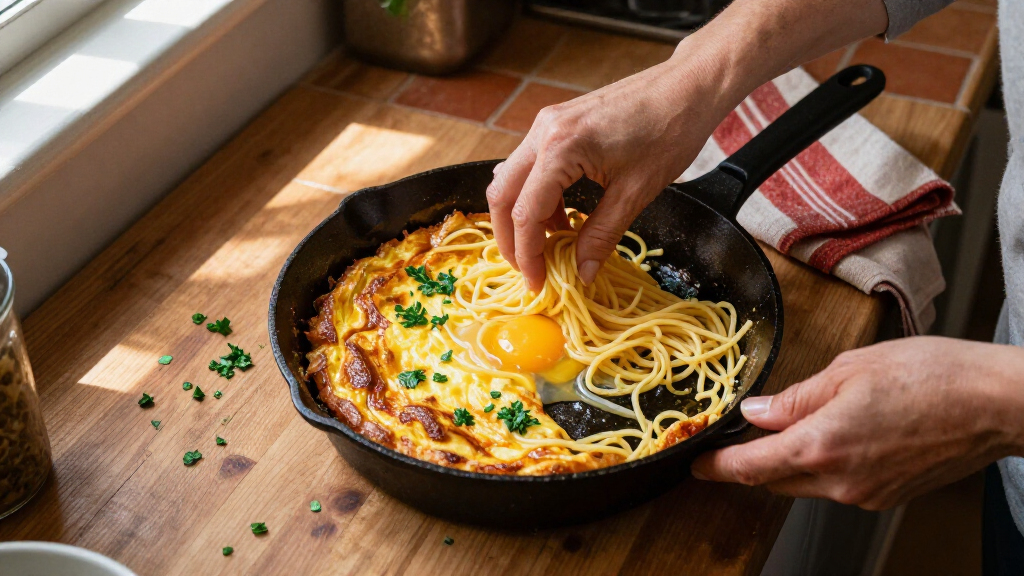
Mad Tasting has published a guide to frittata di pasta, a Neapolitan home-cooking dish that turns cooked leftover pasta, eggs and grated cheese into a firm, browned skillet pie. The guide explains the two common directions—tomato-free bianca and tomato-based rossa—and says the finished dish can be served warm, at room temperature or cold.
The dish is pasta-first: cooked noodles make up most of each bite, while beaten eggs bind the strands and help the mixture hold together. That sets it apart from a conventional egg frittata, where eggs are usually the main ingredient and vegetables, cheese or meat are mixed in as additions. Mad Tasting describes the result as a cohesive pie that can be cut into wedges rather than served as loose pasta.
The guide presents bianca and rossa as flexible styles, not fixed recipes. Bianca omits tomato, allowing pasta, egg and cheese to shape the flavor and browned surface. Rossa uses tomato sauce, often making it a natural fit for spaghetti that is already dressed. Excessively wet sauce can leave the center soft and complicate turning the pie, so the guide advises removing excess sauce before mixing.
Spaghetti is a familiar choice, but the source says other cooked pasta shapes can work if the binder coats them. Long strands tangle into a compact pie; short pasta can produce a chunkier slice. Small additions such as cheese, vegetables or cured meat can make use of what is on hand, though the source cautions that moisture matters: mozzarella can release liquid as it melts. The guide recommends cooking slowly and waiting until the base has set before flipping, which helps keep the pie intact.
Neapolitan home cooking · Leftover guide
Frittata di Pasta: Naples’ Genius Answer to Leftover Spaghetti
Cooked pasta, eggs and grated cheese come together in a browned skillet pie: a practical way to turn yesterday’s noodles into a meal you can slice and share.
01 / Choose your direction
Two Neapolitan styles, one skillet method
Mad Tasting describes bianca and rossa as flexible approaches shaped by the pasta already on hand. Both rely on cooked noodles bound with egg and grated cheese, then cooked until the pie can be cut into wedges.
Bianca
Made without tomato. Pasta, egg and cheese lead the flavor, with the skillet helping create a browned surface. A natural fit for plain or lightly oiled leftovers.
Rossa
Made with tomato sauce, especially handy for spaghetti that is already dressed. Remove excess sauce first so the center can set and the pie is easier to turn.
“Frittata di pasta is pasta-first: the noodles provide most of each bite, while eggs bind them into a cohesive round.”Mad Tasting
02 / Build a sliceable pie
Let the mixture and the pan set the pace
Leftover pasta varies in quantity and moisture, so the guide favors visual cues over a fixed egg count. A steady cook and a set base help the pie stay together when turned.
Assess the pasta
Use cooked spaghetti or another shape. Long strands tangle compactly; short shapes make a chunkier slice.
Manage moisture
Drain off excess sauce. Add beaten egg until the noodles are coated evenly, with no liquid pooling below.
Add and bind
Mix in grated cheese. Small additions can use what is available, but watery ingredients can soften the center.
Cook, then turn
Cook slowly and wait for the base to set before flipping. Turning too early can scatter the pasta.
03 / Read the mixture
Balance matters more than a rigid ratio
The amount of egg depends on how much pasta you have and how wet it is. Aim for a coating that helps the strands hold together. Mozzarella and other moist additions can release liquid as they melt, so account for that before cooking.
04 / Why it works for leftovers
A portable meal from yesterday’s pasta
A firm wedge is easy to pack and serve compared with loose noodles. The guide suggests it can be eaten at home or taken on a picnic, beach day or trip; it does not provide data on how widely the dish is made.
Easy to portion
The bound mixture cooks into a cohesive pie that can be cut into wedges rather than served as loose pasta.
Use what is available
Choose a style to suit the leftovers, then adjust for their amount and moisture instead of relying on a single fixed formula.
Refrigerate promptly
The dish contains cooked pasta and eggs. Chill leftovers promptly and follow local guidance for storage and reheating.
From leftovers to wedges
05 / What the guide establishes
Useful technique, with limits to the detail
The available material is a practical overview, not a fully tested recipe. It offers texture and cooking cues while leaving exact quantities, timings and historical claims open.
Not specified
No publication date, tested ingredient ratios, cooking times, exact refrigerator storage limits or reheating method are provided. The source also gives no historical timeline for the dish.
Use sound judgment
Do not treat the overview as a precise formula. Refrigerate promptly, avoid leaving the pie out for extended periods, and follow applicable local food-safety guidance.
What is frittata di pasta?
A Neapolitan skillet dish of cooked pasta bound with eggs and grated cheese, cooked into a firm pie and sliced into wedges.
Can you use pasta other than spaghetti?
Yes. Other cooked shapes can work if the egg mixture coats and binds them. Short shapes tend to make a chunkier slice.
Why wait before flipping?
The base needs time to set. Turning too early can break the pie apart, and watery sauce can make the center harder to firm.
How should leftovers be stored?
Refrigerate them promptly because the dish contains cooked pasta and eggs. The guide gives no storage duration, so follow local food-safety guidance.
A Practical Meal From Leftovers
The dish offers a way to turn leftover pasta into a portable meal without requiring a separate, elaborate recipe. A firm wedge can be easier to pack and serve than a container of loose noodles, and the source notes it may be eaten at home or taken on a picnic, beach day or trip. Those uses reflect the practical appeal described in the guide; it does not provide sales figures, survey results or other evidence measuring how widely the dish is made.
For home cooks, the technique matters as much as the ingredient list. A pie that is too wet may not set cleanly, while flipping it before the bottom firms can scatter the pasta. The guide’s emphasis on judging the mixture’s consistency rather than following a rigid egg count offers a useful approach when the quantity and moisture of leftovers vary. It also reinforces a basic food-safety point: cooked pasta and eggs should be refrigerated promptly after serving.
As an affiliate, we earn on qualifying purchases.
Two Neapolitan Styles, One Method
Mad Tasting characterizes frittata di pasta as a Neapolitan home-cooking tradition based on using cooked pasta rather than letting it go to waste. The source offers no historical documentation or timeline for the dish, so the broader origins and development are not established by the material provided. Its account focuses on how cooks can adapt the preparation to the pasta already available.
The distinction between bianca and rossa gives cooks a simple starting point: plain or lightly oiled noodles can be made without tomato, while pasta already coated in tomato sauce naturally suits the red version. In either style, grated cheese adds seasoning and helps form the browned exterior. The guide says the appropriate amount of egg depends on the quantity and wetness of the pasta, and suggests looking for an even coating rather than liquid pooling at the bottom of the bowl.
“Frittata di pasta is pasta-first: the noodles provide most of each bite, while eggs bind them into a cohesive round.”
— Mad Tasting
As an affiliate, we earn on qualifying purchases.
Recipe Ratios and Origins
The source does not give a publication date, tested ingredient ratios or cooking times, and it does not provide a formal historical account of the dish. Egg amounts will vary with how much pasta is being used and how wet it is; the guide offers a visual consistency cue rather than a standardized formula. It also does not specify exact refrigerator storage limits or a reheating method. Readers should not treat the material as a fully tested recipe with precise measurements.
As an affiliate, we earn on qualifying purchases.
Adjust the Pie to Your Pasta
The next step for a cook is to assess the leftovers: choose bianca for pasta without tomato or rossa for noodles already dressed with sauce, then remove excess liquid and add enough beaten egg to coat the pasta evenly. Cook the mixture slowly and wait for the base to set before attempting to turn it. The source does not identify a forthcoming event or further publication; its guidance is practical rather than tied to a scheduled development.
After serving, refrigerate leftovers promptly because the pie contains cooked pasta and eggs. The guide says the dish can be served warm, at room temperature or cold, but does not provide a safe time limit for leaving it unrefrigerated. For food safety, avoid keeping it out for extended periods and follow applicable local guidance for storage and reheating.
As an affiliate, we earn on qualifying purchases.
Key Questions
What is frittata di pasta?
It is a Neapolitan skillet dish in which cooked pasta is bound with eggs and grated cheese, then cooked into a firm pie that can be sliced into wedges.
What is the difference between bianca and rossa?
Bianca is made without tomato; rossa includes tomato sauce. The source describes them as flexible styles suited to the pasta and sauce already available.
Can it be made with pasta other than spaghetti?
Yes. The guide says other cooked pasta shapes can work if the egg mixture coats and binds them. Short shapes may make a chunkier slice than long strands.
Why should you wait before flipping it?
The base needs time to set before turning. Flipping too early can break the pie apart; excess watery sauce can also make the center difficult to firm.
How should frittata di pasta leftovers be stored?
Refrigerate leftovers promptly because the dish contains cooked pasta and eggs. The source does not state a specific storage duration, so follow local food-safety guidance and avoid leaving it out for extended periods.
Source: Mad Tasting