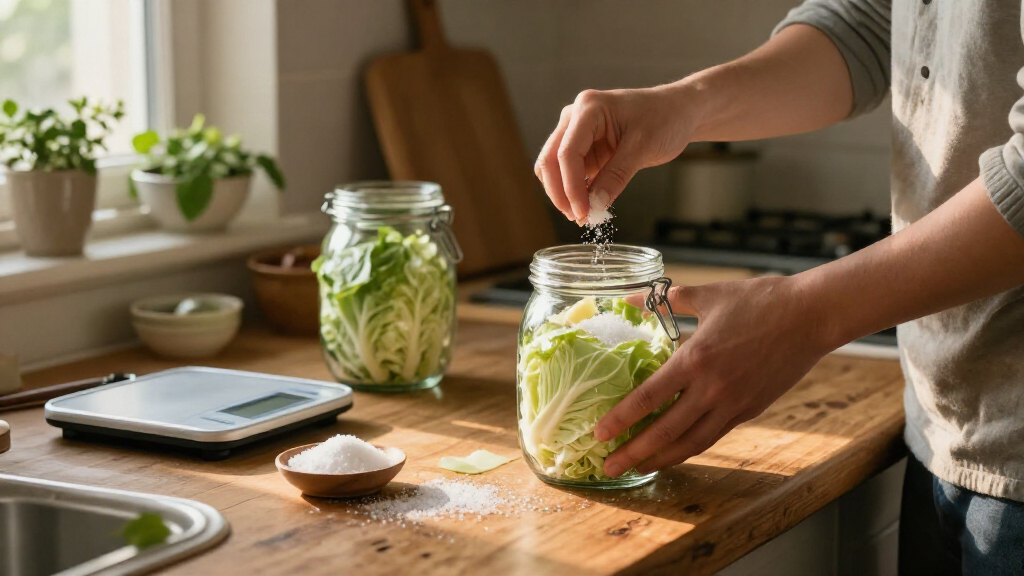
This checklist is for home cooks who want to gather the basics for fermenting vegetables and keeping their setup organized. It covers containers, lids and weights, plus tools for preparing and measuring ingredients. Start with your recipe so you can choose supplies that suit the batch you plan to make.

Get kitchen staples and gadgets delivered free with Prime
- Fast, free delivery on millions of items
- Prime Video, Amazon Music and more included
- Member-only deals all year
The sections follow the work from holding a ferment to preparing vegetables and checking measurements. Some picks are dedicated products, while the glass weights section offers selection advice. Match each item to its role before adding it to your kitchen setup.
Use the look-for points to compare shape, fit and compatibility with your own containers and equipment. Product names alone do not confirm dimensions or included components, so check the listing details before buying. Verify fit and contents, especially when a tool must work with a particular jar, lid or appliance.
Wide-Mouth Mason Jars
Jars are the containers at the center of many small-batch fermentation setups, so opening style and capacity deserve attention. This pick is named as a 32-ounce, wide-mouth jar set. Confirm the mouth and capacity suit your recipe and the amount you expect to prepare, rather than assuming every wide-mouth jar will fit the same accessories.
A common buying mistake is focusing on the jar count while overlooking lid compatibility, storage space or the need to leave room inside the vessel. Check the product listing for the exact jar dimensions and what the airtight lids are designed to fit. Check each included lid and make sure the jars can be stored where you intend to keep them. If you plan to use weights, verify that their diameter can pass through the opening and sit inside the jar.
Think about how you will handle and clean the jars, too. Compare the listed opening and body dimensions with your hands, utensils and available shelf space. Choose a manageable batch size that works with your recipe and routine.
What to look for:
- Confirm the listed capacity and jar dimensions
- Check that the included lids fit these jars
- Verify the opening accommodates your intended weights and utensils
- Consider storage space and handling comfort
- Review the listing for the exact number of jars and included parts
Mason Jars 32 oz, 12 Pack Wide Mouth Mason Jars with Airtight Lids

This set includes 12 durable 32 oz wide mouth mason jars with airtight lids, ideal for canning, fermenting, pickling, meal prep, and centerpieces. Made of thick glass, these jars are designed for long-lasting use and secure sealing to keep contents fresh.
Pros:
- Durable thick glass construction
- Airtight lids keep contents fresh
- Versatile for various uses like canning and meal prep
- Stylish and suitable for centerpieces
Cons:
- Labeled as 24 oz on the side, which may cause confusion
- No mention of dishwasher safety
- Limited to 32 oz capacity
Best for: Small-batch setups that suit the listed jar capacity
Not ideal for: Kitchens that need a different capacity or opening size
Bottom line: Check jar and lid dimensions against your recipe and planned accessories before choosing this set.
Fermentation Lids
A lid and weight help define how ingredients are held in a fermentation vessel, so the right setup depends on your container and method. The listed pick is a one-gallon fermentation crock with lid, weights and pounder. Review what the set includes and confirm the crock’s stated capacity suits your planned batch.
One frequent mistake is buying a vessel without checking whether its lid and accessories fit together as intended. Read the listing for dimensions, materials and care guidance, and compare those details with your recipe and available storage. Confirm the lid arrangement and how the included weights are used; the product name does not establish a particular sealing method or guarantee compatibility with other jars.
Consider whether you need a crock or a different container format. If you already own jars, check whether this product’s components are intended for use with the crock alone. Keep accessories matched to their vessel unless the listing explicitly confirms cross-compatibility. Check the pounder’s size and handling details as well, so it suits the ingredients and preparation routine you have in mind.
What to look for:
- Verify the crock’s listed capacity and dimensions
- Check which lid, weights and pounder are included
- Read materials and care instructions in the listing
- Confirm whether accessories fit only this crock or other vessels too
- Compare the crock format with your available storage and recipe
Fermentation Crock 1 Gallon with Lid, Weights & Pounder

This 1-gallon ceramic fermentation crock is designed for making sauerkraut, kimchi, and pickles at home. It features a water seal lid, unglazed weights, and a pounder to facilitate easy and effective fermentation, ensuring flavorful results.
Pros:
- High-quality ceramic construction ensures food safety and flavor preservation
- Includes weights and pounder for optimal fermentation
- Water seal lid prevents air contamination and maintains proper gases escape
- Easy to clean and looks attractive on countertops
Cons:
- Limited to small batch sizes (1 gallon)
- Requires careful cleaning to prevent residue buildup
- May be fragile if dropped
Best for: Cooks looking for a crock with named accessories
Not ideal for: Anyone who needs accessories confirmed for a different vessel
Bottom line: Check the set’s dimensions and accessory compatibility before pairing it with a recipe or existing jars.
Glass Fermentation Weights
Weights are intended to help keep ingredients positioned inside a fermentation vessel, making fit a key selection detail. Because this section has no product pick, focus on measurements and compatibility with the jars or crock you plan to use. Measure the vessel opening before shopping so you can compare it with the weight’s listed diameter.
A common mistake is choosing a weight based on appearance or assuming that a generic size will work across containers. Check the product information for dimensions, material and care guidance, and make sure the weight can be inserted and removed through the opening. Look for clear dimensions rather than relying on a broad compatibility claim. Consider the shape of the vessel interior, too, since walls can narrow or curve below the mouth.
Think through how the weight will be handled during filling and cleaning. Check whether the listed piece is meant for a single jar or a wider vessel, and compare its size with the batch and container in your recipe. Match weight to vessel, and follow the recipe’s directions for using it. If you cannot confirm fit from the listing, keep looking for one with measurements that answer the question.
What to look for:
- Compare the weight diameter with the vessel opening
- Check dimensions and shape in the product listing
- Review material and care information
- Confirm it can be inserted and removed through the opening
- Choose a size appropriate to the intended jar or crock
Cabbage Shredder
Preparing cabbage to a consistent cut can make the prep stage more orderly, and a dedicated cutter may suit cooks who prepare it often. This pick is named as a thin julienne cutter for salad and food prep. Check the blade style and listed dimensions to see whether it matches the cut and quantity your recipe calls for.
A frequent mistake is assuming a slicer’s name describes every cut it can make or how it should be handled. Review the product details for instructions, materials and cleaning guidance. Read the use instructions before deciding whether the cutter suits your preferred prep method. Consider its overall size and whether you have a stable, convenient place to use and store it.
Compare the tool’s stated capacity or working dimensions with the amount of cabbage you expect to prepare. If the listing does not specify those details, avoid assuming it will handle a particular batch size. Prioritize comfortable handling and a cut that fits your recipe. Check that the product information addresses safe use and care, and plan to follow the maker’s instructions when preparing vegetables.
What to look for:
- Confirm the listed cut style and blade dimensions
- Review the maker’s use and care instructions
- Check tool size against your storage space
- Compare working dimensions with your typical prep quantity
- Look for clear handling and safety guidance
Cabbage Slicer – Thin Julienne Cutter for Salad and Food Prep

This cabbage slicer creates consistent 1mm (0.04 inch) shredded cabbage, ideal for salads, coleslaw, and sauerkraut. It is a multipurpose mandoline that handles vegetables, fruits, cheese, and more, with a safe and easy-to-clean design suitable for home and small-scale professional use.
Pros:
- Produces consistent, thin shredded cabbage ideal for various dishes
- Multipurpose slicer suitable for vegetables, fruits, and more
- Safe, ergonomic design with non-slip base and hand guard
- Easy to clean and store with detachable blade and foldable design
Cons:
- Hand wash only recommended
- Limited to thin julienne cuts, not adjustable for different thicknesses
Best for: Cooks whose recipes call for thin julienne cuts
Not ideal for: Anyone seeking a different cut or unspecified capacity
Bottom line: Check the cutter’s dimensions and instructions to confirm it fits your preparation needs.
Digital Kitchen Scale
A scale can help you measure ingredients consistently, so capacity and readability are useful details to compare. This pick is named as an OXO Good Grips digital kitchen food scale with an 11-pound capacity. Check the stated capacity against the quantities in your recipes, and review the product details for its display and measurement units.
A common buying mistake is assuming that a scale’s maximum capacity tells you how it handles smaller amounts or whether its platform suits a particular bowl. Check the listing for platform dimensions, display details and how the scale is operated. Consider bowl clearance and whether you can see the readout when weighing ingredients in your usual containers. Also review the maker’s cleaning and care instructions.
Think about where the scale will live and how often you will use it. Compare its dimensions with your counter and storage space, and check which units it displays against the recipe format you follow. Match units to recipes so you can use the scale without unnecessary conversions. The product name provides a capacity, but the listing is where to confirm the remaining features and fit.
What to look for:
- Verify the listed maximum capacity and measurement units
- Check platform dimensions and bowl clearance
- Review display placement and operating details
- Compare the scale’s footprint with counter and storage space
- Read cleaning and care instructions
OXO Good Grips 11-Pound Digital Kitchen Food Scale

This digital kitchen scale weighs food up to 11 pounds in 1/8-ounce or 1-gram increments. Its pull-out display helps prevent shadows from large bowls, while the tare function, remaining-capacity indicator, and easy-to-clean platform make food preparation convenient.
Pros:
- Pull-out display helps prevent shadowing from large containers
- Measures in both US and metric increments
- Tare function supports weighing ingredients in a container
- Thin profile and easy-to-clean platform simplify storage and cleanup
Cons:
- Maximum capacity is limited to 11 pounds
- Requires four AAA batteries
Best for: Cooks whose ingredient quantities fit the listed capacity
Not ideal for: Anyone needing an unlisted unit or platform feature
Bottom line: Confirm the display, units and platform details suit your recipes and containers.
pH Test Strips
The supplied product name is for cake paddles compatible with Artiste, Universal Plus and NutriMill Sta equipment; it does not identify pH test strips. Verify the product category before using this listing for fermentation testing. A product title alone cannot establish that an item measures acidity or is intended for food testing.
For a pH-related purchase, check the listing for an explicit pH range, intended sample type, instructions and storage guidance. Look for stated pH use and do not infer a testing function from a product name that describes paddles. Consider whether the listed format can be used with the recipe or sample you have in mind, and whether the maker provides clear directions for reading results.
Also review the listing details carefully for the exact item, intended equipment and included contents. If the product remains identified as cake paddles, it does not match the pH test strip slot. Choose a clearly labeled tester only when its product information confirms that purpose and explains how to use it. Keep the selection tied to the task your recipe requires.
What to look for:
- Confirm the listing explicitly identifies pH test strips
- Check the stated pH range and intended sample type
- Review instructions for using and reading results
- Verify the exact product and included contents
- Choose an item whose stated purpose matches fermentation testing
Food-Grade Cake Paddles for Artiste, Universal Plus, and NutriMill Stand Mixers

These food-grade nylon paddles are designed to mix dough, butter, and cookie batter evenly without striking the mixing bowl. They are described as heat- and wear-resistant, easy to install, and easy to clean.
Pros:
- Designed for even mixing
- Made from heat- and wear-resistant nylon
- Designed to avoid hitting the mixing bowl
- Easy to install and clean
Cons:
- Compatibility is limited to specified mixer models
- The description provides no care or dishwasher-safety instructions
Best for: Shoppers verifying the item before purchasing
Not ideal for: Anyone seeking pH strips from this product name
Bottom line: The named item is cake paddles, so confirm a separate listing explicitly identifies pH test strips.
Buy in the order your recipe depends on: first choose a compatible vessel, then confirm the matching lid and weight, followed by the preparation and measuring tools you will use. Prioritize fit and function before filling gaps in your setup. The pH test strip pick needs a clearly identified product listing before it can serve that role.
You can assemble a useful setup one verified item at a time. Check dimensions, included parts and care guidance as you go, and let your recipes determine what belongs on the counter. Build around your routine and choose supplies whose stated details make sense for the work ahead.