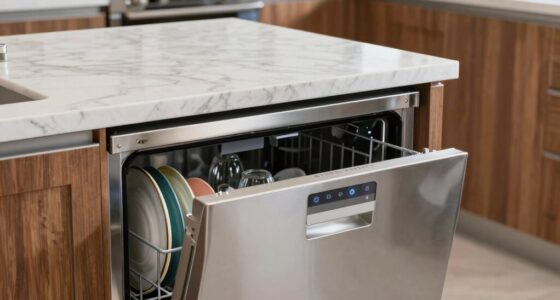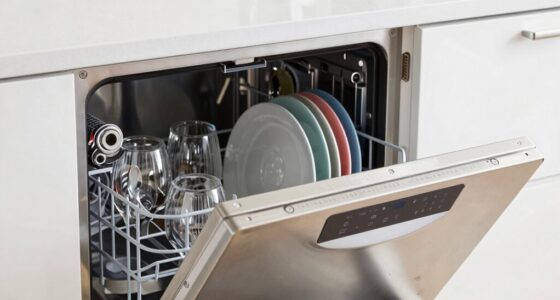
A built-in water tank in a countertop dishwasher acts as a self-contained water source, giving you flexibility and convenience, especially if water access is limited or unreliable. It’s helpful when you need portability, want to avoid plumbing, or operate in remote areas like RVs or apartments. While marketers often highlight its eco-friendly benefits, actual savings depend on usage and model features. To discover when it truly benefits you, keep exploring the details ahead.

Get kitchen staples and gadgets delivered free with Prime
- Fast, free delivery on millions of items
- Prime Video, Amazon Music and more included
- Member-only deals all year
Key Takeaways
- Built-in water tanks provide a self-contained water source, eliminating the need for direct plumbing connections.
- They are helpful in locations with limited or no access to water supply, enhancing portability and installation ease.
- Water tanks promote efficiency by controlling water usage, reducing waste and energy needed for heating.
- Marketing claims of eco-friendliness and energy savings depend on proper usage and model features.
- Effectiveness varies; longer or extra cycles can diminish water and energy conservation benefits.
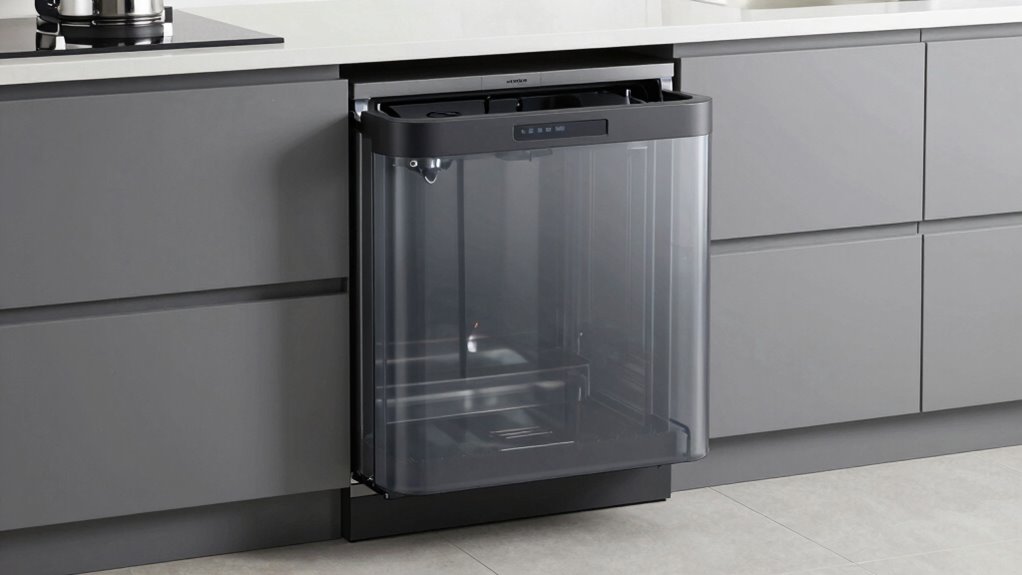
If you’re considering a countertop dishwasher, you might notice some models feature a built-in water tank instead of relying solely on direct plumbing. This design can be a game-changer, especially if you live in an apartment, a RV, or somewhere with limited or no access to a water hookup. The water tank acts as a self-contained reservoir, allowing you to operate the dishwasher without connecting it directly to a water source. This feature enhances portability and makes installation straightforward, but it also impacts how you conserve water and save energy during each wash cycle.
One of the biggest advantages of a built-in water tank is water conservation. Because the dishwasher uses a fixed, controlled amount of water per cycle, you can avoid unnecessary waste. If you’re mindful of your water usage, this feature helps you keep consumption in check, especially during longer cycles or when washing smaller loads. Additionally, some models with water tanks are designed to optimize water efficiency, using just enough to get the dishes clean without excess. This not only benefits the environment but can also lower your utility bills over time, making it a smart choice for budget-conscious households.
Energy efficiency is another key benefit. Since these dishwashers often operate independently of a plumbing connection, they typically include energy-saving modes that rely on precise water management. With less water used per cycle, the appliance consumes less energy heating that water, which reduces your overall energy footprint. Plus, because these dishwashers don’t need to be constantly connected to water lines, they can be more efficient in terms of installation and operation, especially in places where water pressure or supply might fluctuate. Moreover, some models incorporate advanced water management features that further enhance efficiency and performance.
However, it’s worth noting that some marketing about built-in water tanks can be a little misleading. Manufacturers often promote them as “eco-friendly” or “energy-saving” without emphasizing that the actual savings depend on your usage habits and the model’s design. Not all water tank models are equally efficient; some may require more cycles or longer wash times, which could negate some of the water and energy benefits. It’s important to read reviews, compare specifications, and consider how often you’ll be using the dishwasher to determine if it truly aligns with your sustainability goals.
countertop dishwasher with built-in water tank
As an affiliate, we earn on qualifying purchases.
As an affiliate, we earn on qualifying purchases.
Frequently Asked Questions
How Long Does a Built-In Water Tank Typically Last Before Needing Replacement?
Your built-in water tank typically lasts around 5 to 10 years before needing replacement, depending on usage and water quality. Regular maintenance can extend its lifespan, but you’ll likely need a replacement once it shows signs of leaks, cracks, or reduced capacity. Keep an eye on these issues, as they indicate that the water tank’s lifespan is nearing its end, and replacement frequency may increase over time.
Can the Water Tank Be Cleaned or Descaled Easily?
Yes, you can clean or descale the water tank easily. Remove the tank and rinse it with warm water and mild detergent, ensuring detergent compatibility with the tank material. For thorough descaling, use a vinegar solution to break down mineral buildup. Regular cleaning helps maintain water quality and appliance performance, preventing clogs and odors. Always follow manufacturer instructions to avoid damaging the tank or voiding warranties.
Does the Water Tank Affect the Dishwasher’s Overall Cleaning Performance?
Yes, the water tank can affect your dishwasher’s cleaning performance. If the water quality is poor or water pressure is low, your dishes might not come out spotless. A clean, well-maintained tank guarantees better water flow and quality, leading to more effective cleaning. Regularly descale the tank and use filtered water if possible to improve results and avoid build-up that hampers performance.
Are There Specific Maintenance Routines for the Built-In Water Tank?
Yes, you should regularly clean and inspect the built-in water tank. Check the tank material for any buildup or mold, especially if it’s plastic or metal. Use a soft brush or cloth to remove residues. Also, verify the water level sensor is functioning properly by keeping it free of debris. Regular maintenance prevents clogs, keeps the sensor accurate, and helps your dishwasher run efficiently.
Is the Water Tank Compatible With All Countertop Dishwasher Models?
Not all countertop dishwasher models are compatible with built-in water tanks. You need to verify the specific model compatibility before purchasing. Installation requirements vary, so make certain your dishwasher can accommodate the water tank, and follow the manufacturer’s instructions carefully. If your model isn’t compatible, you might need to opt for a different unit or consider alternative solutions to meet your needs.
portable countertop dishwasher RV
As an affiliate, we earn on qualifying purchases.
As an affiliate, we earn on qualifying purchases.
Conclusion
So, next time you spot that built-in water tank on your countertop dishwasher, remember it’s like a secret weapon—saving water, boosting convenience, and making your life easier. But don’t be fooled into thinking it’s magic; sometimes, it’s just clever marketing whispering sweet nothings. Trust your needs and weigh the facts before you plunge in. With this knowledge, you’ll navigate the world of appliances like a pro, turning everyday chores into a smooth, effortless dance.
eco-friendly countertop dishwasher
As an affiliate, we earn on qualifying purchases.
As an affiliate, we earn on qualifying purchases.
water-saving countertop dishwasher
As an affiliate, we earn on qualifying purchases.
As an affiliate, we earn on qualifying purchases.
Evergreen bestsellers Picks
bestsellers
As an affiliate, we earn on qualifying purchases.