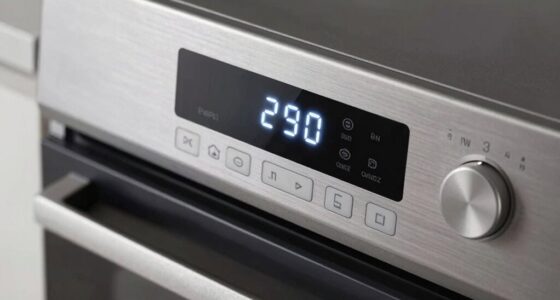
Appliance presets simplify cooking but don’t guarantee better results because they’re designed for general use, not your specific ingredients or preferences. Relying solely on presets can lead to undercooked or overdone dishes, as they don’t account for variations in equipment or personal taste. By adjusting temperature and time manually, you gain better control and improve your dish’s quality. Stick around, and you’ll discover how combining presets with tweaks can truly elevate your cooking skills.

Get kitchen staples and gadgets delivered free with Prime
- Fast, free delivery on millions of items
- Prime Video, Amazon Music and more included
- Member-only deals all year
Key Takeaways
- Presets are designed for general use and may not account for specific ingredient or equipment variations.
- Relying solely on presets can lead to undercooked or overdone dishes without manual adjustments.
- Presets lack the fine-tuning needed to optimize flavor, texture, and personal preferences.
- They often overlook unique recipe requirements and the importance of precise control over temperature and time.
- Combining presets with manual adjustments allows for better control and improved cooking results.
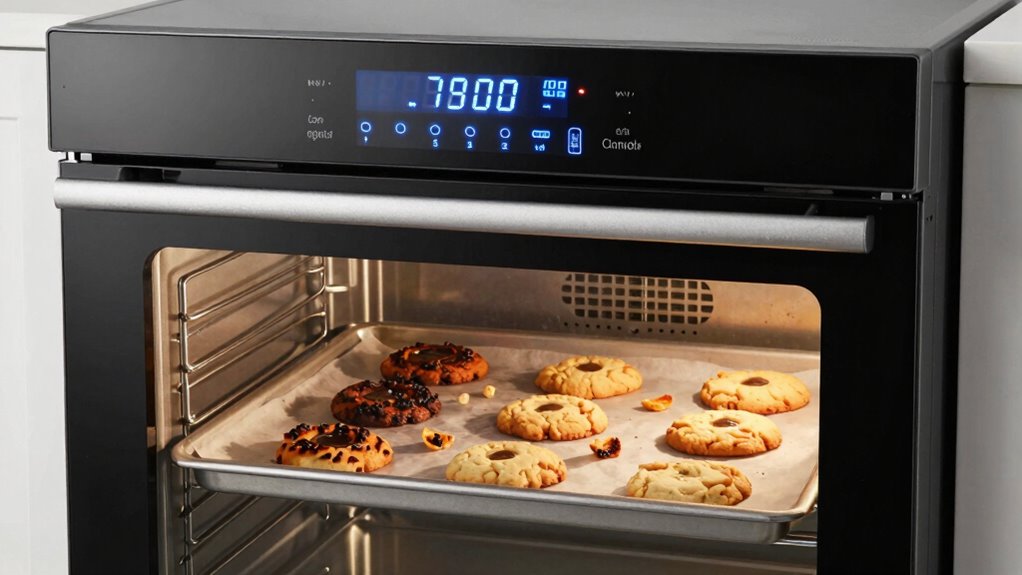
Modern appliances with preset functions are transforming the way you cook, making meal preparation faster and more consistent. These features promise convenience and simplicity, but they don’t always guarantee better results. Many preset modes are designed to suit a broad range of dishes, yet they can overlook the nuances that come with manual adjustments based on your specific ingredients or equipment. Relying solely on presets might mean missing out on the fine-tuning that makes a dish truly shine. While they offer a quick start, they don’t account for variations in your recipes, the size of your portions, or the particularities of your appliances. That’s where understanding your user preferences becomes essential; it’s about tailoring the process, not just following a one-size-fits-all setting.
Presets can sometimes lead you to underestimate the importance of manual adjustments. For example, a preset oven temperature or cooking time might not match your particular dish or cookware. If you don’t tweak these settings, your food might end up undercooked or overdone. Presets are helpful as a starting point, but they shouldn’t replace your judgment. When you’re familiar with your appliances and ingredients, you can make small adjustments that markedly improve the final outcome. Adjusting the temperature, cooking time, or humidity levels based on your experiences helps you develop a more refined approach to cooking. Relying solely on presets can result in a generic result that lacks the personalized touch you’re capable of achieving through manual control. Developing an understanding of cooking techniques can help you better adapt preset functions to different dishes. Additionally, recognizing the significance of recipe customization enables you to fine-tune settings for superior results.
Manual adjustments enhance dish quality, preventing undercooking or overcooking despite preset oven settings.
Furthermore, understanding the importance of customization in cooking enables you to adapt preset functions to better suit your specific needs. Furthermore, user preferences come into play when you’re cooking multiple dishes or experimenting with new recipes. Preset functions often cater to a standard scenario and might not accommodate your specific taste or dietary needs. For instance, you might prefer a slightly lower temperature for a particular roast or need to extend the cooking time for a larger batch. By manually adjusting settings, you take control of the process, ensuring your dish aligns with your expectations. This flexibility allows you to optimize your appliance’s performance, rather than passively accepting a preset that might not be perfect. Incorporating appliance features such as manual control options can significantly enhance your cooking outcomes. In this way, manual adjustments complement the convenience of presets, giving you the best of both worlds—speed and precision.
In the end, appliance presets are tools designed to help, but they shouldn’t replace your expertise and intuition. Recognizing when to rely on a preset and when to make manual adjustments based on your user preferences is key to elevating your cooking. It’s about balancing technology with your knowledge, ensuring each meal turns out exactly as you envision. Presets can be helpful, but they’re just one part of your cooking toolkit—your manual adjustments and awareness of your preferences are what truly make your dishes stand out.
Products Worth Considering

De'Longhi Linea Classic Espresso Machine with Adjustable Milk Frother

Le Creuset Enameled Cast Iron Round Dutch Oven, 5.5 Qt, Flame

Le Creuset Enamemed Cast Iron Oval Dutch Oven, 5 qt., White/Crucible
As an affiliate, we earn on qualifying purchases.
Frequently Asked Questions
Can Appliance Presets Be Customized for Different Recipes?
Yes, you can customize appliance presets for different recipes. While preset limitations exist, many appliances allow you to adjust settings like temperature and cooking time, giving you recipe flexibility. This way, you’re not confined to the default modes and can tailor the cooking process to suit your specific dish. Experimenting with these adjustments helps you achieve better results, especially when working with complex or unique recipes.
Do Presets Work the Same Across All Appliance Brands?
Presets aren’t one-size-fits-all; they vary like flavors across brands. While some appliances promise consistency, brand variability can make presets behave differently, like a song played on different instruments. You might find that what works perfectly in one brand doesn’t translate seamlessly to another. So, don’t rely solely on presets—adjust and experiment. Brand consistency isn’t guaranteed, so treat presets as helpful guides rather than strict rules.
Are Presets Suitable for Professional Cooking Environments?
Presets generally aren’t suitable for professional cooking environments because appliance automation often lacks the precision and flexibility needed in such settings. Preset limitations can hinder your ability to fine-tune temperatures and cooking times, which are vital for top-quality dishes. As a professional, you need more control than presets offer. Relying solely on automation might compromise consistency, so manual adjustments are usually essential for achieving the best results.
How Do Presets Affect Cooking Times and Temperatures?
Presets can influence your cooking times and temperatures by relying on auto optimization, which may not always match your specific dish. You might encounter auto optimization issues where the preset doesn’t account for ingredient variations or dish size, leading to undercooked or overcooked results. Remember, preset limitations mean they’re not universally perfect; adjusting manually often yields better results, especially for complex or delicate recipes.
Can Presets Be Adjusted for Dietary Restrictions or Preferences?
Yes, presets can be adjusted for dietary restrictions or preferences. You have the ability to modify cooking times, temperatures, or settings to suit your dietary flexibility and personal customization. Many appliances now offer customizable presets or manual settings, allowing you to tailor your cooking process. This guarantees your meals meet your specific needs, whether you’re accommodating allergies, preferences, or specific nutritional goals, giving you more control over the final dish.
Conclusion
Remember when you relied solely on preset buttons for your oven, only to find your cookies came out flat? Sometimes, those presets are like following a map without understanding the terrain—they offer guidance, but don’t guarantee the best outcome. Just like a skilled chef tweaks recipes to taste, you’re better off adjusting settings based on your own experience. Trust your instincts; they often lead to a tastier, more personalized result than relying on presets alone.