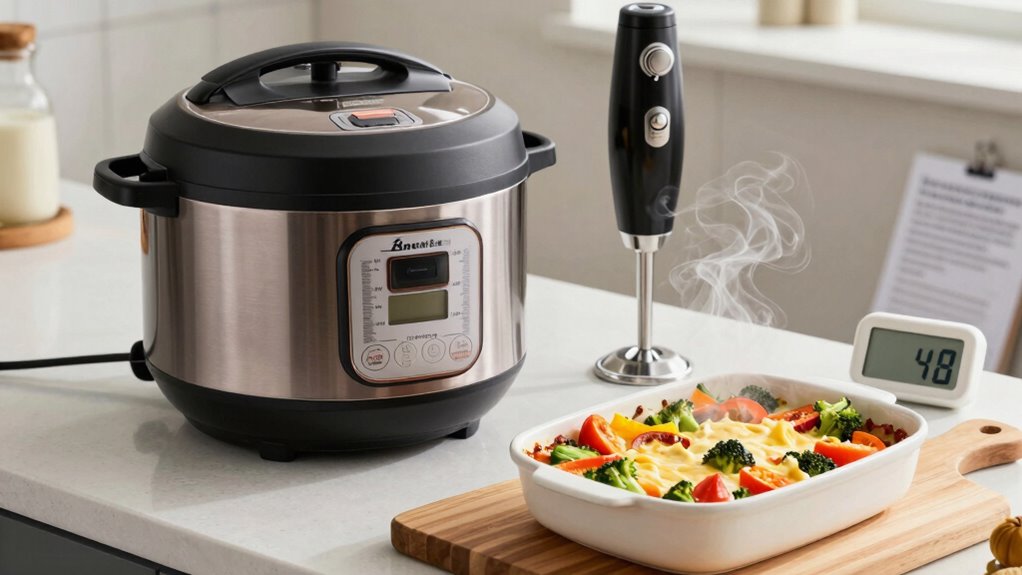
To convert oven recipes for countertop appliances, start by reducing the temperature by about 25°F since these devices tend to run hotter or cooler. Keep an eye on cook times, which usually decrease due to quicker heat circulation, and check for doneness early. Adjust temperature and time based on your appliance’s quirks, and monitor closely to prevent overcooking. If you want to master these adjustments, you’ll find helpful tips that make the process more predictable.

Get kitchen staples and gadgets delivered free with Prime
- Fast, free delivery on millions of items
- Prime Video, Amazon Music and more included
- Member-only deals all year
Key Takeaways
- Reduce the recipe temperature by about 25°F when switching from oven to toaster oven or air fryer.
- Shorten cooking time and check for doneness early to prevent overcooking.
- Understand your appliance’s heat distribution to make precise temperature adjustments.
- Use visual cues like browning and a toothpick test to determine doneness.
- Keep notes on adjustments and results to refine conversions with experience.
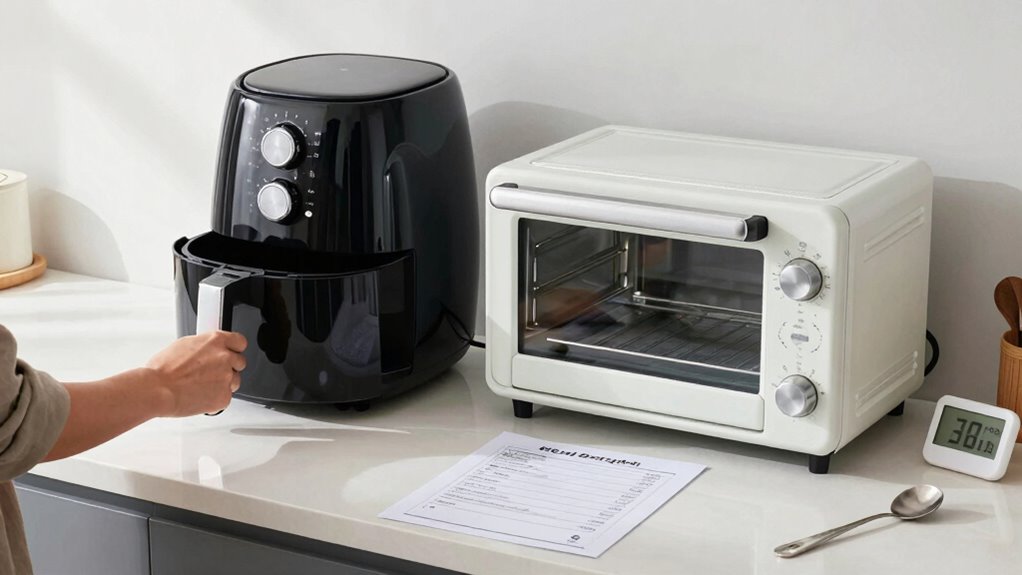
Converting oven recipes for other cooking methods or appliances can seem intimidating, but with a few simple adjustments, you can achieve great results every time. When switching from a traditional oven to a countertop appliance like a toaster oven, air fryer, or slow cooker, understanding how to modify baking temperature adjustments and cooking time modifications is key. These appliances often cook differently, so you can’t just follow the same instructions without some tweaks.
First, pay close attention to baking temperature adjustments. Most countertop appliances run hotter or cooler than standard ovens, so you’ll need to adjust the temperature accordingly. For example, if a recipe calls for baking at 350°F in a regular oven, you might reduce the temperature by 25°F to 325°F when using a toaster oven or air fryer. Conversely, if your appliance tends to cook more slowly, you may need to increase the temperature slightly. Always start with the recommended adjustments and monitor your food closely, because each appliance has its quirks. Additionally, considering the heat distribution of your appliance can help you make more precise adjustments and achieve more consistent results. Recognizing the cooking environment within your appliance can also influence how you tweak your recipes for optimal outcomes. Being aware of the air circulation is especially important in appliances like air fryers, which circulate hot air rapidly for even cooking. Incorporating knowledge of appliance-specific heat dynamics can further fine-tune your conversions. Understanding the performance characteristics of your appliance can also help you anticipate how it will handle different recipes.
Next, focus on cooking time modifications. Since countertop appliances often cook faster due to their smaller size and higher heat concentration, your cooking time will likely need to be shortened. For instance, a cake that takes 30 minutes in a traditional oven might only need 20 to 25 minutes in an air fryer or toaster oven. Keep an eye on your dish and check it early to prevent overcooking. Using a toothpick or cake tester inserted into the center can help you determine doneness—if it comes out clean, your dish is ready.
It’s also helpful to think about the appliance’s airflow and heat distribution. Air fryers, for example, circulate hot air rapidly, which can lead to quicker browning and crisping. When converting recipes, you might want to lower the temperature slightly and check your food more frequently. For slow cookers, the adjustments are different; you’ll generally need to cook for longer at lower temperatures, but since slow cookers operate at a much lower temperature than ovens, it’s best to follow specific slow cooker recipes or guidelines.
Throughout the process, remember that experience and observation are your best tools. Take notes on how your adjustments work for future reference. With patience and a little experimentation—adjusting baking temperature adjustments and cooking time modifications—you’ll become proficient at converting recipes, ensuring your dishes turn out delicious no matter the appliance you use.
Products Worth Considering

Ninja Foodi Air Fryer 10 Qt DualZone 6-in-1 Black DZ302

Cuisinart 6-Quart Basket Air Fryer with Viewing Window, Stainless Steel and Black (AIR-200NAS)

Ninja Foodi DZ201 8-Quart DualZone 6-in-1 Air Fryer
As an affiliate, we earn on qualifying purchases.
Frequently Asked Questions
Can I Use a Microwave Oven for Baking Recipes?
Yes, you can use a microwave oven for baking recipes, but keep in mind its appliance versatility is limited compared to traditional ovens. Microwave baking works well for small cakes, mug treats, or quick bread, but it might not give you the same crust or browning. Adjust cooking times and power levels, and use microwave-safe bakeware to achieve the best results without guesswork.
How Do I Adjust Cooking Times for Different Countertop Appliances?
You should adjust cooking times based on your appliance’s wattage and cooking temperature. Higher wattage appliances typically cook faster, so cut the original oven time by about 25-30%. Lower wattage models need more time. Always monitor your food closely, and consider doing test runs. Start with a shorter time, check progress, and extend as needed to prevent overcooking or undercooking your dish.
Are There Recipes Specifically Designed for Countertop Appliances?
Yes, there are recipes specifically designed for countertop appliances. These recipes consider appliance compatibility and often include recipe substitution tips to guarantee they work well in smaller or different cooking devices. When trying these recipes, follow the provided instructions closely, and adjust cooking times if needed. This way, you avoid guesswork and achieve the best results, making your cooking experience smoother and more successful.
What Safety Precautions Should I Take When Using Countertop Appliances?
When using countertop appliances, you should prioritize kitchen safety by keeping the area dry and clear of clutter. Always follow the manufacturer’s instructions for appliance maintenance, like cleaning and inspecting cords regularly. Use oven mitts to handle hot items and avoid overloading appliances to prevent accidents. Unplug devices when not in use, and keep them away from water. Staying alert and practicing these safety habits guarantees a safe, efficient cooking environment.
How Do I Prevent Overcooking When Adapting Recipes?
You can prevent overcooking by paying close attention to ingredient substitution and temperature calibration. When adapting recipes, start by lowering the temperature slightly—your countertop appliance might run hotter than your oven. Keep an eye on your dish, and check it frequently. Trust your senses—smell, sight, and touch—and adjust cooking times as needed. Remember, small tweaks make the difference between perfect and overdone.
Conclusion
Converting oven recipes for countertop appliances might seem tricky, but with a few adjustments, it’s totally doable. For instance, if a recipe calls for roasting at 400°F in the oven, you might set your air fryer to 375°F and reduce cooking time by about 20%. Jane, a busy mom, tried this with her chicken wings and found they cooked evenly and stayed crispy without overcooking. Just remember to monitor and tweak as needed—practice makes perfect!