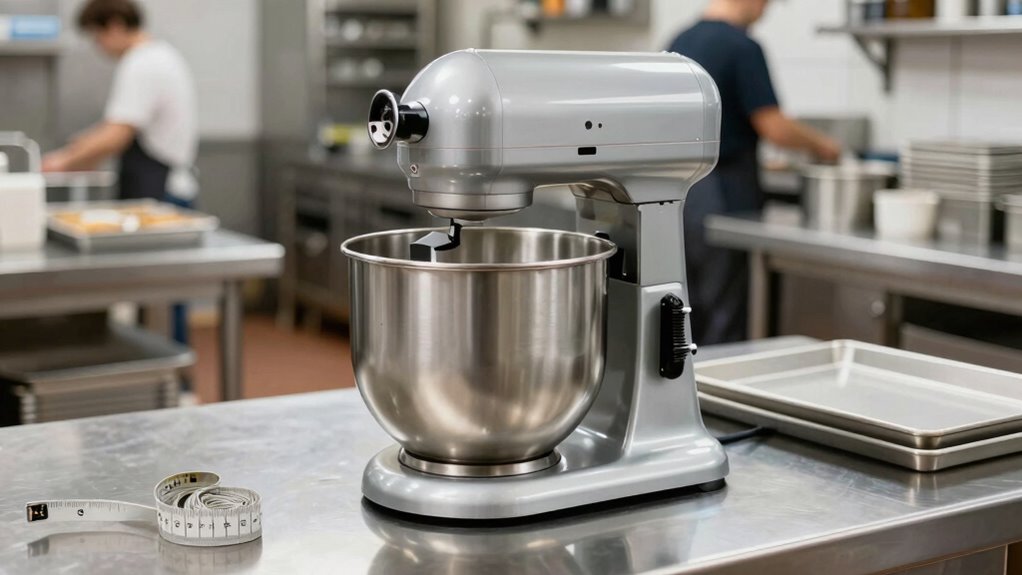
Choosing the right dough mixer size depends on your production needs, available space, and future growth plans. For small-scale or home use, a 4-8 quart mixer often works best, while larger operations may require 20-80 quart models. Consider your workspace’s footprint to avoid clutter and workflow issues. Overestimating capacity wastes resources, while underestimating limits efficiency. Understanding these factors helps you select the perfect fit—stick around for detailed tips that make the choice clear.

Get kitchen staples and gadgets delivered free — and shop member deals
- Fast, free delivery on millions of items
- Access to Prime Big Deal Days deals on October 6–7
- Prime Video, Amazon Music and more included
Key Takeaways
- Match mixer capacity to batch size to ensure efficiency without overloading or underutilizing the equipment.
- Consider available workspace to select a size that fits comfortably and maintains smooth workflow.
- Larger mixers handle bigger batches but require more power and space, influencing long-term operational costs.
- Regular maintenance and understanding capacity limits prevent motor strain and extend mixer lifespan.
- Plan for future growth to choose a size that accommodates expansion and avoids early equipment replacement.
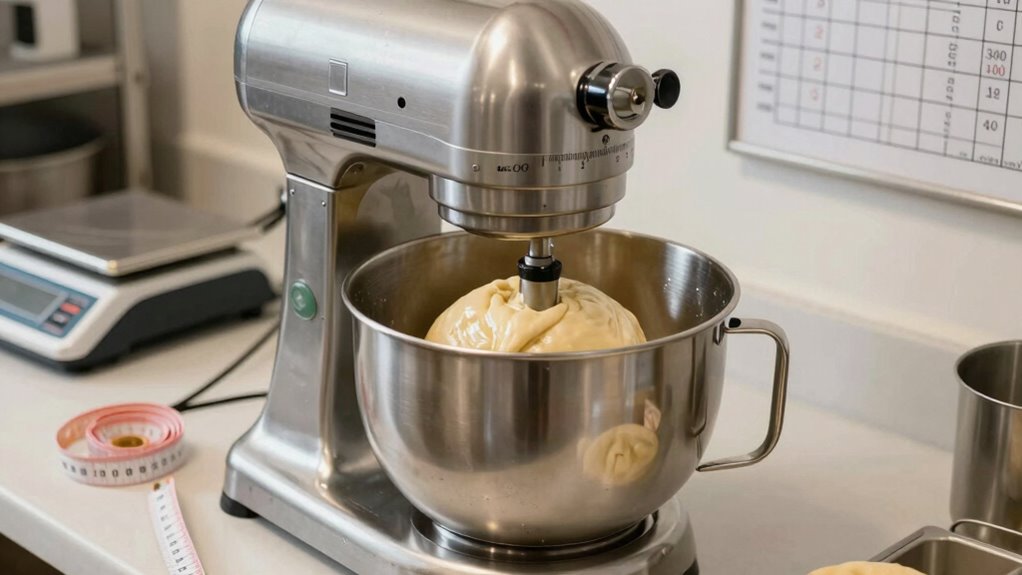
Choosing the right dough mixer size is vital to guarantee your baking process runs smoothly and efficiently. When selecting a mixer, you need to consider your typical batch sizes and how often you’ll be baking. The capacity of the mixer directly influences how much dough you can produce at once, but it’s also important to think about the mixer’s footprint to make sure it fits comfortably in your workspace. A larger mixer might seem appealing because it handles bigger batches, but if your space is limited, it can become cumbersome and hinder your workflow. Conversely, a smaller unit may not meet your production needs if you’re baking at a commercial scale.
Understanding the capacity needed is key. For home bakers or small-scale operations, a mixer with a capacity of 4 to 8 quarts typically suffices. This size allows you to make enough dough for family-sized batches or small orders without overwhelming your space or budget. If you’re running a bakery or catering business, you might need a commercial dough mixer with capacities ranging from 20 to 80 quarts, or even more. These larger machines can handle larger dough quantities, but they also require more power, space, and maintenance. It’s worth noting that overestimating your capacity needs can lead to wasted space and unnecessary expenses, while underestimating can slow down your production and impact your business.
Choosing the right mixer size balances capacity, space, and efficiency for your baking needs.
When it comes to dough mixing techniques, the size of your mixer plays a role in how you combine ingredients effectively. Smaller mixers might require more frequent batch splitting, which can affect consistency. Larger mixers, on the other hand, often feature multiple speed options and attachments that can handle different dough types with ease, making it easier to achieve uniform results. Regular maintenance tips become vital, especially for larger, high-volume machines. Keeping your mixer clean, lubricating moving parts, and inspecting belts and gears regularly will extend its lifespan and ensure it operates at peak performance. Proper maintenance not only prevents breakdowns but also guarantees the best dough consistency, regardless of batch size. Additionally, understanding the capacity limitations of your mixer helps prevent overloading, which can strain the motor and reduce the lifespan of the equipment. It is also important to consider your workflow when choosing a size, as this can influence how efficiently you work and how often you need to pause for adjustments. Properly matching your mixer size to your production demands is essential for optimizing efficiency and avoiding unnecessary wear and tear. In real-world use, think about your workflow. If space is tight, a compact model might be better, even if it means smaller batches. Think about how often you’ll be using the machine—frequent use justifies investing in a larger, more durable model. Also, considering future growth can save you from needing an upgrade sooner than expected, especially if your business is expanding. Understanding the importance of capacity helps prevent overloading and ensures smooth operation. Properly matching your needs will help maximize productivity and longevity of your equipment. Remember, choosing the right size isn’t just about capacity; it’s about balancing your production needs with your workspace and long-term maintenance considerations. When you get it right, your dough mixing techniques will become more efficient, and your operation will run smoother, saving you time and effort in the long run.
As an affiliate, we earn on qualifying purchases.
Frequently Asked Questions
How Do I Choose the Right Dough Mixer for My Bakery Size?
To choose the right dough mixer for your bakery size, consider your daily production needs and the dough flavor you aim for, which depends on proper mixing. Opt for a mixer with adjustable mixing speed to handle different recipes efficiently. Larger bakeries require higher capacity mixers, while smaller setups benefit from compact models. Balance capacity, footprint, and speed controls to guarantee consistent quality and smooth workflow.
What Maintenance Is Required for Different Dough Mixer Capacities?
Think of your dough mixer as a finely tuned orchestra, requiring harmony through regular maintenance. You’ll need to follow cleaning protocols diligently, wiping down surfaces and removing dough residues after each use. Lubrication schedules are equally essential, ensuring moving parts like gears and bearings stay smooth. For larger capacities, more frequent checks prevent wear and tear, while smaller mixers may need less frequent attention but still benefit from consistent upkeep to keep your bakery humming smoothly.
Can I Upgrade a Small Dough Mixer to a Larger Capacity Later?
You can often upgrade a small dough mixer for capacity expansion, but it depends on the model. Some mixers are designed with modular parts or can be fitted with larger bowls and motors, allowing for upgrades. However, check with the manufacturer first to guarantee compatibility and safety. Keep in mind that significant capacity increases might require purchasing a new, larger mixer to meet your production needs efficiently.
How Does Dough Consistency Affect Mixer Capacity Choices?
Dough elasticity and ingredient hydration directly influence your mixer capacity choices. When dough is elastic and well-hydrated, it demands more power and larger capacity to handle the stress, stretch, and knead effectively. Conversely, less elastic or drier dough allows for smaller mixers. You must match your mixer’s capacity to the dough’s consistency—more elastic, more hydrated dough needs a bigger, more robust machine to achieve perfect results.
Are There Safety Features Specific to Larger Dough Mixers?
Larger dough mixers often come equipped with advanced safety features like emergency stop buttons, safety interlocks, and protective guards to prevent accidents. These mixer safeguards guarantee your safety during operation, particularly when handling heavy, dense dough. Always check for features like automatic shutoff when covers are open or overload protection, which help minimize risks and keep you safe while working with high-capacity equipment.
As an affiliate, we earn on qualifying purchases.
Conclusion
Now that you understand how to size a dough mixer for your needs, the real test begins. Will your chosen capacity keep up with your busiest days, or will it leave you craving more? Every detail matters, from footprint to power, shaping your bakery’s future. The question is, are you ready to make the leap and find the perfect fit—before the next batch is ready to rise? The choice is yours—what’s next?
As an affiliate, we earn on qualifying purchases.
As an affiliate, we earn on qualifying purchases.
Fall Picks
fall essentials
As an affiliate, we earn on qualifying purchases.