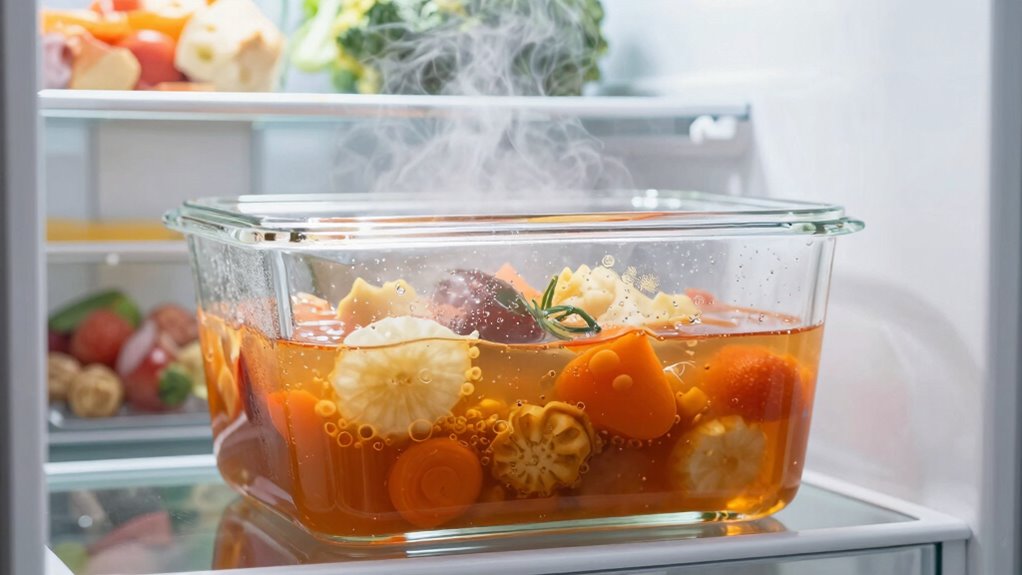
Putting warm food in your fridge causes more problems than you think. It raises the overall temperature, boosting bacteria growth and risking foodborne illnesses. Hot items also make your fridge work harder, using more energy and potentially shortening its lifespan. Plus, the moisture from cooling hot food encourages mold and spoilage of other items, affecting taste and texture. If you want to keep your food safe and your fridge efficient, you’ll want to understand how to cool properly.
Key Takeaways
- Warm food raises the fridge’s internal temperature, promoting bacterial growth and risking foodborne illnesses.
- Placing hot items causes condensation, moisture buildup, and mold, damaging other stored foods.
- Elevated fridge temperatures increase energy consumption and strain the appliance, reducing its lifespan.
- Hot dishes disrupt proper cooling, leading to faster spoilage and loss of food quality.
- Cooling hot food beforehand prevents temperature spikes, moisture issues, and prolongs food freshness.
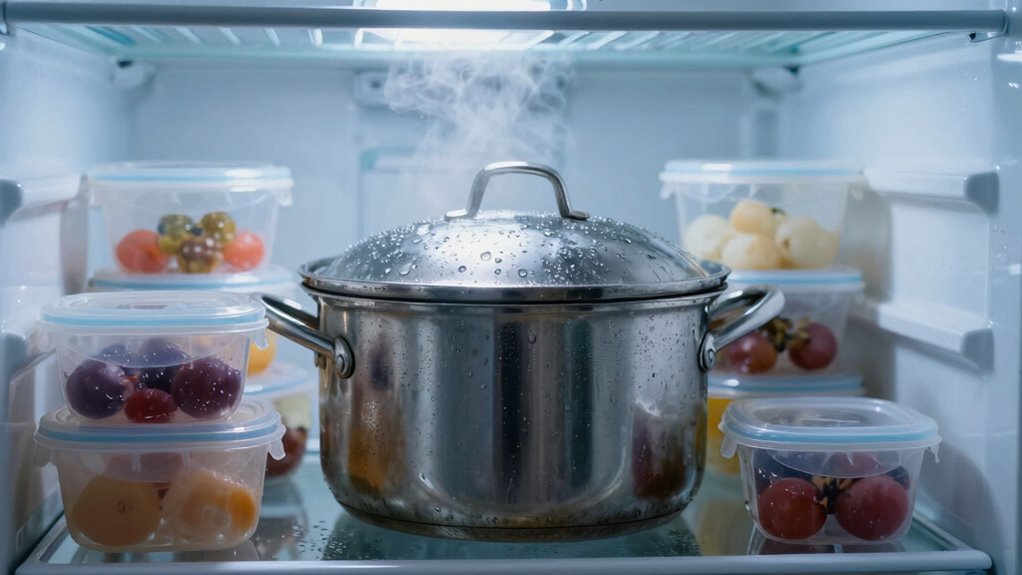
Putting warm food directly into the fridge might seem harmless, but it can actually cause a range of problems that affect your kitchen and your health. When you do this, you disrupt the delicate balance of temperature control inside your refrigerator, which is vital for maintaining food safety. Bacteria grow rapidly between 40°F and 140°F, known as the “danger zone,” and placing hot dishes into the fridge pushes the internal temperature into this zone. As a result, you risk the rapid multiplication of pathogens that could lead to foodborne illnesses.
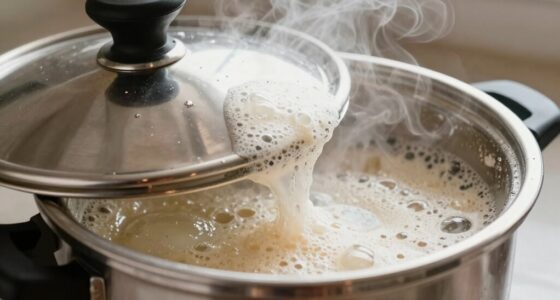
Putting hot food in the fridge can promote bacteria growth and foodborne illnesses. Cool foods properly first.
Moreover, warm food raises the overall temperature of your fridge, forcing the appliance to work harder to bring everything back to a safe, cool level. This increased workload not only consumes more energy but also places stress on your appliance, potentially shortening its lifespan. When your fridge isn’t able to maintain consistent temperatures, other stored perishables become vulnerable to spoilage. Dairy, meats, and leftovers can all deteriorate faster, increasing waste and potential health hazards. Proper cooling methods are essential for preventing these issues and keeping your food safe.
From a food safety perspective, the initial step should always be to cool hot foods before refrigerating. You don’t need to wait hours for it to reach room temperature, which also has its risks, but using quick methods like dividing large portions into smaller containers or using an ice bath can speed up cooling. Proper temperature control is key here, and temperature regulation is essential for preventing bacterial growth. In addition, avoiding the placement of hot food can help prevent moisture buildup, which can lead to mold and bacteria proliferation. By doing so, you prevent the temperature inside the fridge from rising and ensure that each item remains at a safe, stable temperature. This practice minimizes the opportunity for bacteria to thrive and keeps your food safe longer.
Additionally, stacking hot food directly in the fridge can cause condensation and moisture buildup, which creates an environment conducive to mold and bacteria growth. Excess moisture can also cause other foods to spoil prematurely or become soggy, affecting their texture and taste. Keeping hot food out of the fridge until it cools properly preserves not only food safety but also the quality of your leftovers. Controlling temperature is essential for maintaining both food safety and the longevity of your groceries.

Homelove Snackle Box Container with 2 Plastic Ice Packs, Snack Organizer Divided Serving Tray with Lid and Handle, Double-layer Tray and 5-Compartment Snack Platter for Travel Party Beach Picnic
- Double-tier design with 5 compartments: Separate snacks, fruits, and more
- Includes 2 reusable ice packs: Keeps food chilled over 3.5 hours
- Dishwasher-safe and durable: Easy to clean and long-lasting
As an affiliate, we earn on qualifying purchases.
As an affiliate, we earn on qualifying purchases.
Frequently Asked Questions
How Long Can Warm Food Safely Stay Outside Before Refrigeration?
You should refrigerate warm food within two hours of cooking to guarantee proper food storage and prevent bacteria growth. If the temperature is above 90°F, cut that time down to one hour. Leaving warm food outside too long risks spoilage and foodborne illnesses. Proper temperature control is essential, so always cool food quickly and store it promptly to keep it safe and fresh.
Does Reheating Food Affect Its Safety After Refrigeration?
Reheating food doesn’t automatically make it safe after refrigeration. Food bacteria can survive if the temperature control isn’t precise, especially if reheated unevenly. To stay safe, reheat thoroughly to an internal temperature of 165°F, killing bacteria. Remember, proper reheating minimizes risks, but if food sat out too long before refrigeration, bacteria could have multiplied, making reheating less effective in ensuring safety.
Can Warm Food Cause Refrigerator Damage or Inefficiency?
Warm food can cause refrigerator damage or inefficiency because it raises energy consumption as the appliance works harder to cool down the contents. This increased effort strains the compressor and can lead to premature wear. Additionally, placing warm food inside raises the risk of food spoilage, since it temporarily elevates the fridge’s internal temperature, making it harder to maintain safe storage conditions and increasing the chances of bacterial growth.
What Are the Signs of Spoiled Food Due to Improper Cooling?
You’ll notice spoiled food signs like foul odors, slimy textures, or mold growth, which indicate food bacteria have thrived due to improper temperature control. When food isn’t cooled properly, bacteria multiply quickly, risking health. Keep your fridge at the right temperature to prevent bacteria growth, and always refrigerate warm food promptly. If you see these signs, discard the food to avoid foodborne illness and maintain a safe, clean fridge environment.
Is It Better to Cool Food Quickly or Slowly in the Fridge?
It’s better to cool food quickly in the fridge through efficient cooling methods and proper temperature control. Rapid cooling prevents bacteria growth and keeps food safe. Use shallow containers to speed up cooling and avoid overcrowding, which hampers air circulation. Slow cooling may allow bacteria to multiply, increasing spoilage risk. Prioritize quick cooling and maintain a consistent fridge temperature of 40°F (4°C) for safe, fresh food storage.

2 Pack Refrigerator Thermometer, 30-30°C/20-80°F, Classic Fridge Thermometer Large Dial with Red Indicator Thermometer for Freezer Refrigerator Cooler
- Versatile Use: Suitable for refrigerators, freezers, and insulated boxes
- Easy to Read: Large dial with clear color indicators
- Wide Temperature Range: -20°F to 80°F / -30°C to 30°C
As an affiliate, we earn on qualifying purchases.
As an affiliate, we earn on qualifying purchases.
Conclusion
So, remember, putting warm food in the fridge is like opening Pandora’s box—you’re inviting bacteria to party and risking spoilage. It might seem convenient now, but in the end, it’s a recipe for trouble. Instead, let your food cool down first; it’s like giving your fridge a gentle nudge to keep your meals safe and fresh. Play it smart, and your leftovers will thank you with every delicious bite.

Leitee 4 Pcs Inflatable Ice Serving Bars Buffet Serving Tray Drink Cooler for Pool Party Inflatable Ice Tray Floating Food Drink Containers with Drain Plug and a Hand Pump, 2 Sizes
- Includes 4 Inflatable Ice Trays: Two sizes with a hand pump
- Two Sizes for Versatile Use: Large 51x24x5 inches, Small 28x22x5 inches
- Keeps Drinks Cold: Add ice and store fruits or drinks
As an affiliate, we earn on qualifying purchases.
As an affiliate, we earn on qualifying purchases.

Fruit Storage Containers for Fridge with vent holes and handle,Airtight Food Storage Containers Keep Fruits, Vegetables, Berry, Meat Fresh longer,BPA-free Fridge Storage Container with Lid (3 Pack)
- Three Sizes Included: 3.15L, 1.7L, 0.8L capacities
- Ventilation and Drainage: Lids with vent holes and drain basket
- BPA-Free Food Grade Material: Durable, safe for fridge, freezer, microwave
As an affiliate, we earn on qualifying purchases.
As an affiliate, we earn on qualifying purchases.