
To achieve chewy or crispy confections, understanding sugar’s behavior during heating and cooling is key. When sugar reaches around 320°F, it caramelizes, developing rich flavor and color, but controlling temperature and timing determines whether it stays chewy or crisps up. Ingredients like corn syrup and butter inhibit crystallization for chewiness, while minimal interference creates crisp textures. Properly managing heating, cooling, and ingredients gives you control over your final product—keep going to discover more about mastering these techniques.

Get kitchen staples and gadgets delivered free with Prime
- Fast, free delivery on millions of items
- Prime Video, Amazon Music and more included
- Member-only deals all year
Key Takeaways
- Higher caramelization temperatures produce crispy textures, while lower temperatures yield chewier confections.
- Ingredient choices, like corn syrup or butter, inhibit sugar crystallization for chewy textures.
- Rapid cooling encourages small crystal formation for chewy treats, whereas slow cooling promotes larger crystals for crispness.
- Precise temperature control during heating determines the extent of caramelization and final texture.
- Managing sugar crystallization through ingredients and process controls shapes whether the result is chewy or crispy.
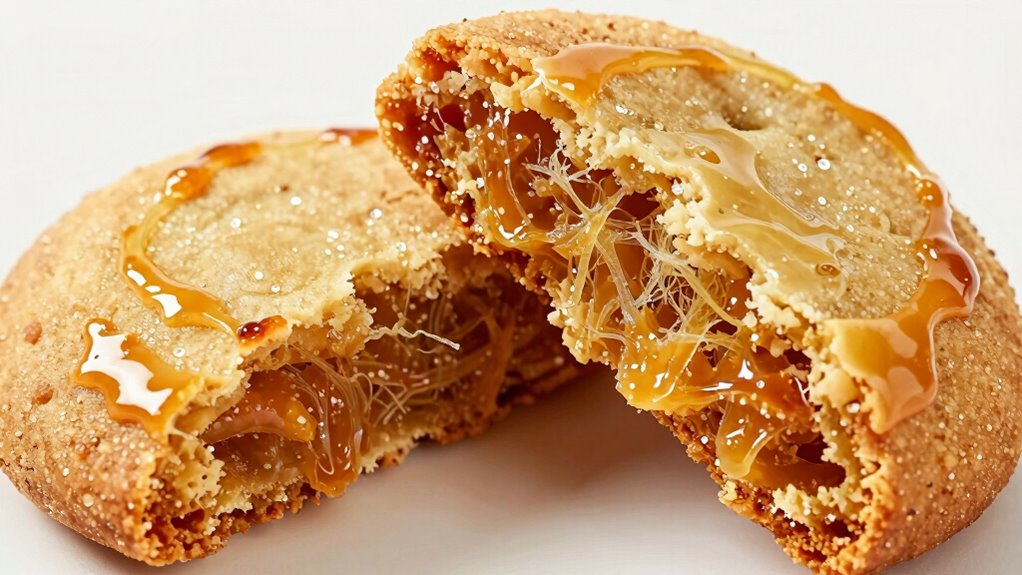
When you make candies or baked goods, understanding how sugar behaves is key to achieving the desired texture. The way sugar transforms during cooking directly influences whether your treat turns out chewy or crispy. Two essential aspects that play a role here are caramelization processes and sugar crystallization control. Knowing how to manipulate these can help you fine-tune your recipes for perfect results.
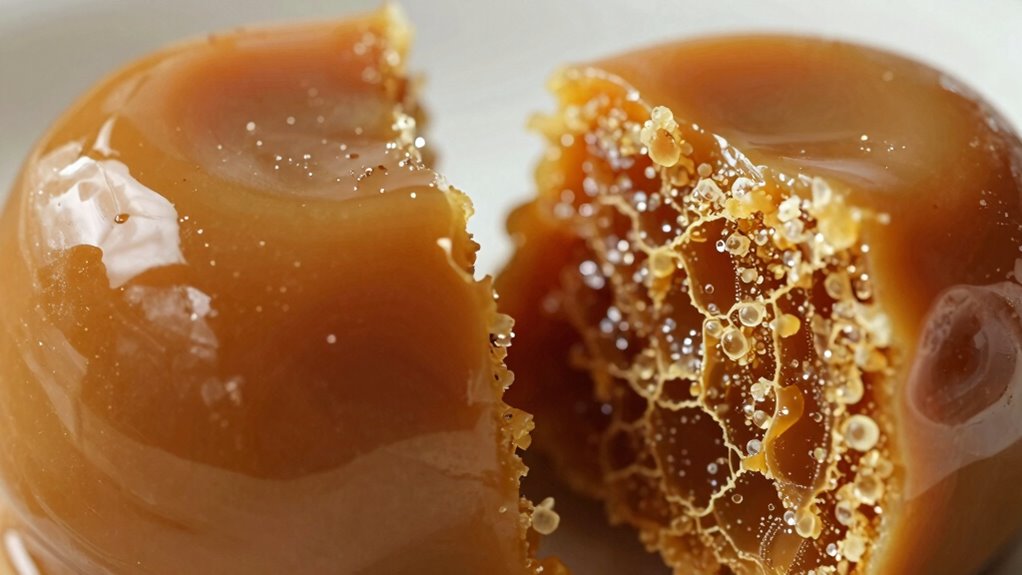
Caramelization occurs when sugar is heated past its melting point, typically around 320°F (160°C). During this process, sugar molecules break down and recombine, creating complex flavors and a rich, golden-brown color. If you’re aiming for a chewy caramel or fudge, you want to push the sugar to a higher temperature, encouraging thorough caramelization. However, for crispy confections like brittle, you need to reach the right temperature—often around 300°F (149°C)—and then cool rapidly to set the sugar in a firm, brittle state. Controlling the caramelization process is about managing temperature and heating time carefully; too high, and you risk burning the sugar, resulting in a bitter taste, too low, and the flavor won’t develop fully.
On the other hand, sugar crystallization regulation is vital for determining whether your final product is chewy or crispy. When sugar dissolves in water and then cools, crystals can form and grow, giving the texture you observe. To create a chewy treat, you often want to encourage some crystallization but prevent it from becoming too coarse or grainy. This involves adding ingredients like corn syrup or butter, which interfere with crystal growth, resulting in a smooth, chewy consistency. Conversely, for crispy treats, you want to maximize crystallization and prevent interference, allowing the sugar to form a dense, glass-like structure when cooled. Rapid cooling and agitation can also influence crystallization, helping you achieve the desired crunch. Additionally, understanding the science of sugar crystallization can enhance your ability to control the final texture with greater precision.
Furthermore, understanding the role of ingredients in crystallization can provide additional control over the texture of your confections.
In essence, the difference between chewy and crispy confections hinges on how you control these processes. Managing caramelization ensures the sugar reaches the right flavor and color profile, while regulating crystallization determines the final texture. Precise temperature control, timing, and ingredient choices are your tools to master these techniques. When you understand and manipulate these sugar behaviors, you have the power to craft confections that are perfectly chewy, delightfully crispy, or somewhere in between. It’s all about knowing when to stop heating, how to cool, and what ingredients to add to guide sugar’s transformation into the texture you want. Understanding sugar behavior is fundamental for bakers and candy makers aiming for consistent, high-quality results.
candy thermometer for sugar cooking
As an affiliate, we earn on qualifying purchases.
As an affiliate, we earn on qualifying purchases.
Frequently Asked Questions
How Does Humidity Affect the Texture of Chewy and Crispy Confections?
Humidity effects play a significant role in the texture of chewy and crispy confections. When humidity is high, it adds moisture, making crispy treats lose their crunch and become softer. Conversely, humidity can help preserve the chewiness of certain candies by maintaining moisture levels. To keep the desired texture, you need to control humidity effects carefully, ensuring proper storage to preserve the intended crispiness or chewiness of your confections.
Can Ingredient Substitutions Alter the Final Texture of Candy?
Ingredient substitutions can totally transform your candy’s final texture, making it either irresistibly chewy or delightfully crispy. Swap sugar types or add different flavorings and you’ll see huge changes, like turning a dull treat into a flavor explosion. Plus, these tweaks can enhance color, creating eye-popping visuals, and perfect flavor pairings that make every bite unforgettable. So experiment boldly — your perfect candy is just a substitution away!
What Role Does pH Play in Sugar Crystallization?
pH control plays a vital role in the crystallization process of sugar. When you adjust the pH level, you influence how easily sugar molecules form crystals. A more acidic environment slows down crystallization, leading to softer, chewier textures, while a neutral or slightly basic pH encourages rapid crystal formation, resulting in crispy candies. By monitoring and adjusting pH, you can precisely control the texture of your confectionery.
How Does Cooking Temperature Influence Sugar Structure?
Cooking temperature directly influences sugar structure by controlling sugar crystallization and caramelization reactions. As you increase the temperature, sugar dissolves and then begins to caramelize, creating complex flavors and color. Higher temperatures promote Maillard reactions and prevent large sugar crystal formation, resulting in a crispy texture. Lower temperatures favor controlled sugar crystallization, leading to chewy textures. So, your cooking temperature determines whether your treat turns out chewy or crispy by affecting these key sugar processes.
Are There Storage Tips to Maintain Desired Chewy or Crispy Textures?
To maintain your desired chewy or crispy textures, store your treats properly. For chewy textures, keep them in airtight containers at room temperature to prevent moisture loss, which enhances flavor and preserves their chewiness. For crispy treats, store them in a sealed container and avoid humidity to prevent sogginess. Proper storage guarantees flavor remains vibrant and texture stays true, giving you consistent, delightful results every time.
silicone candy molds for brittle and fudge
As an affiliate, we earn on qualifying purchases.
As an affiliate, we earn on qualifying purchases.
Conclusion
Just like the alchemists of old sought gold, mastering sugar’s secrets lets you craft treats that delight. Whether you aim for the tender pull of chewy or the crack of crispy, understanding sugar’s role is your key. With a little patience and knowledge, you become the wizard behind the sweet curtain, turning simple ingredients into magic. Remember, in the world of confections, sugar’s dance is what makes your creations truly shine—your own sweet masterpiece in the making.
As an affiliate, we earn on qualifying purchases.
candy making kit with ingredients
As an affiliate, we earn on qualifying purchases.
As an affiliate, we earn on qualifying purchases.
Fall Picks
fall essentials
As an affiliate, we earn on qualifying purchases.