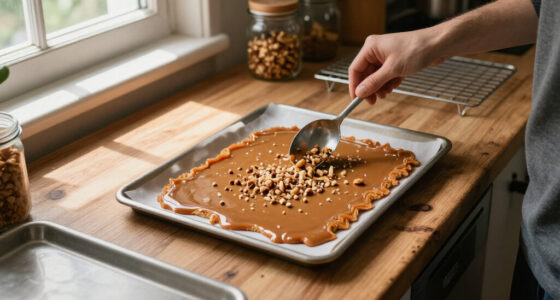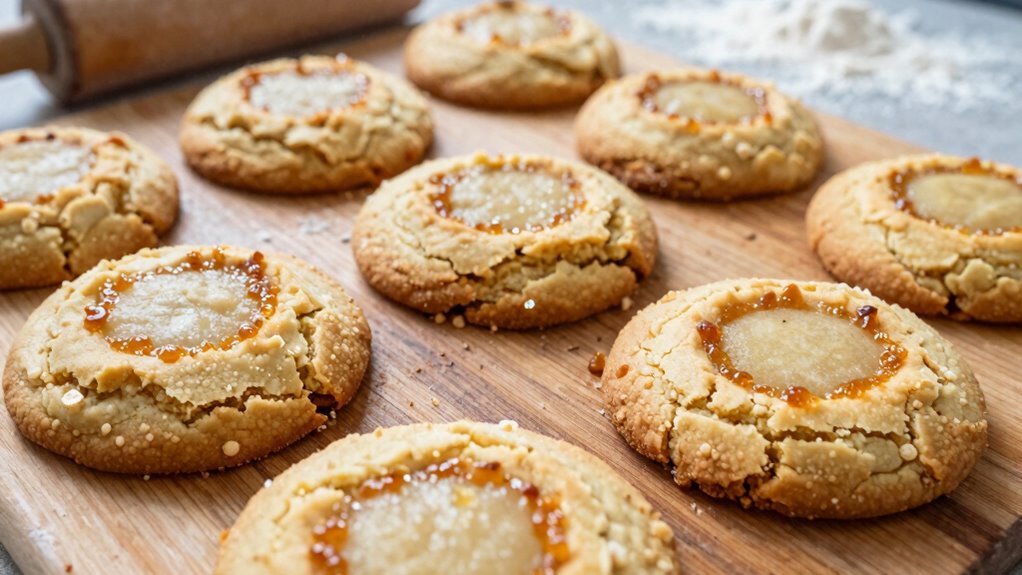

Your cookies may spread too much even if your recipe looks fine because the oven temperature might be too high, causing fats to melt quickly and lose structure. Additionally, if you haven’t chilled your dough properly, it’s less resistant to melting during baking. Using the right ingredients, measuring accurately, and controlling oven heat all help maintain shape. Keep exploring to discover more tips that can help you bake perfectly shaped cookies every time.

Get kitchen staples and gadgets delivered free — and shop member deals
- Fast, free delivery on millions of items
- Access to Prime Big Deal Days deals on October 6–7
- Prime Video, Amazon Music and more included
Key Takeaways
- Oven temperature may be too high, causing fats to melt quickly and cookies to spread excessively.
- Insufficient chilling of dough reduces resistance to melting, leading to more spreading during baking.
- Using ingredients with too much butter or oil increases dough fluidity, promoting wider spread.
- Inaccurate measuring of flour or other dry ingredients weakens dough structure, allowing more spreading.
- Baking on improper or uncalibrated sheets can cause uneven heat transfer and increased cookie spread.
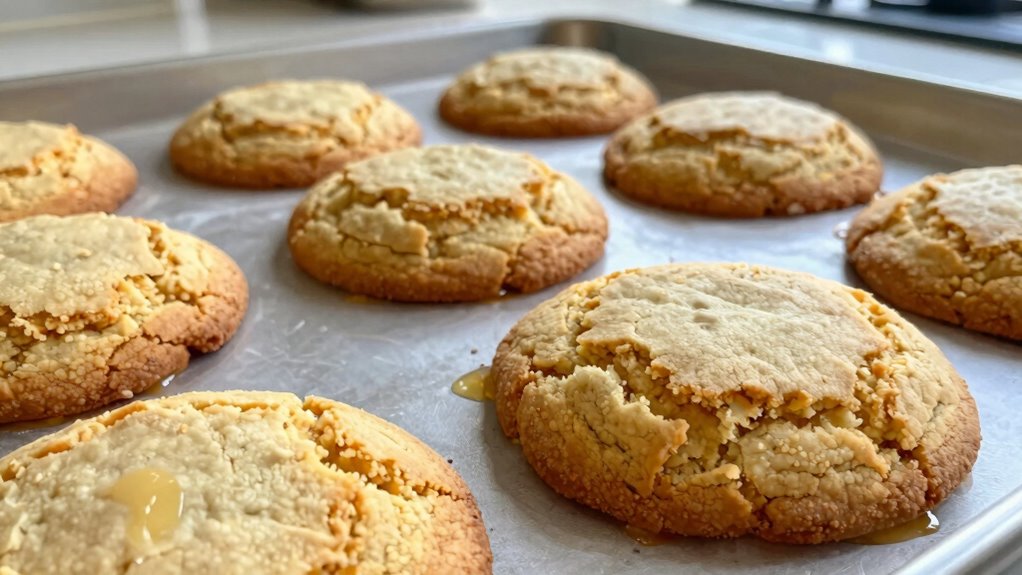
Cookies tend to spread more than intended because of how their ingredients interact during baking. When you place cookie dough in the oven, the heat causes the fats to melt and the moisture inside to turn to steam, which influences the cookie’s final shape and texture. One key factor in controlling how much your cookies spread is the baking temperature. If your oven runs too hot or if you set the temperature higher than what the recipe specifies, the fats in your dough melt quickly. This rapid melting causes the dough to lose its structure before it has a chance to set, resulting in cookies that flatten out and spread more than you want. Conversely, baking at too low a temperature might not give your cookies enough heat to properly set, making them dense and overly thick instead.
Another vital aspect is your cookie texture, which is directly affected by the ingredients and how they interact during baking. For example, if your recipe contains too much butter or oil, the increased fat content can make the dough more fluid, encouraging spreading. Similarly, using too little flour or not enough chilling time can compromise structure, leading to wider spread. The balance of ingredients influences the cookie’s ability to hold its shape, especially during baking. If you want to minimize spreading, opt for a slightly stiffer dough and consider chilling it before baking. The cold dough will resist melting in the oven, helping your cookies keep their shape and preventing excess spread. Additionally, understanding the baking process can help you better control the outcome of your cookies. Properly measuring ingredients is also crucial, as inaccuracies can affect how well your cookies maintain their shape during baking. Incorporating techniques like chilling or using specific flours can also make a significant difference in controlling spreading. Being aware of oven calibration ensures that temperature-related issues don’t interfere with your desired cookie outcome.
Furthermore, using appropriate baking sheets can influence how heat is distributed and affect cookie spread.
As an affiliate, we earn on qualifying purchases.
Frequently Asked Questions
Can Using Different Types of Flour Affect Cookie Spreading?
Yes, using different types of flour can affect cookie spreading. For example, bread flour has higher gluten development, which can make cookies chewier and less prone to spreading. Conversely, cake flour has less gluten, leading to lighter cookies that spread more easily. Ingredient substitutions, like replacing all-purpose flour with almond flour, can also impact spreading due to different moisture absorption. Adjusting your flour choice helps control cookie texture and spread.
Does Baking at Higher Altitudes Influence Cookie Spread?
Baking at higher altitudes causes cookies to spread more due to lower air pressure, so you should make altitude adjustments by reducing sugar and fat and increasing flour. Humidity effects also play a role—high humidity can lead to wetter dough, increasing spread. To combat this, chill your dough before baking and tweak your recipe accordingly, ensuring your cookies maintain their shape despite altitude challenges.
How Does Resting Cookie Dough Impact Spread During Baking?
Resting your cookie dough helps prevent excessive spread by allowing the dough to chill and firm up, which reduces dough temperature. This process also enhances ingredient freshness, ensuring butter and eggs stay balanced, leading to better structure. When you let the dough rest, you give the flour time to hydrate, resulting in cookies that hold their shape better during baking. So, always rest your dough for ideal cookie shape and texture.
Can Overmixing the Dough Cause Excessive Spreading?
Yes, overmixing the dough can cause excessive spreading. When you mix too much, it develops the gluten and alters the dough’s consistency, making it softer and more prone to spreading. Use gentle mixing techniques to combine ingredients just until smooth, avoiding overworking the dough. Proper dough consistency helps control spread, ensuring your cookies stay thicker and maintain their shape during baking.
Do Cookie Shapes or Sizes Affect How Much They Spread?
Yes, cookie shapes and sizes affect how much they spread. Thinner or larger cookies tend to spread more because of increased surface area, which impacts cookie texture. To regulate this, you can adjust your baking temperature—lower temps help cookies hold their shape, while higher temps cause more spreading. Using uniform sizes ensures even baking, and chilling the dough before baking can also reduce spreading and improve cookie texture.
As an affiliate, we earn on qualifying purchases.
Conclusion
So, next time your cookies turn into flat, pancake-like disasters, don’t despair. Sometimes, a tiny tweak—like chilling your dough or adjusting butter amounts—can save the batch. Remember, even the tiniest mistake can cause your cookies to spread like wildfire, transforming your baking masterpiece into a flatland of disappointment. Keep experimenting, stay patient, and you’ll soon master the art of perfectly shaped cookies that stand tall and proud, not sprawling like a runaway train.
silicone baking sheets for cookies
As an affiliate, we earn on qualifying purchases.
As an affiliate, we earn on qualifying purchases.
As an affiliate, we earn on qualifying purchases.
NFL season / tailgating Picks
team gear
As an affiliate, we earn on qualifying purchases.