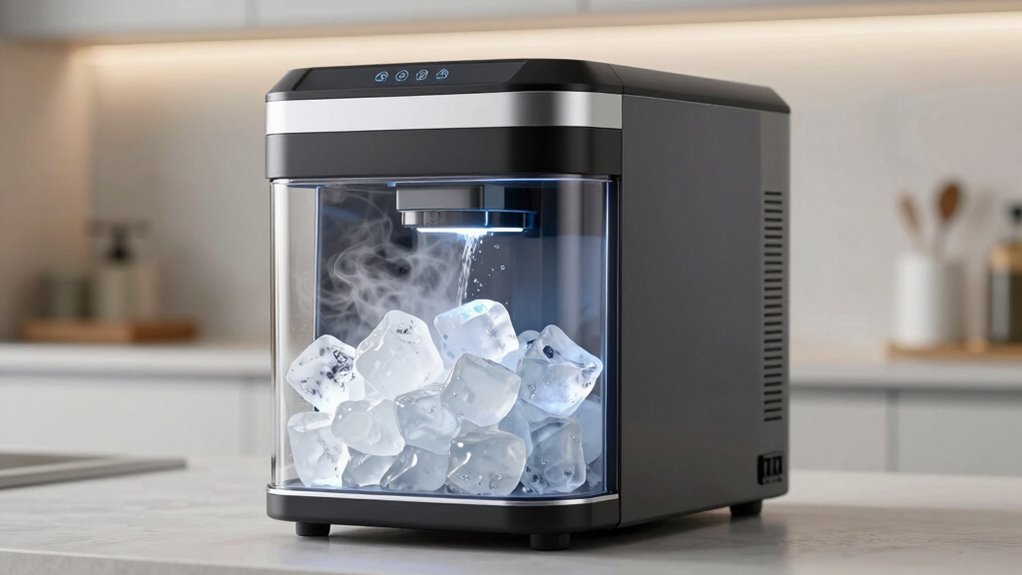
A self-cleaning cycle on your nugget ice maker helps remove mineral buildup and impurities, keeping the machine performing well and producing cleaner ice. It’s useful for occasional maintenance but doesn’t replace regular manual cleaning or descaling every few months. The cycle works best with filtered water and isn’t a full disinfectant. While marketed as low-maintenance, understanding its limits can help you keep your ice maker in peak condition—learn more for ideal care.

Get kitchen staples and gadgets delivered free — and shop member deals
- Fast, free delivery on millions of items
- Access to Prime Big Deal Days deals on October 6–7
- Prime Video, Amazon Music and more included
Key Takeaways
- The self-cleaning cycle flushes out mineral deposits and impurities to maintain ice quality and machine performance.
- It is most helpful when water quality is good; poor water can reduce its effectiveness.
- The cycle is a quick rinse and does not replace regular manual cleaning or descaling every few months.
- Marketing often claims it makes maintenance “maintenance-free,” but manual cleaning remains necessary.
- Proper water filtration and scheduled manual cleaning extend the machine’s lifespan and ensure consistent ice quality.
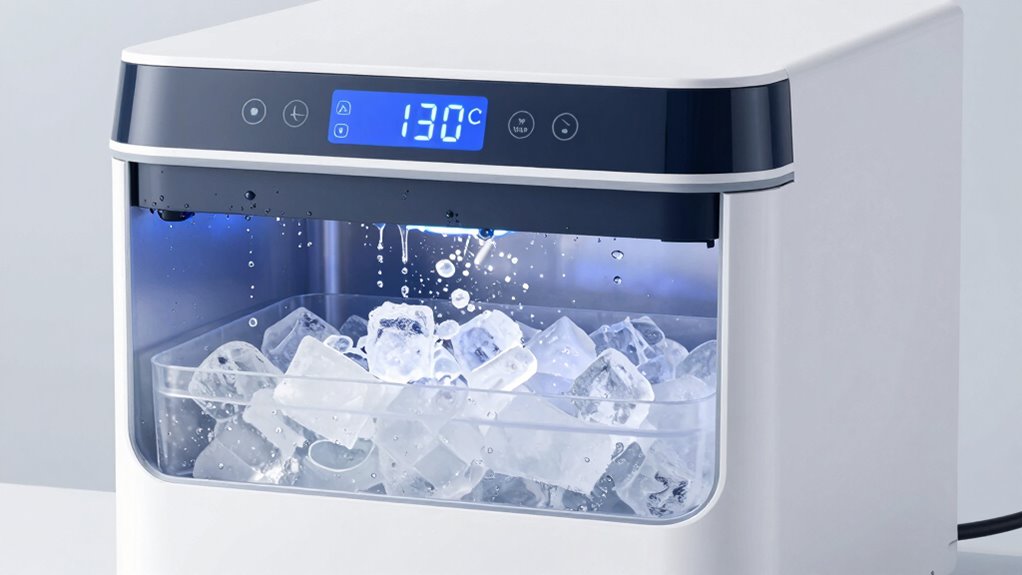
Have you ever wondered how your nugget ice maker stays clean and runs smoothly? The self-cleaning cycle is designed to help maintain your machine, but understanding what it does and when it’s effective is key to getting the best performance. One of the most important factors influencing your ice maker’s cleanliness is water quality. Using clean, filtered water minimizes mineral buildup and prevents bacteria from forming inside the unit. Over time, minerals and impurities can accumulate, leading to smudgy ice or even foul tastes. That’s where the self-cleaning cycle comes in—it’s meant to flush out these deposits periodically, reducing the need for manual cleaning. However, relying solely on the cycle isn’t enough if your water quality is poor. Regularly testing and maintaining a proper water filtration system will help keep your ice maker in top shape and extend the intervals between deep cleans.
A common misconception is that the self-cleaning cycle replaces your regular maintenance schedule. In truth, it’s a supplement, not a substitute. Most manufacturers recommend a scheduled cleaning every few months—often every 3 to 6 months—depending on usage and water conditions. During these scheduled cleanings, you may need to manually descale or scrub parts of the unit to remove stubborn mineral deposits or mold buildup. The self-cleaning cycle is more like a quick rinse that helps prevent buildup, but it doesn’t fully disinfect or descale the internal components. For peak performance, you should follow the manufacturer’s instructions on how often to run the cycle and whether additional cleaning steps are necessary. Ignoring this schedule can lead to decreased ice quality, increased machine wear, or even breakdowns. Regular maintenance is essential to ensure your ice maker operates efficiently and produces high-quality ice consistently.
When it’s marketed as a “self-cleaning” feature, it’s often portrayed as a maintenance-free solution. While it does automate part of the cleaning process, it’s not magic. The cycle typically involves running a cleaning solution or water through the system to loosen debris, but it doesn’t eliminate the need for manual intervention or water quality management. If your water is hard or contaminated, the cycle’s effectiveness diminishes. That’s why many experts advise supplementing the self-cleaning feature with regular manual cleaning and a strict maintenance schedule. This proactive approach ensures your nugget ice maker produces fresh, clean ice consistently and prevents costly repairs down the line. Remember, a little effort on the front end saves you headaches and money later.
nugget ice maker self-cleaning cycle
As an affiliate, we earn on qualifying purchases.
As an affiliate, we earn on qualifying purchases.
Frequently Asked Questions
How Often Should I Run the Self-Cleaning Cycle?
You should run the self-cleaning cycle on your nugget ice maker every 1 to 2 months, depending on your usage. Incorporate this into your maintenance schedule to keep it running smoothly. If you notice any buildup or a change in ice quality, increase the cleaning frequency. Regular cleaning prevents mold, bacteria, and mineral deposits, ensuring fresh-tasting ice and prolonging your machine’s lifespan.
Does the Self-Cleaning Cycle Use Any Cleaning Chemicals?
You might be surprised, but the self-cleaning cycle usually doesn’t use cleaning chemicals, focusing instead on hot water and internal cleaning processes. However, it’s always wise to check your ice maker’s manual for specific details. When cleaning, prioritize chemical safety by avoiding harsh chemicals unless explicitly recommended. This way, you keep your machine safe, your ice pure, and enjoy peace of mind knowing you’re handling cleaning chemicals responsibly.
Can I Manually Start the Cleaning Cycle Anytime?
Yes, you can manually initiate the cleaning cycle whenever you want. Just follow your ice maker’s instructions for manual initiation, usually involving pressing specific buttons. It’s a good idea to do this regularly, based on the recommended cleaning frequency, to keep your machine in top shape. Regular manual cleaning helps prevent buildup and guarantees your nugget ice stays fresh and clean without relying solely on automatic cycles.
Will the Self-Cleaning Cycle Affect Ice Production?
Imagine you run a busy café, and you use the self-cleaning cycle regularly. It might temporarily pause ice production, but it actually benefits ice quality and machine longevity. By removing mineral buildup, cleaning guarantees your ice stays fresh and your machine works efficiently longer. So, yes, the cycle can affect production briefly, but in the long run, it keeps your nugget ice maker running smoothly and producing high-quality ice consistently.
Is the Cleaning Cycle Safe for All Nugget Ice Makers?
The cleaning cycle is generally safe for most nugget ice makers, but you should check your manufacturer’s warranty and instructions first. Use only approved cleaning chemicals to avoid damaging your machine or voiding warranty. If you follow the manufacturer’s guidelines, the cycle helps keep your ice maker clean and functioning properly. Always verify compatibility and recommended cleaning products to guarantee safety and peak performance.
As an affiliate, we earn on qualifying purchases.
Conclusion
Think of your nugget ice maker’s self-cleaning cycle like a gentle rain washing away dust from a window. Just as clean windows let in more sunlight, regular cleaning keeps your machine running smoothly and your ice tasting fresh. Skipping this step is like ignoring a small leak — it may seem minor, but over time, it can cause bigger problems. Embrace the cycle, and your ice maker will serve you cool, clean ice for years to come.
descaling solution for ice machine
As an affiliate, we earn on qualifying purchases.
As an affiliate, we earn on qualifying purchases.
manual cleaning kit for ice maker
As an affiliate, we earn on qualifying purchases.
As an affiliate, we earn on qualifying purchases.
NFL season / tailgating Picks
team gear
As an affiliate, we earn on qualifying purchases.