To get the best results with your spiral dough mixer, start at a low or medium-low speed when adding ingredients to prevent flour fly-off. Mix until the dough pulls away from the bowl sides and forms a cohesive ball, usually taking 8 to 12 minutes. Adjust water gradually for proper hydration and avoid overmixing to prevent overworking the gluten structure. Continuing to fine-tune these settings will help you produce consistent, high-quality pizza dough.
Key Takeaways
- Start mixing at low or medium-low speed to prevent flour splash and ensure even ingredient incorporation.
- Gradually increase to medium or medium-high speed once ingredients are combined for proper gluten development.
- Mix for approximately 8-12 minutes, monitoring dough until it clears the bowl sides and forms a cohesive ball.
- Turn off the mixer immediately once the desired dough texture is achieved to avoid overworking.
- Allow the dough to rest after mixing to relax gluten, improving stretchability and final dough quality.
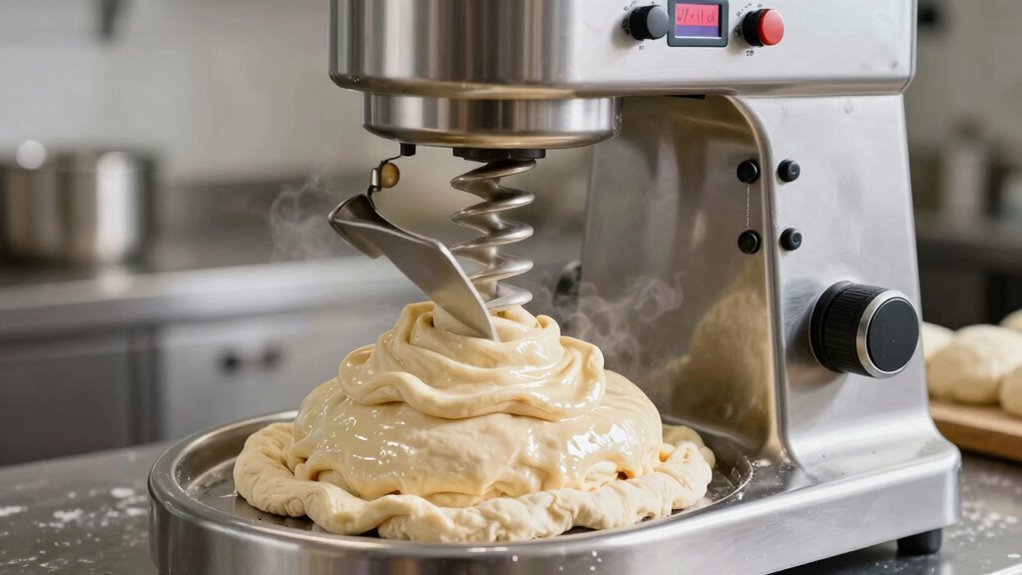
A spiral dough mixer is an indispensable tool for making high-quality pizza dough efficiently. Its design ensures thorough mixing, which is crucial for achieving the perfect dough consistency. When using a spiral mixer, understanding how to control dough hydration and mixing speed can make all the difference in your final product. Dough hydration refers to the amount of water relative to flour, affecting the dough’s texture and elasticity. Too little water results in a stiff, dry dough, while too much leads to a sticky, difficult-to-manage ball. The key is to find the right balance for your recipe, and the mixer can help you do that precisely. Proper mixing at the right speed ensures even hydration of the flour and proper gluten development, which is essential for a good rise and chewy texture.
Start by setting your mixer to a low or medium-low speed when adding ingredients. This prevents flour from flying out or forming lumps, especially when incorporating water into the dry ingredients. As you add water gradually—monitoring your dough hydration—you want to keep the mixing steady but gentle. Once the ingredients are combined, increasing the mixing speed slightly helps develop gluten strands, giving your dough strength and elasticity. Be cautious not to go too fast, as excessive mixing speed can overwork the dough, leading to a tough crust and reduced fermentation. Typically, a slow to medium speed for the initial mix, then a slightly higher speed for gluten development, works best. Additionally, understanding the mixing time is crucial to avoid over- or under-mixing, which can impact dough quality.
Timing is equally critical. Under-mixing can result in uneven dough with weak gluten structure, while over-mixing can cause the dough to become excessively tight and less extensible. A good rule of thumb is to mix until the dough clears the sides of the bowl and forms a cohesive ball—usually around 8 to 12 minutes, depending on your recipe and mixer capacity. During this process, keep an eye on dough hydration by feeling the dough’s texture—if it’s too sticky or slack, consider adjusting your water amount in future batches. Once the desired consistency is achieved, turn off the mixer and let the dough rest. This resting period allows gluten to relax, making it easier to shape and stretch.

Ooni Halo Pro Spiral Mixer – Dough Stand Mixer with Attachments, 7.3 Quart Capacity and 58 Speed Settings – Charcoal Grey
- Dough Quality: Bake bakery-quality dough at home
- Mixing Technology: Professional spiral mixing with rotating bowl
- Removable Breaker Bar: Patent-pending removable breaker bar included
As an affiliate, we earn on qualifying purchases.
As an affiliate, we earn on qualifying purchases.
Frequently Asked Questions
How Do I Clean and Maintain My Spiral Dough Mixer?
You should regularly perform cleaning procedures by unplugging the mixer, then wiping down the bowl, blades, and exterior with a damp cloth. Use a mild detergent for stubborn residue and avoid abrasive cleaners. For maintenance tips, lubricate moving parts as recommended by the manufacturer and inspect the power cord for damage. Keeping your spiral dough mixer clean and well-maintained guarantees it runs smoothly and lasts longer.
Can I Use a Spiral Mixer for Gluten-Free Dough?
Yes, you can use a spiral mixer for gluten-free dough, but you should consider its gluten-free compatibility. Gluten-free dough tends to be stickier and more delicate, so monitor mixing times closely. If you find the mixer isn’t ideal, try alternative mixing methods like hand kneading or using a stand mixer with a paddle attachment. This helps prevent overmixing and keeps your gluten-free dough perfect for baking.
What Is the Ideal Batch Size for My Spiral Mixer?
Your ideal batch size depends on your mixer capacity, but generally, you should fill the spiral mixer no more than 2/3 full to guarantee proper kneading. For medium-sized mixers, this means a batch size of about 10-15 pounds. Overloading hampers performance, while underloading isn’t efficient. Always check your specific mixer’s capacity and adjust your batch size accordingly for the best dough consistency and machine longevity.
How Do I Troubleshoot Common Issues With the Mixer?
To troubleshoot common issues, first check your mixing speed—using the wrong setting can affect dough consistency. If your dough is too sticky or too dry, adjust the speed or ingredient amounts accordingly. Make sure the mixer is properly calibrated and the blades are clean. If problems persist, inspect for mechanical issues like worn parts or motor problems. Regular maintenance helps keep your spiral mixer running smoothly and dough consistent.
Are There Safety Precautions When Operating a Spiral Dough Mixer?
Yes, when operating a spiral dough mixer, you should follow safety protocols like keeping your hands clear of moving parts and wearing protective gear. Always review emergency procedures before starting, so you know what to do if something goes wrong. Never bypass safety features, and guarantee the mixer is turned off before cleaning or adjusting. Staying alert and cautious helps prevent accidents and keeps you safe during operation.
Ooni Halo Pro Spiral Mixer – Dough Stand Mixer with Attachments, 7.3 Quart Capacity and 58 Speed Settings – Charcoal Grey
- Dough Quality: Bake bakery-quality dough at home
- Mixing Technology: Professional spiral mixing with rotating bowl
- Removable Breaker Bar: Patent-pending removable breaker bar included
As an affiliate, we earn on qualifying purchases.
As an affiliate, we earn on qualifying purchases.
Conclusion
Just like a master chef perfects their craft, mastering your spiral dough mixer turns pizza making into an art. With the right settings and timing, you’re channeling the spirit of legendary pizzerias, turning simple ingredients into something extraordinary. Remember, patience and precision are your allies—trust the process, and your dough will rise to greatness. Soon, you’ll be creating pies that rival those from the greatest ovens, capturing the magic of authentic Italian pizza right in your own kitchen.

Garvee Commercial Dough Mixer 10.5 QT, 650W Dual Rotating Dough Kneading Machine with Food-Grade Stainless Steel Bowl, Security Shield & Timer, Electric Spiral Mixer for Restaurant Bakery Pizzeria
- Large Capacity Bowl: 10.5 QT, up to 11 lbs dough
- Food-Grade Stainless Steel: All parts in contact are stainless steel
- Dual Rotation System: 650W motor with 21 and 129 rpm speeds
As an affiliate, we earn on qualifying purchases.
As an affiliate, we earn on qualifying purchases.

Dough Mixer with Fermentation Function, 5.3Qt Large Capacity Dough Maker for Bread, Pizza & Sourdough, Electric Dough Kneading Machine with Stainless Steel Bowl and Touch Control Panel
- Powerful Motor: 250W for reliable mixing
- Versatile Use: Handles bread, pizza, cookies, and more
- Automatic Fermentation: Ensures optimal dough fermentation
As an affiliate, we earn on qualifying purchases.
As an affiliate, we earn on qualifying purchases.