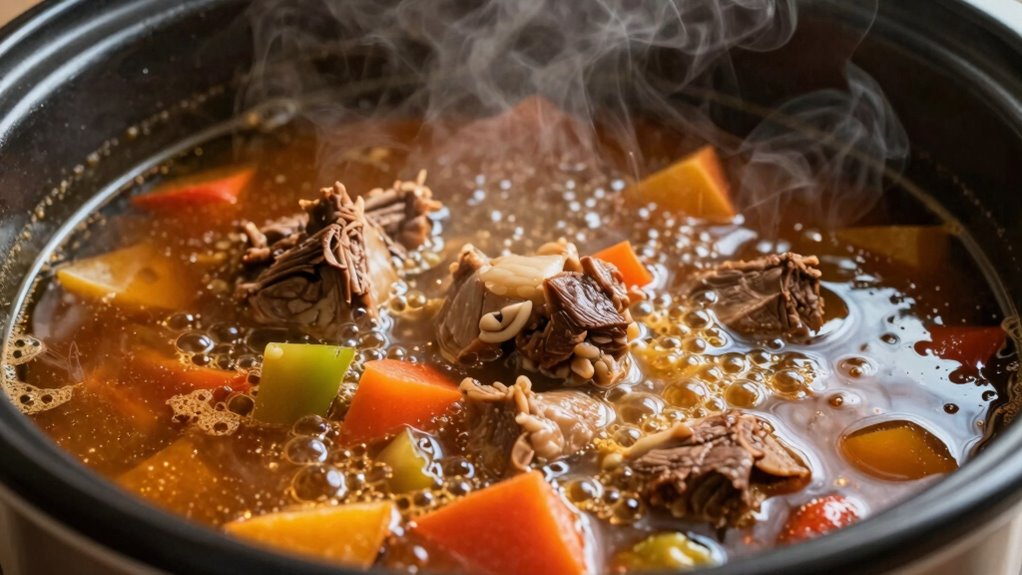

Slow cooker meals often turn watery because of adding too much liquid, ingredients releasing excess moisture, or overcooking that causes ingredients to break down and release more juices. To fix this, reduce initial liquids, drain or marinate ingredients beforehand, and cook on lower heat for longer. You can also thicken dishes with cornstarch, mashed vegetables, or simmering without the lid. Keep these tips in mind to get thick, flavorful results—more helpful tricks are on the way.
Listen free for 30 days with Audible
Thousands of audiobooks and originals — cancel anytime.
As an affiliate, we earn on qualifying purchases.
Key Takeaways
- Excess liquid from ingredients, broth, or over-adding sauces causes watery slow cooker meals.
- Not draining or marinating ingredients before cooking increases moisture and dilutes flavors.
- Overcooking breaks down ingredients, releasing more juices and making dishes soupy.
- Using thickening agents like cornstarch or reducing the lid helps thicken dishes at the end.
- Proper liquid control, ingredient prep, and cooking time management prevent excess moisture and improve texture.
Why Does My Slow Cooker Meal Turn Out Watery?

If your slow cooker meals are turning out watery, the most common reason is excess liquid. Often, you might add too much broth, water, or sauce, or ingredients release more moisture than expected. To fix this, try ingredient substitution by choosing produce or proteins that release less liquid. For example, opt for chicken breasts instead of thighs with skin or bone, which tend to release more moisture. Additionally, seasoning enhancement can help compensate for reduced liquid; adding flavor through herbs and spices can boost taste without relying on extra liquids. Be mindful of the ingredients you add, and consider draining excess liquids before combining everything. This approach helps control moisture levels, ensuring your meal isn’t overly watery and maintains the desired texture and flavor.
How Excess Liquid Affects Flavor and Texture : And Why It Matters

When your slow cooker meal becomes too watery, the flavor can get diluted, making your dish less tasty. The excess liquid can also break down the texture, turning tender ingredients mushy or bland. Plus, valuable nutrients may wash away, reducing the meal’s overall nutritional value. Additionally, understanding flavor evolution can help you better control the taste and liquid levels, which are crucial for achieving the desired taste and texture in your slow cooker recipes. Proper management of contrast ratio can also enhance the visual appeal of your dish, making it more appetizing. Recognizing ingredient interactions is key to preventing excessive moisture and maintaining the intended consistency. Developing a creative storytelling approach to your cooking process can also make meal preparation more engaging and enjoyable.
Flavor Dilution Risks
Excess liquid in slow cooker meals can considerably dilute flavors and alter textures, making dishes taste bland and watery. When too much liquid is present, the natural flavors of ingredients get washed out, reducing overall taste intensity. Proper ingredient pairing is essential—combining bold, flavor-packed ingredients can compensate for some dilution, but relying solely on seasoning techniques can help. Use salt, acid, and herbs wisely to boost flavor without adding more liquid. Avoid overloading with watery vegetables or ingredients that release a lot of moisture, as they can contribute to flavor loss. Additionally, understanding Free Floating concepts can help you manage moisture levels and improve your cooking results. Being aware of moisture release during cooking can help you better control the amount of liquid in your dish. Employing techniques like pre-cooking or draining watery ingredients can also reduce excess moisture. Recognizing how ingredient moisture content impacts overall dish consistency allows for better planning and adjustments. By balancing ingredient choices and seasoning techniques, you minimize flavor dilution, ensuring your slow cooker meals stay rich, flavorful, and satisfying instead of bland and watery. Incorporating proper cooking methods can further help maintain the ideal consistency and flavor concentration.
Texture Breakdown Effects
Too much liquid in your slow cooker can cause ingredients to break down, resulting in a soggy, mushy texture that undermines the dish’s appeal. This is a classic example of texture breakdown, where excess moisture compromises the ingredients’ structure. When moisture retention is off, foods lose their firmness and bite, making everything feel overly soft or slimy. Here are three key effects:
- Loss of texture contrast – Vegetables become limp, and meats turn to pulp.
- Flavor muddling – Excess moisture dilutes concentrated flavors, making dishes bland.
- Reduced visual appeal – Mushy ingredients look unappetizing and detract from the dish’s presentation. Additionally, improper moisture management can lead to these issues despite following a good recipe. Understanding how moisture retention impacts texture helps you prevent these issues and craft better slow cooker meals. Incorporating energy-efficient options can also help regulate moisture levels and improve overall dish quality. Being mindful of liquid ratios ensures ingredients maintain their structure and flavor integrity throughout cooking. Paying attention to cooking time and temperature can further help prevent overcooking and excessive moisture loss. Knowing how to properly monitor moisture during cooking can make a significant difference in achieving the desired texture and flavor.
Nutritional Loss Concerns
Moisture imbalance in your slow cooker doesn’t just affect texture; it also impacts the dish’s nutritional integrity. When excess liquid cooks off or dilutes ingredients, you lose essential nutrients that contribute to overall health, reducing nutrient retention. This means your meal may contain fewer vitamins, minerals, and antioxidants than intended. Additionally, the calorie impact can change—diluted dishes might seem lower in calories, but they also provide less energy and fewer nutrient-dense components. Overly watery meals can lead to nutritional deficiencies over time, especially if you rely on slow cooker dishes as a regular part of your diet. To preserve nutrient density, managing liquid levels carefully ensures your meal remains both flavorful and nutritionally complete.
Signs Your Slow Cooker Meal Is Too Watery Before Serving

If your slow cooker meal starts to look overly watery before serving, there are clear signs to watch for. First, notice if the liquid level exceeds the ingredients, making the dish appear soupy. Second, check the texture; vegetables and meat should be tender but not swimming in broth. Third, observe the consistency—if it’s runny rather than thick, it indicates excess liquid. These signs can compromise slow cooker safety, as too much moisture might affect cooking times and food safety. To fix this, consider ingredient substitutions that absorb more liquid or reduce added liquids initially. Additionally, understanding smart appliance integration can help you choose the best tools or methods to prevent over-watering in your kitchen setup. Proper appliance maintenance also plays a crucial role in avoiding excess moisture issues, ensuring your slow cooker functions efficiently and maintains consistent results. Regularly cleaning and inspecting your appliance helps prevent moisture buildup that can lead to over-watering and inconsistent cooking. Recognizing these signs early helps prevent over-watering and ensures your meal stays flavorful and well-textured, especially when considering proper maintenance of your appliances to avoid excess moisture issues.
Easy Ways to Thicken Slow Cooker Dishes on the Spot
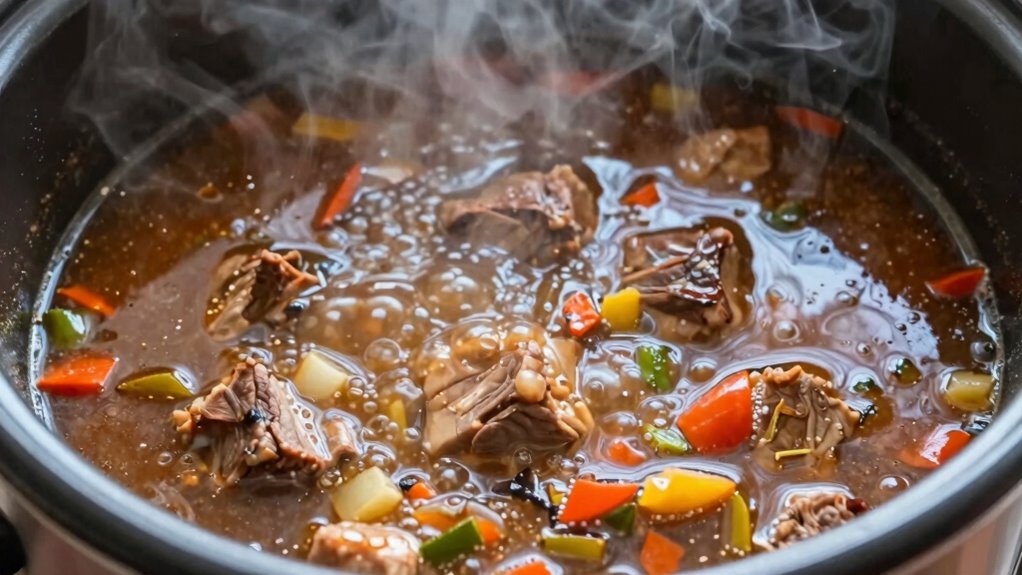
When your slow cooker dish turns out too watery, there are quick and effective ways to thicken it right away. One of the easiest thickening techniques is to stir in a slurry made from cornstarch or flour mixed with cold water; let it simmer for a few minutes until it thickens. You can also mash cooked beans or vegetables directly into the dish for natural thickening. Ingredient substitutions, like adding instant potato flakes or tomato paste, work well too. If you prefer a dairy option, stir in a bit of sour cream or heavy cream to add richness and viscosity. These methods are simple, fast, and help salvage a watery meal without starting from scratch.
How to Use Liquids and Broths So Your Meal Isn’t Watery
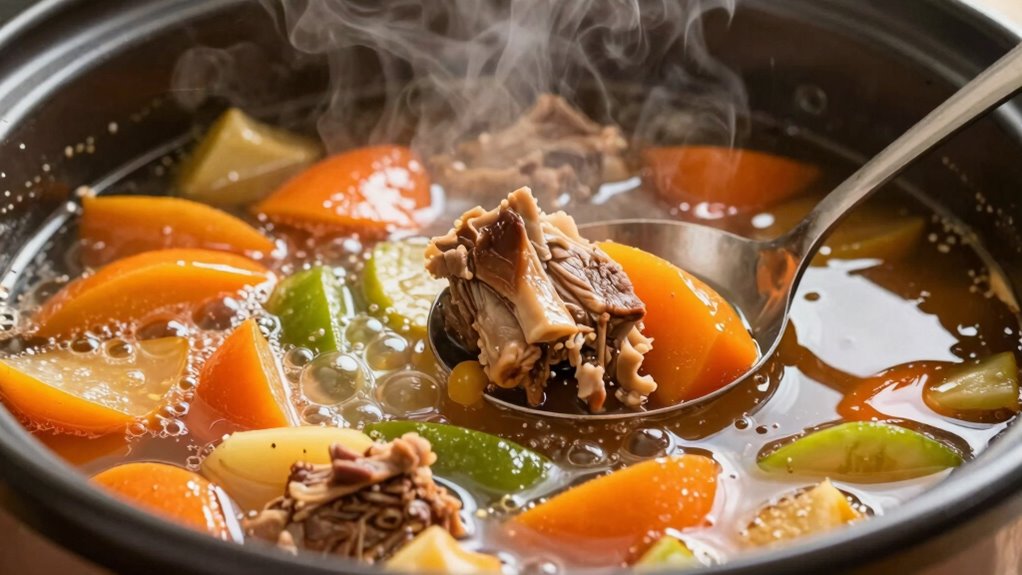
To prevent your meal from becoming too watery, it’s important to use liquids and broths thoughtfully. Start by considering the right liquid ratios; too much liquid will dilute flavors and create a soupy texture. Choose broth options carefully—opt for low-sodium or richer broths depending on your dish’s flavor. Here are some tips:
- Use less broth initially, and add more only if needed during cooking.
- Opt for thicker broth choices like mushroom or beef broth for more depth.
- Adjust the liquid amount based on the ingredients—starchy vegetables or beans absorb liquids and require less added broth.
Simple Adjustments to Prevent Watery Results in Your Recipes
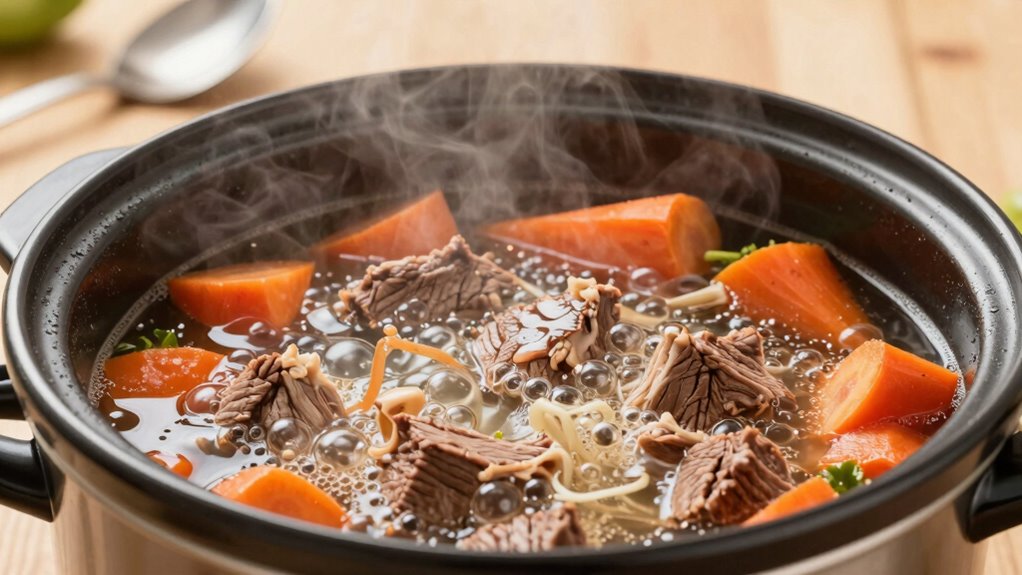
You can prevent your slow cooker meals from turning watery by adjusting the cooking time—sometimes a shorter period helps the liquids stay in check. Using thickeners like cornstarch or flour at the right moment can also make a big difference. Keep these simple tweaks in mind to achieve a thicker, more satisfying dish. Additionally, understanding smart cooking techniques can help optimize your results and avoid excess liquid. For example, selecting the appropriate cooking settings can help control moisture levels and improve dish consistency.
Adjust Cooking Time
Adjusting the cooking time can make a significant difference in preventing watery results in your slow cooker meals. If you cook too long, ingredients release excess moisture, making the dish watery. To fix this, consider these simple adjustments:
- Reduce cooking time slightly to prevent overcooking, which can cause ingredients to break down and release more liquid.
- Optimize ingredient pairing by combining ingredients with similar moisture levels, reducing excess liquid.
- Use proper storage techniques for ingredients prior to cooking, such as draining excess liquids from canned vegetables or marinating meats to control moisture.
Use Thickeners Properly
Using thickeners properly is key to preventing watery slow cooker meals. To achieve the right consistency, consider adding potato starch or a cornstarch slurry toward the end of cooking. A cornstarch slurry, made by mixing equal parts cornstarch and cold water, thickens sauces quickly without altering flavor. Be sure to stir it well and add gradually, allowing the mixture to cook a few more minutes until it thickens. Potato starch is another effective option, providing a glossy, smooth finish. Avoid adding thickeners too early, as prolonged cooking can break them down and cause thinning. Incorporate these thickeners carefully and in small amounts, tasting as you go, to ensure your dish reaches the perfect, non-watery consistency. Proper thickening techniques help maintain the desired texture and prevent dishes from becoming too watery.
How Cooking Time and Temperature Help Achieve a Thick, Flavorful Dish
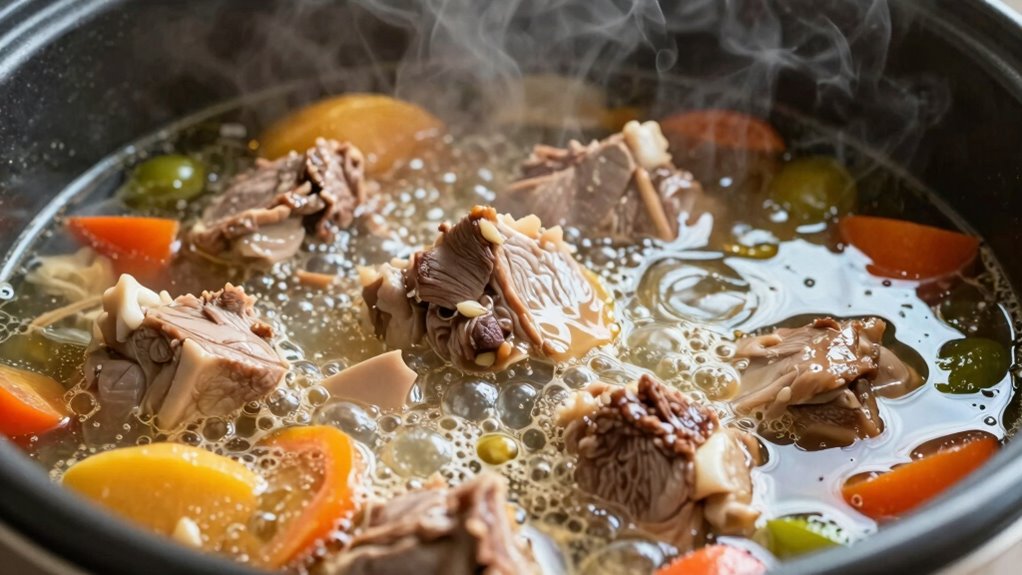
Cooking time and temperature play crucial roles in transforming watery slow cooker meals into thick, flavorful dishes. When you set the right cooking duration, you allow ingredients to break down and release their natural juices, enhancing flavor and consistency. Proper temperature control ensures the liquid reduces naturally, thickening the dish over time. To maximize flavor, focus on effective ingredient pairing and seasoning techniques.
Consider these tips:
- Use longer cooking times for tougher ingredients like beef or root vegetables to help them release starches that thicken the sauce.
- Set the temperature to low for a slow, gentle cook that promotes natural reduction without over-dilution.
- Incorporate ingredients like beans or pureed vegetables early to contribute to natural thickening and deepen flavors.
Final Tips for Serving Rich, Thick Slow Cooker Meals

To serve rich, thick slow cooker meals, focus on finishing touches that enhance texture and flavor. Ingredient substitutions can be key—swap out watery vegetables for root vegetables or beans to add body. Using a cornstarch or flour slurry can help thicken the dish just before serving. Consider reducing excess liquid through rapid simmering or removing the lid to evaporate moisture. Meal planning also plays a role; preparing ingredients in advance ensures you don’t overfill the slow cooker, which can cause dilution. Additionally, adding a splash of dairy like cream or a dollop of sour cream just before serving can enrich the sauce. These small adjustments help you serve a meal that’s flavorful, hearty, and satisfying, even after the cooking process introduces extra moisture.
Frequently Asked Questions
Can Adding Thickening Agents Ruin the Flavor of My Slow Cooker Meal?
Adding thickening agents can cause flavor compromise if you’re not careful, but it doesn’t have to ruin your meal. You should add them gradually and taste as you go to avoid overwhelming the dish. While they might alter the texture slightly, using the right amount can enhance your meal without significant texture alteration. Just remember, moderation is key to maintain the balance of flavors and consistency.
How Do Different Types of Meats Affect the Liquid Content?
Different meat cuts impact your slow cooker’s liquid content considerably. Lean cuts like chicken breasts or sirloin release less moisture, making dishes less watery. In contrast, fattier cuts like pork shoulder or beef chuck hold more juices, which can enrich the dish but also increase liquid levels. To balance this, choose cuts based on your desired consistency, and consider adjusting cooking times or adding thickeners if needed.
Is It Better to Open the Lid During Cooking to Reduce Excess Liquid?
You shouldn’t open the lid during cooking, as it interrupts evaporation control and causes temperature fluctuations. Removing the lid allows steam to escape, which can reduce excess liquid. However, doing so frequently can extend cooking time and affect dish consistency. Instead, if your meal is too watery, try removing the lid briefly near the end to help some moisture evaporate, but avoid opening it constantly for best results.
What Are the Best Vegetables to Prevent Watering Down the Dish?
Think of vegetable selection as choosing the right brush for a painting. For slow cooker meals, opt for sturdy vegetables like carrots, potatoes, and bell peppers—they hold their shape and release less water. Use proper cooking techniques, like chopping vegetables into uniform pieces and adding delicate greens later, to prevent watering down. These tips keep your dish flavorful and thick, just like a well-crafted masterpiece.
Can I Use Store-Bought Broths or Stocks to Control Wateriness?
Yes, you can use store-bought broths to control wateriness in your slow cooker meals. When adding store-bought broths or stocks, opt for low-sodium varieties and measure carefully to avoid adding too much liquid. This helps you control the overall moisture and prevents your dish from becoming watery. Be sure to adjust the amount based on your recipe, and consider reducing other liquids to maintain the right consistency.
Conclusion
To keep your slow cooker creations beautifully balanced, a gentle touch with adjustments can work wonders. By paying attention to liquids, cooking time, and thickening techniques, you gently steer your dish towards perfection. Remember, a little patience and tweaking can transform a watery surprise into a rich, hearty meal everyone will enjoy. Embrace these tips, and your slow cooker will consistently serve up comforting, flavorful results that truly shine.
NFL season / tailgating Picks
team gear
As an affiliate, we earn on qualifying purchases.