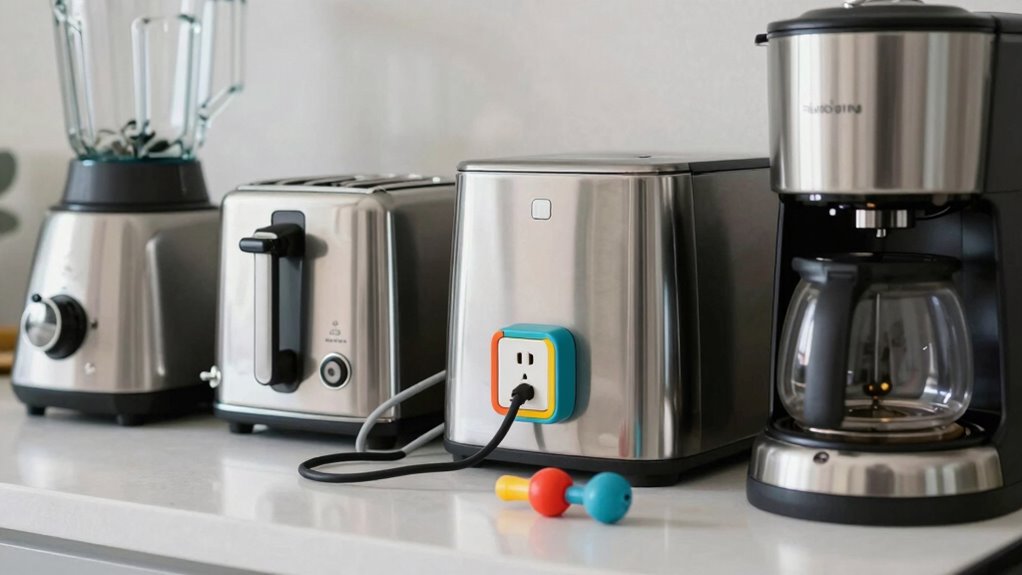
Childproofing countertop appliances involves more than just unplugging them. Kids are naturally curious and may pull cords, touch hot surfaces, or open appliance doors, risking burns, shocks, or falls. To improve safety, use outlet covers, cord shorteners, and child locks, and organize your space to keep hazards out of reach. Regularly check for damage and teach your children about appliance dangers. Continue exploring to discover essential tips to create a safer kitchen environment.
Key Takeaways
- Regularly inspect appliances and cords for damage, and keep them out of children’s reach to prevent tampering and injuries.
- Use childproof locks, outlet covers, and cord shorteners to minimize access and reduce electrical hazards.
- Organize and secure cords along appliance backs to prevent tripping and pulling by children.
- Educate children on safe appliance use and warning signs like hot surfaces or frayed cords.
- Maintain appliances properly and keep countertops clutter-free to reduce hidden hazards and accidental contact.
Why Are Countertop Appliances a Hidden Hazard for Kids?
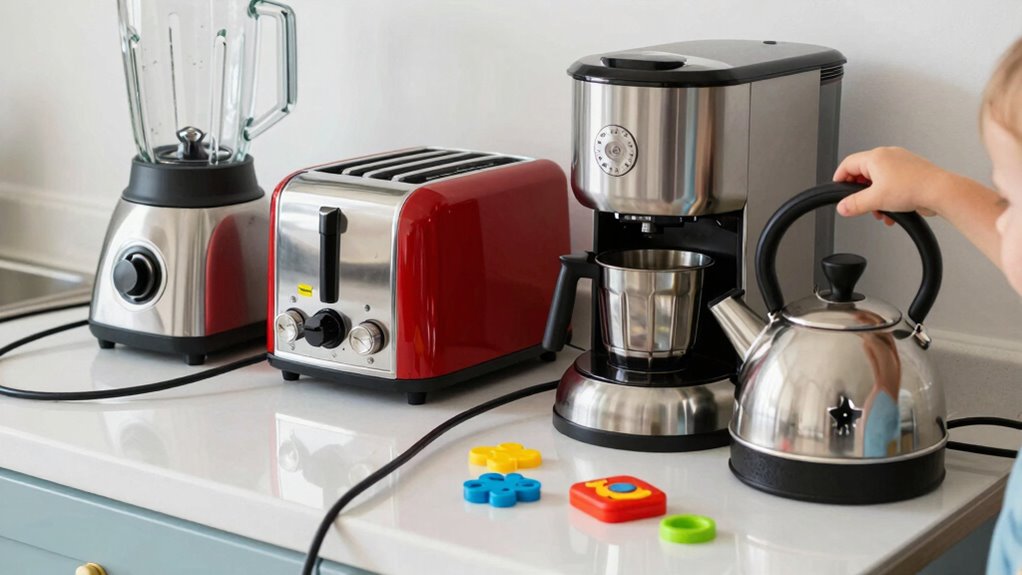
Countertop appliances pose a hidden hazard for kids because they are often within easy reach and look appealing to curious little hands. The appliance design sometimes features shiny surfaces, buttons, and cords that attract children’s attention, making them tempting to grab or explore. Many appliances don’t consider child awareness, overlooking how easily children can pull them down or tamper with controls. Their lightweight build and simple operation make them accessible and dangerous if mishandled. Because of this, children might accidentally turn on appliances, get burned, or pull objects onto themselves. Recognizing how appliance design appeals to kids and understanding their curiosity helps you see the hidden risks. Proper childproofing measures are essential to keep young children safe from these unseen dangers lurking on your countertops. Child safety considerations are crucial because they help you create a safer environment and prevent accidents before they happen. Additionally, understanding appliance safety features can help you choose safer devices and implement effective safety measures. Implementing childproofing techniques can significantly reduce the risk of accidents and ensure a safer home environment for your little ones. Being aware of potential hazards associated with appliances enables you to take proactive steps to protect your children effectively.
Which Kitchen Appliances Are Most Dangerous for Children?

Some kitchen appliances pose a greater risk to children because of their size, function, and accessibility. These hazards can be minimized with proper appliance maintenance and a thoughtful kitchen layout. Regularly inspecting appliances for damage and ensuring safety features are in place can further reduce risks. Child safety measures, such as using outlet covers and appliance locks, are essential to prevent accidental activation or tampering. Additionally, understanding kitchen appliance hazards can help caregivers identify potential dangers before accidents occur. Recognizing the volatile nature of crypto markets can also inform safer decision-making when dealing with financial risks.
How Do Kids Interact With Appliances, and What Risks Are Involved?
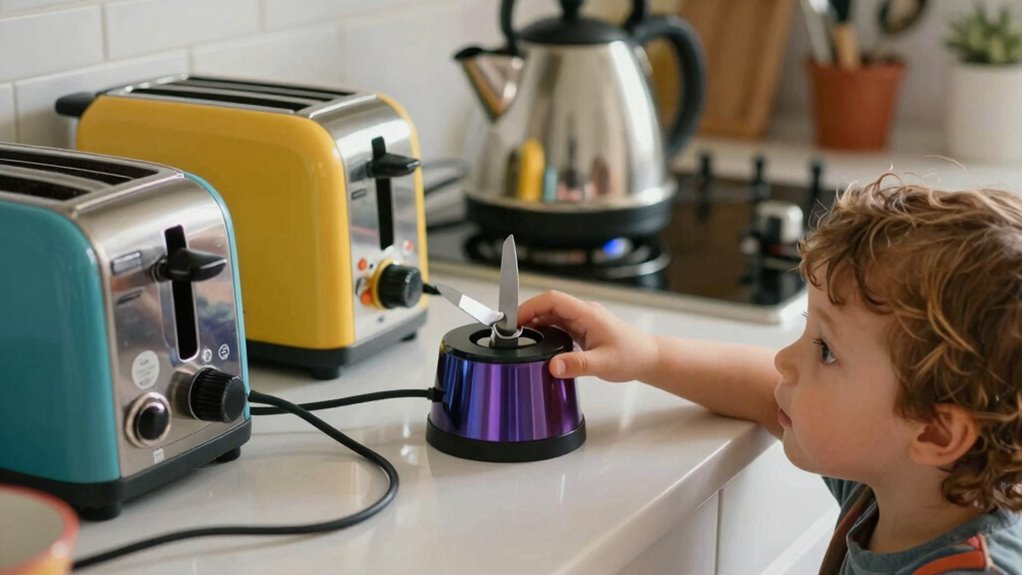
Kids are naturally curious and often reach out to explore appliances within their reach. They may touch hot surfaces or pull on cords, risking burns or injuries. Understanding these interactions helps you spot potential hazards and keep your little ones safe. Additionally, many common appliances have hidden dangers such as sharp edges or electrical components that are not immediately obvious but pose significant risks. For example, some appliances contain electric components that can cause shocks if tampered with. Awareness of regulatory standards helps ensure appliance safety, though some hazards may still go unnoticed by consumers. Recognizing how childproofing techniques can minimize these risks and prevent accidents is essential, especially since Gold IRA markets continually evolve to prioritize security and compliance, paralleling the importance of safety in your home environment.
Curious Hands Reach Out
Children are naturally curious about their surroundings, and appliances on the countertop often catch their attention. They reach out with enthusiastic fingers, drawn to the buttons, knobs, and shiny surfaces. Their curiosity can lead to unintended accidents. Imagine their tiny hands grabbing a hot coffee mug, tugging at an appliance cord, or trying to open a toaster. Visualize:
- Smudged fingerprints on stainless steel, stubborn stains that mar the appliance aesthetics.
- Climbing onto counters, risking falls or knocking over items.
- Tugging on cords, pulling appliances down or exposing electrical hazards.
- Touching buttons or switches, activating appliances unexpectedly.
- Proper maintenance of appliances ensures they operate safely and reduces potential hazards caused by malfunction or wear. Additionally, childproofing techniques can help create a safer environment by minimizing access to dangerous components.
These actions highlight why childproofing is essential, preventing curiosity from turning into danger. Protect your appliances and your little explorer from these hidden hazards.
Hot Surfaces Danger
Since hot surfaces on appliances can cause serious burns, it’s crucial to understand how children interact with them. Kids are naturally curious and may touch a hot stove, toaster, or oven without realizing the danger. Hot surface awareness is often lacking, despite appliance safety labels warning of the risk. Your job is to stay vigilant and keep these hazards out of reach. Additionally, nanotechnology advancements are contributing to the development of safer, more heat-resistant materials for household appliances, which can help reduce accidental burns. Incorporating heat-resistant materials into appliance design can provide an extra layer of safety for children. Moreover, implementing smart safety features such as automatic shut-off and child locks can further minimize risks associated with hot surfaces. Research into sound healing science also highlights how sound vibrations can influence awareness and relaxation, which could inspire new safety alerts for appliances. Innovative safety technologies are emerging that can actively detect and respond to children’s presence near hot surfaces, further enhancing household safety.
Cord Tugs and Pulls
Because cords and pulls are often within reach, children may tug or yank on appliance cords out of curiosity or by accident, risking injury or appliance damage. This behavior, known as cord tugging or appliance pulling, can lead to dangerous falls or electrical hazards. Imagine a child:
- Grabbing a dangling cord and pulling fiercely.
- Yanking the appliance toward them unexpectedly.
- Tripping over the loose cord and falling.
- Accidentally unplugging or toppling a heavy device.
These actions increase the risk of burns, cuts, or electrical shocks from exposed wiring. To prevent this, secure cords out of reach, use cord shorteners, or install outlet covers. Keep in mind, children’s natural curiosity makes cord tugging a common, yet preventable, hazard. Understanding appliance safety and proper cord management can greatly reduce these risks. Additionally, using childproof outlets can prevent accidental unplugging and related dangers.
How to Childproof Your Blenders, Toasters, and Coffee Makers
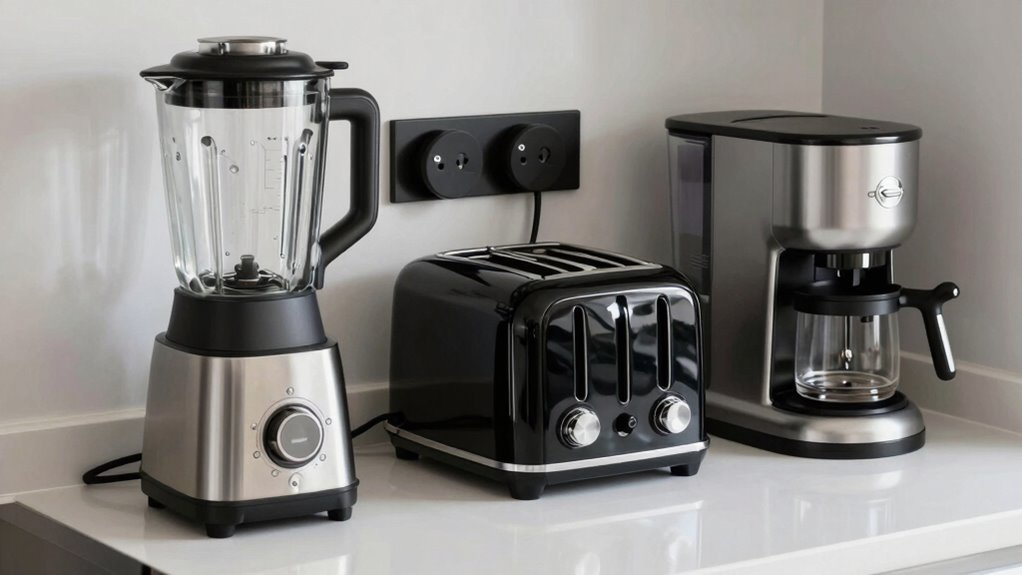
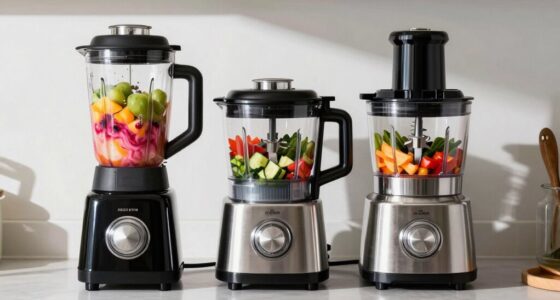
To keep your kids safe around blenders, toasters, and coffee makers, start by securing the appliance cords so children can’t pull or trip over them. Using safety locks on these devices can prevent accidental operation or tampering. Taking these simple steps makes your kitchen a safer space for your little ones.
Secure Appliance Cords
Childproofing your countertop appliances starts with securing their cords to prevent accidental pulls and strangulation hazards. Proper cord management is essential for appliance safety and keeps cords out of children’s reach. To guarantee safety, consider these steps:
- Use cord clips or ties to bundle excess length, preventing tangling and tripping.
- Attach cords along the back of appliances, keeping them flat and out of sight.
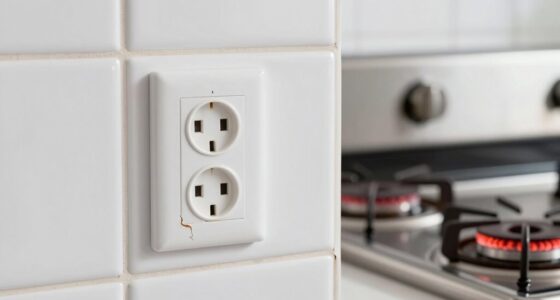
- Install outlet covers to block access to plug sockets.
- Avoid dangling cords that children can pull or grab.
Use Safety Locks
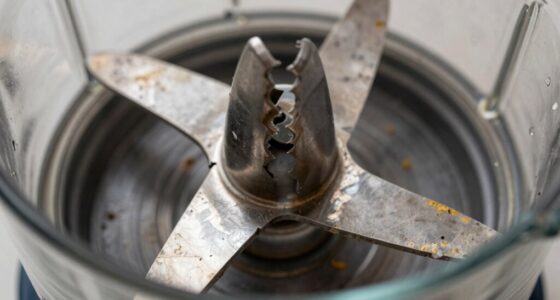
Installing safety locks on your countertop appliances is a simple yet effective way to prevent children from accidentally turning them on or opening compartments. Safety locks act as a reliable childproof mechanism, adding an extra layer of protection. Choose locks designed specifically for appliances like blenders, toasters, and coffee makers, ensuring they’re sturdy and tamper-proof. These locks prevent curious little hands from accessing sharp blades, hot surfaces, or electrical components. When installed properly, safety locks give you peace of mind, knowing your appliances won’t be accidentally activated or opened. Regularly check that the safety locks remain secure and functional. Using these childproof mechanisms is a straightforward step that considerably reduces potential hazards, keeping your little ones safe around your kitchen appliances.
What Safety Devices Can Prevent Appliance Accidents?
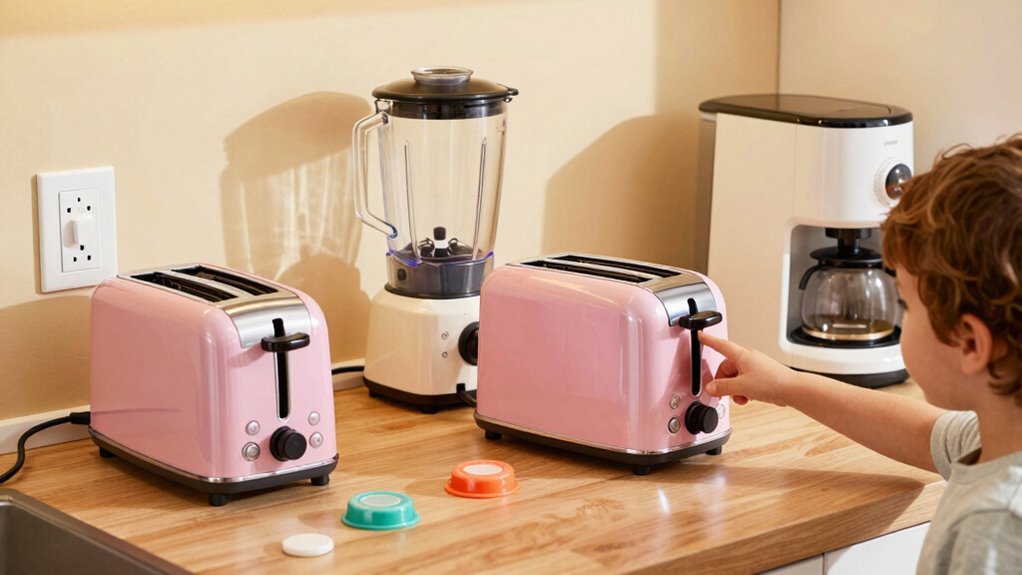
What safety devices can help prevent accidents with countertop appliances? Childproofing tips include using safety device options that make appliances less accessible to children. Here are four effective safety devices:
- Outlet covers – prevent children from inserting objects or sticking fingers into electrical outlets.
- Appliance cord shorteners – keep cords out of reach to avoid pulling or entangling hazards.
- Safety switches or covers – lock down buttons or switches so kids can’t turn appliances on.
- Childproof knobs or dials – prevent accidental adjustments or activation by little hands.
These safety device options help create a safer environment by reducing risks associated with countertop appliances. Incorporate childproofing tips like these to keep your home secure and prevent potential accidents.
How to Organize and Maintain Your Appliances for Safety
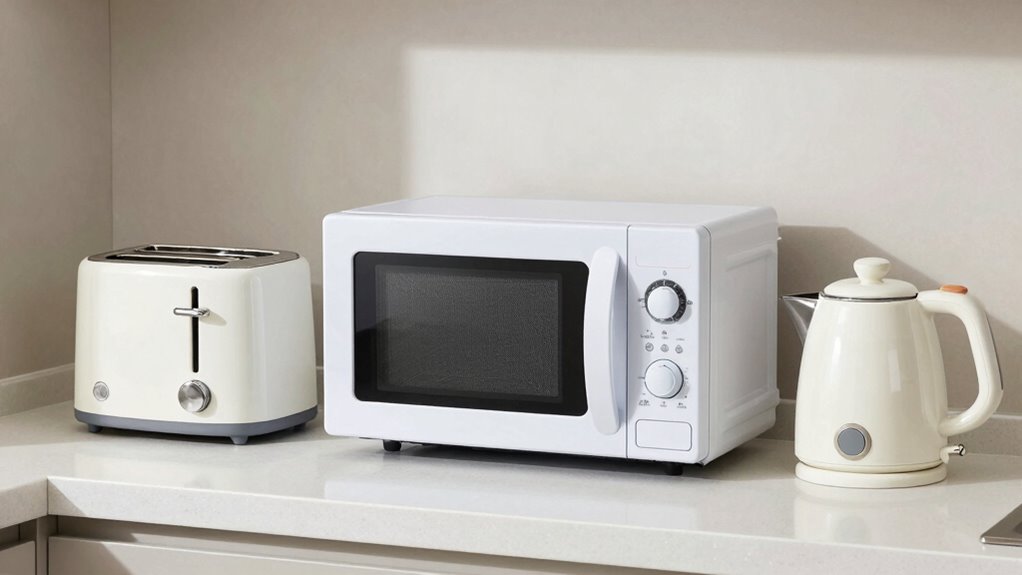
Keeping your countertop appliances organized and well-maintained plays a vital role in ensuring a safe home environment. Start by using clear appliance labeling to identify each device’s purpose and safety instructions. This helps prevent accidental misuse and keeps dangerous settings out of children’s reach. Implement effective storage solutions such as designated drawers, shelves, or containers to keep appliances out of sight when not in use. Regularly inspect cords and plugs for damage, and clean appliances to prevent buildup that could cause malfunctions or hazards. Keeping cords tucked away reduces tripping risks and prevents children from pulling appliances down. Staying organized and attentive to maintenance not only prolongs the life of your appliances but also creates a safer, clutter-free kitchen space, reducing potential hazards for everyone.
Teaching Kids About Kitchen Safety and Appliance Risks

Teaching kids about kitchen safety and appliance risks is essential to prevent accidents and promote independence. When you talk to them about kitchen hygiene and proper appliance maintenance, you’re helping them understand hazards they might not see. Use simple examples to illustrate dangers, like hot surfaces or sharp blades. For instance, you can:
- Show how to handle appliances safely, like unplugging before cleaning.
- Explain why keeping countertops clean prevents slips and falls.
- Teach them to recognize warning signs, such as overheating or frayed cords.
- Demonstrate the importance of not playing with buttons or switches.
Regular Checks to Keep Your Kitchen Child-Safe
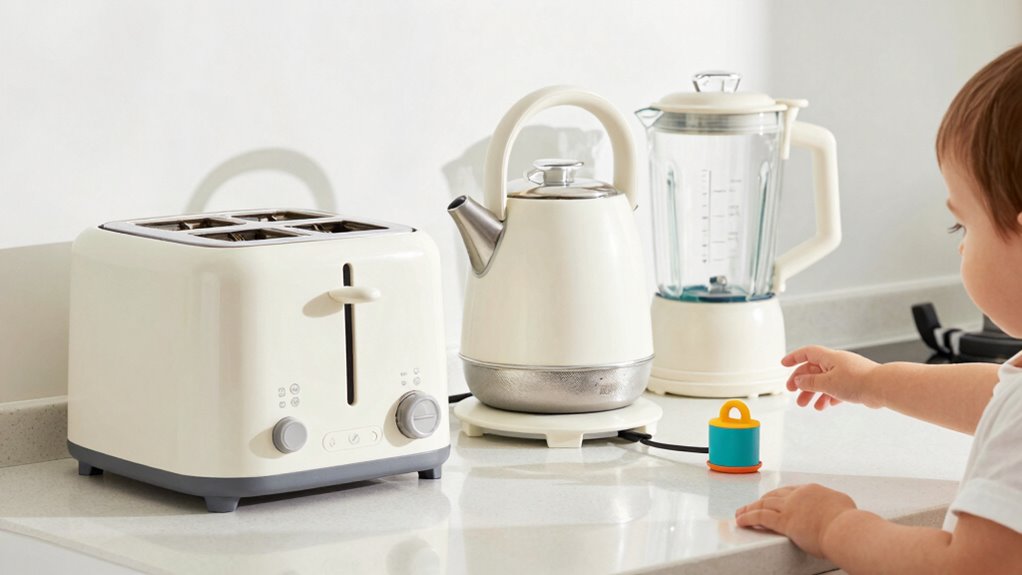
Regularly inspecting your kitchen appliances and surroundings helps guarantee your child remains safe as they learn to navigate the space. Consistent appliance maintenance ensures that cords, switches, and surfaces stay in good condition, reducing potential hazards. Make daily inspections part of your routine—check for loose parts, frayed cords, or unexpected damage. This vigilance helps you spot issues early before they become risky. Keep appliances clean and free of clutter to prevent accidental tip-overs or spills. By staying proactive, you create a safer environment where your child can explore and learn without unnecessary dangers. Regular checks also give you peace of mind, knowing that you’re actively maintaining a secure kitchen space. Staying attentive to small details makes a big difference in childproofing your countertop appliances effectively.
Frequently Asked Questions
Are There Specific Childproofing Products Recommended for Countertop Appliances?
Yes, you should use appliance covers and safety straps for countertop appliances. Appliance covers prevent curious little hands from accessing hot or dangerous parts, while safety straps secure appliances to the counter, preventing tipping or accidental pulls. These products are easy to install and provide an extra layer of protection, giving you peace of mind knowing your child is safer around the appliances they might try to explore.
How Can Parents Effectively Teach Toddlers About Appliance Dangers?
You can effectively teach toddlers about appliance dangers through consistent safety education and vigilant supervision. Use simple, clear language to explain hazards, demonstrate safe behaviors, and set boundaries. Engage them with interactive lessons, like role-playing or picture books, and reinforce lessons daily. Remember, toddler supervision is key; always stay close. By blending safety education with attentive supervision, you help your child understand risks and develop healthy safety habits early on.
What Are the Legal Safety Standards for Small Kitchen Appliances?
You should check that your small kitchen appliances meet safety certification standards like UL or ETL, ensuring they comply with established safety guidelines. Stay informed about appliance recalls, which highlight potential hazards, and avoid products that have been recalled. These measures help protect your family from hidden dangers, and always follow manufacturer instructions for safe use. Being proactive with safety standards reduces risks and keeps your home safer for everyone.
How Often Should Childproofing Measures Be Inspected or Replaced?
You should inspect and replace childproofing measures every few months, aligning with your maintenance schedule. Regularly check for wear, tear, or looseness, and replace safety covers or locks before they become ineffective. Keep in mind the product lifespan—if an item shows signs of damage or has been in use for several years, it’s time to update your childproofing to ensure continuous safety. Consistent maintenance keeps your home secure for your little explorer.
Are There Eco-Friendly or Non-Toxic Childproofing Options Available?
Yes, there are eco-friendly products and non-toxic solutions available for childproofing your home. You can choose items made from natural materials like silicone or organic fabrics, which are safe for kids and the environment. Look for certifications that verify non-toxicity, such as GREENGUARD. These options help keep your children safe while reducing chemical exposure, giving you peace of mind knowing you’re using environmentally responsible childproofing solutions.
Conclusion
By staying vigilant and proactive, you turn your kitchen from a hidden hazard into a safe haven. Childproofing appliances isn’t just about locks and covers; it’s about creating a rhythm of awareness that keeps accidents at bay. Remember, a cautious approach today guarantees your little one’s safety tomorrow. With every safety measure, you build a fortress of protection—because in the kitchen, safety isn’t just a goal; it’s your family’s peace of mind.