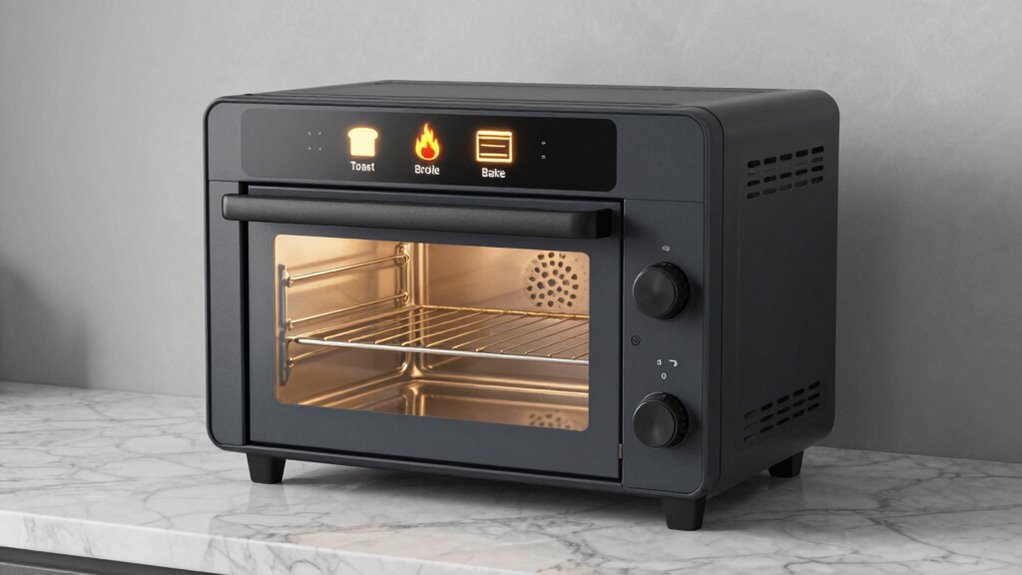
Bake, broil, and toast are common settings on your toaster oven, but they each do something different. Bake heats evenly from all sides, perfect for cooking casseroles or bread. Broil uses intense heat from above, ideal for melting cheese or finishing dishes. Toast applies specific heat to brown bread or bagels. Knowing when and how to use these settings guarantees the best results—keep going to discover more tips on mastering each one.
Key Takeaways
- Bake heats evenly from all sides, ideal for casseroles, bread, and cookies, requiring preheating for best results.
- Broil applies direct, intense heat from above, perfect for melting cheese or finishing dishes quickly.
- Toast uses specific heat settings and timers to brown bread or bagels, focusing on surface browning.
- Proper placement and monitoring are essential for broiling to prevent burning or uneven cooking.
- Understanding these differences helps prevent confusion and ensures optimal use of each setting.

GoodCook Everyday Set of 2 Nonstick Steel 9" x 6.2" Toaster Oven Mini Baking Sheets, Gray
SET OF 2 MINI BAKING SHEETS: Comes with 2 mini 9" x 6.2" baking sheets for your favorite…
As an affiliate, we earn on qualifying purchases.
As an affiliate, we earn on qualifying purchases.
What’s the Difference Between Bake, Broil, and Toast?
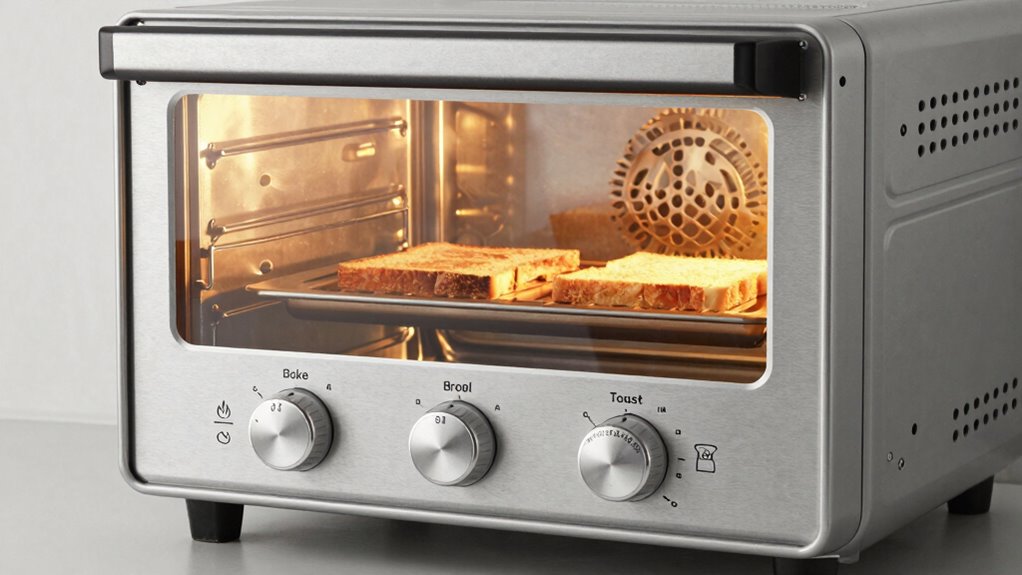
Although bake, broil, and toast all use heat to cook food, they operate differently within a toaster oven. Baking heats evenly from all sides, making it ideal for casseroles, cookies, and bread. To maintain oven safety, always keep the interior clean, removing crumbs and spills regularly. Cleaning tips include unplugging the appliance and wiping down surfaces with a damp cloth—never harsh chemicals. Broiling applies direct, intense heat from above, perfect for melting cheese or finishing dishes. When using this setting, ensure the oven is clear of flammable items to prevent accidents. Additionally, understanding the different heat distributions helps you operate your toaster oven safely and effectively, ensuring better results and easier cleaning after each use. Recognizing the proper maintenance practices can extend the lifespan of your appliance and keep it functioning smoothly. For instance, many toaster ovens use electric heating elements, which require periodic checking and replacement to maintain optimal performance. Regularly inspecting these elements can prevent performance issues and ensure your food is cooked evenly.

E-far Small Baking Rack Set of 2, Stainless Steel Metal Roasting Cooking Racks, Size – 8.6"x6.2", Non Toxic & Rust Free, Fit for Small Toaster Oven, Dishwasher Safe
HEALTHY MATERIAL – E-far Rectangle cooling racks are made of pure stainless steel to ensure no harmful substance…
As an affiliate, we earn on qualifying purchases.
As an affiliate, we earn on qualifying purchases.
How to Use Each Setting for Perfect Results
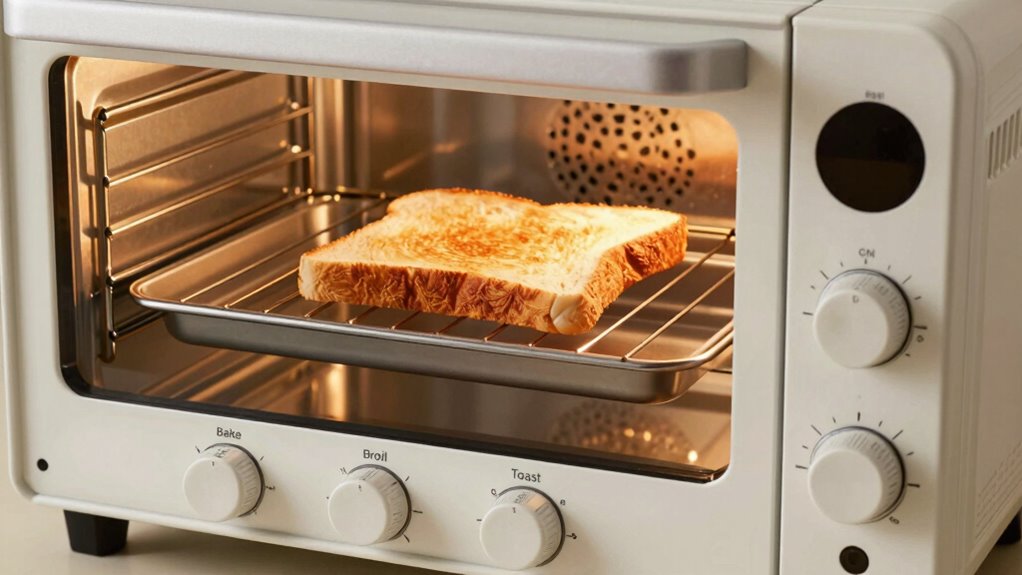
To achieve perfect results with your toaster oven, mastering how to use each setting correctly is vital. Always prioritize oven safety by ensuring your oven is clean and free of crumbs before use. For baking, set the temperature according to your recipe and preheat if needed; this guarantees even cooking. When broiling, position your food closer to the heating element, and keep a close eye to prevent burning. Toast settings are ideal for bread or bagels; use the timer to avoid over-toasting. Regularly clean your toaster oven, following cleaning tips like unplugging it first and wiping down crumbs and splatters, which maintains safety and performance. Proper use and maintenance help you achieve consistent, perfect results every time. Understanding oven settings can also help you adapt to different recipes and achieve better culinary outcomes. Additionally, knowing the safety precautions ensures your appliance remains reliable and your kitchen stays safe during operation.
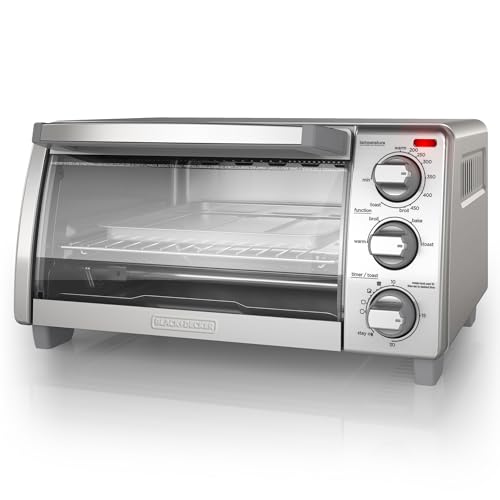
BLACK+DECKER 4-Slice Toaster Oven with Natural Convection, Stainless Steel, TO1760SS (TO1760SST-1)
4-in-1 VERSATILITY FOR EVERYDAY COOKING – Toast, bake, broil, and keep food warm with one compact countertop appliance….
As an affiliate, we earn on qualifying purchases.
As an affiliate, we earn on qualifying purchases.
Common Problems and How to Fix Them
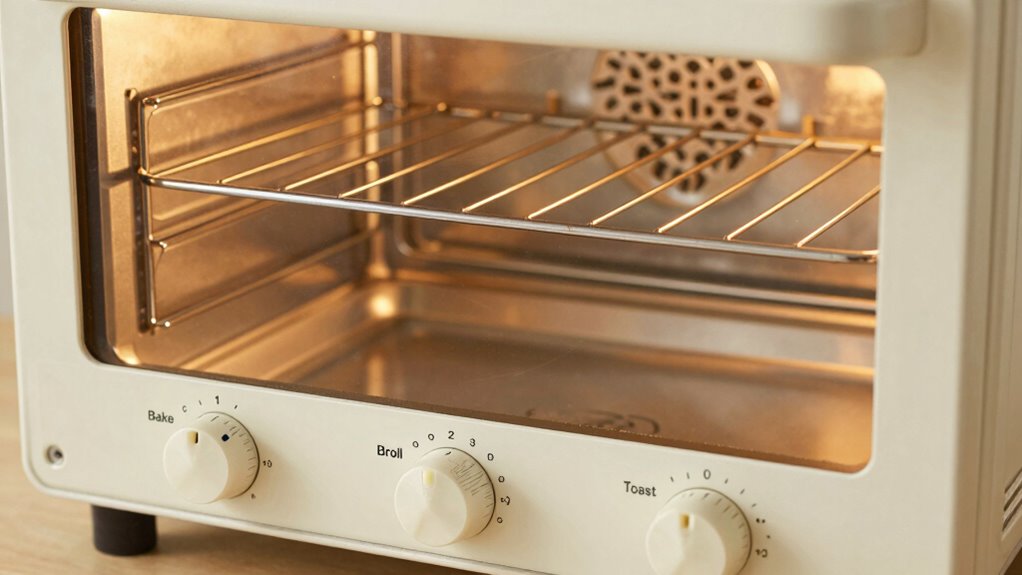
Even with proper technique, toaster ovens can sometimes present issues that disrupt your cooking. Common problems include uneven heating, temperature control glitches, or burnt toast. To fix uneven heat, ensure your oven is clean and free of crumbs; this improves heat distribution. If the temperature control isn’t accurate, calibrate your oven following the manufacturer’s instructions or replace faulty components. Regular cleaning tips include wiping down surfaces and removing grease build-up, which can affect heat transfer. You can also check the heating elements regularly for signs of damage or wear. Here’s a quick troubleshooting guide:
| Issue | Solution | Prevention |
|---|---|---|
| Uneven heating | Clean interior, check heating elements | Regular cleaning, proper placement |
| Temperature issues | Calibrate or replace thermostat | Use a thermometer for accuracy |
| Burnt toast | Adjust timer, lower temperature | Monitor closely, don’t overcook |
Performing routine maintenance with appliance care features, such as self-diagnostic tools, can also help identify issues early and keep your toaster oven functioning properly. Additionally, modern smart appliance features like remote diagnostics can assist in troubleshooting and maintenance. Maintaining your appliance with routine checks minimizes these common problems.

BLACK+DECKER Crisp 'N Bake Air Fry Countertop Convection Toaster Oven, Medium Capacity, 4-Slice, 5-in-1, Fits 9” Pizza, 30-Min Timer, Bake, Broil, Air Fry, Toast, Keep Warm, Stainless Steel
5-IN–1 MULTIFUNCTIONAL COOKING- Enjoy versatile cooking with Air Fry, Bake, Broil, Toast, and Keep Warm settings. Perfect for…
As an affiliate, we earn on qualifying purchases.
As an affiliate, we earn on qualifying purchases.
Frequently Asked Questions
Can I Use the Same Setting for All Types of Bread?
You can’t use the same setting for all bread types because different breads require different baking techniques. For example, thicker or denser breads like bagels or artisanal loaves need a higher temperature and longer time, while thinner slices like white bread toast quickly at a lower setting. Adjust your toaster oven‘s bake, broil, or toast settings based on the bread’s thickness and texture to achieve the best results.
How Do I Adjust Timing for Different Food Thicknesses?
You should adjust the timing based on food thickness, as thicker items need more cooking time. To do this, add a few extra minutes for thicker foods and reduce the time slightly for thinner ones. Keep an eye on your food and check frequently to prevent overcooking. Remember, small timing adjustments make a big difference in ensuring your food is cooked evenly and thoroughly.
Is It Safe to Leave the Toaster Oven Unattended?
Yes, it’s generally safe to leave your toaster oven unattended if you follow proper safety precautions. Always stay nearby when it’s in use, avoid leaving it on for extended periods, and guarantee there are no flammable materials nearby. Make sure the toaster oven is clean and functioning properly before leaving it unattended. Never ignore signs of malfunction, and always unplug it after use to reduce risks during unattended operation.
What’s the Best Setting for Reheating Leftovers?
For reheating leftovers, your best bet is to use the ‘bake’ setting on your toaster oven, which provides gentle, even heat similar to a microwave but with better toaster oven safety. Avoid the ‘broil’ or ‘toast’ functions, as they can overheat and cause accidents. While microwaves are quick, a toaster oven preserves food texture and avoids safety issues associated with open flames or high heat.
How Do I Prevent Uneven Cooking Across the Tray?
To prevent uneven cooking, make certain good air circulation inside your toaster oven by not overcrowding the tray. Position your tray in the center to promote even heat distribution. You can also rotate the tray halfway through cooking to help different areas cook uniformly. Keeping these tips in mind ensures your food cooks evenly, whether you’re baking, broiling, or toasting.
Conclusion
Understanding the differences between bake, broil, and toast transforms your toaster oven from a confusing gadget into a versatile tool. While each setting offers unique benefits, mastering their nuances guarantees perfect results every time. It’s a dance of heat and technique—unlike the simplicity of just pressing a button, it requires attention and finesse. Embrace the challenge, and you’ll find that what once confounded you now elevates your culinary skills, one setting at a time.