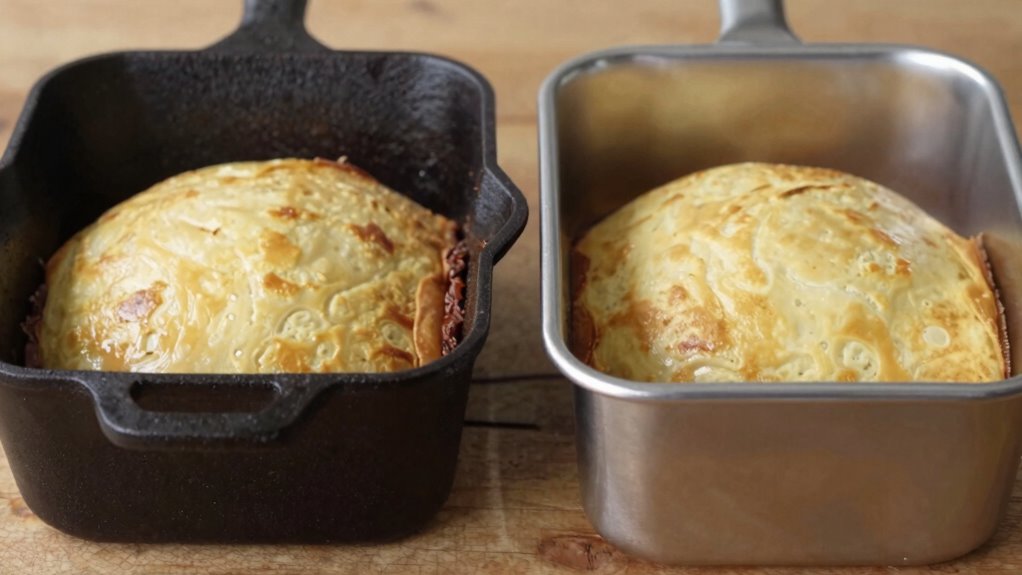

Choosing a metal pan, especially aluminum, can greatly improve browning without altering your recipe. Aluminum conducts heat efficiently, promoting even heat distribution and a crispy crust. Opt for a heavy-duty, thick pan with a smooth surface for best results. Preheating the pan before pouring in batter helps even more. The right pan makes a noticeable difference in crust development, so continue to explore how pan selection can elevate your baking outcomes.

Get kitchen staples and gadgets delivered free with Prime
- Fast, free delivery on millions of items
- Prime Video, Amazon Music and more included
- Member-only deals all year
Key Takeaways
- Use a metal pan, like aluminum, for superior heat conduction and even browning.
- Preheat the pan thoroughly before pouring batter to promote consistent crust development.
- Choose a shallow, wide pan to enable even heat distribution and prevent uneven browning.
- Opt for a pan with dense, thick construction to enhance heat transfer and reduce hot spots.
- Ensure the pan surface is smooth to facilitate uniform heat transfer and consistent crust color.
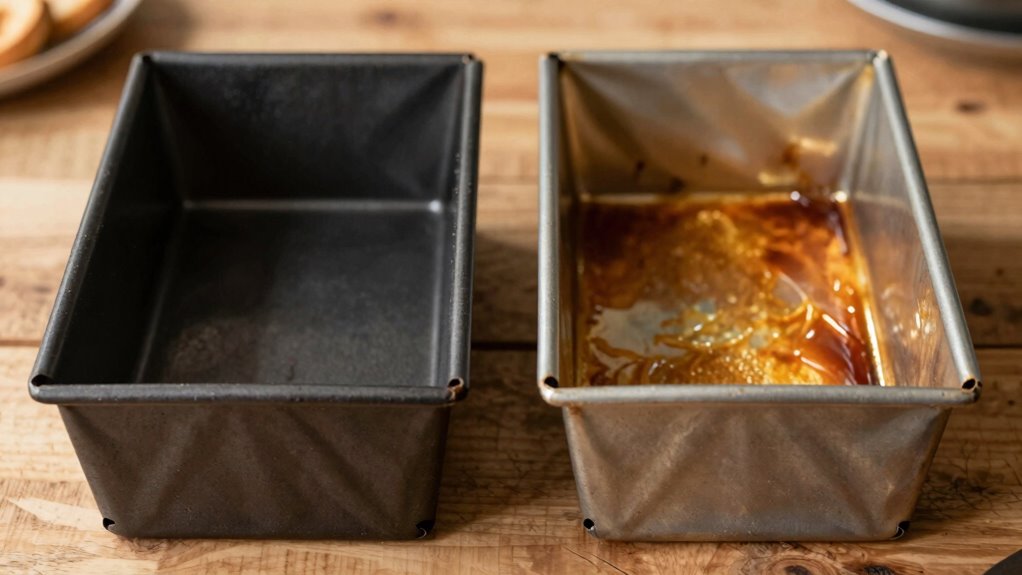
Choosing the right baking pan can make all the difference when it comes to achieving a perfectly browned crust. The right pan influences how heat interacts with your batter, especially affecting the cake crust and overall appearance. If you’re aiming for an even, golden-brown finish without altering your recipe, understanding how your pan’s material and design impact heat distribution is essential.
Choosing the right baking pan ensures even heat and a perfect, golden crust every time.
When selecting a baking pan, pay attention to its material. Metal pans, particularly aluminum, tend to conduct heat more efficiently than glass or ceramic options. This superior heat conduction promotes uniform heat distribution across the cake, helping to develop an even crust. On the other hand, glass pans absorb and radiate heat differently, often leading to uneven browning or over-baked edges. If your goal is a consistently browned cake crust, metal pans are typically the better choice.
The thickness of the pan also plays a critical role. Thicker pans tend to distribute heat more evenly, reducing hot spots that can cause uneven browning. Thinner pans, while quicker to heat up, may create areas of intense heat that scorch parts of your cake or produce inconsistent crusts. To achieve optimal heat distribution, opt for a sturdy, heavy-duty pan that maintains its shape and conducts heat smoothly throughout the baking process. Proper heat conduction can be enhanced by selecting pans with a solid, dense construction. Additionally, choosing pans with a uniform thickness ensures consistent heat transfer across the entire surface. Using a quality non-stick coating can also facilitate more even browning by preventing uneven sticking or hot spots. It’s also helpful to consider the pan’s texture, as a smooth surface typically promotes more even heat transfer than a rough or textured one.
Shape and size matter too. A deeper pan might trap more heat, leading to darker edges or a crust that’s too thick. Conversely, a wider, shallower pan spreads the heat more evenly across the surface, promoting uniform browning. It’s also important to match the pan size to your recipe to avoid overfilling or underfilling, which can affect heat flow and crust development.
Preheating the pan before pouring in your batter can significantly impact the cake crust. A preheated pan begins to transfer heat immediately, encouraging rapid crust formation and even browning from the start. This technique works well with metal pans that conduct heat efficiently, ensuring the heat is evenly distributed from the moment baking begins. Additionally, understanding the heat conduction properties of your pan material can help you make better choices for achieving the perfect crust. Proper preheating helps minimize hot spots and promotes more consistent results throughout your baked goods.
As an affiliate, we earn on qualifying purchases.
Frequently Asked Questions
Does Pan Material Affect Browning More Than Size?
Yes, pan material affects browning more than size. Thicker pans with better heat conduction distribute heat evenly, promoting even browning. If you use a thin or poorly conductive pan, uneven heat causes inconsistent browning, regardless of size. So, focus on pan material and thickness; they play a more significant role in browning than just the pan size. Proper material and thickness guarantee your baked goods brown beautifully every time.
Can I Use Glass Pans for Better Browning?
Yes, you can use glass pans for better browning, but keep safety and durability in mind. Glass pans distribute heat evenly, enhancing browning, but make certain they’re oven-safe to avoid accidents. Glass is durable if handled carefully, though it may break with sudden temperature changes. Always follow manufacturer guidelines for oven safety, and preheat the oven properly. Using glass can give you beautifully browned baked goods without altering your recipe.
How Does Pan Color Influence Baking Results?
Think of your pan as a silent artist shaping your baked masterpiece. Dark-colored pans, with their bold color contrast, absorb heat fiercely, leading to quicker browning and crispier edges. Meanwhile, lighter pans reflect heat, resulting in softer, more evenly baked goods. Your choice influences heat transfer, like a painter selecting brushes—dark pans accelerate browning, while lighter ones create gentle, delicate finishes. Select wisely to master your baking symphony.
Is Non-Stick Coating Good or Bad for Browning?
Non-stick coating can be good for easy release, but it has disadvantages for browning since it prevents direct contact with heat, leading to less caramelization. Plus, non-stick pans often have reduced durability, meaning they can scratch or degrade over time, affecting performance. If browning is your goal, consider using uncoated pans, such as metal or ceramic, which promote better heat transfer and give you more consistent browning results.
Should I Adjust Oven Temperature When Changing Pans?
Yes, you should adjust the oven temperature when changing pans for better browning. Different pans conduct heat differently, so monitor oven safety and avoid overheating. Use a baking rack to guarantee even heat distribution and prevent uneven browning. Keep an eye on your baked goods, and don’t be afraid to tweak the temperature slightly to achieve the perfect golden-brown crust without risking overcooking or damaging your pan.
As an affiliate, we earn on qualifying purchases.
Conclusion
Choosing the right baking pan can truly transform your baked goods’ browning without tweaking the recipe. Remember, “You are what you bake,” so selecting the proper pan isn’t just about appearance—it’s about achieving perfect texture and flavor every time. When you pick wisely, you let your ingredients shine. So, trust your instincts, experiment, and enjoy the delicious results. After all, the proof is in the pudding—and the perfect pan makes all the difference.
As an affiliate, we earn on qualifying purchases.
As an affiliate, we earn on qualifying purchases.
NFL season / tailgating Picks
team gear
As an affiliate, we earn on qualifying purchases.