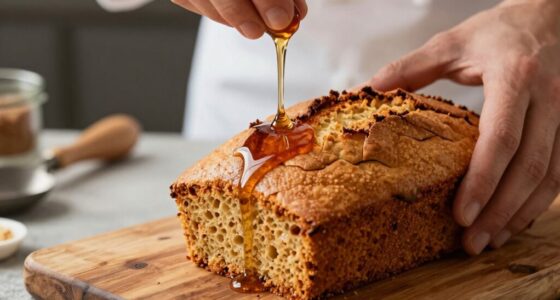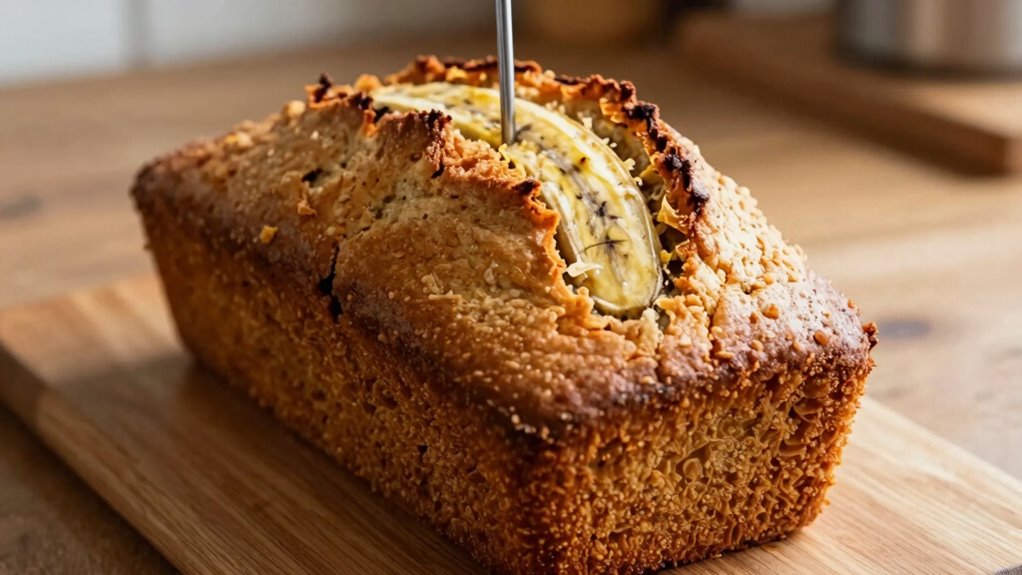
To know when banana bread is done without guessing, look for a golden-brown crust that pulls away from the pan edges and feels firm but not hard. Gently press the top—you want it slightly springy, not sticky or soft. Use a toothpick or cake tester—if it comes out clean or with few moist crumbs, it’s ready. For extra certainty, check that the internal temperature reaches about 200°F (93°C). Keep these tips handy, and you’ll master perfect timing every time.
Key Takeaways
- Insert a toothpick or cake tester into the center; it should come out clean or with few moist crumbs.
- Check for a golden-brown crust that is firm but not burnt, with edges slightly pulled away from the pan.
- Gently press the top; it should feel slightly firm and not overly sticky or deep imprinted.
- Use a digital thermometer; internal temperature should reach about 200°F (93°C).
- Observe the edges; they should be slightly pulled away from the pan, indicating doneness.

AcuRite 00620A2 Stainless Steel Oven Thermometer (150°F to 600°F)
Oven and grill safe for leave-in use while cooking
As an affiliate, we earn on qualifying purchases.
As an affiliate, we earn on qualifying purchases.
Why It’s Important to Know When Banana Bread Is Done

Knowing when banana bread is done is essential because underbaked bread can be dense and gummy, while overbaked bread becomes dry and tough. The ripeness of your bananas influences baking time and texture—overripe bananas yield moist bread, but underripe ones may require adjustments. Recognizing when your banana bread is ready helps prevent overbaking, especially if you’re using ingredient substitutions like applesauce or yogurt, which can alter moisture levels. These substitutions may cause the bread to bake faster or slower, so understanding when it’s done guarantees perfect results. Keeping track of banana ripeness and adjusting baking time accordingly helps you avoid guesswork, ensuring your bread is moist, tender, and delicious without risking dryness or underbaking. Using proper baking techniques and monitoring the baking process can also help achieve consistent results every time. Being familiar with baking indicators such as color, texture, and inserted toothpick results can further refine your ability to tell when your banana bread is perfectly baked. Additionally, understanding oven calibration can help you maintain accurate baking temperatures for optimal results.

LKNNEASTO 2PCS Cake Tester for Baking Doneness – 7.6 Inch Premium Stainless Steel Cake Testers, Reusable Baking Testing Skewers for Perfect Cakes, Muffins, Breads and Pastries
Material & Durability: Crafted from durable stainless steel, the slender needle of this cake tester is built to…
As an affiliate, we earn on qualifying purchases.
As an affiliate, we earn on qualifying purchases.
Visual Clues That Show Your Banana Bread Is Ready

When your banana bread is nearing completion, visual clues can help you determine if it’s ready to come out of the oven. Look for a golden-brown crust that’s firm but not burnt—overbaking signs include a dark, cracked surface or a dry appearance. The edges should pull slightly away from the pan, indicating it’s cooked through. You might notice subtle flavor changes, such as a richer aroma or a slight sheen on top, signaling doneness. If the bread appears glossy or overly dark, it could be overbaked, which can lead to a dry texture and less desirable flavor. Keep an eye on these visual cues to avoid overbaking and ensure your banana bread stays moist, flavorful, and perfectly baked. Additionally, understanding how to assess doneness through visual and aromatic cues can help you master consistent baking results, especially when you learn to interpret oven temperature and its effects on baking outcomes. Monitoring the baking process carefully can significantly improve your success rate. Recognizing these signs can also help prevent undercooked bread, which can be unappetizing and unsafe to eat.

Amazon Basics Rectangular Nonstick Bread Loaf Pan for Baking Meatloaf with Even Heat Distribution, 9.5 x 5 Inch, Gray, Set of 2
Set of 2 rectangular-shaped loaf pans; ideal for baking bread, pound cake, meatloaf, and more
As an affiliate, we earn on qualifying purchases.
As an affiliate, we earn on qualifying purchases.
How to Use a Toothpick or Cake Tester to Check Doneness
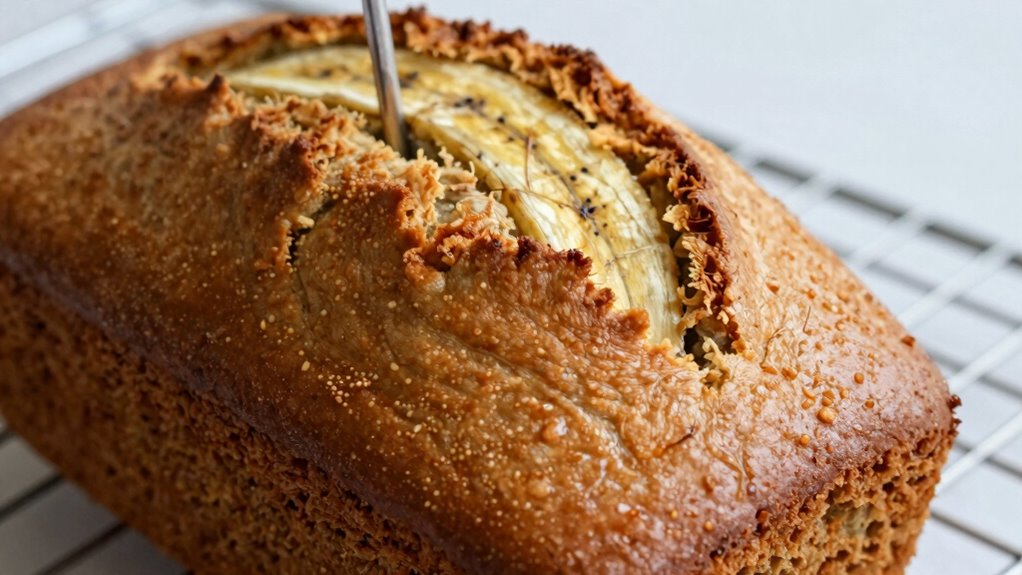
To accurately determine if your banana bread is finished baking, using a toothpick or cake tester is one of the simplest and most reliable methods. Insert the toothpick or cake tester into the center of the bread, making sure it reaches the middle. If it comes out clean or with just a few moist crumbs, your banana bread is done. If it’s wet or sticky, give it more baking time and check again later. Be gentle when removing the tester to avoid breaking the bread. This simple toothpick test removes guesswork and guarantees your banana bread is perfectly baked. Remember, even if the top looks golden, the inside might need more time, so always rely on this method for the best results. Additionally, understanding the importance of baking temperature can help you achieve consistent doneness every time. Using a kitchen thermometer to monitor your oven’s actual temperature can prevent under- or over-baking your banana bread. Regularly checking your oven’s temperature accuracy with a thermometer can also account for oven calibration issues that affect baking outcomes. Knowing the ideal internal temperature for banana bread can further help you judge doneness accurately.
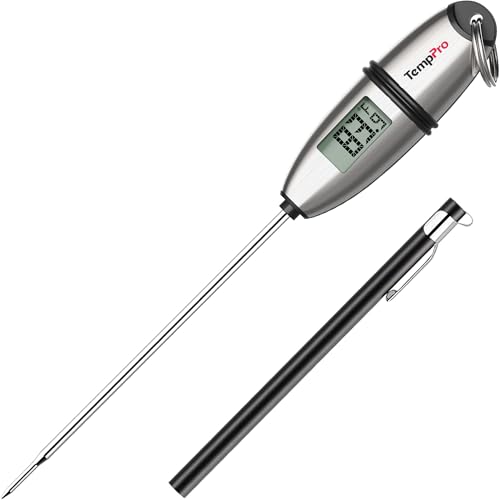
TempPro TP02S Digital Food Thermometer for Cooking Bread Baking Sourdough Liquids, Meat Thermometer Digital with Super Long Probe for Kitchen BBQ Yogurt Candy Making Accessory (Previously ThermoPro)
Fast and Accurate Reading: Kitchen thermometer for cooking features a 1 to 3 second readout speed and high…
As an affiliate, we earn on qualifying purchases.
As an affiliate, we earn on qualifying purchases.
What the Crust and Edges Reveal About Your Bread’s Readiness
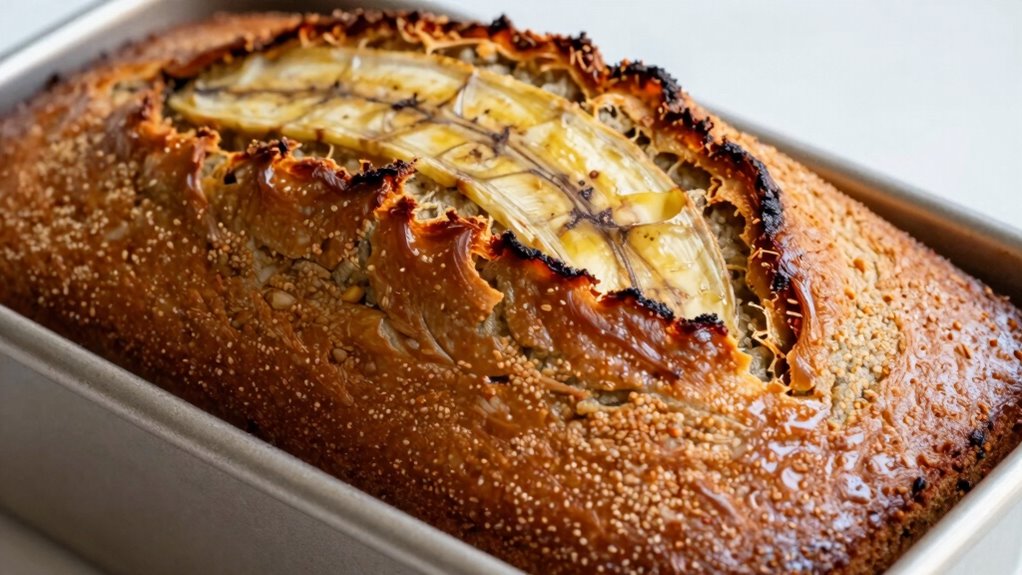
After checking the toothpick test, examining the crust and edges of your banana bread offers additional clues about its doneness. Look for a golden-brown crust; a rich coloration indicates proper baking without overdoing it. The crust should be firm but not burnt; a dark, overly crisp crust suggests it’s overbaked. Pay attention to the edges—when they pull slightly away from the pan and feel firm to the touch, your bread is likely ready. Soft, pale edges mean it needs more time, while edges that are too dark or hard can signal overbaking. Additionally, visual cues such as the appearance of the crust and edges are crucial for assessing doneness. Combining these visual cues with the toothpick test helps you accurately gauge doneness, ensuring your banana bread is perfectly baked with a satisfying crust and moist interior. Also, baking time can vary based on oven calibration and pan type, so trusting your visual cues is essential for consistent results. Paying attention to the oven temperature helps prevent underbaking or overbaking, contributing to ideal doneness. Proper oven calibration ensures your baking times are accurate, making visual cues even more reliable. Monitoring the baking environment can also influence how evenly your bread cooks, further aiding in precise doneness assessment.
Measuring Internal Temperature to Confirm Perfect Doneness
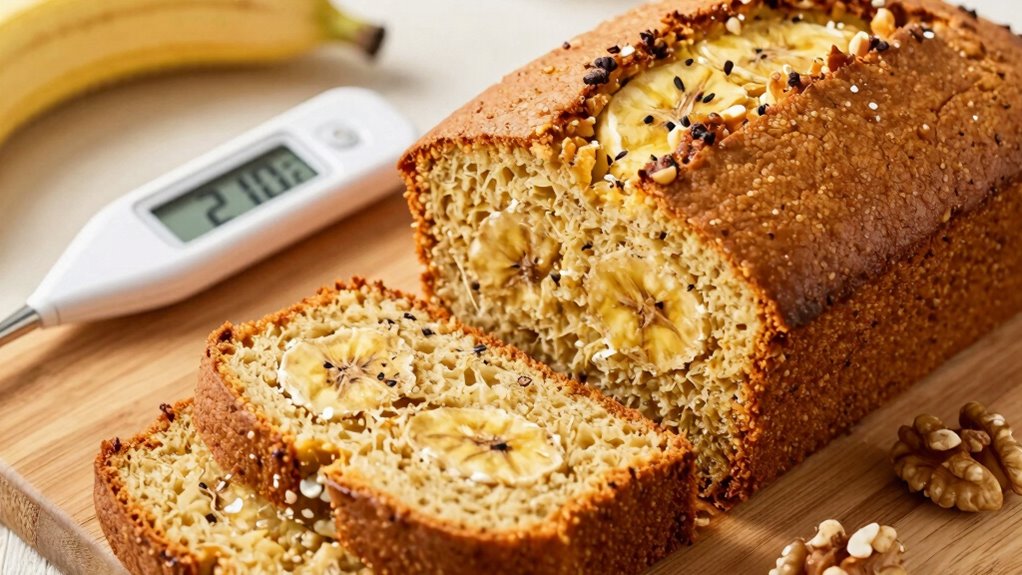
Measuring the internal temperature of your banana bread provides a reliable way to confirm it’s done, especially when visual and textural cues are inconclusive. Use a digital thermometer inserted into the center; aim for 200°F (93°C). If it’s below, your bread needs more time. This method helps you avoid overbaking, especially when making ingredient substitutions like applesauce or yogurt, which can affect baking time. Once done, store your banana bread properly to maintain freshness: wrap it tightly or refrigerate. Proper baking temperature is essential for achieving perfect results every time and can vary depending on your oven and recipe. Remember, temperature accuracy guarantees perfect results every time, whether adjusting recipes or troubleshooting doneness. Here’s what you’ll feel when it’s just right:
- A thermometer reads 200°F, signaling perfection.
- The crust feels firm but the center isn’t wet.
- The aroma is rich and inviting, promising a moist slice. Additionally, using a baking thermometer ensures consistent outcomes and helps you understand your oven’s behavior better. Being aware of oven calibration can further refine your baking accuracy.
How to Test Moisture and Texture Without Slicing
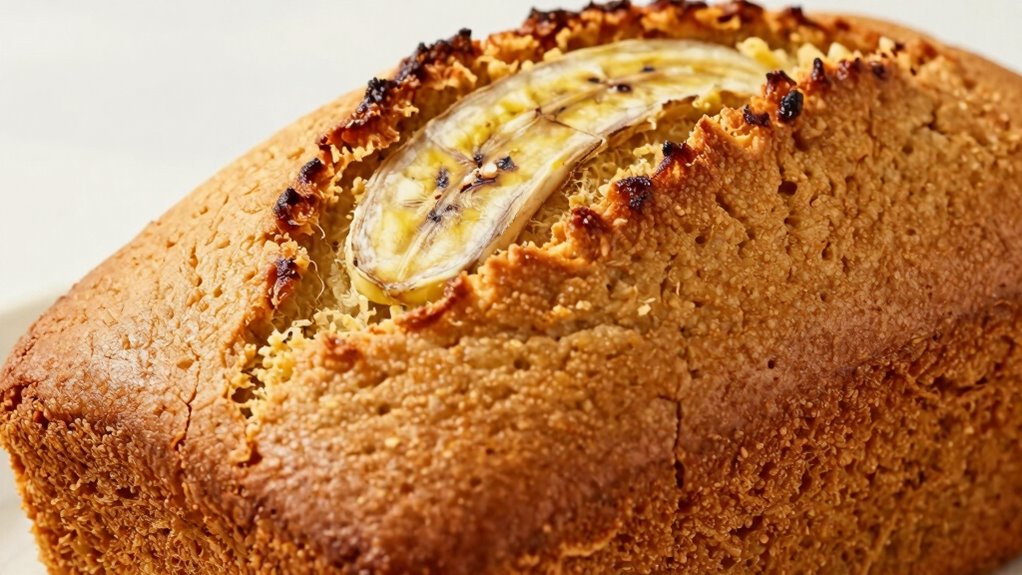
You can assess the moisture and texture of your banana bread without slicing into it by gently pressing the top and sides. During texture testing, look for a slight bounce or firmness—if it feels too soft or jiggly, it likely needs more baking. A firm, but not hard, surface indicates it’s approaching doneness. For moisture assessment, press lightly; if your finger leaves a slight indent that quickly springs back, the bread has good moisture balance. If it feels overly sticky or leaves a deep impression, it might need more time. Avoid pressing too hard, which can damage the crust or give a false sense of doneness. These tactile cues help you judge whether your banana bread is moist and textured properly, without slicing into it prematurely.
Common Baking Mistakes That Can Undercook or Overbake Banana Bread
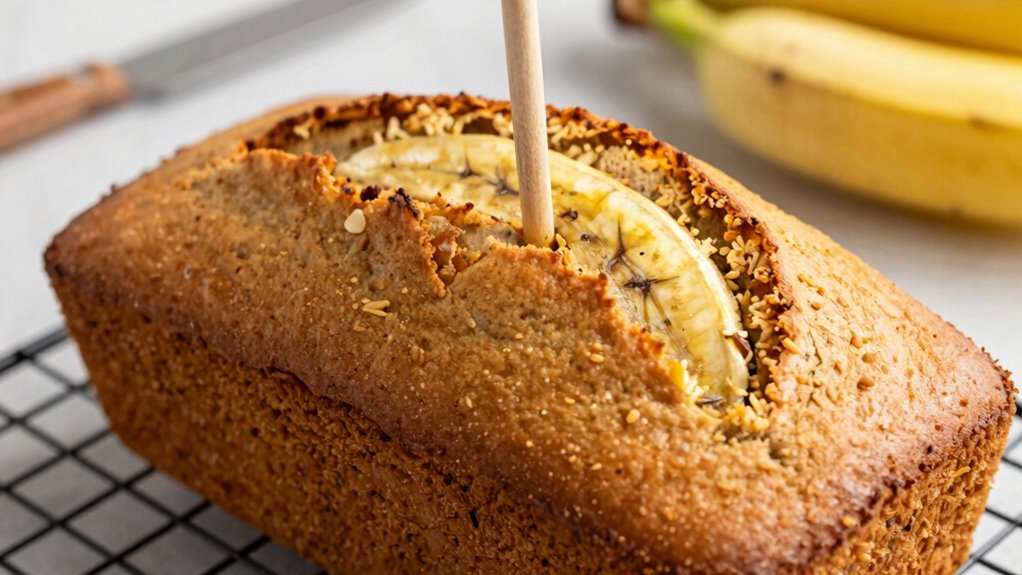
Even when you’ve tested the moisture and texture carefully, baking mistakes can still lead to undercooked or overbaked banana bread. Overbaking pitfalls include relying solely on time rather than visual cues, which can dry out your loaf. Using ingredient substitutions, like swapping applesauce for oil, might affect baking time and moisture, increasing the risk of underbaking if not adjusted properly. To avoid these mistakes, watch for these signs:
- Relying on the toothpick test too early or too late.
- Ignoring oven hot spots that cause uneven baking.
- Making ingredient swaps without considering their impact on bake time and moisture content.
Being aware of these common errors helps ensure your banana bread comes out perfectly baked every time, without guesswork or disappointment.
Adjusting Baking Time Based on Your Oven’s Performance
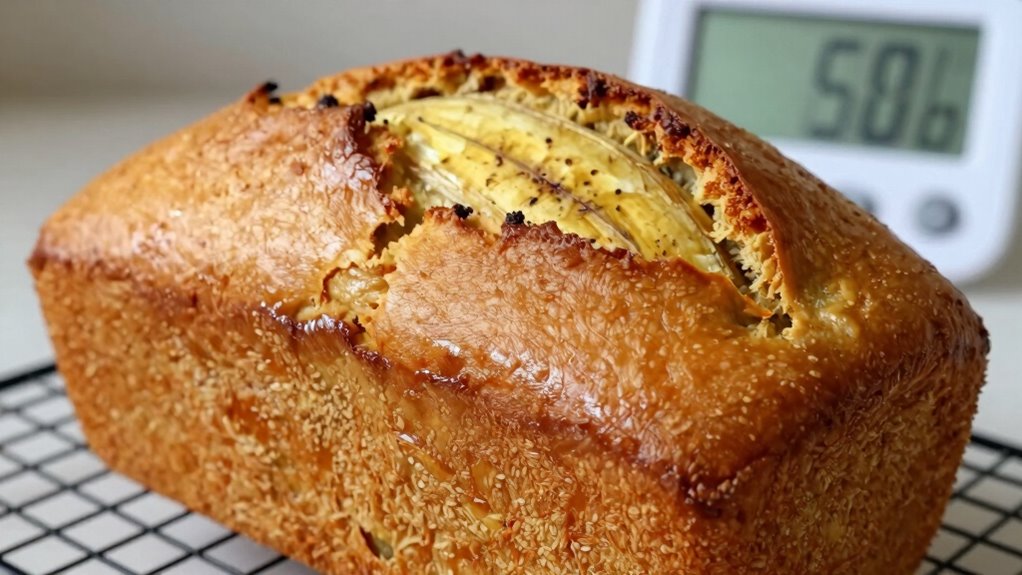
Ovens vary in heat distribution and accuracy, so baking times listed in recipes are only estimates. To get consistent results, it’s vital to take into account your oven’s calibration. If your oven runs hot or cold, you may need to make baking time adjustments. Check whether your oven’s temperature is accurate with an oven thermometer; if it’s off, recalibrate or adjust the temperature accordingly. When baking banana bread, start checking for doneness a few minutes earlier or later than the recipe suggests, based on your oven’s performance. Keep a close eye on the bread’s color and texture, and use a toothpick test to confirm doneness. Fine-tuning your baking time ensures moist, perfectly baked banana bread every time, regardless of your oven’s quirks.
Final Tips for Perfectly Baked, Moist Banana Bread Every Time

Achieving perfectly baked, moist banana bread relies on a few simple yet essential tips. First, choose bananas at the right ripeness; overly ripe bananas boost flavor and moisture, while underripe ones can make it dry. Second, guarantee ingredient freshness—use fresh eggs, flour, and butter to enhance texture and taste. Third, don’t overmix the batter; gentle folding preserves air pockets, ensuring a light crumb. Keep these tips in mind:
- Select bananas with brown spots for ideal ripeness and sweetness.
- Use fresh ingredients for moisture and flavor depth.
- Check doneness with a toothpick, avoiding overbaking.
Following these guidelines guarantees moist, tender banana bread every time, with a rich flavor and perfect consistency, eliminating guesswork and ensuring your baking success.
Frequently Asked Questions
Can I Tell if Banana Bread Is Done by Smell Alone?
Yes, you can sometimes tell if banana bread is done by smell alone. When it’s ready, it should emit a sweet, inviting aroma, not a rancid or overripe scent. If you notice a sour or off smell, especially a rancid aroma, it’s likely undercooked or overdone. Rely on your nose alongside other indicators, like a toothpick test, to guarantee your banana bread is perfectly baked without guessing.
How Does Altitude Affect Banana Bread Baking Times?
At high altitudes, baking banana bread becomes like trying to catch a kite in a breeze—things fly faster. You’ll need to make altitude adjustments by reducing the baking time and possibly lowering the oven temperature. These tweaks help prevent over-baking. Keep a close eye on your loaf, and check for doneness a few minutes earlier than usual, adjusting as needed to get that perfect, moist banana bread you crave.
Is It Better to Underbake or Overbake Banana Bread?
It’s better to avoid overbaking banana bread because the risks include dry, tough texture and loss of flavor. Underbaking concerns are also valid, as it can leave the center raw or gooey. To get perfect results, check for doneness with a toothpick—if it comes out clean, your banana bread is ready. Striking a balance guarantees moist, tender bread without risking underbaking or overbaking.
How Do Pan Sizes Impact Baking Duration and Doneness?
You’ll notice that pan size directly affects baking time and cake textures. Smaller pans concentrate batter, so your banana bread bakes faster, while larger pans require more time. Always consider your oven calibration—if it runs hot or cool, it impacts doneness. To prevent under or overbaking, check your bread early with a toothpick. Adjust baking duration based on your pan size and oven, ensuring perfectly baked banana bread every time.
Can Frozen Banana Bread Be Baked Directly From the Freezer?
Yes, you can bake frozen banana bread directly from the freezer. Just remove it from freezer storage and preheat your oven. Use thawing techniques like letting it sit at room temperature for 15-20 minutes if you prefer a more even bake, or bake directly if you’re short on time. Keep in mind, baking from frozen may require an extra 10-15 minutes, so check for doneness with a toothpick.
Conclusion
Knowing when your banana bread is truly done can boost your baking confidence and result in perfectly moist slices every time. Did you know that over 70% of home bakers struggle with under or overbaking? By using visual clues, a toothpick test, or measuring internal temperature, you can avoid these common mistakes. With these simple tips, you’ll enjoy consistently delicious banana bread that’s just right—no guessing needed!