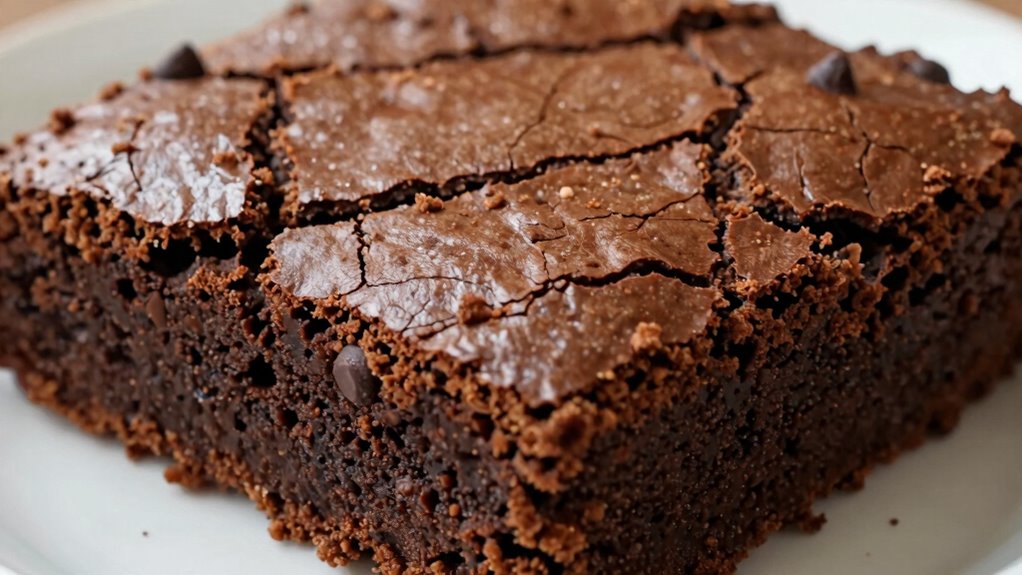

To get the brownie texture you want, focus on balancing ingredients and baking time. For fudgy brownies, use more chocolate, fat, and less flour, and bake slightly under time. For airy, cakey ones, add extra leavening and bake longer. Milder flavors create lighter textures, while intense chocolate makes them denser. Small tweaks can make a big difference—if you want to perfect your favorite style, there’s more to discover about how ingredients and techniques influence your brownies.

Get kitchen staples and gadgets delivered free — and shop member deals
- Fast, free delivery on millions of items
- Access to Prime Big Deal Days deals on October 6–7
- Prime Video, Amazon Music and more included
Key Takeaways
- Fudgier brownies result from higher fat, less flour, and shorter baking times, emphasizing moisture and density.
- Cakier brownies are achieved with more leavening agents, lighter flours, and longer baking for a rise and airy crumb.
- Proper ingredient ratios and baking adjustments are essential to target the desired texture—mistakes can lead to undesired results.
- Intense chocolate and oil substitutions can increase fudginess, while milder chocolate and butter create lighter textures.
- Experimenting with baking times and ingredient proportions helps fine-tune the brownie’s final texture to match preferences.
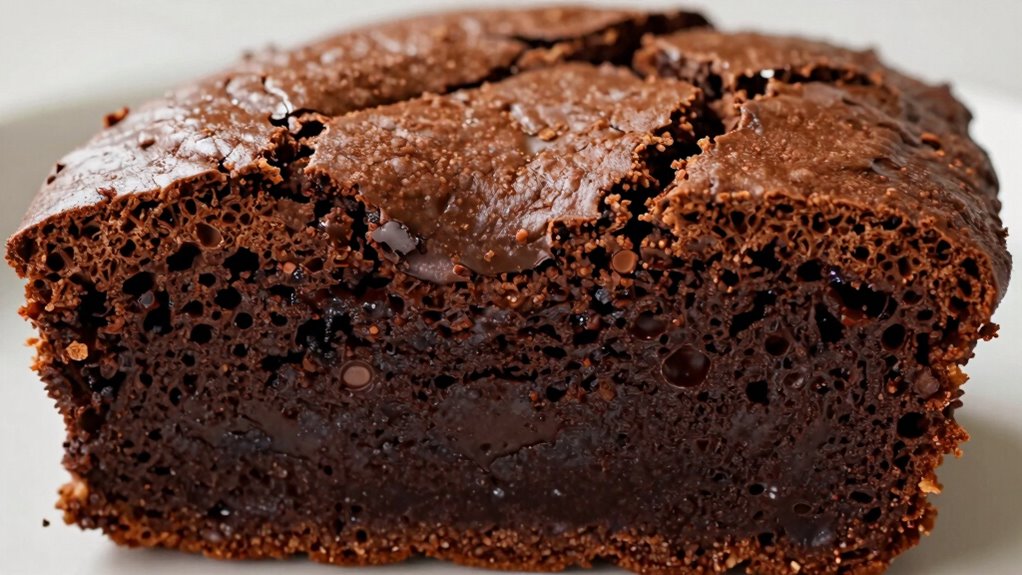
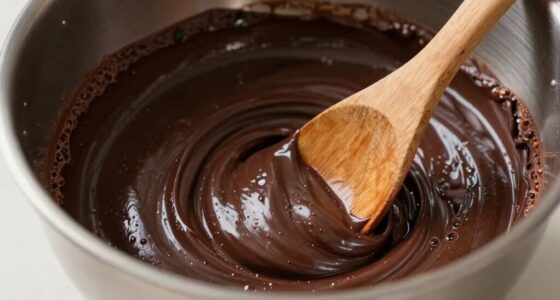
Have you ever wondered why some brownies turn out fudgy and dense while others are light and cakey? The difference mainly boils down to the recipe and how you tweak ingredients. One key factor influencing texture is chocolate intensity. When you use high-quality, dark chocolate or cocoa powder with a rich, deep flavor, you often get a fudgier brownie because the intense, concentrated chocolate adds moisture and weight to the batter. Conversely, if you opt for milder chocolate or less cocoa, the batter tends to be lighter and more airy, resulting in a cakier texture. It’s not just about flavor — the chocolate’s strength impacts how much moisture and fat it contributes, which directly affects the final consistency.
Chocolate intensity shapes brownie texture — rich, dark chocolate yields fudgier, moister treats; milder chocolate creates lighter, airy results.
Ingredient substitutions also play an essential role. For example, replacing butter with oil can make your brownies moister and denser because oil stays liquid at room temperature, giving that fudgy bite. Using less flour, or swapping some of it for cocoa powder, can heighten the chocolate flavor and contribute to a fudgier result. On the other hand, increasing the amount of baking powder or baking soda encourages rise, creating a lighter, more airy crumb. If you want a more traditional, dense brownie, stick to minimal leavening and focus on ingredients that add moisture, like eggs or even a splash of coffee to enhance chocolate flavor. Understanding leavening agents can help you better control your desired texture. Also, adjusting the baking time can significantly influence whether your brownies are moist and fudgy or dry and crumbly.
You might also experiment with ingredient substitutions to achieve your ideal texture. For a fudgier brownie, try reducing the baking time slightly so the center remains moist and underbaked. Substituting part of the butter with melted chocolate or adding a tablespoon of brewed coffee enhances chocolate intensity, making the brownies richer and denser. Incorporating alternative flours, such as almond or coconut flour, can also change the crumb and moisture level, giving you more control over the final result. For a cakier version, increase the leavening agents and use less fat, which promotes airiness. Remember, even minor changes can have a significant impact. For example, swapping all-purpose flour for cake flour will produce a lighter crumb, while using bread flour will add more chewiness.
Ultimately, understanding how chocolate intensity and ingredient substitutions influence your batter helps you control the final texture. Don’t be afraid to experiment—adjust quantities, try different chocolates, and tweak baking times. The perfect brownie isn’t just about following a recipe; it’s about customizing ingredients to match the texture you crave. Whether you prefer intensely fudgy or delightfully airy, knowing these details puts you in charge of your baking outcome.
high-quality dark chocolate for baking
As an affiliate, we earn on qualifying purchases.
As an affiliate, we earn on qualifying purchases.
Frequently Asked Questions
Can Ingredient Substitutions Change the Brownie Texture Significantly?
Yes, ingredient swaps can considerably change the brownie’s texture. When you replace butter with oil, you often get a fudgier result, while using less sugar can make them cakier. These swaps lead to a texture transformation, so your brownies might turn out more dense or crumbly depending on what you choose. Experimenting with ingredients allows you to customize your perfect brownie, but be aware of how each change impacts the final product.
How Does Baking Time Affect Brownie Fudginess or Cakiness?
Baking time directly impacts whether your brownies turn out fudgy or cakey. Longer baking times reduce moisture, making the brownies more cakey, while shorter times preserve moisture for a fudgy texture. Keep an eye on baking temperature and chocolate intensity, as higher temperatures can dry out brownies faster. Adjust baking time carefully to match your desired chocolate richness and texture, ensuring a perfect balance between fudginess and cakiness.
Are There Regional Variations in Brownie Texture Preferences?
Regional preferences and cultural variations definitely influence brownie textures. In the U.S., many favor fudgy, dense brownies, while in the UK, lighter, cakier versions are more popular. In some areas, people might prefer a chewy or crumbly texture based on local tastes and ingredients. Your choice depends on where you are—what’s considered perfect in one place might be different elsewhere. Embrace these regional differences to enjoy a variety of delicious brownies.
Does Pan Size Influence the Final Brownie Texture?
Pan size considerably impacts your brownie’s texture by affecting baking time and thickness. A smaller pan yields thicker, fudgier brownies, while a larger one produces thinner, crisper edges. Ingredient variation also plays a role; more butter or sugar can enhance fudginess, whereas less flour makes for a cakier outcome. Adjusting pan size and ingredients helps you customize your brownies’ texture to match your preference perfectly.
What Role Does Mixing Technique Play in Texture Development?
Your mixing methods and aeration techniques directly impact brownie texture. If you mix gently, you’ll preserve air bubbles, resulting in a fudgy, dense brownie. Conversely, vigorous mixing introduces more air, creating a lighter, cakey texture. Incorporate aeration techniques like folding or beating accordingly, depending on your desired outcome. Ultimately, controlling how you mix influences whether your brownies turn out moist and fudgy or light and airy.
brownie baking pan with temperature control
As an affiliate, we earn on qualifying purchases.
As an affiliate, we earn on qualifying purchases.
Conclusion
Imagine your perfect brownie as a treasured painting—each texture a brushstroke, creating a masterpiece that speaks to your taste. Whether you prefer fudgy depths or airy peaks, remember that your ideal is uniquely yours. Embrace the journey of experimentation, blending ingredients like a skilled artist, until your canvas is just right. In the end, your perfect brownie isn’t a destination but a delicious masterpiece born from your personal palette.
As an affiliate, we earn on qualifying purchases.
As an affiliate, we earn on qualifying purchases.
Halloween Picks
halloween
As an affiliate, we earn on qualifying purchases.