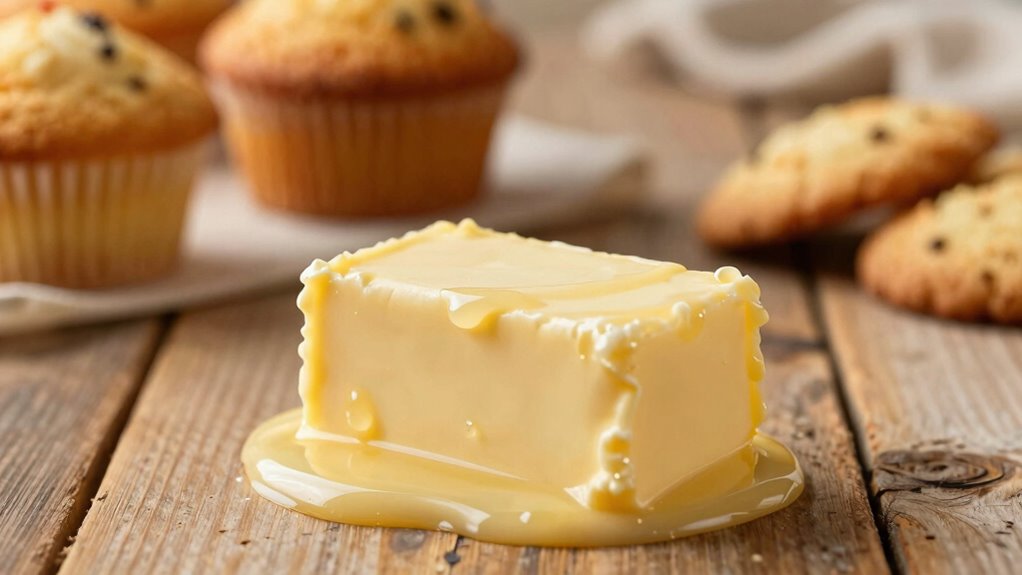

Your butter’s temperature drastically affects your baked goods’ texture and appearance. For cakes, muffins, and cookies, it should be soft enough to leave a slight indent but not greasy—about 65°F to 70°F. Too cold, and your batter won’t cream properly, leading to denser results. Too warm, and it makes the batter greasy and causes spreading. Mastering this simple butter rule can make a big difference—stick around to learn how to perfect it every time.

Get kitchen staples and gadgets delivered free — and shop member deals
- Fast, free delivery on millions of items
- Access to Prime Big Deal Days deals on October 6–7
- Prime Video, Amazon Music and more included
Key Takeaways
- Softened butter should leave a slight indent when pressed but not feel greasy for optimal creaming.
- Proper butter temperature ensures even expansion and prevents spreading during baking.
- Cold butter hampers aeration, resulting in denser baked goods; warm butter causes greasy textures.
- Achieving the right butter consistency improves batter stability and final texture of cakes, muffins, and cookies.
- Managing butter temperature in tandem with ingredient temperature is essential for consistent, high-quality baked goods.
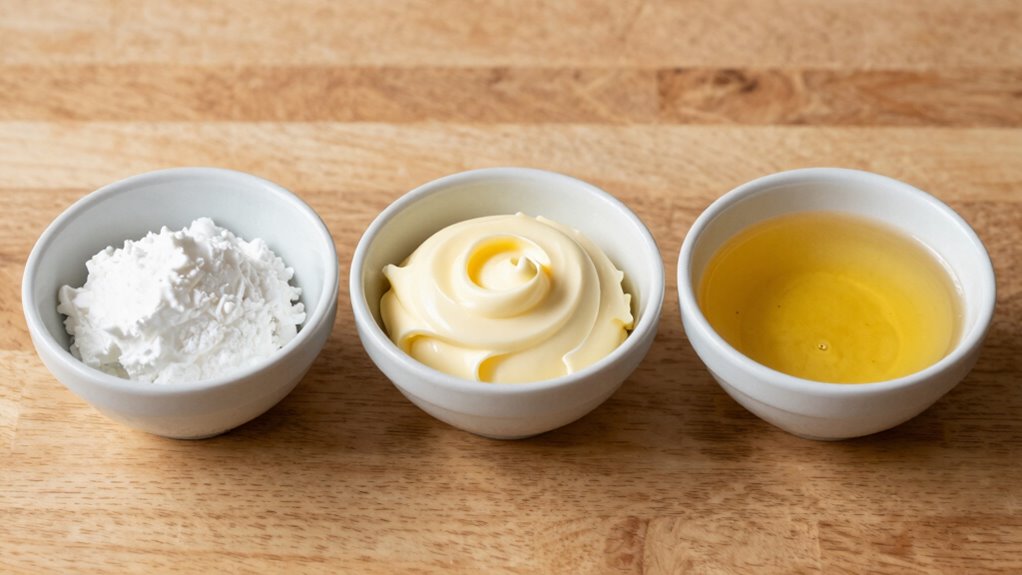
Understanding the perfect butter temperature can make all the difference in your cooking and baking. When you’re preparing cakes, muffins, or cookies, the temperature of your butter influences the final texture and appearance. If your butter is too cold, it won’t cream properly, leading to inconsistent mixing and dense baked goods. Conversely, if it’s too warm, the batter can become overly greasy or lose structure, affecting how your baked goods rise and hold their shape. The key lies in managing the creaming consistency, which is the foundation for creating light, airy textures. When butter reaches the right temperature, it becomes soft enough to blend smoothly with sugar, trapping air and creating a fluffy mixture that helps your baked goods expand evenly. Proper butter temperature is crucial to achieving a consistent and desirable outcome in your baked treats.
Achieving the ideal creaming consistency depends heavily on your butter being at the right baking temperature. Usually, this means softening butter just enough so that when you press on it with your finger, it leaves a slight indent but doesn’t feel greasy or melted. This stage is crucial because it allows you to incorporate sugar thoroughly, leading to a stable structure in your batter. When you beat butter and sugar together, the mixture should look light and creamy, indicating that you’ve reached the optimal creaming consistency. If your butter is too cold, you’ll notice a grainy texture, and if it’s too warm, it may become slick and lose its ability to aerate properly. Proper temperature management can also prevent your baked goods from spreading too much or baking unevenly, especially at higher temperatures. ingredient temperature plays a significant role in how well your batter combines and reacts during baking. In addition, consistent ingredient temperature helps maintain batter stability, which is essential for achieving uniform texture in your final product. Ensuring your ingredients are at the right temperature can also help prevent uneven baking and improve the overall quality of your baked goods. Properly measured ingredients ensure that your baked goods turn out with the right texture and rise. Your choice of baking temperature also plays a role in how butter interacts during baking. For example, when baking at a high temperature, butter melts quickly, which can cause your baked goods to spread too much or bake unevenly. On the other hand, baking at too low a temperature might result in dense, undercooked centers. Therefore, understanding and controlling your baking temperature is essential to complement your butter’s state. It’s best to start with ingredients at room temperature—around 65°F to 70°F—so that your butter reaches that perfect softness. This ensures you get a smooth creaming process and a predictable baking outcome.
As an affiliate, we earn on qualifying purchases.
Frequently Asked Questions
How Does Butter Temperature Affect Baking Time?
Your butter’s consistency directly influences baking time. Melted butter causes batter to spread more quickly, often resulting in shorter baking times, while solid butter creates a thicker batter that takes longer to bake through. If your butter is too soft or melted, expect your baked goods to cook faster, so keep an eye on them. Using solid, room-temperature butter offers more control, ensuring even baking and proper rise.
What’s the Best Way to Measure Butter Temperature Accurately?
You can’t beat a good old-fashioned thermometer to measure butter temperature accurately. Check the butter’s firmness by inserting a thermometer into the center—aim for about 65°F (18°C) for perfect consistency. This helps you avoid the melting point that’s too high or too low, ensuring your baked goods turn out just right. Don’t rely on touch alone; a thermometer is your best bet to keep your baking on point.
Can Butter Temperature Impact the Flavor of Baked Goods?
Yes, butter temperature can impact the flavor of baked goods. When butter is too cold, it doesn’t blend well, leading to uneven melting and a less rich butter flavor. If it’s too warm, it melts quickly, affecting texture and aroma. The melting point of butter influences how flavors are released during baking, so maintaining proper butter temperature guarantees your baked goods have maximum butter flavor and a desirable, consistent texture.
Does Room Temperature Butter Always Produce the Best Results?
Room temperature butter doesn’t always produce the best results; it depends on your baking goal. For creaming into sugar, softened butter near its melting point creates ideal texture. Proper butter storage keeps it at this ideal temperature, making it easier to work with. If butter is too soft or melted, it can affect your batter’s structure. So, understanding your recipe and butter’s melting point helps you decide the perfect butter temperature.
How Do I Adjust Recipes for Different Butter Temperatures?
If your butter’s too cold or too warm, it can totally wreck your baking magic! To adjust recipes, tweak the butter consistency—soften slightly for a creamy texture or chill it for firmness. When baking, remember that different butter temperatures change your baking texture and rise. Always measure butter accurately, and adjust baking times if needed. With these tweaks, you’ll master perfect cakes, muffins, and cookies every time!
kitchen butter temperature gauge
As an affiliate, we earn on qualifying purchases.
As an affiliate, we earn on qualifying purchases.
Conclusion
Mastering the butter temperature rule is like finding the secret ingredient to perfect baked goods. When you start with butter at the right temperature, your cakes, muffins, and cookies come out tender and delicious every time. Think of it as the conductor guiding your baking symphony—getting everything in harmony. So, next time you bake, remember: butter at the right temp isn’t just a rule, it’s the magic wand that turns your baking into a masterpiece.
As an affiliate, we earn on qualifying purchases.
As an affiliate, we earn on qualifying purchases.
NFL season / tailgating Picks
team gear
As an affiliate, we earn on qualifying purchases.