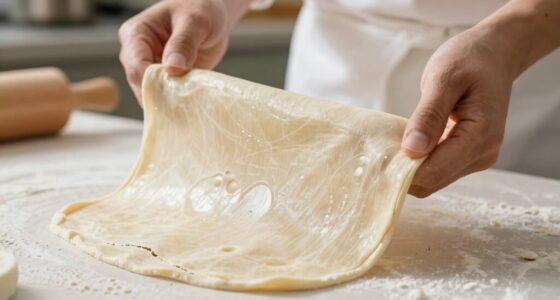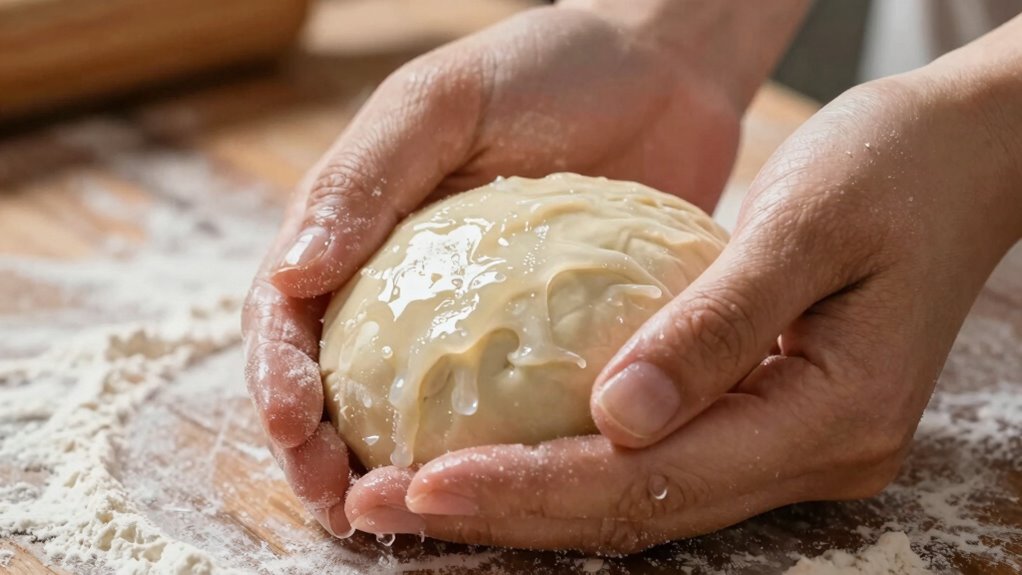

When dough gets sticky, using the “wet hands” trick is a better option than adding extra flour, which can make bread dense and tough. Keep your hands damp with cool water before handling or shaping the dough to prevent sticking and maintain moisture. This technique helps you work more easily, promotes better gluten development, and keeps the dough smooth. Want to learn more tips to handle sticky dough like a pro?
Listen free for 30 days with Audible
Thousands of audiobooks and originals — cancel anytime.
As an affiliate, we earn on qualifying purchases.
Key Takeaways
- Dampening your hands with cool water reduces dough stickiness without altering hydration.
- Wet hands help handle sticky dough gently, preventing tearing and minimizing the need for extra flour.
- Using moist hands promotes even gluten development, improving dough elasticity and manageability.
- Resting the dough after handling allows gluten to relax, making shaping easier without adding more flour.
- Avoid excessive flour dusting, which can dry out the dough and negatively impact texture and rise.
As an affiliate, we earn on qualifying purchases.
Why Dough Gets Sticky and How It Affects Your Baking

Dough often becomes sticky when it contains too much moisture or hasn’t been kneaded enough, making it difficult to handle. High dough hydration levels can lead to excess moisture, causing the dough to stick to your hands and work surface. This stickiness impacts gluten development, which is essential for structure and elasticity. When dough is under-kneaded, gluten strands haven’t fully formed, resulting in a softer, more adhesive texture. Proper kneading helps develop gluten networks, giving your dough strength and stability. If the dough is too wet, it won’t hold its shape well and can become overly sticky. Understanding how dough hydration affects consistency allows you to adjust kneading time or hydration levels to achieve a manageable, elastic dough perfect for baking. By controlling hydration, bakers can better manage stickiness and improve dough quality.
As an affiliate, we earn on qualifying purchases.
Why Using Extra Flour Can Ruin Your Bread
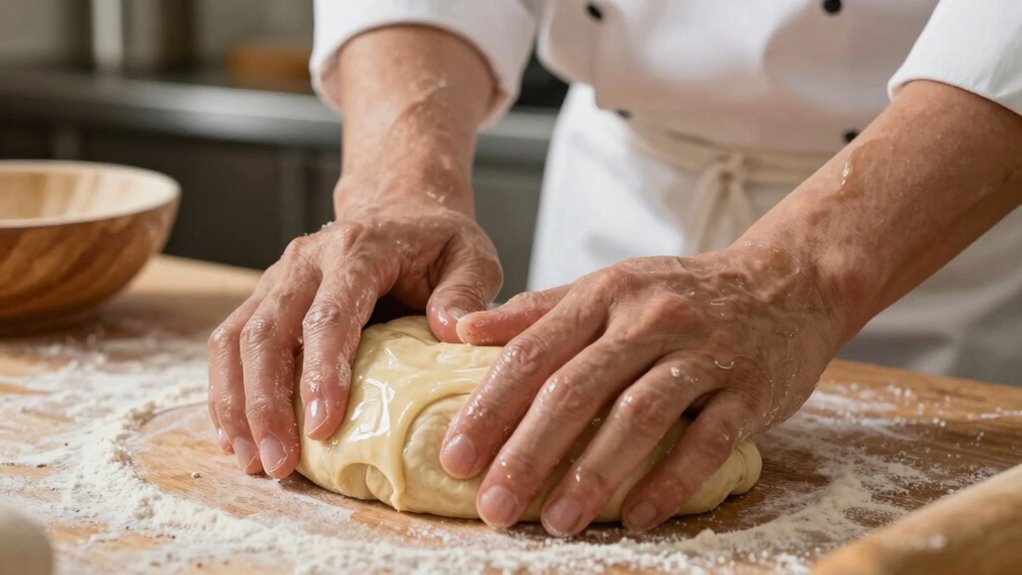
While adding extra flour might seem like a quick fix for sticky dough, it can actually ruin your bread’s texture and structure. Excess flour reduces dough hydration, making it denser and less tender. It can lead to a tough crust and uneven crumb. Using flour alternatives, like rice or cornstarch, might seem helpful but can alter the dough’s balance and gluten development. Over-flouring also creates a dry exterior, preventing proper fermentation and rise. Your dough becomes less elastic, harder to handle, and more prone to breaking. Implementing a consistent dough management system can help prevent these issues and improve your baking results, ensuring optimal gluten development and a better final product. Additionally, controlling hydration levels is essential for achieving the ideal dough consistency. Proper dough handling techniques can further improve elasticity and overall bake quality, making your bread more successful.
As an affiliate, we earn on qualifying purchases.
How the Wet Hands Technique Helps Handle Sticky Dough

When handling sticky dough, using extra flour might seem like an easy solution, but it can compromise the bread’s texture. The wet hands technique helps you manage stickiness without drying out the dough, maintaining proper dough hydration. This method allows you to handle the dough softly, encouraging better gluten development, which is essential for structure and elasticity. By keeping your hands damp, you reduce surface friction, preventing tearing or overworking the dough. This approach ensures your dough stays moist and manageable. Proper dough hydration is crucial for achieving the ideal balance between stickiness and elasticity, ensuring a perfect bake every time. Additionally, practicing consistent hand dampening helps develop a feel for the dough’s moisture level, leading to better results over time.
As an affiliate, we earn on qualifying purchases.
Step-by-Step: How to Use Wet Hands When Kneading

To effectively use wet hands when kneading, start by dampening your hands with cool water. This prevents the dough from sticking excessively and allows for smoother handling. As you knead, your goal is to enhance dough elasticity and gluten development without adding extra flour. Here’s how:
- Keep your hands moist throughout the process to maintain a slick surface.
- Use gentle, firm presses to fold and stretch the dough.
- Rotate and turn the dough frequently to distribute moisture evenly.
- Avoid pressing too hard, which can break gluten strands.
- Monitor the dough’s texture, stopping once it becomes smooth and elastic.
- Maintaining the right dough consistency is essential for achieving optimal elasticity and workability. Proper hydration levels are key to developing a resilient dough that’s easier to work with, preventing tearing or sticking.
When Should You Use Wet Hands During Baking?

Using wet hands during baking is especially helpful when handling sticky dough or delicate pastries. You should use this technique when hydration levels are high, making the dough more elastic and difficult to manage with dry hands. Wet hands help prevent sticking without altering the dough’s texture or compromising gluten development. Additionally, this method can support maintaining scalp health and prevent damage caused by excessive flour. Applying wet hands at these moments ensures better control, preserves hydration, and keeps your dough manageable without over-flouring or risking damage.
How to Properly Moisten Your Hands Without Overdoing It
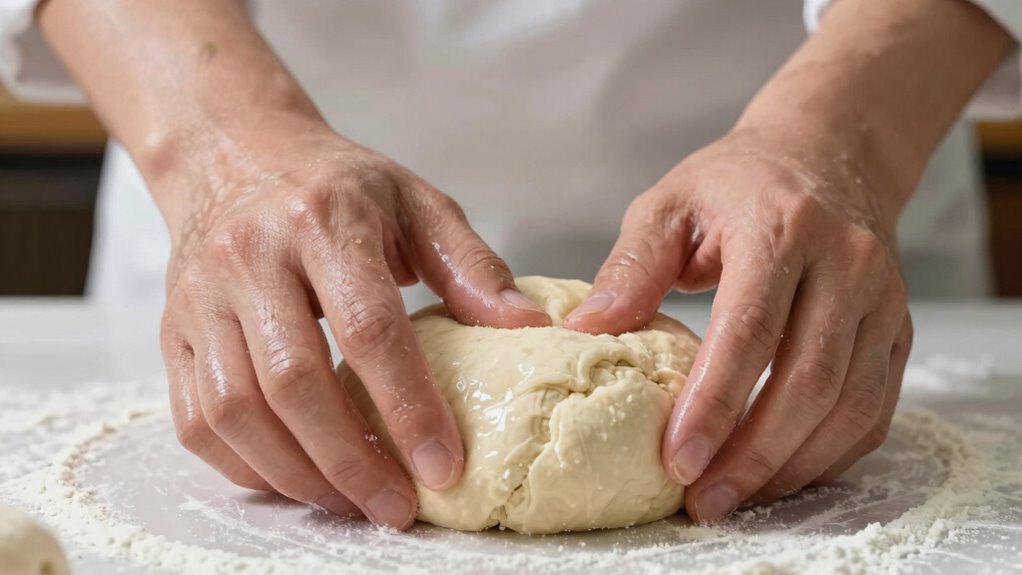
Moistening your hands correctly is key to handling sticky dough without making it overly wet or difficult to work with. To master the right moistening techniques, focus on light hand hydration—adding just enough moisture to prevent sticking without overdoing it. Here’s what you should do:
Keep hands lightly moist to handle sticky dough smoothly without over-wetting.
- Splash a small amount of water onto your palms
- Rub your hands together gently
- Use a damp towel to wipe your fingers
- Keep a spray bottle nearby for quick moisture boosts
- Avoid excess water, which can make the dough too wet
- Remember, Free Floating techniques can help you adapt to different dough types and conditions
These techniques help you maintain control, ensuring your hands stay moist enough to handle sticky dough smoothly. Proper hand hydration makes kneading easier, reduces frustration, and keeps the dough at the ideal consistency.
Common Mistakes When Using Wet Hands on Sticky Dough

One common mistake is adding too much water to your hands, which can make the dough excessively wet and difficult to handle. This affects the dough consistency, making it overly sticky and harder to shape. Instead of improving handling, it creates a mess and can cause tearing or sticking to surfaces. Another mistake is using handling techniques that rely solely on wet hands without adjusting pressure or movement. For example, pressing too firmly or dragging the dough can cause it to tear or become overly sticky. Remember, the goal is to keep your hands slightly moist, not soaked. Proper handling techniques involve gentle, smooth motions that prevent sticking while maintaining the right dough texture. Understanding the importance of dough texture can help you achieve a better balance between wetness and workability. Additionally, maintaining consistent moisture levels helps prevent the dough from becoming too sticky or too dry, ensuring easier shaping and handling.
Wet Hands vs. Other Ways to Deal With Sticky Dough
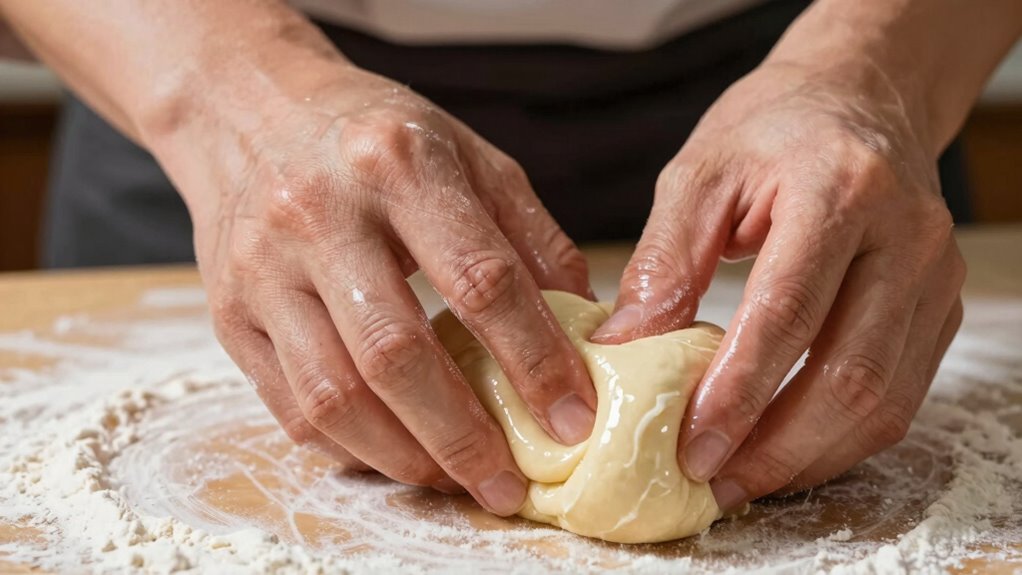
You’re probably familiar with using wet hands to handle sticky dough, but it’s worth comparing this method to others like flouring. While wet hands prevent sticking without adding extra flour, flour can sometimes make the dough drier or tougher. Exploring alternative solutions can help you find the best approach for your baking needs. Additionally, some bakers find that using a dough scraper can be effective in managing sticky dough without modification.
Wet Hands Technique
When dealing with sticky dough, wet hands offer an effective solution by reducing the dough’s stickiness and making it easier to handle. This technique enhances dough hydration, allowing you to work without adding extra flour that can hinder gluten development. Wet hands glide smoothly through the dough, preventing tearing and sticking. Imagine:
- Effortlessly shaping a soft, sticky boule
- Maintaining proper dough hydration levels
- Minimizing flour dust in your workspace
- Encouraging even gluten development
- Saving time by reducing cleanup and adjustments
Using wet hands helps you achieve better control, especially with high-hydration doughs. The moisture prevents dough from sticking excessively, making kneading and shaping more efficient. This method offers a cleaner, more precise approach compared to flour dusting, improving your overall baking experience. Additionally, understanding haute couture principles such as craftsmanship and attention to detail can inspire meticulous techniques in your baking, emphasizing the importance of precision and quality in every step. Proper dough handling techniques are essential for professional results and consistent texture. Incorporating artisan baking techniques like this can elevate your bread-making skills and ensure a more consistent, high-quality outcome. Developing baking mastery through such techniques can further refine your skills and confidence in the kitchen.
Flouring Drawbacks
While dusting your workspace with flour is a common way to prevent sticking, it often introduces excess dry powder that can alter dough texture and hinder gluten development. Too much flour can make your dough dry, crumbly, or tough, affecting its consistency and elasticity. This can lead to a less smooth, less cohesive dough that’s harder to work with. Flour alternatives, like dusting with rice flour or cornstarch, can reduce these drawbacks but still risk changing dough behavior if overused. Unlike the wet hands method, which keeps dough moist without adding dry ingredients, flour dusting can cause uneven surfaces and interfere with proper gluten formation. For delicate doughs, minimizing dry flour helps maintain ideal dough hydration and ensures a better final texture. Additionally, understanding dough hydration can help you achieve the perfect balance between moisture and elasticity for your baked goods.
Alternative Solutions
To effectively handle sticky dough, there are several alternative solutions beyond just dusting with flour. One effective method involves adjusting kneading techniques to develop gluten structure, which can improve dough elasticity. You can also modify dough hydration by slightly decreasing water content if your dough is excessively sticky, making it easier to work with. Additionally, using a bench scraper helps lift and fold sticky dough without sticking. Keeping your hands damp, rather than floured, minimizes sticking while maintaining dough integrity. Lastly, chilling the dough briefly can firm it up, reducing stickiness. These options help manage sticky dough efficiently, ensuring you don’t over-flour and compromise texture. Each technique focuses on better kneading, hydration control, and mindful handling.
Troubleshooting Sticky Dough: What to Do Next
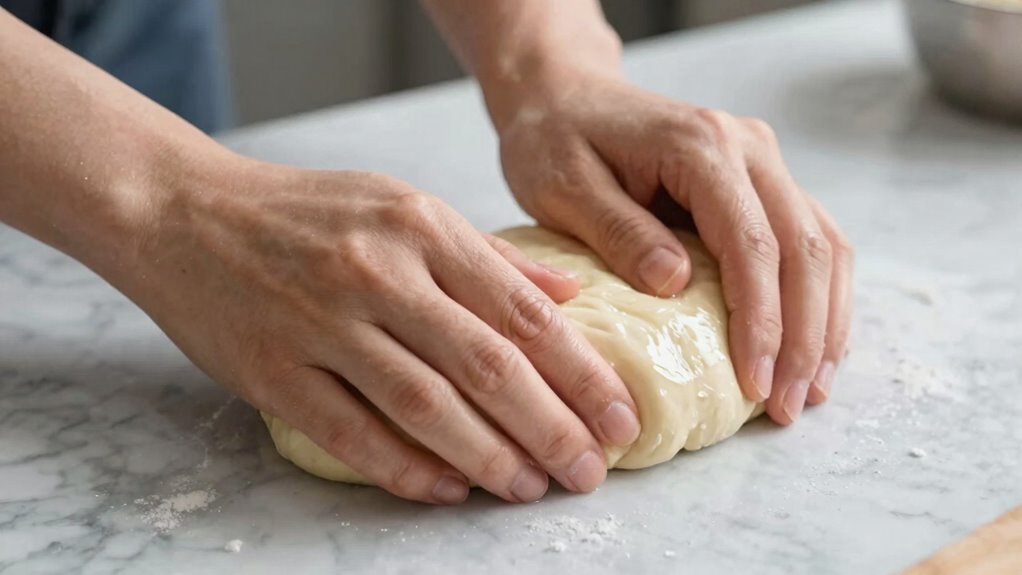
If your dough remains too sticky despite your efforts, there are straightforward solutions to fix it quickly. Focus on improving dough elasticity by letting it rest longer; this allows gluten development to strengthen the structure. Avoid adding more flour, which can hinder gluten formation and make the dough tougher. Instead, knead the dough gently but thoroughly, encouraging gluten networks to develop naturally. Using wet hands during handling can also help prevent sticking without compromising dough quality. Keep in mind that sticky dough often indicates underdeveloped gluten, so patience during kneading is key. If necessary, let the dough rest covered for 10-15 minutes before kneading again, giving gluten time to relax and improve elasticity.
Benefits of the Wet Hands Method for Consistent Results
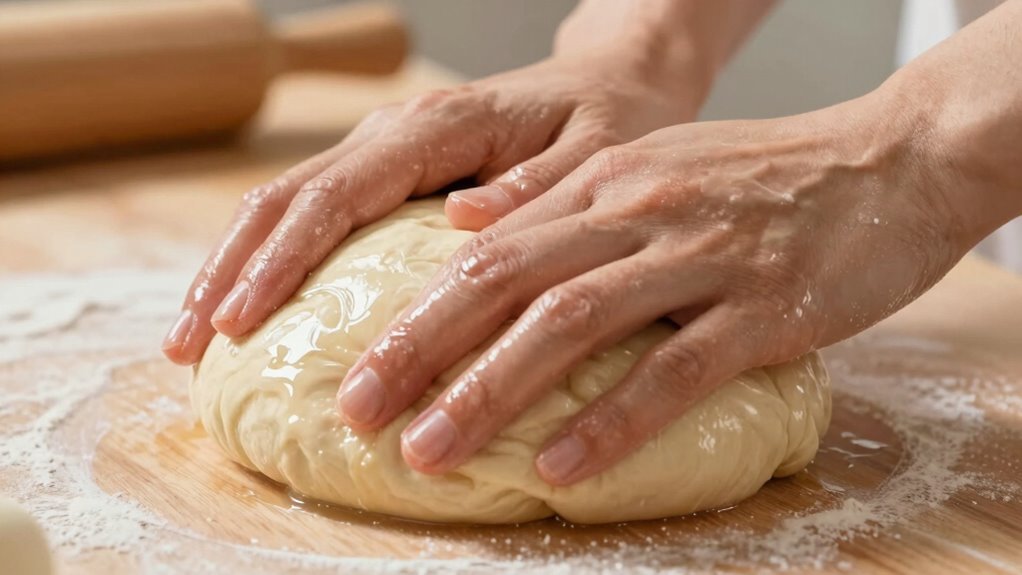
Using wet hands when handling sticky dough helps you achieve more consistent results by reducing sticking without altering the dough’s moisture balance. This method improves dough handling by allowing you to shape and transfer dough smoothly, minimizing tearing and sticking. It also helps maintain ideal moisture control, preventing the dough from drying out or becoming overly wet. With wet hands, you can:
- Easily fold and stretch dough without it sticking
- Keep your workspace clean and less messy
- Shape dough uniformly for even baking
- Avoid over-flouring, preserving dough texture
- Reduce the need for additional flour, maintaining proper hydration
Frequently Asked Questions
Can I Use Oil Instead of Water for Moistening My Hands?
You can use oil instead of water for moistening your hands, but it’s not the best alternative moisture. Oil creates a slippery surface, making it harder to handle sticky dough without adding extra flour. For an effective oil substitution, use a small amount and spread it evenly. Keep in mind, oil might alter the dough’s texture slightly, so use it sparingly to prevent affecting your baking results.
Does the Wet Hands Method Work for All Types of Dough?
The wet hands technique works well for many dough types, especially sticky or high-hydration doughs, but it has limitations. For very delicate doughs, it might weaken the gluten structure, affecting texture. For dense or stiff doughs, wet hands may not provide enough grip. So, while it’s versatile, you should consider the dough type and technique limitations before relying solely on wet hands for all doughs.
How Do I Prevent My Hands From Becoming Too Wet?
Picture your hands as a gentle breeze, not a storm, when handling dough. To prevent them from becoming too wet, dip your fingers just briefly in water, then wipe off excess on a towel before touching the dough. This keeps your hands moist without drenching, making dough handling smoother. For flour alternatives, consider using a light dusting of rice flour or cornstarch to reduce stickiness without adding too much moisture.
Is the Wet Hands Technique Suitable for Gluten-Free Doughs?
Yes, the wet hands technique works for gluten-free doughs, but keep in mind gluten-free challenges like stickiness and crumbly texture. You might find it helpful to use alternative moistening methods, such as lightly oiling your hands or using a damp spatula, to prevent sticking without adding extra moisture that could alter the dough’s consistency. These methods help manage moisture levels while maintaining your dough’s structure and workability.
Can I Reuse the Water Used for Moistening My Hands?
You can reuse the water used for moistening your hands, but it’s best to use fresh water each time. In dough handling, this helps maintain cleanliness and prevents contamination. Reusing water can also dilute the moisture, making it less effective for controlling stickiness. When substituting flour, the wet hands technique remains helpful, especially if you want to avoid adding extra flour, which could alter your dough’s texture.
Conclusion
Next time your dough turns too sticky to handle, don’t reach for extra flour just yet. Try the wet hands trick—you might be surprised at how smoothly it transforms your baking experience. But beware: this simple method can have unexpected surprises. Ready to master the secret that bakers swear by? Keep practicing, and you’ll uncover the true magic behind perfect, easy-to-manage dough. Are you ready to take your baking to the next level?
NFL season / tailgating Picks
team gear
As an affiliate, we earn on qualifying purchases.