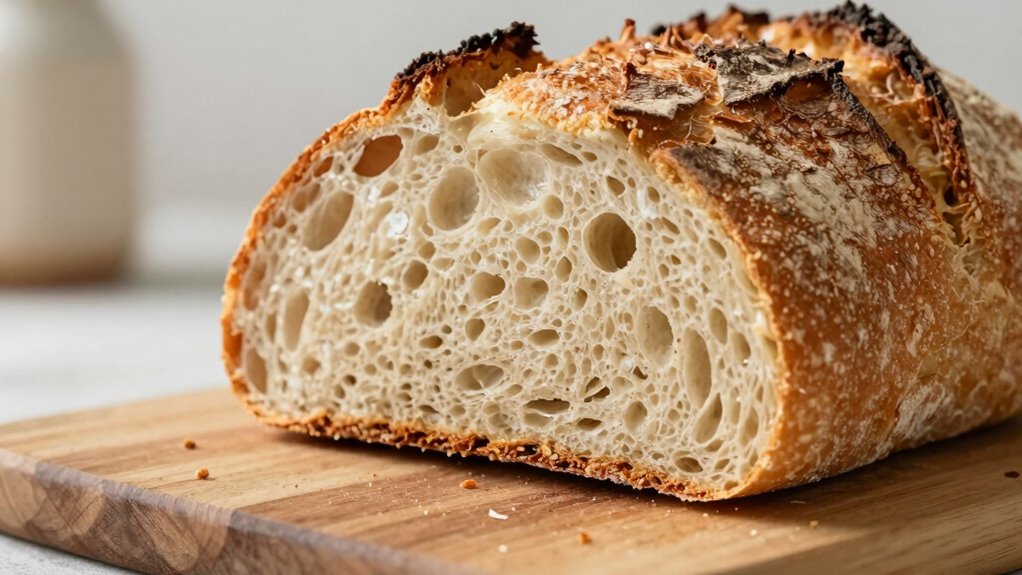

Bread stales faster than it seems because moisture inside escapes through the crust when exposed to air, making it dry and crumbly. Refrigeration speeds up this process by causing starch molecules to crystallize, leading to a firmer texture. Even with proper storage, moisture movement can still occur, especially if the crust isn’t sealed well. Understanding how moisture loss and storage choices affect freshness can help you keep bread better. Keep exploring to discover more tips on keeping bread fresh.

Get kitchen staples and gadgets delivered free with Prime
- Fast, free delivery on millions of items
- Prime Video, Amazon Music and more included
- Member-only deals all year
Key Takeaways
- Staling is primarily caused by starch retrogradation, which occurs faster at cooler temperatures, making bread firm and crumbly.
- Refrigeration accelerates staling due to rapid starch crystallization, reducing bread’s freshness.
- Moisture loss through the crust leads to dryness, speeding up the staling process.
- Improper storage methods, like leaving bread exposed or in the wrong containers, can increase moisture loss and staling.
- Freezing bread preserves moisture and delays staling, but improper thawing can affect texture.
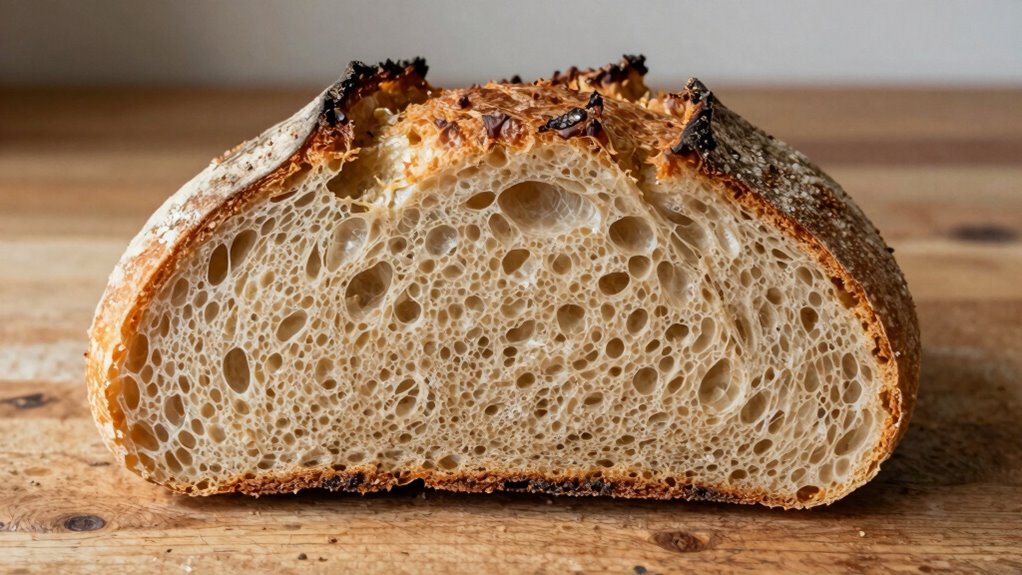
Have you ever wondered why bread seems to go stale much faster than you’d expect? It’s frustrating to buy a fresh loaf, only to find it dry and crumbly a day or two later. The reason often boils down to how bread preservation and moisture control play vital roles in maintaining freshness. When bread is baked, the moisture inside helps keep it soft and tender, but once exposed to air, that moisture starts to escape. Without proper storage, the bread begins to lose its moisture, leading to staleness.
To prolong freshness, you need to understand how moisture moves in and out of your bread. When exposed to open air, the moisture inside the loaf evaporates through the crust, which acts like a barrier but isn’t completely airtight. This moisture loss causes the bread to become dry and crumbly. That’s why storing bread properly is essential—using methods that slow down moisture loss can considerably extend its shelf life. For example, keeping bread in a paper bag allows some airflow, preventing excess moisture buildup but still protecting it from rapid drying. Conversely, plastic bags trap humidity, which can help keep bread soft longer, but if stored too long, they can encourage mold growth. Striking the right balance in moisture control is key to effective bread preservation.
You might think refrigeration would help preserve bread longer, but in reality, it accelerates staling. Cold temperatures cause the starch molecules in bread to crystallize faster, which makes it dry out more quickly. This process, known as retrogradation, is why bread tends to become firm and crumbly after refrigeration. Additionally, the change in temperature can affect the overall texture and flavor of the bread, making it less appealing. Instead, the best approach is to store bread at room temperature in a bread box or a paper bag, which helps maintain a stable moisture level. Freezing is another option if you know you won’t eat the bread within a few days. When freezing, wrap the loaf tightly in plastic wrap or foil, then place it in an airtight container. This prevents moisture loss and prevents freezer burn. When you’re ready to eat it, simply thaw it at room temperature or warm it briefly in the oven. This method preserves the bread’s moisture and texture better than leaving it out or refrigerating it. Proper storage techniques, including understanding moisture movement, are essential for keeping bread fresh longer.
bread storage container airtight
As an affiliate, we earn on qualifying purchases.
As an affiliate, we earn on qualifying purchases.
Frequently Asked Questions
Does Storage Temperature Affect Bread Staling?
Yes, storage temperature affects bread staling. You’ll notice that temperature fluctuations can speed up or slow down the process. If you keep bread in a cool, stable environment, it stays fresher longer. Also, packaging materials matter—airtight packaging helps prevent moisture loss and slows staling. Avoid exposing bread to high temperatures or frequent temperature changes, as these factors accelerate staling. Proper storage preserves bread’s texture and freshness.
Can Different Bread Types Stale at Different Rates?
Different bread types can stale at different rates, like how some friends age more gracefully than others. For example, crusty sourdough might stay fresh longer, while softer white bread loses its fluffiness quicker. Factors like bread mold resistance and gluten development influence this. Denser, well-developed gluten creates a sturdy structure, slowing staling, whereas lighter breads with less gluten might turn stale faster, losing their appeal sooner.
Does Slicing Bread Earlier Cause It to Stale Faster?
Yes, slicing bread earlier can cause it to stale faster. When you use a slicing technique that creates more surface area, it accelerates moisture loss, affecting bread texture. The more slices you make, the quicker the bread dries out and becomes stale. To keep it fresher longer, wait to slice until you’re ready to eat, or slice just enough for immediate use, minimizing exposure and preserving moisture.
How Does Humidity Influence Bread Freshness?
Humidity levels considerably influence bread freshness. When humidity is high, moisture migrates into the bread, making it feel soft and delaying staling. Conversely, low humidity causes moisture to escape, leading to dryness and faster staling. You should store bread in a cool, dry place to balance humidity levels, preventing excess moisture or dryness. Proper storage helps maintain freshness by controlling moisture migration, keeping your bread tasty longer.
Are There Preservatives That Prevent Bread From Going Stale?
Yes, there are preservatives that help prevent bread from going stale. Chemical preservatives like calcium propionate are commonly used to inhibit mold growth, extending freshness. These preservatives slow down mold development and help maintain bread’s texture longer. If you want fresher bread for longer, look for products with these additives or consider baking your own with natural ingredients that inhibit mold, keeping your bread tasting fresh and enjoyable.
As an affiliate, we earn on qualifying purchases.
Conclusion
So, stay savvy about storage, and don’t sabotage your bread with silly mistakes. Storing bread properly slows staling, saving your stomach and your supplies. Remember, simple solutions prevent spoilage, so seal, store, and savor every slice. Staying smart about storage turns stale into success, keeping your bread fresh longer. Stay sharp, steer clear of shortcuts, and savor the sweet success of a perfectly fresh loaf every time.
As an affiliate, we earn on qualifying purchases.
As an affiliate, we earn on qualifying purchases.
Halloween Picks
halloween
As an affiliate, we earn on qualifying purchases.