
TL;DR

Get kitchen staples and gadgets delivered free with Prime
- Fast, free delivery on millions of items
- Prime Video, Amazon Music and more included
- Member-only deals all year
Two years after the U.S. officially ratified American single malt whisky as a distinct category, it remains in a nascent stage. Industry insiders cite slow growth and lack of clear standards as key hurdles. The category’s future depends on resolving these issues.
Two years after the American single malt whisky category was officially ratified by industry authorities in 2021, the sector remains in its early stages of growth and standardization. Despite the legal recognition, producers and industry experts say the category is still finding its footing amid market confusion and a lack of clear guidelines.
In 2021, the American single malt whisky category was formally recognized by the Alcohol and Tobacco Tax and Trade Bureau (TTB), aligning it with traditional single malts from Scotland and Ireland. This move was intended to promote clarity and foster growth within the emerging segment of American whisky producers.
However, two years on, the category has yet to achieve widespread market recognition or significant sales growth. Industry insiders point to ongoing ambiguity around standards for what constitutes an American single malt, with some producers adopting different production methods and labeling practices.
According to several distillers and industry analysts, the lack of a universally accepted definition has hindered marketing efforts and consumer education, leading to inconsistent product offerings and limited consumer awareness. Some producers have expressed concern that without clearer guidelines, the category might struggle to establish a distinct identity comparable to Scotch or Irish single malts.
Implications of Slow Category Development
The slow progress of the American single malt whisky category impacts both producers and consumers. For producers, unclear standards make it difficult to differentiate their products and build brand recognition. For consumers, the lack of clarity hampers informed purchasing decisions and limits the category’s growth potential.
Moreover, the continued ambiguity risks undermining the category’s credibility and could lead to regulatory or legislative challenges if standards remain inconsistent. The eventual establishment of clear, industry-backed definitions could be crucial for the category’s long-term success and global competitiveness.
As an affiliate, we earn on qualifying purchases.
Background on American Single Malt Recognition
The U.S. government and industry groups recognized American single malt whisky as a distinct category in 2021, following years of debate over its definition. Unlike traditional Scotch or Irish single malts, American single malts are made exclusively from malted barley and distilled at a single distillery, but there was no specific regulation to codify these criteria initially.
Since then, efforts have been made to develop industry standards, but consensus remains elusive. Some distillers advocate for a broad definition to encourage innovation, while others push for stricter criteria to protect the category’s integrity. The lack of a formal, enforceable standard has contributed to the category’s slow growth and inconsistent branding.
Market data indicates that American single malt sales remain a niche segment within the broader American whiskey market, which is dominated by bourbon and rye. Industry experts note that consumer awareness is still limited, partly due to the category’s recent emergence and ongoing definitional debates.
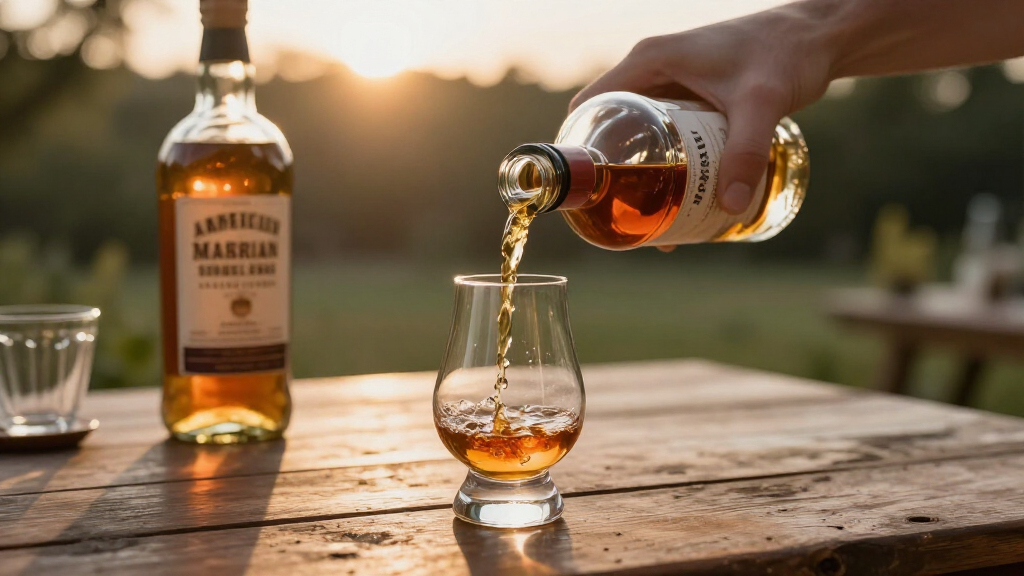
American single malt whiskey bottles
As an affiliate, we earn on qualifying purchases.
As an affiliate, we earn on qualifying purchases.
Unresolved Standards and Market Outlook
It is not yet clear when or if the industry will establish a universally accepted standard for American single malt whisky. While some industry groups are advocating for formal regulations, no consensus has been reached, and regulatory bodies have yet to issue specific guidelines.
Market growth projections remain uncertain, with some experts predicting slow expansion unless standards are clarified and consumer awareness increases. The impact of potential legislative changes or industry-led standardization efforts remains to be seen.
As an affiliate, we earn on qualifying purchases.
Next Steps for Industry Standardization and Growth
Industry stakeholders are expected to continue discussions on defining and standardizing American single malt whisky. The TTB and industry groups may propose new guidelines or hold public consultations in the coming months.
Producers are also working on marketing strategies to educate consumers and differentiate their products amid ongoing definitional debates. The category’s growth will likely depend on the speed and clarity of these standardization efforts.
Consumers and investors should watch for any official regulatory updates or industry initiatives that could shape the future of American single malt whisky.
As an affiliate, we earn on qualifying purchases.
Key Questions
What is American single malt whisky?
American single malt whisky is a distilled spirit made exclusively from malted barley, produced at a single distillery in the United States, and recognized as a distinct category since 2021.
Why has the category struggled to grow?
The category faces challenges due to a lack of clear, industry-wide standards and consumer awareness, which complicates marketing and branding efforts.
Are there any official regulations for American single malt?
As of now, there are no strict, enforceable federal standards. Industry groups and regulators are still debating and developing guidelines.
Will the category become more popular?
Its growth depends on establishing clear standards and increasing consumer education. Industry efforts in these areas are ongoing but have yet to produce significant market expansion.
Source: rss
Halloween Picks
halloween
As an affiliate, we earn on qualifying purchases.