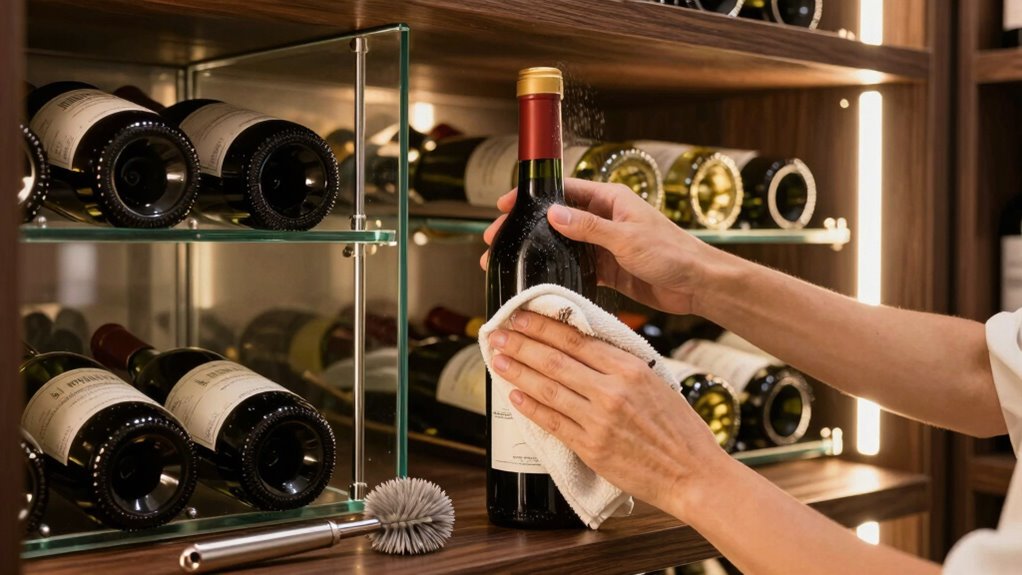

To keep your wine and beverage storage in top shape, regularly clean shelves and walls with mild cleaners, avoiding harsh chemicals. Wipe down bottles carefully to prevent damage and label loss, and guarantee the area is well-ventilated after cleaning. Maintain consistent temperature and humidity, and organize bottles for easy access and rotation. Staying on top of these practices helps prevent spoilage and performance drops, and you’ll discover more tips to optimize your storage environment as you continue.

Get kitchen staples and gadgets delivered free with Prime
- Fast, free delivery on millions of items
- Prime Video, Amazon Music and more included
- Member-only deals all year
Key Takeaways
- Regularly wipe shelves and containers with mild, non-abrasive cleaners to prevent dust and mold buildup.
- Ensure proper ventilation and dry storage areas after cleaning to maintain optimal environment conditions.
- Inspect bottles frequently for leaks or spoilage, and handle carefully during cleaning to avoid damage.
- Keep storage organized for easy access, proper rotation, and to prevent unnecessary disturbance of bottles.
- Use accurate hygrometers and thermometers to monitor humidity and temperature, maintaining stable conditions for beverage quality.
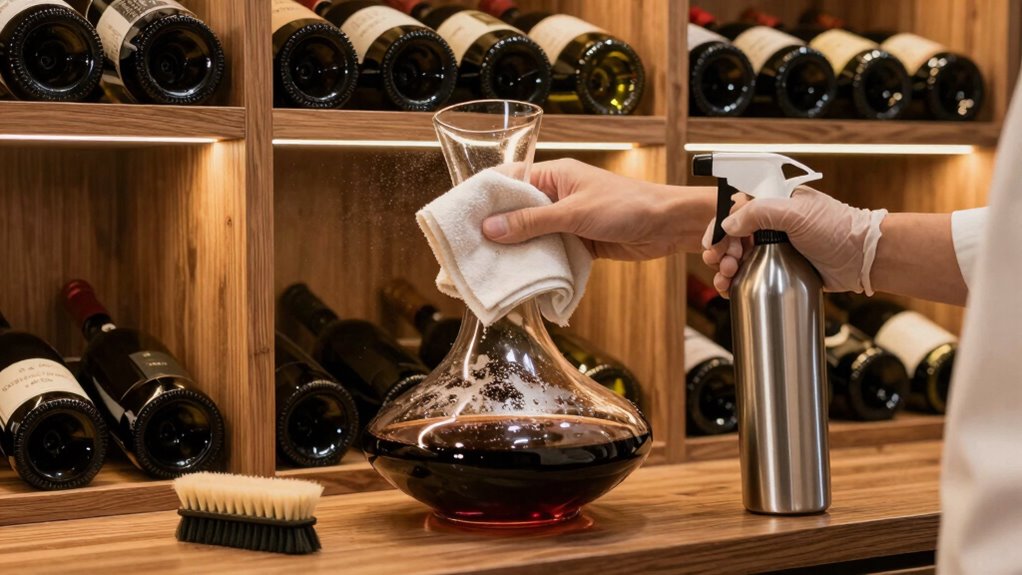
Maintaining clean and well-preserved wine and beverage storage is crucial for guaranteeing your drinks stay fresh and flavorful. Proper care begins with understanding how critical conditions like temperature regulation and humidity control are to your storage environment. If the temperature swings too much or stays too high, your beverages can spoil or age prematurely, losing their intended taste and aroma. Aim to keep your storage area at a steady 55°F (13°C), which is ideal for most wines, but also appropriate for many beverages. Use a reliable thermometer to monitor the temperature regularly, and consider investing in a wine cooler or climate-controlled storage if your current environment fluctuates frequently. Consistent temperature helps prevent expansion and contraction of liquids, which can compromise seals and lead to spoilage.
Maintain storage at 55°F (13°C) for optimal freshness and quality of your wines and beverages.
Humidity control plays an equally important role in maintaining your beverage storage. Too dry, and corks can dry out, allowing air to seep into bottles and spoil their contents. Too humid, and mold or mildew can develop on the storage surfaces or labels, making it difficult to identify your bottles and potentially damaging packaging. The ideal humidity level falls between 60% and 70%. To achieve this, you can use a hygrometer to keep track of moisture levels and add a humidifier or dehumidifier as needed. If you’re storing wine, ensure your cellar or storage room maintains consistent humidity to keep corks moist and the wine intact. For beverage storage, especially if you’re dealing with bottles that have screw caps or sealed containers, humidity isn’t as critical but still benefits from being within the proper range to prevent mold and damage. Additionally, maintaining a stable environment is essential to prevent fluctuations that can adversely affect your stored beverages. Ensuring proper ventilation in your storage area can also help regulate moisture and prevent stale air buildup. Incorporating proper air circulation can further enhance the environment, reducing the risk of mold and preserving your beverages’ quality. Regularly maintaining the storage environment, including checking for dust and pests, can further extend the longevity of your collection.
Cleaning your storage space regularly is also crucial to prevent dust, mold, and pests from affecting your drinks. Wipe down shelves, walls, and storage containers with a mild, non-abrasive cleaner. Avoid using harsh chemicals that might leave residues or fumes that could contaminate your bottles. Keep the area well-ventilated and dry, especially after cleaning, to discourage mold growth. Regular inspections of your storage area will help identify issues early before they impact your beverages. Additionally, handle bottles carefully during cleaning to avoid knocking them over or damaging labels, which are often essential for identification and inventory. Using proper cleaning techniques ensures that your storage remains sanitary and free from potential contaminants that could compromise your beverages.
Finally, remember that proper storage isn’t just about the environment; it’s also about organization. Keep your bottles stored horizontally if possible, especially for wines with corks, to maintain moisture levels. Regularly check your bottles for leaks or signs of spoilage, and rotate your stock so older bottles are consumed first. Proper organization can make a significant difference in how well your collection is maintained and accessed. By maintaining a clean, temperature-regulated, and humidity-controlled environment, you ensure your wine and beverages stay in peak condition, preserving their quality for as long as possible.
As an affiliate, we earn on qualifying purchases.
Frequently Asked Questions
How Often Should I Replace the Air Filters in My Wine Storage?
You should replace the air filters in your wine storage every 6 to 12 months, depending on usage and air quality. Regular filter changes help maintain best air quality, preventing mold, odors, and dust from affecting your wine. Keep an eye on the filter lifespan and replace it sooner if you notice reduced airflow or increased dust buildup. Doing so ensures your storage environment stays suitable for preserving your wine.
Can I Use Regular Cleaning Products on Wine Storage Units?
Can regular cleaning products harm your wine storage units? Absolutely. You should avoid harsh chemicals that can damage interior surfaces or leave residues affecting your wine quality. Instead, use gentle cleaning solutions specifically designed for storage units. Follow proper storage tips by cleaning with soft cloths and mild solutions, and avoid abrasive cleaners. This way, you preserve your unit’s performance and guarantee your wine stays in peak condition.
What’s the Best Way to Remove Stubborn Stains Inside the Storage?
To remove stubborn stains inside your storage, focus on effective stain removal techniques. Start by mixing a gentle cleaning solution with warm water and a mild detergent or vinegar. Use a soft cloth or sponge to gently scrub the stained area, avoiding harsh abrasives. Rinse with clean water and dry thoroughly. Consistent cleaning techniques and patience will help keep your storage looking pristine without damaging surfaces.
How Do I Prevent Mold Growth in Humid Environments?
To prevent mold growth in humid environments, you need to focus on mold prevention and humidity control. Keep the storage area well-ventilated, and use a dehumidifier to maintain humidity levels between 50-70%. Regularly check for excess moisture and clean surfaces with a solution of vinegar or mold cleaner. These steps help you control humidity and make it harder for mold to thrive, protecting your storage environment.
Are There Specific Maintenance Steps for Temperature-Sensitive Beverages?
For temperature-sensitive beverages, you should regularly check and adjust temperature regulation and humidity control. Keep the storage environment between the recommended temperature range, usually around 55°F for wine, and maintain consistent humidity levels to prevent spoilage. Use a reliable thermometer and hygrometer, and make sure ventilation is proper. Regular maintenance, like cleaning vents and inspecting seals, helps prevent fluctuations that could harm your beverages.
hygrometer and thermometer for wine cellar
As an affiliate, we earn on qualifying purchases.
As an affiliate, we earn on qualifying purchases.
Conclusion
Keeping your wine and beverage storage clean and well-maintained might seem tedious, but it’s essential for preserving quality and extending shelf life. Don’t overlook small details like regular cleaning or proper temperature control—you’ll notice the difference in flavor and freshness. Remember, investing a little time now guarantees costly spoilage later. Your efforts ensure each bottle tastes as intended, making every pour a rewarding experience. Ultimately, good maintenance isn’t just about storage; it’s about honoring your love for fine beverages.
wine cooler with temperature control
As an affiliate, we earn on qualifying purchases.
As an affiliate, we earn on qualifying purchases.
beverage storage organization racks
As an affiliate, we earn on qualifying purchases.
As an affiliate, we earn on qualifying purchases.
Halloween Picks
halloween
As an affiliate, we earn on qualifying purchases.