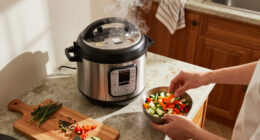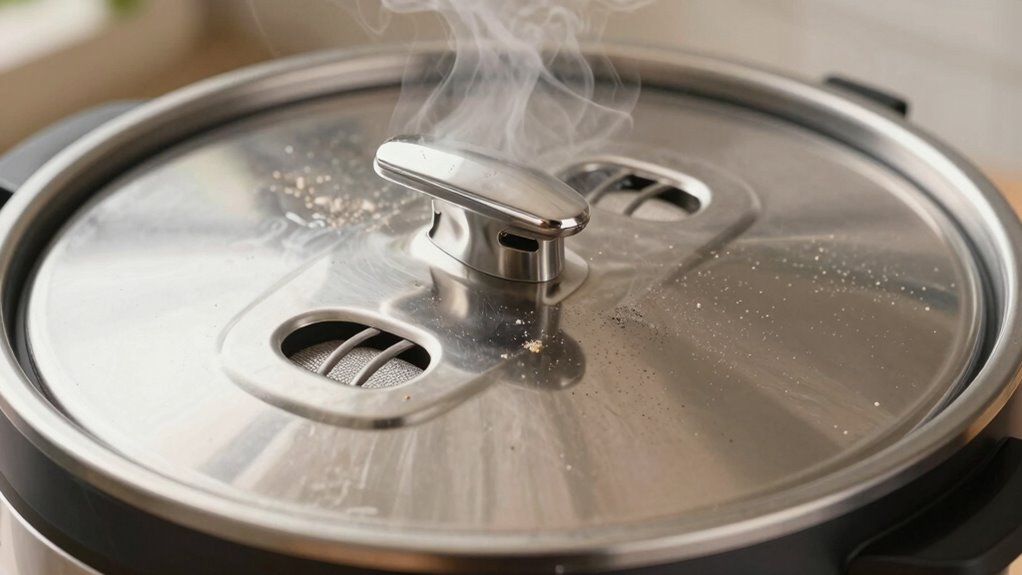

To prevent odors trapped in your rice cooker’s hidden steam vent, first unplug it safely. Gently remove the vent cover, then clean all parts with warm water and mild soap, focusing on crevices where residues hide. Regular cleaning prevents mold and mildew buildup that cause lingering smells. If odors persist, try natural deodorizers like baking soda or vinegar. Keep your cooker fresh—discover tips to effectively clean and maintain the vent for clean, odor-free cooking.

Get kitchen staples and gadgets delivered free — and shop member deals
- Fast, free delivery on millions of items
- Access to Prime Big Deal Days deals on October 6–7
- Prime Video, Amazon Music and more included
Key Takeaways
- Regularly remove and clean the steam vent to prevent residue buildup and odor absorption.
- Use warm water and a soft brush to thoroughly scrub the vent’s crevices and small openings.
- Ensure the vent is completely dry before reassembling to inhibit mold and bacteria growth.
- Incorporate natural deodorizers like vinegar or baking soda during cleaning to eliminate lingering smells.
- Check and maintain the vent’s condition routinely to prevent clogs and odor development over time.
rice cooker steam vent cleaning brush
As an affiliate, we earn on qualifying purchases.
As an affiliate, we earn on qualifying purchases.
Why a Dirty Steam Vent Causes Odors in Your Rice Cooker
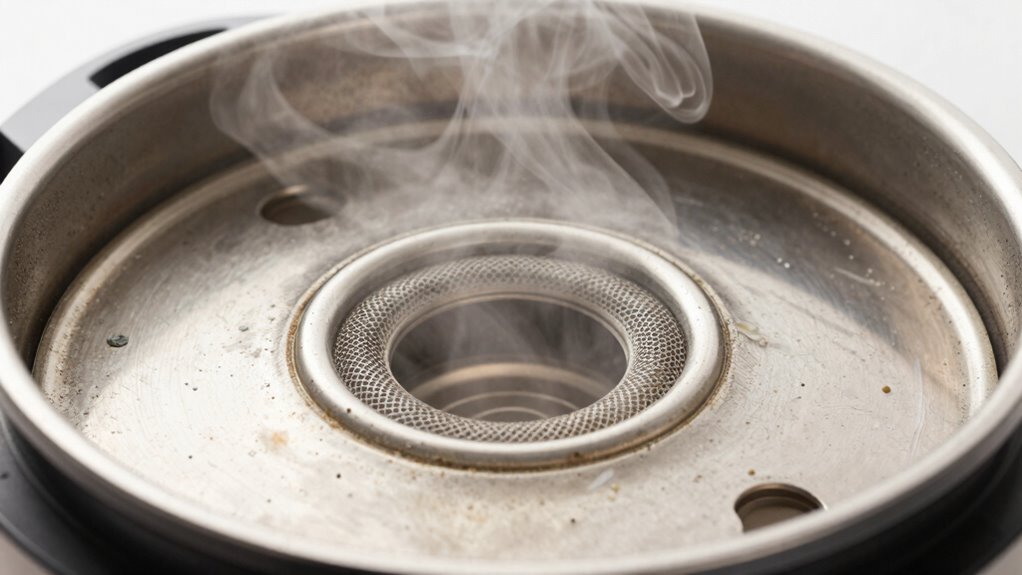
A dirty steam vent can lead to unpleasant odors in your rice cooker because leftover food particles and moisture build up inside it. Without proper steam vent maintenance, these residues create a breeding ground for bacteria and mold, which emit foul smells. The vent’s small openings can trap moisture, making it easier for odors to absorb into the cooker’s interior. Over time, this buildup intensifies, causing a persistent, unpleasant smell that affects your cooked rice’s flavor. Regularly cleaning and inspecting the steam vent helps prevent odor absorption and ensures proper vent function. Keep the vent clear of debris, and use gentle cleaning tools to remove residue. Doing so maintains your rice cooker’s freshness and prolongs its lifespan by avoiding lingering odors. Additionally, understanding the filtration system of your appliance can help you identify other areas that may trap residues contributing to odors. Incorporating smart maintenance reminders can also assist in keeping your rice cooker in optimal condition, preventing odor issues before they start. Regular maintenance, including routine descaling, supports the overall hygiene and efficiency of your appliance, and staying aware of the vent design can help you better understand how odors develop and how to prevent them. Being mindful of vent airflow is crucial because restricted airflow can exacerbate odor problems and reduce the efficiency of your rice cooker.
natural deodorizer for rice cooker
As an affiliate, we earn on qualifying purchases.
As an affiliate, we earn on qualifying purchases.
How to Safely Access and Remove the Steam Vent
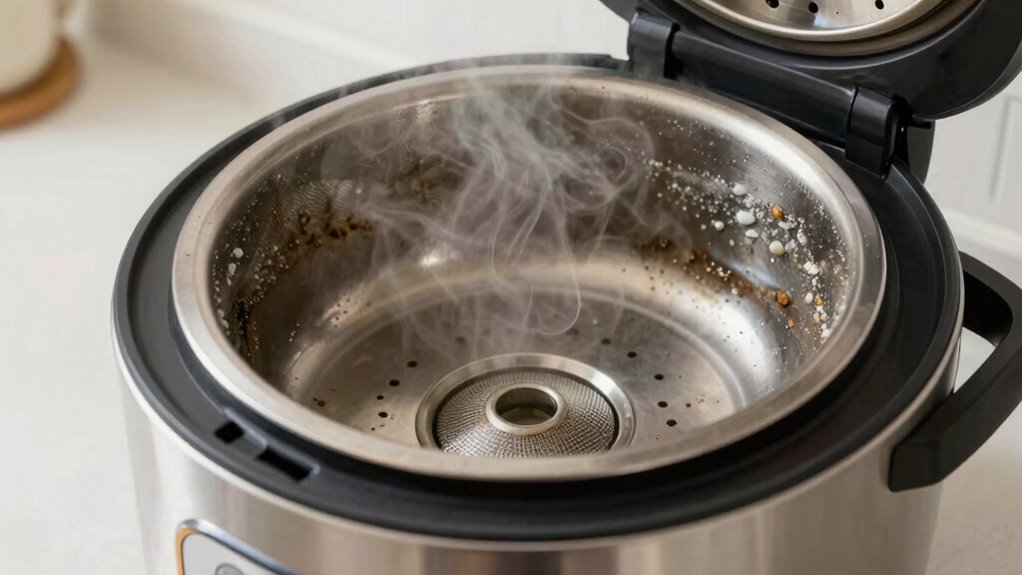
Wondering how to safely access and remove the steam vent from your rice cooker? Start with a thorough steam vent inspection to identify any buildup or blockages. Before removing it, unplug the appliance to avoid electrical hazards. Most vents are designed for safe removal; gently twist or lift the vent cover, following the manufacturer’s instructions. Use safe removal techniques by handling the vent carefully to prevent damage to the plastic or silicone parts. If it’s stuck, avoid forcing it—try a gentle wiggle or warm water to loosen debris. Once removed, inspect for dirt, mold, or blockages that could trap odors. Remember, gentle handling guarantees you don’t damage the vent, making subsequent cleaning easier and safer. Understanding heat distribution in your appliance can also help prevent issues related to odor buildup.
rice cooker vent cover replacement
As an affiliate, we earn on qualifying purchases.
As an affiliate, we earn on qualifying purchases.
Step-by-Step Guide to Cleaning the Steam Vent and Its Parts
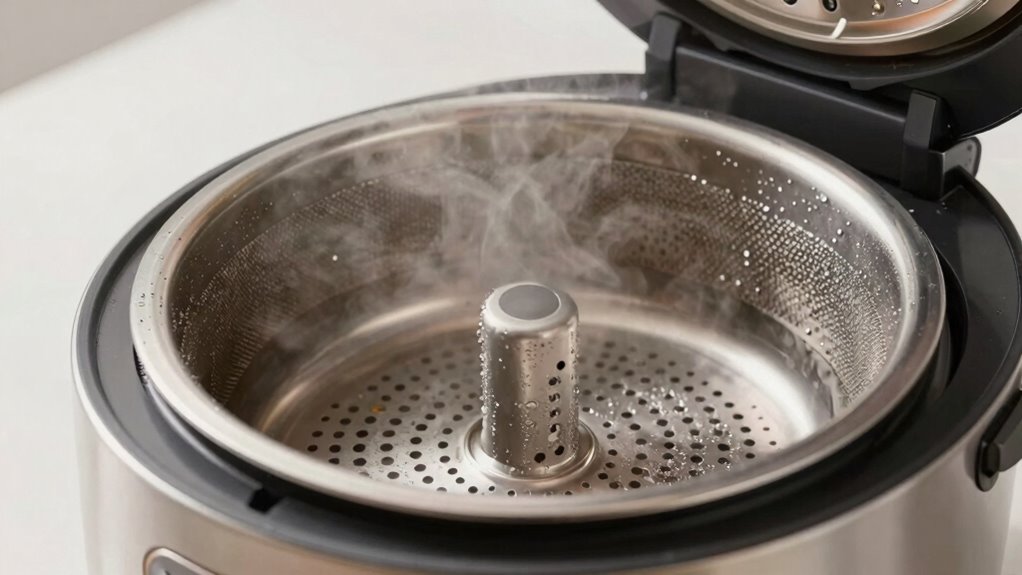
To effectively clean the steam vent and its parts, start by preparing a cleaning station with warm water, mild dish soap, and a soft brush or cloth. Begin with steam vent removal, carefully detach the vent from your rice cooker. Use cleaning tools like a small brush or toothbrush to scrub away grease and debris inside the vent and its components. Dip the brush into soapy water and gently clean each part, paying special attention to crevices where odors can hide. Rinse the vent thoroughly with clean water to remove soap residue. Dry all parts completely before reassembling. Proper cleaning tools ensure you reach all areas and eliminate trapped odors. Additionally, understanding the role of the steam vent in odor retention can help you identify areas that require more thorough cleaning. Recognizing the importance of regular maintenance can prevent the buildup of grime and odors over time. This step keeps your rice cooker fresh and prevents lingering smells.
As an affiliate, we earn on qualifying purchases.
Easy Tips to Prevent Odor Buildup in Your Rice Cooker
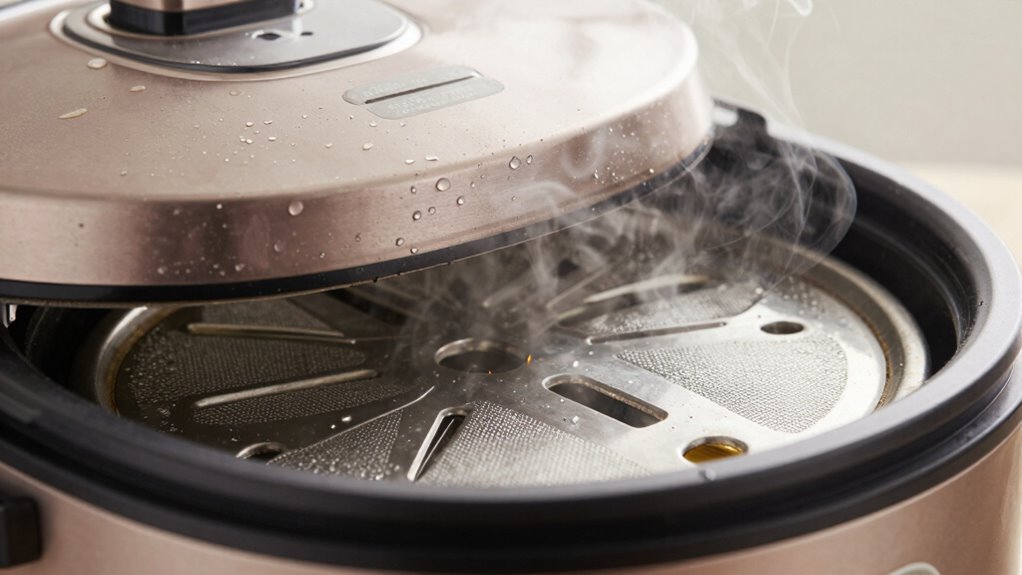
Regularly cleaning your rice cooker and its parts is the best way to prevent odor buildup. Proper steam vent maintenance is vital, as trapped moisture and food particles can cause unpleasant smells. Incorporate simple odor prevention techniques like rinsing the inner pot immediately after use and leaving the lid slightly open to air out. Use the table below for quick reference:
| Tip | Why it helps |
|---|---|
| Clean the steam vent | Prevents mold and musty odors |
| Air out after use | Reduces trapped steam that causes odors |
| Use natural deodorizers | Neutralizes lingering smells |
Maintaining proper ventilation and ensuring the steam vent is clean are essential for odor control. Additionally, inspecting the venting system regularly helps prevent clogs that could lead to trapped odors. Proper airflow around your rice cooker can improve ventilation and help prevent odor buildup. Recognizing the importance of proper maintenance can significantly extend the lifespan of your appliance and keep it smelling fresh. Practicing these tips keeps your rice cooker fresh and odor-free, ensuring every meal tastes as good as it smells.
What to Do If Odors Linger After Cleaning
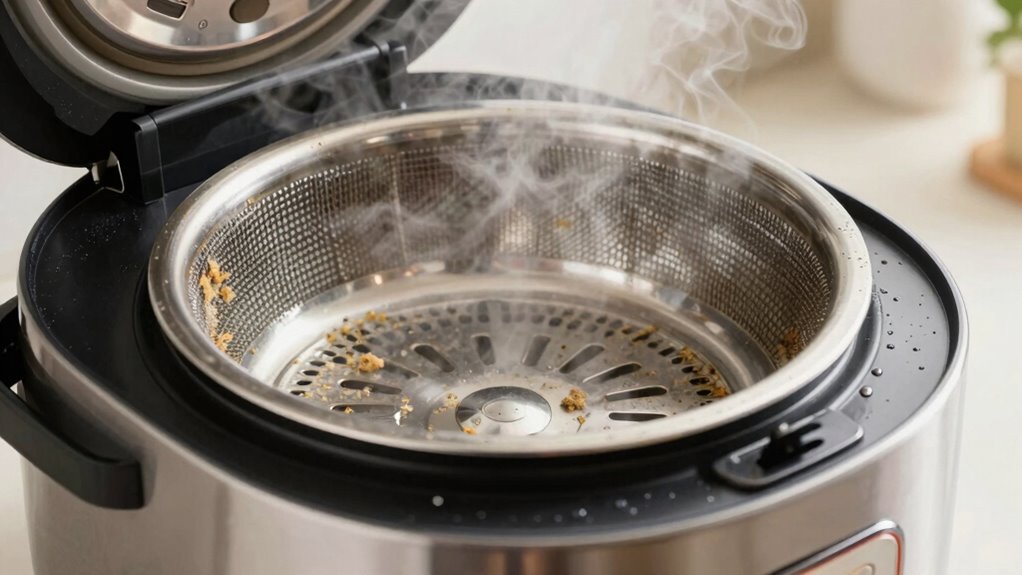
Even after thorough cleaning, some odors may still linger in your rice cooker. If that happens, try using odor absorption methods like placing a bowl of baking soda or white vinegar inside the cooker overnight. These substances help neutralize stubborn smells that cleaning alone might not eliminate. Also, consider increasing your cleaning frequency, especially if you notice odors returning quickly. Regularly wiping down the steam vent and inner lid prevents odor buildup and reduces lingering scents. Ensuring your rice cooker dries completely after each use also minimizes mold and bacteria that cause odors. Proper ventilation and attentive cleaning are key to keeping your rice cooker smelling fresh. Additionally, using odor-absorbing materials regularly can help maintain a fresh scent over time. If odors persist, repeat the cleaning process with a stronger vinegar solution or commercial odor eliminators. Maintaining good hygiene practices and ensuring proper drying can prevent future odor issues. Incorporating proper drying techniques can further reduce residual moisture that promotes odor-causing bacteria.
Frequently Asked Questions
Can Using Harsh Chemicals Damage the Rice Cooker’s Steam Vent?
Yes, using harsh chemicals can cause chemical damage to the rice cooker’s steam vent, leading to vent degradation over time. These chemicals may corrode the plastic or metal parts, weakening the vent’s structure and impairing its function. To keep your cooker in good shape, opt for gentle cleaning solutions like vinegar or mild soap, and avoid abrasive cleaners that can harm the vent and reduce its lifespan.
How Often Should I Clean the Steam Vent for Optimal Odor Control?
Imagine your rice cooker’s vent as a tiny gateway, quietly trapping odors over time. To keep it fresh, you should clean the vent at least once a month. Regular vent maintenance prevents buildup and odors from lingering. If you notice a strong smell or residue, increase cleaning frequency. Staying consistent guarantees your rice cooker stays odor-free, working efficiently, and delivering delicious rice every time.
Are There Eco-Friendly Cleaning Options for the Steam Vent?
Yes, there are eco-friendly cleaning options for the steam vent. You can use biodegradable cleaners or natural disinfectants like white vinegar or baking soda, which are effective at removing odors without harsh chemicals. Simply mix vinegar with water or sprinkle baking soda, then scrub gently with a soft brush. These natural solutions keep your rice cooker clean while protecting the environment and ensuring safe, odor-free cooking.
Will Cleaning the Vent Affect the Rice Cooker’s Warranty?
Cleaning the vent won’t void your warranty if you follow the manufacturer’s instructions, which 85% of users overlook. Warranty considerations are important, so avoid harsh chemicals that could damage parts or pose chemical safety risks. Use gentle, eco-friendly cleaners and clean carefully. Proper maintenance keeps your rice cooker in top shape without risking your warranty, and it ensures safe, odor-free cooking every time.
What Signs Indicate the Steam Vent Needs Replacement Instead of Cleaning?
If you notice vent corrosion or persistent vent blockage that cleaning doesn’t resolve, it’s time to substitute your steam vent. Signs include rust, cracks, or if the vent no longer fits securely, which can cause steam leaks. These issues compromise your rice cooker’s safety and performance. Don’t delay replacing a damaged vent to prevent further damage and ensure your cooker functions properly.
Conclusion
Think of your rice cooker’s steam vent like a tiny, hidden garden that needs regular tending. When neglected, odors can grow like weeds, stubborn and hard to remove. But with a simple cleaning routine, you’ll keep your cooker fresh and your rice tasting perfect. Just like tending a garden, a little effort now guarantees a fragrant, odor-free kitchen—because a clean steam vent keeps your rice cooker happy and your meals delightful.
NFL season / tailgating Picks
team gear
As an affiliate, we earn on qualifying purchases.