
The film inside your coffee carafe happens mainly because mineral deposits, oils, and tannins from brewing build up over time, especially if you don’t clean it regularly. To remove this residue safely, use gentle solutions like vinegar and baking soda, and avoid abrasive tools that can scratch the glass. Proper maintenance prevents future buildup and keeps your coffee tasting fresh. Want to discover proven tips for a spotless carafe? Keep exploring for more expert advice.
Key Takeaways
- Film buildup is caused by mineral deposits, coffee oils, tannins, and residue from brewing that harden on the glass surface.
- Regular cleaning with natural solutions like vinegar and baking soda prevents residue accumulation and mineral deposits.
- Immediate rinsing after brewing and thorough drying help reduce film formation and mold growth.
- Use soft cleaning tools and avoid harsh abrasives to safely remove existing film without damaging the glass.
- Replace the carafe if persistent stains, cracks, or buildup affect cleaning efficiency and coffee flavor.
What Causes the Film Buildup Inside Your Coffee Carafe?
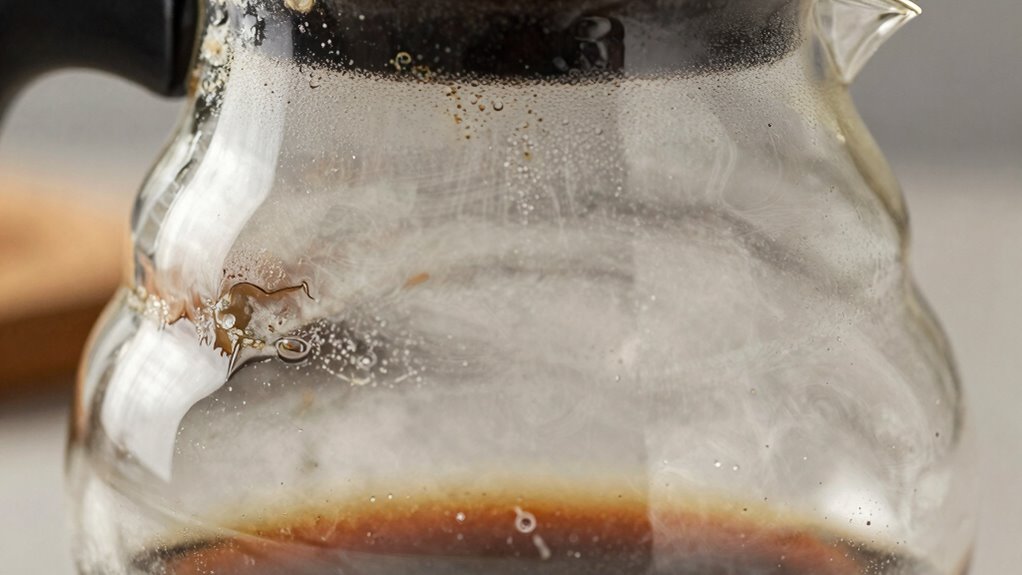
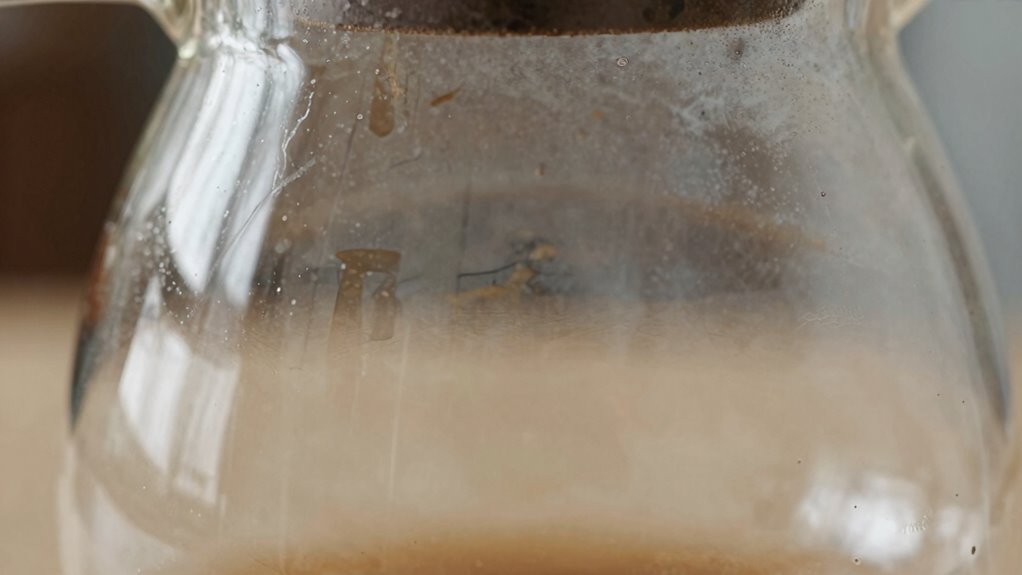
The film buildup inside your coffee carafe mainly results from mineral deposits, coffee oils, and residue left behind after brewing. Over time, mineral deposits from hard water accumulate on the carafe’s surface, creating a stubborn film. Simultaneously, coffee residue, composed of oils and tiny particles, clings to the glass, forming a sticky layer. These deposits combine, forming a film that becomes resistant to regular cleaning. The more frequently you brew coffee, the quicker these layers build up, especially if you don’t rinse the carafe thoroughly. Additionally, Free Floating particles can settle on the surface, further complicating cleaning efforts. Proper cleaning techniques and using filtered water can significantly reduce this buildup. Regularly deep cleaning your coffee maker helps prevent the accumulation of stubborn residues and mineral deposits. Using descaling solutions periodically can also help dissolve mineral deposits more effectively. To help prevent this buildup, it’s beneficial to maintain your coffee maker by following recommended cleaning routines. This film not only looks unappealing but can also affect the taste of your coffee. Regular descaling and proper cleaning help prevent excessive buildup, keeping your carafe clear and your coffee tasting fresh.
How Can You Recognize Different Types of Coffee Carafe Residue?
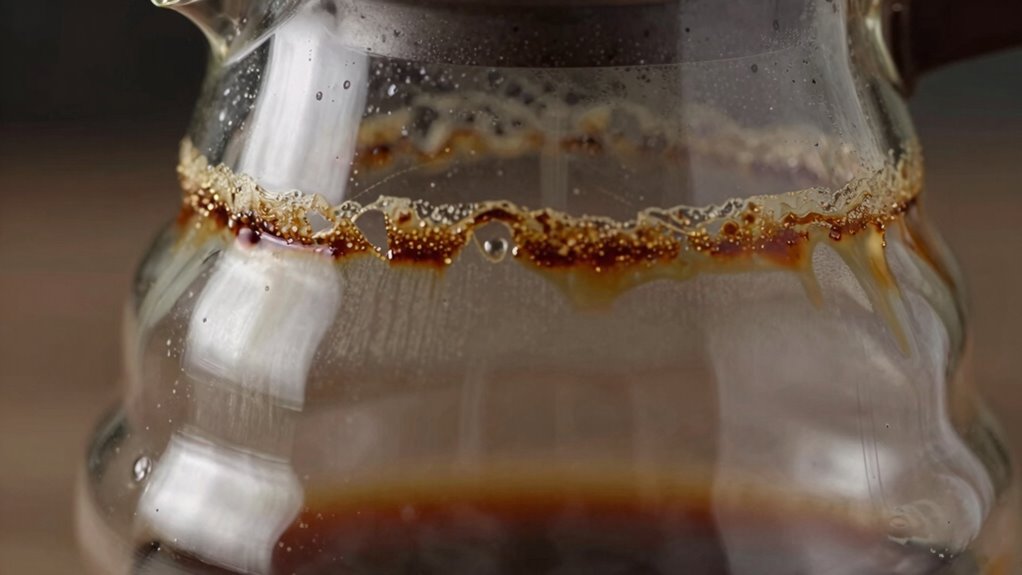
Recognizing different types of residue inside your coffee carafe helps you determine the right cleaning approach. Residue identification is key to effective coffee stain removal. First, look for dark, stubborn stains that cling to the glass; these are usually mineral deposits or old coffee oils. Second, check for a cloudy film that covers the interior surface, indicating buildup of oils or soap residue. Third, spot any sticky or slimy patches, which suggest mold or bacteria growth. Fourth, note any discoloration or film that appears after brewing, often caused by tannins or coffee oils. Additionally, understanding the composition of these residues can guide you in selecting appropriate cleaning solutions and techniques based on their chemical nature, ensuring your carafe remains clean and safe for brewing. Proper residue identification can also help prevent future buildup and prolong the lifespan of your coffee maker. Being aware of the stubborn stains and their causes can help you choose more effective cleaning methods for different situations. Knowing the types of residue present can also inform you about potential cleaning challenges and the best tools or agents to use for each.
How to Safely Clean Your Coffee Carafe and Remove Film
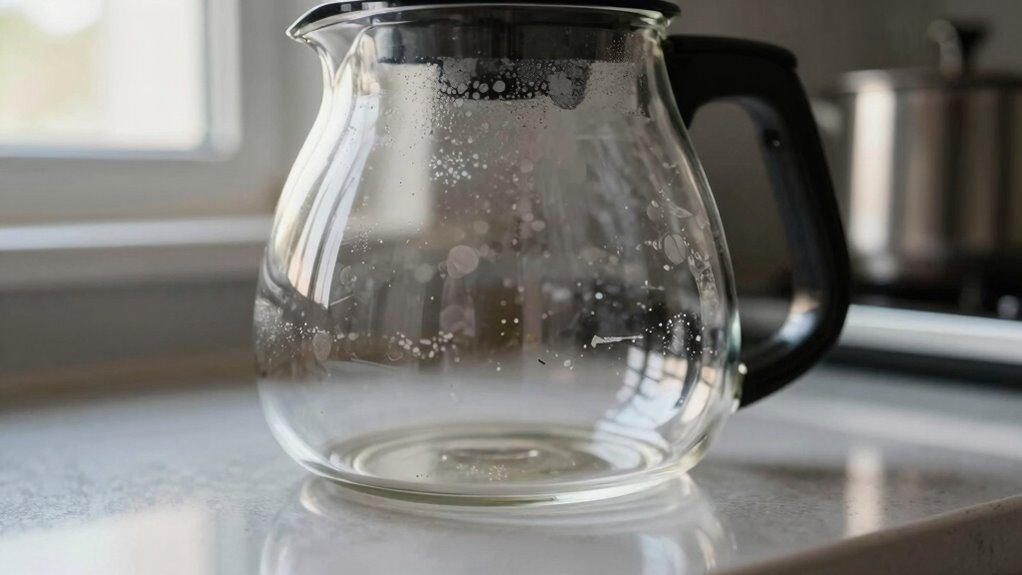
To keep your coffee carafe spotless, use gentle cleaning techniques that won’t scratch the surface. Natural solutions like vinegar or baking soda are effective and safe for removing film. Just remember to rinse thoroughly to avoid any lingering tastes.
Gentle Cleaning Techniques
Over time, mineral deposits and coffee oils can create a film inside your carafe that’s tough to remove with harsh scrubbing. To clean gently, start with a baking soda and vinegar mixture. This natural solution lifts residue without scratching. Here’s how:
- Fill the carafe halfway with warm water.
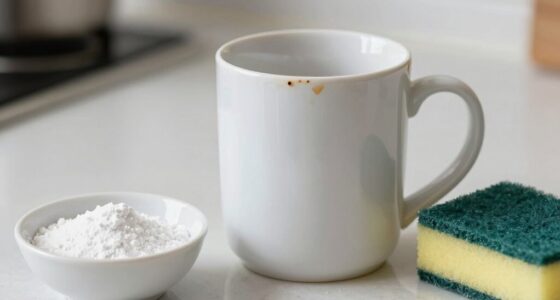
- Add 2 tablespoons of baking soda.
- Pour in 1/2 cup of vinegar mixture.
- Let it sit for 15-20 minutes.
Next, swirl gently to loosen the film. Use a soft sponge or cloth to wipe away deposits. Avoid abrasive scrubbers to prevent scratches. Rinsing thoroughly with clean water ensures no residue remains. Additionally, using a gentle cleaning method helps preserve your carafe’s surface while effectively removing film. Understanding kitchen cleaning techniques can help maintain your coffee maker in optimal condition, especially when dealing with mineral deposits, which are common in areas with hard water.
Natural Cleaning Solutions
Natural cleaning solutions offer a safe and effective way to keep your coffee carafe spotless without risking damage. For coffee stain removal, try using a mixture of equal parts white vinegar and water. Fill the carafe and let it sit for 15-20 minutes, then scrub gently with a soft brush or sponge. For tougher stains, sprinkle baking soda inside, add the vinegar solution, and let it fizz before rinsing thoroughly. These eco friendly cleaning methods are gentle on your carafe and the environment. They effectively break down film buildup and remove residues without harsh chemicals. Regular use of natural solutions not only maintains a clean, clear carafe but also prolongs its lifespan, ensuring your coffee tastes fresh and pure every time. Incorporating smart kitchen appliances that monitor water quality and cleaning cycles can further enhance your maintenance routine.
Step-by-Step: Cleaning Your Coffee Carafe at Home
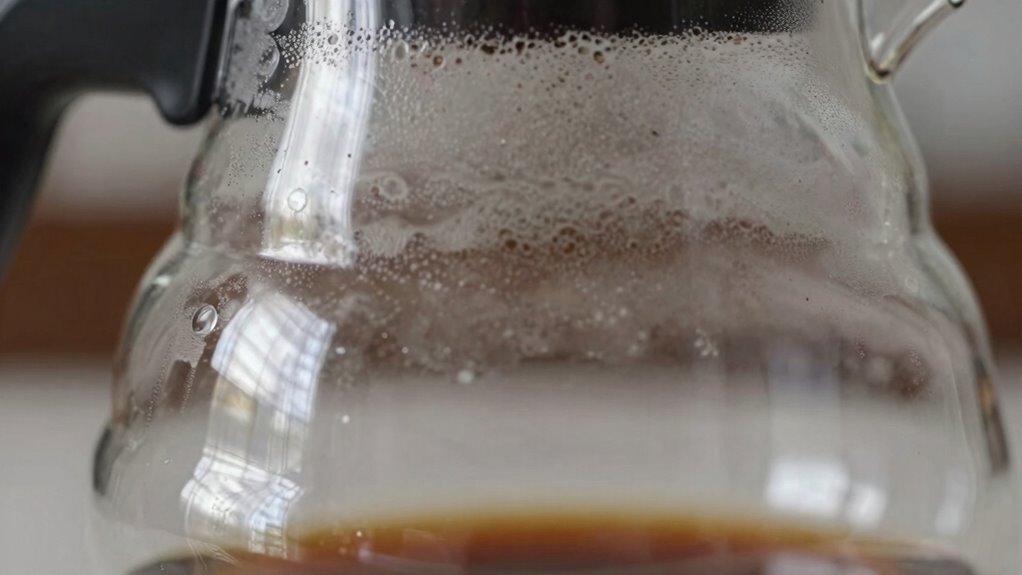
Cleaning your coffee carafe regularly keeps your brew tasting fresh and prevents buildup. To effectively remove coffee residue and film, gather your cleaning tools—like a sponge, bottle brush, or soft cloth. Follow these steps:
- Fill the carafe with warm water and add a few drops of dish soap.
- Use your cleaning tools to scrub the inside gently, focusing on stained areas.
- For stubborn residue, add a mixture of vinegar and water, then let it sit for 15 minutes.
- Rinse thoroughly with clean water to remove any soap or vinegar traces.
Repeat this process weekly to keep your coffee carafe spotless and free of film buildup. Proper cleaning tools and regular maintenance ensure a fresh-tasting brew every time.
How Can You Prevent Future Film Buildup in Your Coffee Carafe?
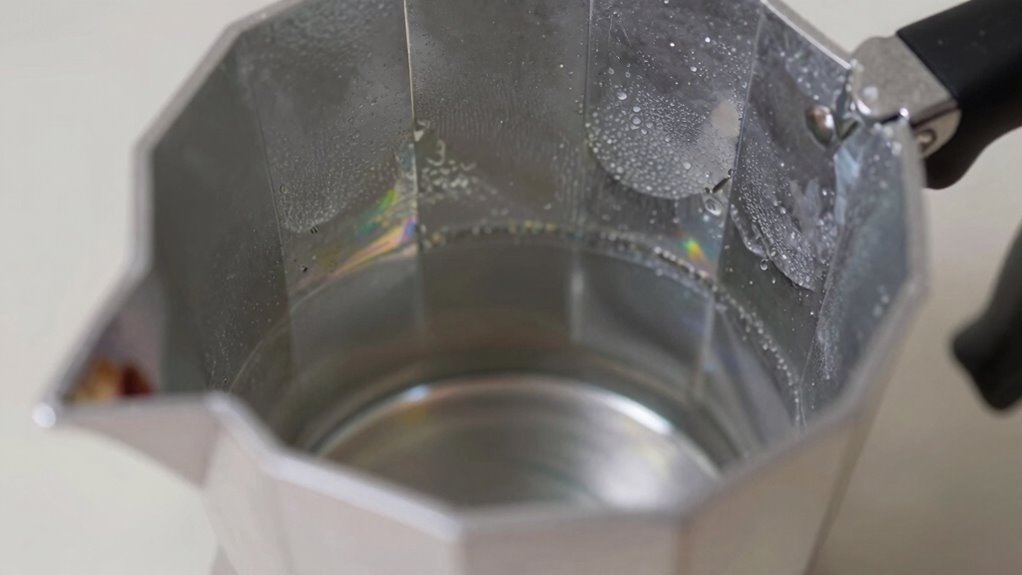
To prevent future film buildup, you should stick to a regular cleaning routine for your coffee carafe. Using proper water quality can also make a big difference in reducing residue. Understanding the science behind residue formation can help you choose the right cleaning methods and products. Additionally, being aware of water mineral content can further assist in minimizing buildup. Regularly descaling your coffee maker with appropriate cleaning solutions can also help prevent stubborn film accumulation. Ensuring proper water filtration can significantly reduce mineral deposits and keep your carafe cleaner. Consistent care keeps your carafe cleaner and your coffee tasting fresh.
Regular Cleaning Routine
Regularly rinsing your coffee carafe immediately after brewing helps prevent film buildup from setting in. This simple step keeps residues from drying and becoming harder to remove. To maintain a clean carafe and avoid stubborn stains, follow these carafe maintenance tips:
- Wash with warm, soapy water daily.
- Use a soft brush for coffee stain removal.
- Occasionally soak in a vinegar solution to dissolve mineral deposits.
- Dry thoroughly to prevent mold and lingering film.
- Consider using non-abrasive cleaning tools to protect the carafe’s surface and extend its lifespan.
Consistent cleaning not only keeps your carafe looking clear but also preserves the taste of your coffee. Implementing this routine reduces the need for harsh scrubbing and keeps your coffee maker in top shape. A regular cleaning schedule is your best defense against future film buildup.
Use Proper Water Quality
Using high-quality water for your coffee can substantially reduce the chance of film buildup in your carafe. Poor water quality often contains minerals that leave deposits on the glass over time, leading to unwanted film. To prevent this, consider using filtered or distilled water, which has fewer minerals and minimizes mineral deposits. Regularly changing your water source and avoiding tap water with high mineral content can make a big difference. Additionally, maintaining consistent water quality helps prevent the accumulation of film and keeps your coffee tasting fresh. By controlling the mineral levels in your water, you’ll reduce buildup and extend the life of your coffee maker and carafe. This simple step can save time on cleaning and improve your overall coffee experience.
When Should You Consider Replacing Your Coffee Carafe or Coffee Maker?
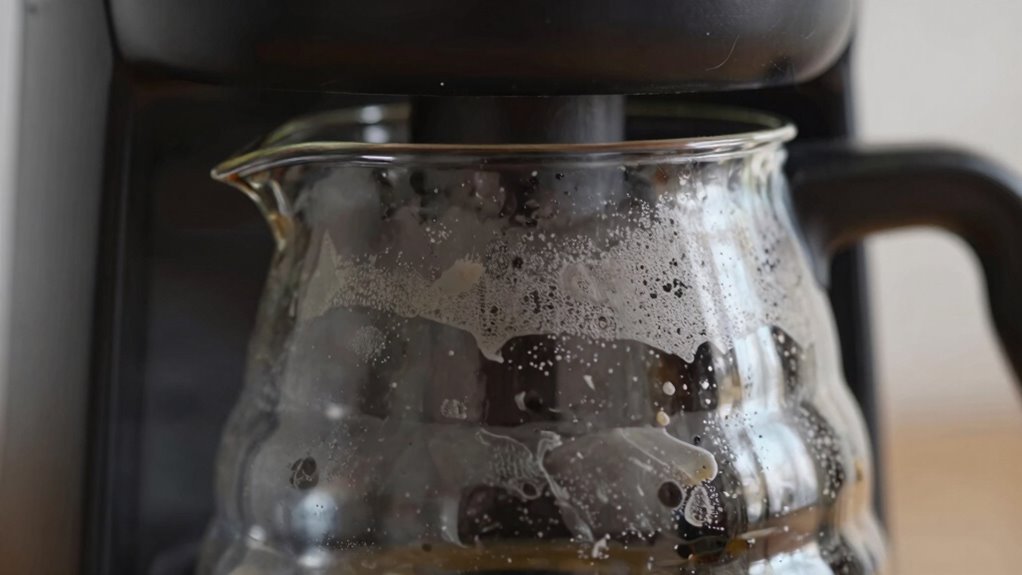
Knowing when to replace your coffee carafe or coffee maker is essential to guarantee your brewing remains efficient and your coffee tastes fresh. If your coffee storage becomes difficult to clean, or if persistent film affects flavor, it’s time to consider replacements. Also, if you notice inconsistent brewing techniques or a decline in coffee quality, replacing may be necessary. Here are some signs:
- Visible cracks or stains that won’t clean out
- Persistent carafe film affecting taste
- Frequent malfunctions or leaks
- Inability to maintain proper brewing temperature
- Signs of equipment wear and tear that impact performance
Regular maintenance and understanding equipment lifespan can help prevent unexpected failures. Monitoring product durability can guide timely replacements and ensure your coffee remains flavorful, and your brewing process stays efficient. Being aware of maintenance best practices can extend the lifespan of your coffee equipment. When replacement is needed, it ensures your coffee remains flavorful, and your brewing process stays efficient. Don’t wait until equipment failure hampers your morning routine.
Common Mistakes to Avoid When Cleaning Your Coffee Carafe
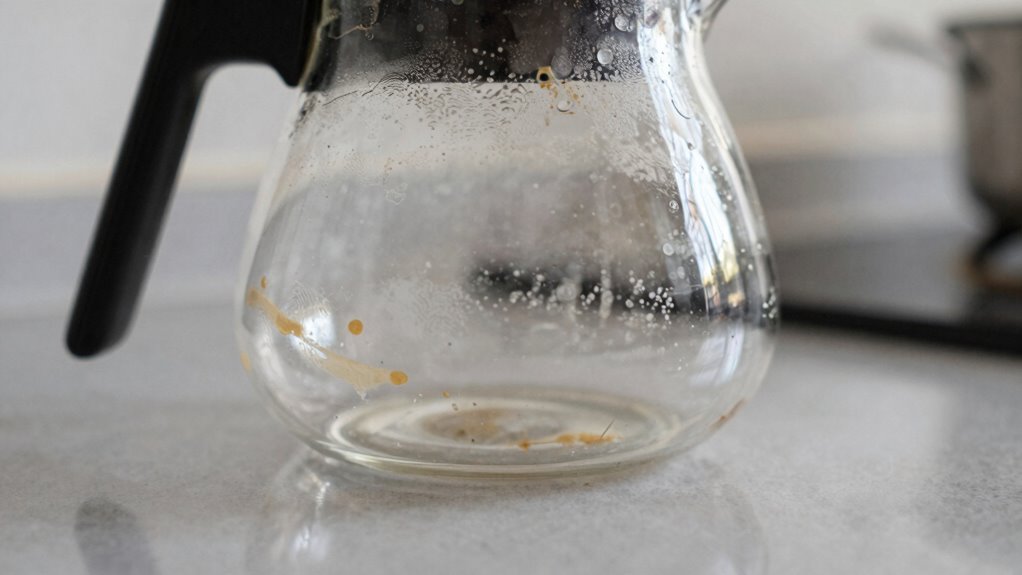
One common mistake to avoid when cleaning your coffee carafe is neglecting to thoroughly remove coffee oils and residues, which can build up and cause stains or off-flavors. To prevent this, don’t skip cleaning regularly. However, avoid abrasive cleaners, as they can scratch the glass and damage the surface, making it harder to clean and potentially trapping residue. Also, skip dishwasher use unless your carafe is labeled dishwasher-safe; high heat and harsh detergents can weaken the glass or cause clouding. Instead, opt for gentle cleaning methods like hand washing with mild soap and a soft sponge. Regular cleaning helps maintain clarity and prevents film buildup, keeping your coffee tasting fresh and your carafe looking clear.
Expert Tips for Maintaining a Spotless Coffee Carafe
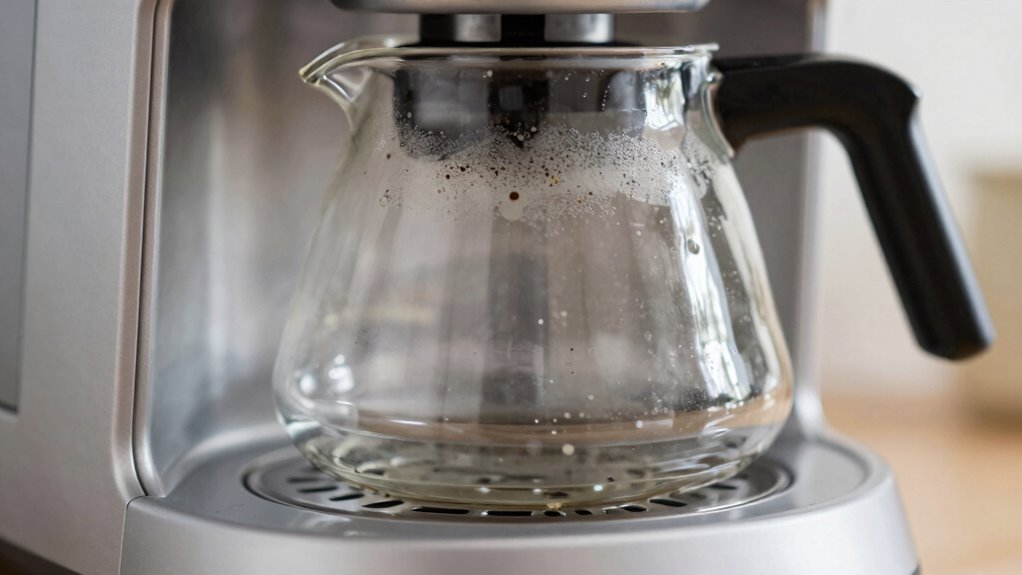
To keep your coffee carafe spotless, establishing a regular cleaning routine is essential. Consistent maintenance prevents stubborn stains and keeps your carafe looking new. Here are expert tips to help you maintain it effectively:
- Use a mixture of vinegar and water for regular coffee stain removal, soaking for 15 minutes before scrubbing.
- For tough stains, apply baking soda paste and let it sit, then scrub gently.
- Practice carafe polishing techniques with a soft cloth or sponge to restore shine after cleaning.
- Avoid abrasive scrubbers that can scratch the glass, and always rinse thoroughly to remove residue.
Following these steps ensures your carafe remains clean, shiny, and free of film buildup, making your coffee taste better and extending its lifespan.
Frequently Asked Questions
Can Certain Water Types Cause More Film Buildup in Coffee Carafes?
Yes, certain water types can cause more film buildup in your coffee carafe. Highly mineralized water with minerals like calcium and magnesium increases mineral deposits, while water with a high or low pH can accelerate film formation. Using filtered or softened water helps reduce mineralization, decreasing buildup. Regular cleaning is essential, especially if you notice more film forming, to keep your coffee tasting fresh and your carafe spotless.
Are There Eco-Friendly Cleaning Alternatives for Coffee Carafe Film Removal?
Think of eco-friendly cleaning options as nature’s gentle whispers. You can use biodegradable solutions like white vinegar or baking soda, which are natural cleaning agents, to remove film safely. These alternatives not only cut down on harsh chemicals but also protect the environment. Simply mix vinegar with water or sprinkle baking soda, scrub, and rinse thoroughly. This way, you keep your coffee carafe spotless while caring for the planet.
How Often Should I Deep Clean My Coffee Carafe to Prevent Film?
You should deep clean your coffee carafe at least once a month to prevent film buildup. Incorporate a regular maintenance routine that includes rinsing after each use and a thorough cleaning weekly. This cleaning frequency helps keep the carafe free of residue and film, ensuring your coffee tastes fresh and your machine stays in good condition. Staying consistent with your routine makes cleaning easier and maintains ideal performance.
Does Using Bottled or Filtered Water Reduce Film Formation?
Think of your water quality as the secret ingredient to a spotless carafe. Using bottled or filtered water can substantially cut down on mineral content, which is often behind film buildup. Cleaner water means fewer minerals to cling to your carafe, reducing film formation over time. So, by opting for better water, you help keep your coffee maker pristine and your brew tasting fresh every morning.
Is It Safe to Use Abrasive Tools for Cleaning Stubborn Film?
Using abrasive tools for cleaning stubborn film isn’t safe because they can scratch or damage your carafe’s surface. Instead, opt for gentle cleaning methods, like a soft sponge or non-abrasive scrubber, combined with a vinegar or baking soda solution. Always prioritize tool safety to avoid harming your equipment. If the film persists, consider using specialized cleaning products designed for coffee makers to ensure effective and safe removal.
Conclusion
Keep your coffee carafe sparkling and your mornings hassle-free by understanding what causes that stubborn film. With simple cleaning steps and prevention tips, you can enjoy fresh-tasting coffee every time. Remember, a clean carafe isn’t just about looks—it’s about flavor and health. Think of your carafe as the heart of your coffee ritual; treat it well, and every sip will remind you that good habits brew great mornings.