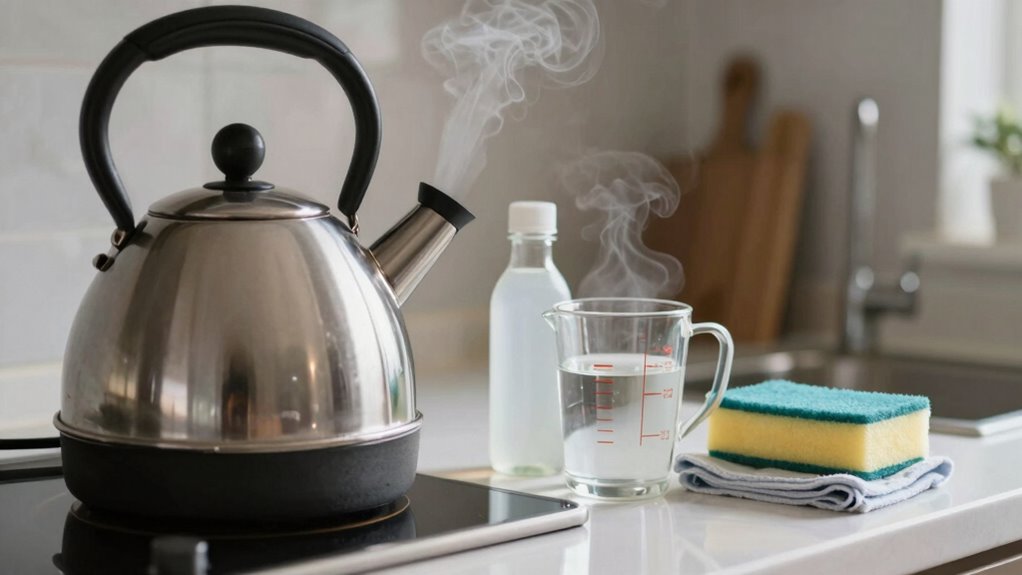
To descale your kitchen appliances safely, unplug them first and follow the manufacturer’s instructions. Use gentle descaling solutions like diluted white vinegar or recommended commercial products, avoiding harsh abrasives or metal tools. Apply soft cloths or non-abrasive brushes to clean sensitive parts, then run multiple water cycles to flush out residues. Regular maintenance prevents damage and keeps your appliances running smoothly. If you stay cautious and mindful, you’ll protect essential parts and guarantee long-term performance.

Get kitchen staples and gadgets delivered free — and shop member deals
- Fast, free delivery on millions of items
- Access to Prime Big Deal Days deals on October 6–7
- Prime Video, Amazon Music and more included
Key Takeaways
- Use manufacturer-recommended descaling solutions, avoiding harsh chemicals or abrasives that can damage sensitive components.
- Dilute vinegar with water and run it through the appliance to gently dissolve mineral buildup.
- Employ soft cloths, non-abrasive sponges, or specialized brushes for cleaning, avoiding metal tools.
- Always unplug appliances before descaling and follow specific manufacturer instructions to prevent damage.
- Rinse thoroughly with clean water after descaling to remove residues and protect internal parts.

Over time, mineral deposits from hard water can build up inside your kitchen appliances, affecting their performance and lifespan. If you notice your coffee maker, kettle, or dishwasher isn’t working as efficiently as it used to, it’s probably time to consider descaling. Proper cleaning techniques are vital to remove these deposits without damaging the delicate parts that keep your appliances running smoothly. When you approach appliance maintenance carefully, you can extend the life of your appliances and guarantee they operate at peak performance.
Regular descaling extends appliance life and keeps them running smoothly.
Start by unplugging the appliance and consulting the manufacturer’s instructions. Many appliances have specific recommendations for descaling solutions and procedures. For example, some coffee machines and kettles are compatible with natural descalers like white vinegar, while others may require commercial descaling products. When using cleaning techniques involving vinegar, dilute it with water—usually a mixture of equal parts vinegar and water works well. Pour the solution into the appliance’s water reservoir or tank, then run a cycle or heat it up as you normally would. This process dissolves mineral buildup gently and effectively. Using appropriate descaling methods helps prevent damage to sensitive parts during cleaning.
Be cautious to avoid harsh abrasives or metal tools that could scratch or damage sensitive parts, such as heating elements or rubber seals. Instead, use soft cloths, non-abrasive sponges, or brushes designed for appliance cleaning. After the descaling cycle completes, run a few cycles with clean water to flush out any residual vinegar or cleaning solution. This step is vital to prevent lingering tastes or chemical residues from affecting your next brew or wash.
Regular appliance maintenance involves more than just descale when needed. Incorporate routine cleaning techniques, like wiping down surfaces and checking for mineral buildup, to keep your appliances in top shape. For appliances like dishwashers and washing machines, using a descaling agent monthly can prevent stubborn deposits from forming. Remember, consistent care not only preserves performance but also prevents costly repairs down the line. Additionally, understanding hard water and how it contributes to mineral buildup can help you take proactive measures to protect your appliances.
descaling solution for coffee maker
As an affiliate, we earn on qualifying purchases.
As an affiliate, we earn on qualifying purchases.
Frequently Asked Questions
Can Descaling Damage Electronic Components in Appliances?
Descaling can damage electronic components if you’re not careful, especially when using harsh chemicals or excessive moisture that can compromise electronic safety. To protect your appliance’s longevity, always follow manufacturer instructions and use gentle descaling solutions. Avoid pouring liquids directly onto electronic parts, and disconnect appliances before cleaning. Proper techniques guarantee you effectively descale without risking damage, helping your appliances stay safe to use and last longer.
How Often Should I Descale Different Kitchen Appliances?
You should descale your appliances regularly—every few months for coffee machines and kettles, and at least once a year for dishwashers and washing machines. Proper cleaning frequency is crucial for appliance maintenance, preventing buildup that hampers performance. While it’s tempting to overlook routine descaling, neglecting it can cause long-term damage. Balancing frequency ensures your appliances stay efficient and durable, blending effective cleaning with protecting essential parts from harmful mineral deposits.
Are Natural Descaling Solutions as Effective as Commercial Ones?
Natural alternatives can be quite effective for descaling, especially with regular use, but their commercial effectiveness varies depending on the appliance and buildup. Vinegar and lemon juice are popular choices, and they often work well for light to moderate scale. However, for heavy deposits, commercial descaling solutions tend to be more powerful and faster. In most cases, a mix of both can keep your appliances running smoothly without damage.
Can Descaling Liquids Cause Corrosion Over Time?
Descaling liquids can cause corrosion if chemical reactions aren’t carefully controlled, especially with incompatible materials. Over time, improper use may lead to material compatibility issues, risking rust and damage. To prevent this, always check the descaling product’s instructions and test it on a small area first. Properly rinsing the appliance afterward helps minimize lingering residues, reducing the risk of corrosion and keeping your appliances in perfect condition.
What Are the Risks of Using Vinegar on Delicate Parts?
Using vinegar on delicate parts can lead to vinegar corrosion if left too long or used excessively. You risk damaging sensitive components like rubber seals or plastic parts, which may degrade or become brittle. To protect delicate parts, dilute vinegar properly, limit contact time, and rinse thoroughly afterward. This approach helps you clean effectively without risking harm to the appliance’s essential, fragile components.
non-abrasive cleaning brush for appliances
As an affiliate, we earn on qualifying purchases.
As an affiliate, we earn on qualifying purchases.
Conclusion
Regular descaling keeps your appliances running smoothly and extends their lifespan. Did you know that mineral buildup can reduce a coffee maker’s efficiency by up to 30%? By following gentle descaling methods, you prevent damage to essential components and save money on repairs or replacements. Keep your appliances in top shape with simple, careful maintenance—your kitchen appliances will thank you for it, and you’ll enjoy better-tasting coffee and cleaner dishes every day.
white vinegar descaler for kettle
As an affiliate, we earn on qualifying purchases.
As an affiliate, we earn on qualifying purchases.
As an affiliate, we earn on qualifying purchases.
Fall Picks
fall essentials
As an affiliate, we earn on qualifying purchases.