
To remove coffee stains from your mug without scrubbing forever, try using natural solutions like baking soda and vinegar, which fizz to lift stains easily. You can also soak your mug in a mixture of hydrogen peroxide and warm water or drop denture tablets in to fizz away stubborn marks. Citrus peels and lemon juice brighten and deodorize at the same time. Keep your mug in top shape by stopping stains early—learn simple tips that make cleaning effortless.
Key Takeaways
- Use natural cleaners like baking soda and vinegar to lift stains with minimal scrubbing.
- Soak mugs in hydrogen peroxide or oxygen bleach for deep stain removal without scrubbing.
- Rinse immediately after use and apply citrus solutions to prevent stains from setting.
- Employ denture tablets or effervescent cleaning agents for quick, chemical stain breakdown.
- Regularly maintain mugs with gentle rinsing and protective coatings to reduce stain buildup over time.
Why Do Coffee Stains Stick to Your Mug? The Science Explained

Coffee stains cling to your mug because of the interaction between the tannins in coffee and the mug’s surface. These tannins, a type of polyphenol, bind easily to porous materials, making coffee residue stick stubbornly. Mug porosity plays a *vital* role here—porous mugs absorb the coffee compounds, creating a foundation for stains that are hard to remove. Mug porosity is influenced by the material composition of the mug, which determines how easily it absorbs stains. When hot coffee contacts a porous surface, the coffee molecules seep into tiny holes and crevices, leaving behind a film of residue. Over time, this buildup becomes more ingrained, making stains more difficult to clean. Additionally, the porosity of the mug can be affected by how the mug is glazed or finished, which can either seal or expose the porous surface. Understanding mug porosity can help you choose the best mug for avoiding stains altogether. Recognizing the porous nature of certain materials helps explain why some mugs stain more easily than others. Additionally, knowing how different materials interact with coffee can inform your choice of mug to minimize staining.
How to Choose the Best Cleaning Method for Your Mug Material
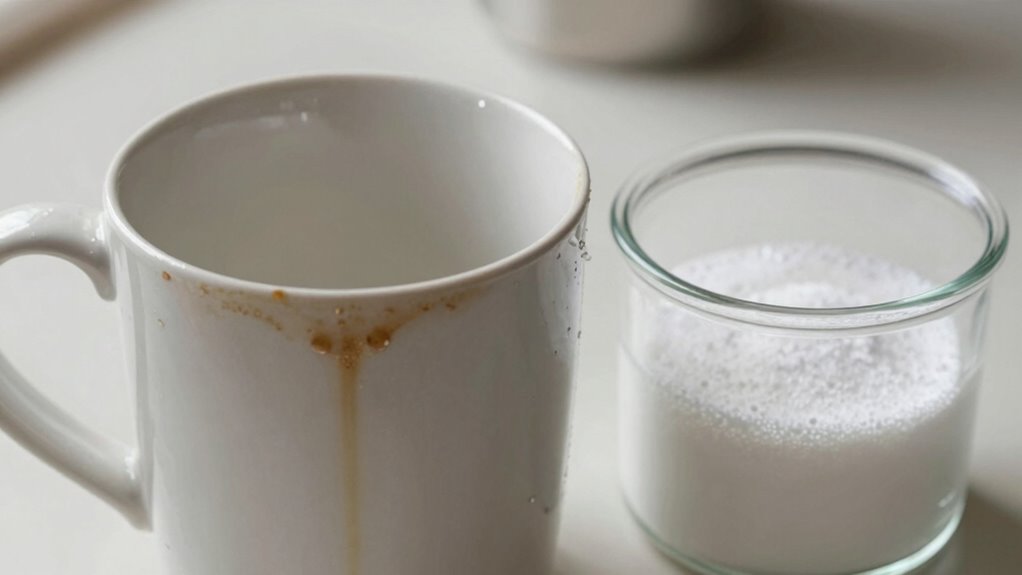
Choosing the right cleaning method depends on your mug’s material to prevent damage. You also want an approach that effectively removes stains without harming the surface. Considering both material compatibility and cleaning agent strength helps you pick the best option. Additionally, selecting environmentally friendly cleaning solutions aligns with sustainable practices. European cloud innovation emphasizes the importance of responsible resource usage in modern solutions. To ensure safe and effective cleaning, it’s helpful to understand material properties that influence stain removal techniques. Being aware of stain composition can guide you in choosing the most suitable cleaning method and agents for your mug. Recognizing cleaning agent safety is essential to avoid unintended damage or health risks during the cleaning process. Understanding environmentally friendly practices can further enhance the sustainability of your cleaning routine.
Material Compatibility
Different mug materials require different cleaning approaches to prevent damage and guarantee effective stain removal. You need to contemplate material durability because some surfaces are more prone to scratches or etching. For example, delicate ceramics or glazed mugs can react negatively to abrasive scrubbers or harsh chemicals, risking surface reactions that damage their finish. Stainless steel and glass are generally more resilient but still benefit from gentle cleaning methods. Porcelain and ceramic mugs may stain more easily but can be sensitive to certain cleaning agents that cause surface reactions, leading to discoloration or roughness. Always match your cleaning method to your mug’s material, avoiding abrasive tools or strong chemicals on fragile surfaces. Proper care ensures your mug remains both stain-free and intact over time.
Cleaning Agent Effectiveness
Selecting the right cleaning agents depends largely on your mug’s material to prevent damage and guarantee effective stain removal. Different materials react uniquely to cleaning agents, affecting chemical reactions that break down coffee stains. For porcelain or ceramic mugs, mild abrasives or baking soda can promote chemical reactions that lift stains without damaging the surface. When cleaning stainless steel mugs, avoid harsh chemicals that could cause stain penetration or surface corrosion. Glass mugs respond well to gentle acids like vinegar, which react chemically to dissolve stains. Using the correct agent guarantees stains are removed efficiently while preserving your mug’s integrity. Understanding how your mug material interacts with cleaning agents helps you choose the most effective method and prevents unnecessary damage during stain removal. Additionally, recognizing the material compatibility of cleaning products ensures safe and effective cleaning results. Being aware of cleaning agent reactions can help you avoid unintended damage or ineffective cleaning.
Quick Coffee Stain Removal With Baking Soda and Vinegar
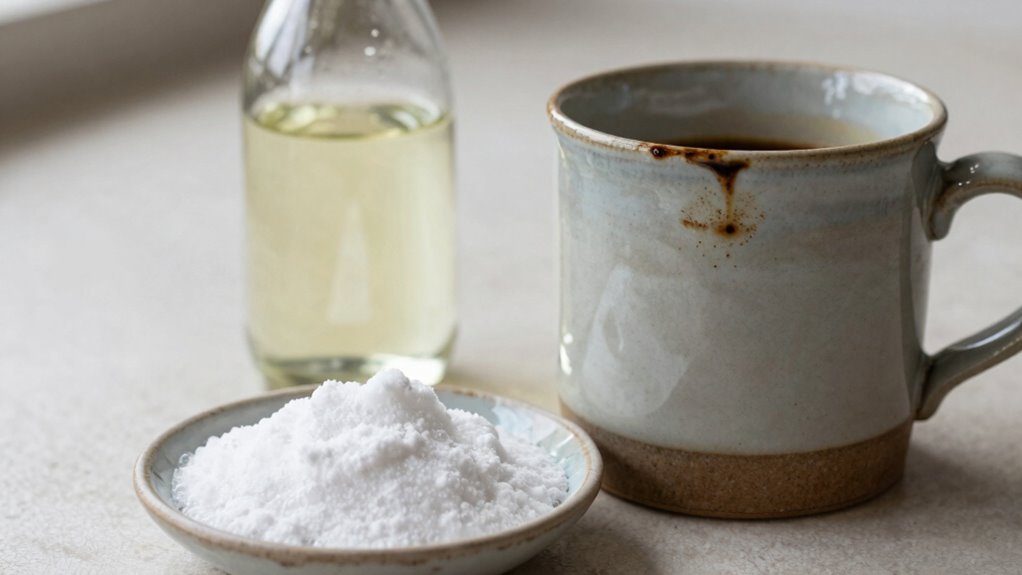
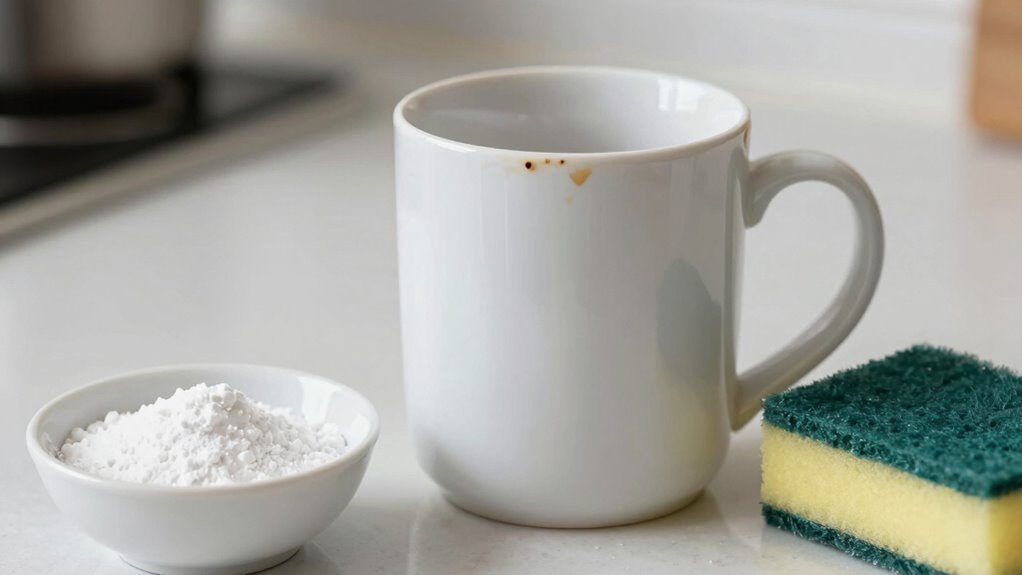
If you want a quick and effective way to remove coffee stains from your mug, combining baking soda and vinegar is a simple solution. Start by sprinkling baking soda inside the mug, covering the stained areas. Add a splash of vinegar, and you’ll see it fizz as it reacts. This reaction helps lift stubborn coffee residue, reducing stains and restoring your mug’s appearance. As the stains fade, your mug’s aesthetics improve, making it look newer. Plus, this method also helps eliminate lingering coffee aroma, leaving your mug smelling fresh. The combination is safe, inexpensive, and requires minimal effort. With just a few minutes, you can enjoy a clean mug without scrubbing forever, and your mug will look great and smell inviting again. Understanding water chemistry can help you better grasp how the reaction works to break down stains and residues. This process demonstrates how chemical reactions facilitate cleaning by breaking down stubborn deposits naturally. Recognizing the role of molecular interactions can further enhance your cleaning techniques by highlighting how these reactions target specific residues effectively. Additionally, knowing about cleaning agents can guide you in choosing the most effective solutions for different types of stains. Incorporating effective cleaning methods can make your cleaning routine more efficient and environmentally friendly.
Brighten Your Mug With Lemon Juice or Citrus Peels

After using baking soda and vinegar to remove stubborn coffee stains, you can brighten your mug even further with natural citrus solutions. Lemon brightening is a simple, effective way to restore shine and revitalization. Squeeze fresh lemon juice onto the mug or rub citrus peels directly over the surface. The citric acid in lemon helps break down residual stains and adds a natural glow. Citrus peel benefits extend beyond cleaning; they contain oils that leave a pleasant scent and help eliminate lingering odors. Plus, using lemon or citrus peels is eco-friendly and budget-friendly. This method not only enhances your mug’s appearance but also provides an invigorating citrus aroma, making your mug feel like new without harsh chemicals or intensive scrubbing. Incorporating natural cleaning methods supports a more sustainable and healthy kitchen environment, aligning with tableware principles for comfortable living. Additionally, citrus peels are a versatile cleaning tool that can be reused in various household tasks, reducing waste and promoting eco-conscious habits. Using citrus peels can also contribute to reducing plastic waste since they are biodegradable and biodegradable materials are better for the environment.
Using Hydrogen Peroxide to Tackle Tough Coffee Stains

When stubborn coffee stains refuse to budge, hydrogen peroxide offers a powerful solution. This common household item is effective for stain removal because it breaks down coffee residues at a molecular level. To use it, fill your mug with a mixture of equal parts hydrogen peroxide and warm water, then let it sit for 15-30 minutes. For tougher stains, apply a small amount of hydrogen peroxide directly onto the stain and let it sit for a few minutes. Use a soft cloth or sponge to gently wipe away the stain afterward. Hydrogen peroxide is safe for most mug surfaces and doesn’t require harsh scrubbing, making it an efficient way to restore your mug’s appearance without damaging the material. Regular use of household cleaning agents can also help maintain your mug’s cleanliness over time.
How Denture Tablets and Oxygen Bleach Can Help Remove Stubborn Stains

Denture tablets and oxygen bleach are powerful tools for removing stubborn coffee stains from mugs. To use denture tablets, drop one into warm water with your mug and let it fizz for about 15 minutes. The effervescent action breaks down stain particles. Oxygen bleach, on the other hand, works by releasing oxygen to lift stains. Mix oxygen bleach with water and soak your mug for a few hours or overnight for deep cleaning.
| Tool | Best For |
|---|---|
| Denture tablets | Quick, chemical reaction to loosen stains |
| Oxygen bleach | Long-term soaking for stubborn stains |
| Safety | Use gloves and rinse thoroughly |
| Effectiveness | Suitable for hard-to-remove stains |
| Precautions | Avoid prolonged contact to prevent damage |
How to Prevent Coffee Stains Before They Happen
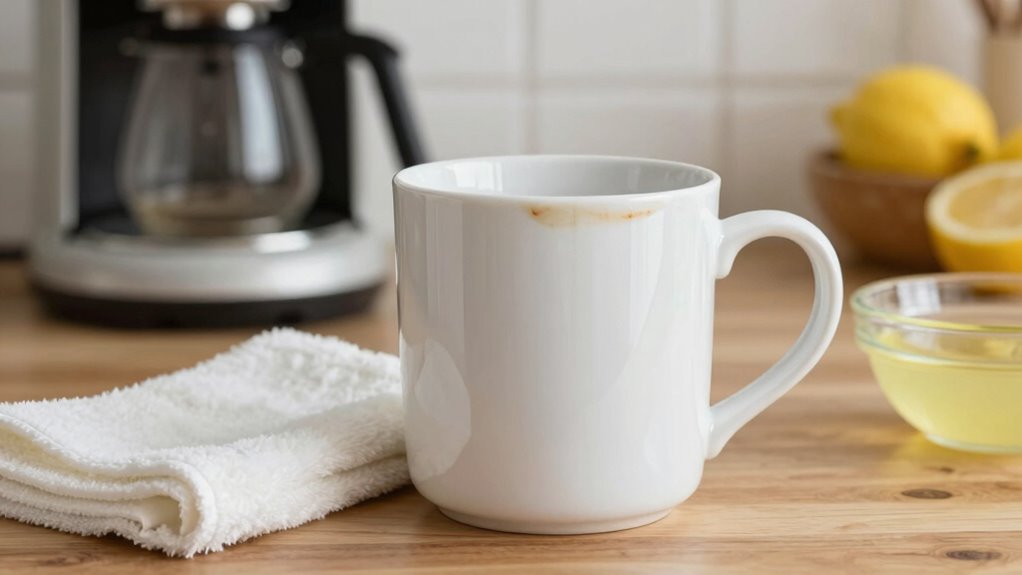
You can prevent coffee stains by applying protective coatings to your mugs, creating a barrier that fights stains. Rinsing your mug right after use stops stains from setting, making cleanup easier. Additionally, limiting the coffee’s strength reduces the likelihood of stubborn stains forming over time.
Use Protective Coatings
Applying a protective coating to your mug can considerably reduce the likelihood of coffee stains forming. Protective coatings create a barrier that minimizes the absorption of coffee residues, making stain prevention easier. You can use clear ceramic sealants or food-safe waxes designed for cookware, which form a thin, durable layer on your mug’s surface. Before applying, clean your mug thoroughly to ensure proper adhesion. Once coated, these barriers help keep coffee from soaking into the ceramic or porcelain, reducing stubborn stains over time. Regular application of protective coatings is a simple way to maintain your mug’s appearance while extending its lifespan. Keep in mind, though, that these coatings need reapplication periodically to stay effective, but they’re a proactive step toward stain-free mug use.
Rinse Immediately After Use
Rinsing your mug immediately after each use is one of the simplest ways to prevent coffee stains from setting in. When you do mug rinsing right away, you wash away coffee residue before it has a chance to dry and stick. This prevents the buildup that leads to stubborn stains down the line. Don’t wait until the mug is completely dry; a quick rinse with warm water is enough to clear away loose coffee residue. If you regularly rinse your mug after use, you’ll find it much easier to keep it looking clean and stain-free. This simple habit reduces the need for harsh scrubbing later and helps maintain your mug’s appearance over time. Plus, it saves you effort and preserves the mug’s finish.
Limit Coffee Concentration
To prevent coffee stains from forming in the first place, it’s important to limit the coffee’s concentration before pouring. A high coffee concentration increases the likelihood of mug staining, especially if the brew is very dark or strong. Diluting your coffee slightly with hot water can reduce its intensity, making it less likely to leave stubborn marks. Using a lighter brew or adding milk or cream also helps minimize the risk of mug staining. When coffee isn’t too concentrated, it’s easier to clean and less prone to leaving behind stubborn residues. By controlling the coffee’s strength from the start, you’ll keep your mug cleaner longer and reduce the need for intensive stain removal later. Limiting coffee concentration is a simple, effective step to protect your mugs.
When Should You Use Commercial Coffee Stain Removers?
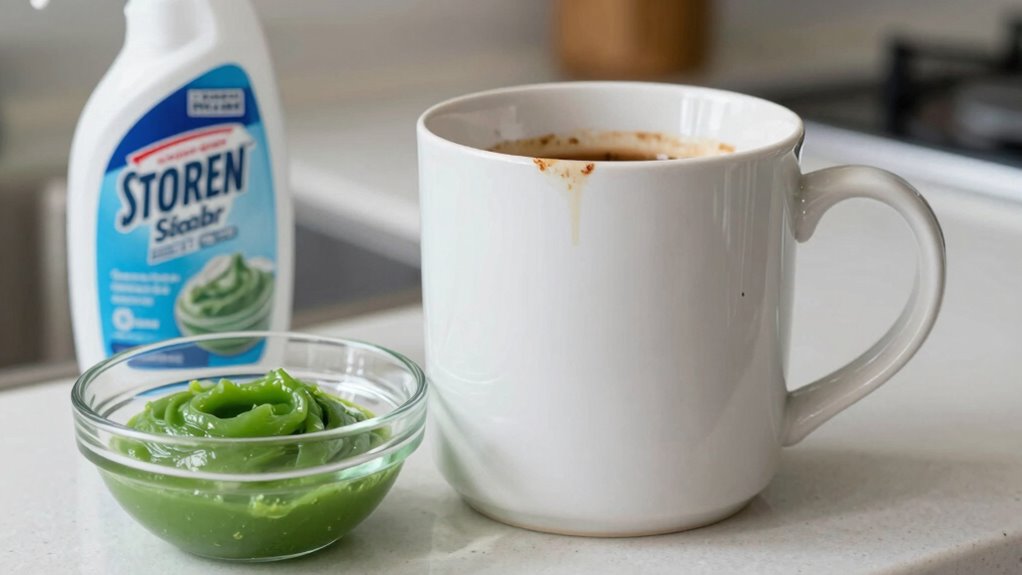
Have stubborn coffee stains refused to budge with home remedies? If your mug still shows dark marks after trying natural solutions, it’s time to contemplate commercial coffee stain removers. These specialized cleaners are designed for tough stains and can save you time and effort. Use them when regular coffee stain removal methods fail, or if stains have set in deeply. Commercial cleaners often contain stronger ingredients that break down coffee residues more effectively. However, always follow the manufacturer’s instructions carefully to avoid damaging your mug. Reserve these products for persistent stains, as natural methods are usually sufficient for light marks. When used correctly, commercial coffee stain removers can help restore your mug’s appearance quickly and easily.
Tips for Keeping Your Mug Sparkling and Stain-Free

Keeping your mug sparkling and stain-free requires consistent care and mindful habits. Regular mug maintenance helps prevent stubborn stains from forming. Rinse your mug immediately after use to wash away coffee residue before it sets. Use gentle cleaning methods—such as a soft sponge and mild dish soap—to avoid scratching the surface. Avoid leaving coffee or tea in your mug for extended periods, as this promotes stain buildup. Occasionally, add baking soda or vinegar to your cleaning routine for extra stain prevention. Also, consider using a straw or avoiding overly dark or pigment-rich beverages if you’re prone to stains. By adopting these simple habits, you’ll keep your mug looking new, making stain prevention a seamless part of your daily routine.
Frequently Asked Questions
Can Dishwasher Detergents Effectively Remove Coffee Stains From Mugs?
Dishwasher detergents can effectively remove coffee stains from mugs because of their strong stain removal chemicals and high dishwasher efficacy. When you run your mug through a cycle with good quality detergent, it helps break down the coffee residue. For stubborn stains, pre-soaking or using a booster can enhance the stain removal process. Just make certain your mug is dishwasher safe, and you’ll see cleaner results without much scrubbing.
Are There Natural Alternatives to Commercial Stain Removers for Coffee Mugs?
Like a gentle alchemist, you can transform your mug with natural home remedies instead of harsh commercial stain removers. Baking soda and vinegar work wonders to lift coffee stains effortlessly, while lemon juice acts as a brightening agent. To prevent future stains, rinse your mug promptly after use and avoid letting coffee sit. These natural options are eco-friendly, cost-effective, and promote stain prevention, keeping your mugs sparkling naturally.
How Long Should I Soak My Mug for Best Stain Removal Results?
For the best stain removal results, soak your mug for about 15 to 30 minutes, depending on the stain’s severity. This soaking duration allows the natural cleaning agents, like baking soda or vinegar, to break down coffee stains effectively. If the stain is stubborn, you can extend the stain removal time up to an hour. Just make certain you check periodically to avoid over-soaking, which might damage your mug.
Does the Type of Coffee Affect Stain Longevity on Mugs?
Yes, the type of coffee influences stain longevity on your mugs. Higher acidity coffees, like espresso or dark roasts, tend to leave more stubborn stains, especially on porous materials like ceramic or stoneware. Lower acidity brews, such as cold brew, usually cause less staining. So, if you notice tougher stains, it’s likely due to the coffee’s acidity and your mug’s material, which can absorb or resist stains differently.
Can Stained Mugs Be Safely Restored Without Damaging the Material?
Your stained mug can be safely restored using gentle stain removal techniques that won’t damage the material. Think of these methods as a soothing balm for your mug’s surface. Use baking soda paste, vinegar soak, or commercial stain removers suitable for your mug’s material. Mug restoration methods like these are effective and safe, ensuring your mug looks great again without risking cracks or scratches.
Conclusion
To keep your mugs spotless, stay consistent, stay gentle, and stay smart. Use natural solutions to prevent stains, act quickly when stains appear, and choose the right method for your mug material. Avoid scrubbing forever by understanding your options, experimenting with safe remedies, and knowing when to reach for commercial cleaners. With these simple steps, you’ll enjoy a sparkling mug every time, free from stubborn coffee stains and endless scrubbing.