
Most often, bitterness in your coffee isn’t caused by the beans’ quality but by brewing mistakes or storage issues. Over-extraction from brewing too long, high water temperatures, or using an inconsistent grind can pull out bitter compounds. Storing beans improperly or using stale beans also enhances undesirable flavors. Adjusting your brewing time, temperature, and grind size can make a big difference. If you want to discover how to perfect your brew, keep exploring these tips.
Open a free Amazon Business account
Business pricing, bulk buying and tax-exempt orders.
As an affiliate, we earn on qualifying purchases.
Key Takeaways
- Over-extraction from long brew times or high temperatures can cause bitterness, not necessarily bean quality.
- Inconsistent grind size leads to uneven extraction, resulting in bitter or sour tastes.
- Using beans that are over-roasted or stored improperly increases bitterness regardless of origin.
- Brewing methods like espresso or pour-over, if not timed correctly, can extract bitter compounds.
- Water temperature that’s too high can draw out excessive bitter tannins during brewing.
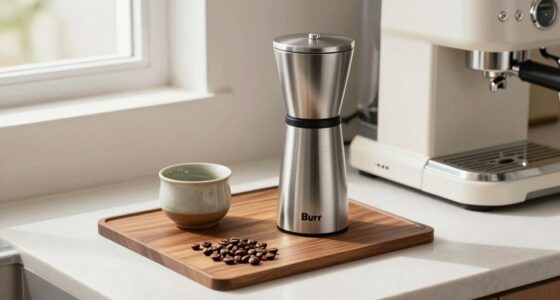
coffee grinder with adjustable grind size
As an affiliate, we earn on qualifying purchases.
As an affiliate, we earn on qualifying purchases.
Why Does My Coffee Taste Bitter Despite Using Quality Beans?
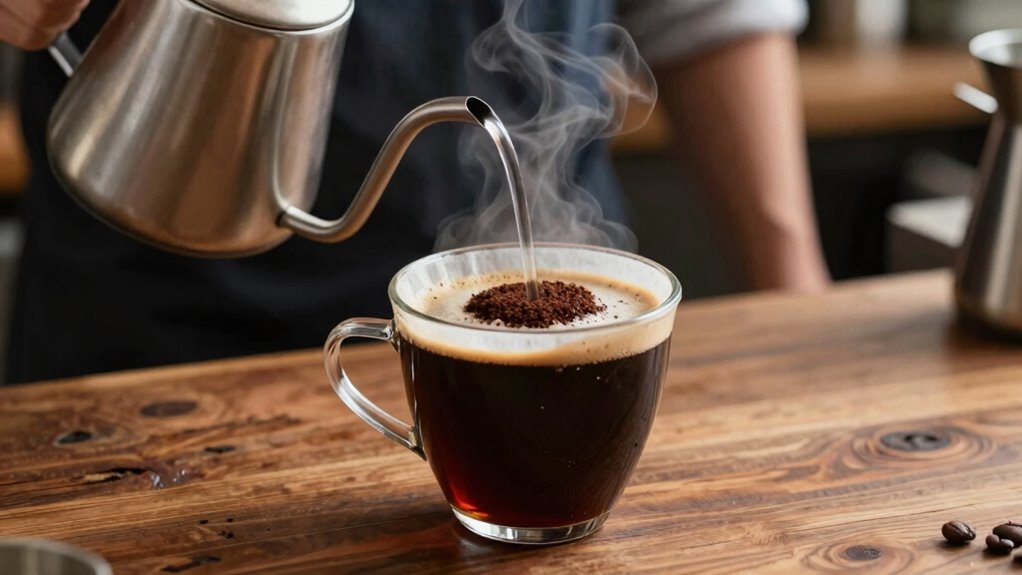
Have you ever wondered why your coffee still tastes bitter even when you start with high-quality beans? The answer often lies in flavor balancing and bean origin. Even premium beans can produce a bitter taste if their natural flavors aren’t balanced during brewing. Different bean origins have distinct flavor profiles—some naturally carry more acidity, others more bitterness. If you don’t adjust your brewing process to complement these traits, the result can be an overly bitter cup. For example, beans from certain regions may require a specific grind size or brew time to highlight their best qualities. Understanding your beans’ origin helps you fine-tune your technique, ensuring that the unique flavors shine without unwanted bitterness. Proper flavor balancing makes all the difference, especially when considering the bean’s natural profile. Additionally, employing proper brewing techniques can significantly influence the final taste, helping to reduce undesirable bitterness. Being aware of precise extraction methods can further refine your process to achieve a smoother, more balanced flavor, and paying attention to water temperature can prevent over-extraction that often leads to bitterness.
As an affiliate, we earn on qualifying purchases.
How Over-Extraction Turns Coffee Bitter
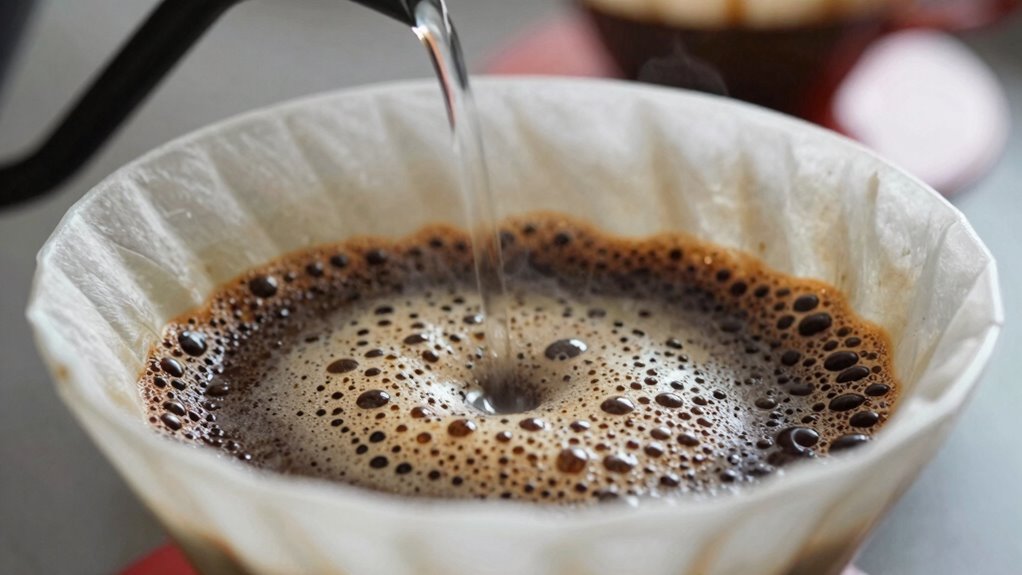
When you brew coffee too long, over-extraction releases bitter compounds, making your cup harsh. Adjusting your grind size helps control extraction time, preventing bitterness from overdoing it. Keep an eye on both to enjoy a balanced, smooth flavor. Additionally, monitoring your extraction process ensures optimal flavor development and avoids over- or under-extraction. Understanding brewing techniques can further help you fine-tune your method for the best taste. Paying attention to water temperature is also crucial, as too high a temperature can increase extraction of undesirable bitter elements. Incorporating appliance maintenance plans for your coffee machine can also ensure consistent performance and prevent unwanted flavors. Properly managing your brew setup can contribute to a more consistent and enjoyable coffee experience.
Extraction Time Matters
If you leave coffee grounds in hot water for too long, the extraction process can go from ideal to overdone, causing your brew to taste bitter. Over-extraction pulls out unwanted compounds, turning your coffee harsh and unpleasant. Timing is key—aim for the right extraction time to preserve flavor pairing and avoid bitterness. Proper coffee storage also helps maintain the beans’ freshness, preventing stale flavors that can amplify bitterness during brewing. When your coffee is stored well, it’s easier to control extraction time, ensuring a balanced, flavorful cup. Paying attention to brewing duration is essential; too long, and bitterness increases. Additionally, understanding extraction control techniques can help prevent over-extraction and improve your overall coffee experience. By managing extraction time carefully and storing coffee properly, you can enjoy a smooth, well-rounded brew without the unwanted bitterness that over-extraction causes. Consistent brewing techniques are essential for achieving optimal flavor and avoiding bitterness.
Grind Size Impact
The size of your coffee grounds plays a significant role in controlling extraction and preventing bitterness. When your grind is too fine, over-extraction occurs, leading to bitter flavors. Conversely, a coarse grind can result in under-extraction, making your coffee weak. Adjusting grind size influences flavor pairing, allowing you to highlight specific tasting notes from different coffee roasts. For instance, lighter roasts benefit from a slightly finer grind to extract bright, fruity flavors, while darker roasts prefer a coarser grind to avoid bitterness. Keep in mind that inconsistent grind size can cause uneven extraction, which can increase bitterness, and lead to an undesirable taste. To optimize your brewing, consider:
- Matching grind size with brewing method
- Experimenting based on coffee roasting level
- Using a burr grinder for consistency
- Adjusting grind size for flavor balance
- Avoiding overly fine or coarse grounds
Proper grind size is essential for balancing extraction and achieving your desired flavor profile. Additionally, understanding how paint spray tips influence spray pattern and finish quality can help ensure your equipment operates efficiently and produces the best results in your projects. Recognizing the impact of grind uniformity on extraction can further help in refining your brewing process to minimize bitterness and enhance flavor clarity. Informed adjustments based on net worth and other factors can also contribute to a more satisfying coffee experience.
As an affiliate, we earn on qualifying purchases.
Does Water Temperature Affect Coffee’s Bitterness?
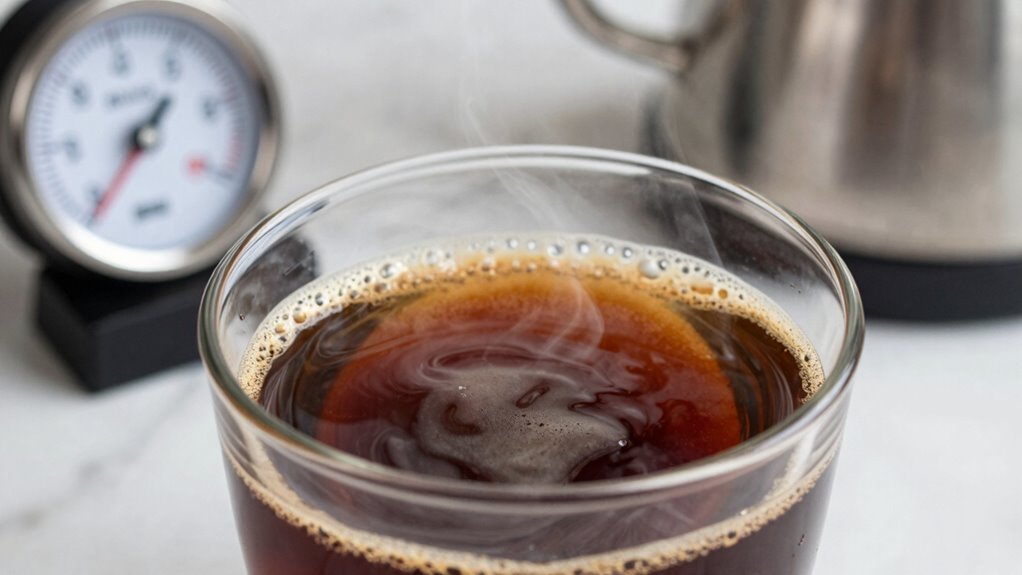
Water temperature plays a crucial role in determining the bitterness of your coffee. It influences water chemistry, affecting how compounds like acids and tannins are extracted during brewing. If the brewing temperature is too high, you’ll extract more bitter compounds, resulting in a harsh taste. Conversely, too low a temperature may lead to under-extraction, making your coffee weak and flat. Ideally, maintaining an ideal brewing temperature ensures a balanced extraction, highlighting the coffee’s natural flavors without excess bitterness. Using water that’s just right helps prevent over- or under-extraction caused by temperature fluctuations. Proper brewing techniques can help you achieve consistent results and avoid unwanted bitter notes, making your coffee smoother and more enjoyable. Additionally, understanding how water temperature impacts extraction can empower you to fine-tune your process for a better cup, especially when combined with temperature control devices for precision brewing. When you optimize these factors, you can reduce the chances of over-extraction that leads to bitterness and create a more enjoyable coffee experience. Being aware of the extraction process allows you to adjust your brewing parameters effectively for improved flavor.
coffee storage container airtight
As an affiliate, we earn on qualifying purchases.
As an affiliate, we earn on qualifying purchases.
What Is the Ideal Brew Time to Avoid Bitter Flavors?
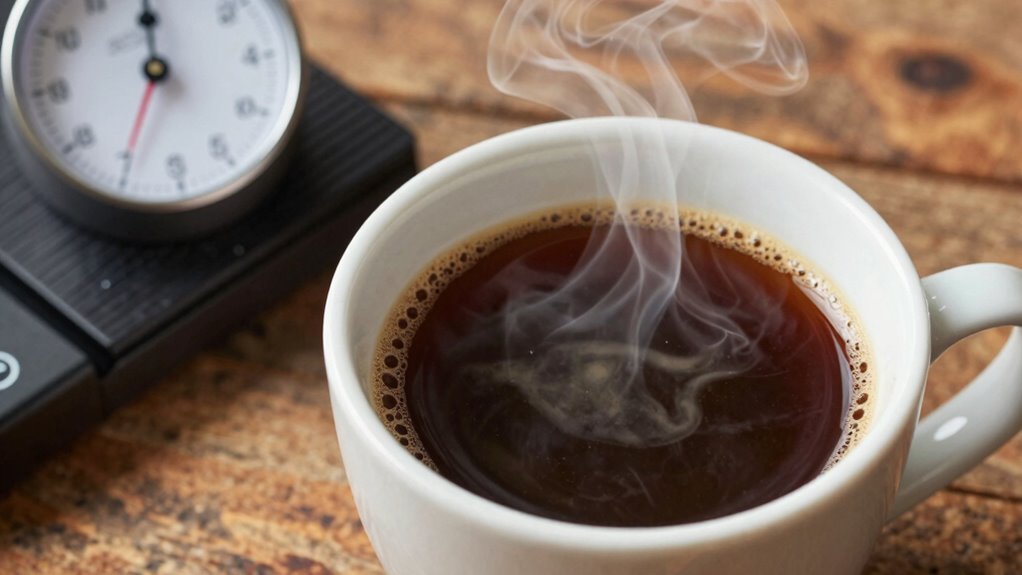
To avoid bitterness, aim for an ideal brew time that balances extraction without overdoing it. If you brew too long, you risk over-extraction, making your coffee bitter; too short, and you may under-extract, resulting in a weak flavor. Recognizing signs of under- or over-extraction helps you fine-tune your brewing process for a smoother taste.
Optimal Brew Duration
Finding the perfect brew time is essential to prevent your coffee from turning bitter. The ideal duration depends on your roast level and brewing equipment. Light roasts usually need longer extraction, around 4-5 minutes, while dark roasts extract quicker, often within 3-4 minutes. Using the right equipment, like pour-over or French press, can help control brew time precisely. Over-brewing leads to bitter notes, so keep an eye on the clock. To optimize your brew duration, consider these tips:
- Match brew time with roast level
- Use a timer for consistent results
- Adjust grind size for your equipment
- Experiment with slightly shorter or longer times
- Pay attention to taste cues during brewing
This balance ensures a smooth, flavorful coffee without bitterness.
Over-Extraction Risks
While over-extraction can easily lead to bitter flavors, knowing the ideal brew time helps you avoid this pitfall. Over-extraction occurs when brewing takes too long, pulling out undesirable compounds that alter flavor profiles negatively. To prevent this, pay attention to your brewing equipment’s recommended times; for example, pour-over methods usually require around 3 minutes, while French press should stay within 4 minutes. Extending brew time beyond these limits increases the risk of extracting bitter tannins and overemphasizing acidity. Monitoring your brewing process closely ensures you preserve balanced flavor profiles. Using precise timing and appropriate equipment settings allows you to enjoy smooth, flavorful coffee without bitterness caused by over-extraction. Stick to recommended durations to create a perfect cup every time.
Under-Extraction Signs
If your coffee tastes flat or sour, it’s often a sign of under-extraction, which occurs when the brewing process ends too soon. Under-extracted coffee can result from a brew time that’s too short, impacting flavor and caffeine content. To avoid bitterness, aim for an ideal brew time that balances extraction without overdoing it.
Signs of under-extraction include:
- Sour, sharp flavors overpowering the aroma
- Watery or thin texture
- Lack of sweetness and body
- Inconsistent flavor profile
- Light color with minimal crema
Adjust your grind size, water temperature, and brewing duration to find that sweet spot. Properly roasted beans also influence extraction, ensuring the caffeine and flavor compounds are fully developed without bitterness.
How Does Grind Size Influence Coffee Taste?
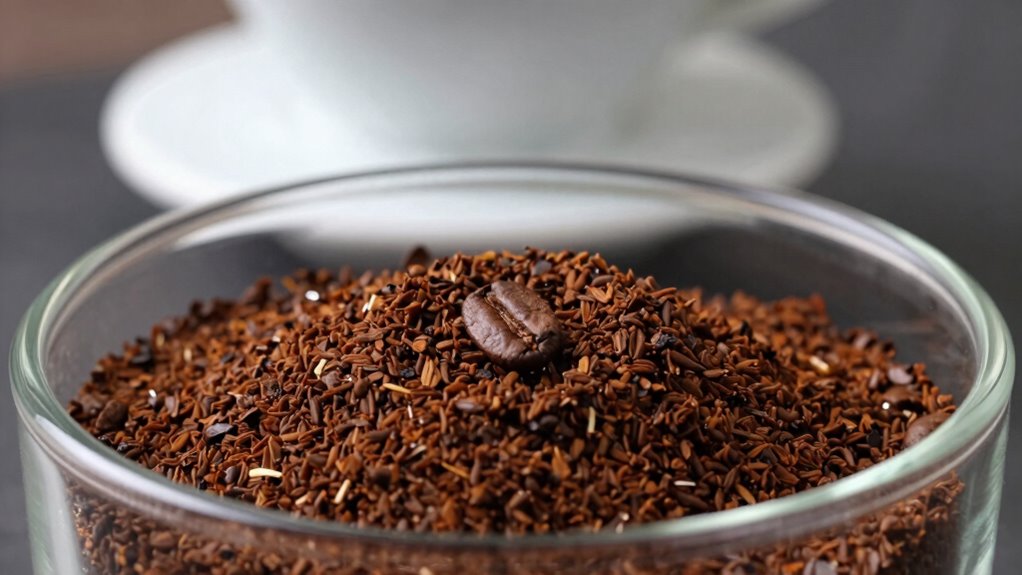
The grind size of your coffee beans plays a crucial role in shaping the final flavor, especially when it comes to bitterness. If your grind isn’t consistent, you end up with uneven particle distribution, causing some coffee to be over-extracted while others remain under-extracted. Fine grinds increase the surface area, which can lead to bitter, over-extracted flavors if brewed too long or with too high pressure. Coarser grinds, on the other hand, may produce a weak, sour taste because they don’t extract enough flavor. Achieving a uniform grind ensures that water interacts evenly with the coffee particles, balancing extraction and preventing bitterness. Proper grind size and consistency are key to a smoother, more balanced cup. Consistent grind size helps optimize extraction and enhances overall flavor quality.
Which Brewing Methods Are Prone to Bitter Coffee?
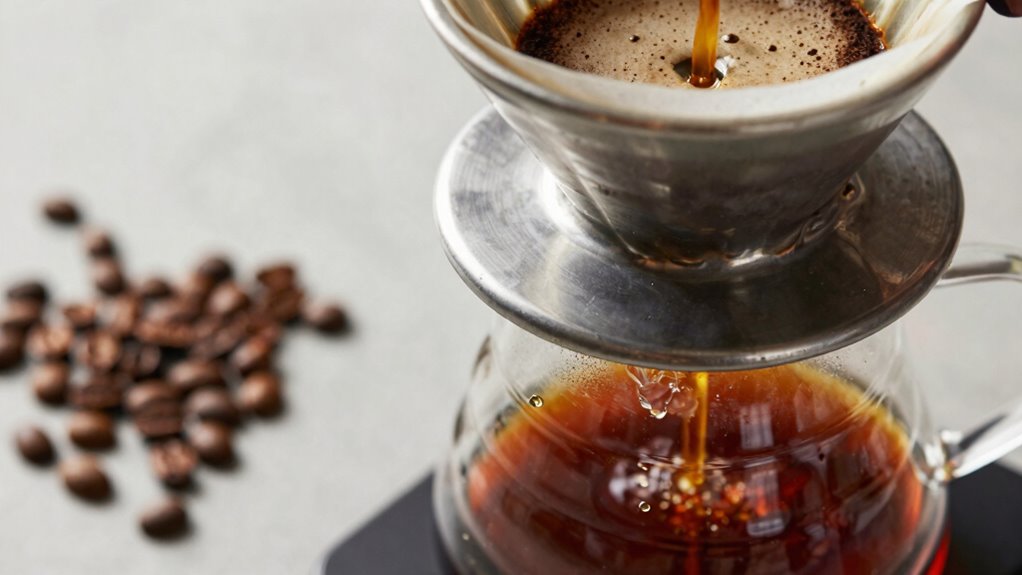
Certain brewing methods are more prone to producing bitter coffee due to their extraction processes. For example, a French press can lead to bitterness if you steep the grounds too long or use a fine grind, over-extracting tannins and compounds. Cold brew, while smoother, can taste bitter if brewed too long or with too much coffee concentration. Other methods to watch out for include:
Certain brewing methods risk bitterness from over-extraction or grind issues.
- Espresso, which uses high pressure and fast extraction
- AeroPress, if over-pressed or brewed too long
- Drip coffee makers, especially if the brew time is extended
- Pour-over, if the water flows too slowly or unevenly
- French press, with excessive steeping time or coarse grind issues
Understanding these pitfalls helps you avoid bitterness and enjoy a balanced, flavorful cup regardless of your chosen method.
How Do Coffee Freshness and Storage Impact Flavor?
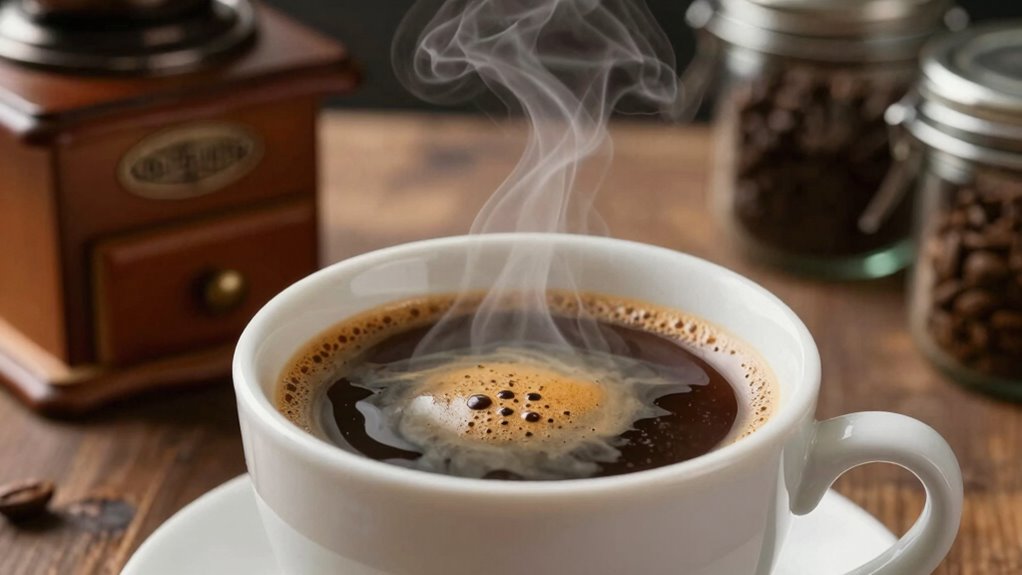
Even the best brewing techniques can’t prevent bitterness if your coffee isn’t fresh or properly stored. Fresh coffee maintains a vibrant coffee aroma, which is key to full flavor. When coffee sits too long, it loses its aromatic qualities and can develop off-flavors that contribute to bitterness. Proper storage is essential; keep your beans in airtight storage containers to protect them from air, moisture, and light—all factors that accelerate staling. Avoid clear containers or those exposed to sunlight, as they allow degradation of flavors. Instead, opt for opaque, airtight containers stored in a cool, dark place. This helps preserve the coffee’s freshness and aroma, ensuring each brew tastes better and less bitter. Proper storage directly impacts flavor, keeping your coffee enjoyable.
How Can Adjusting Coffee Ratios Reduce Bitterness?
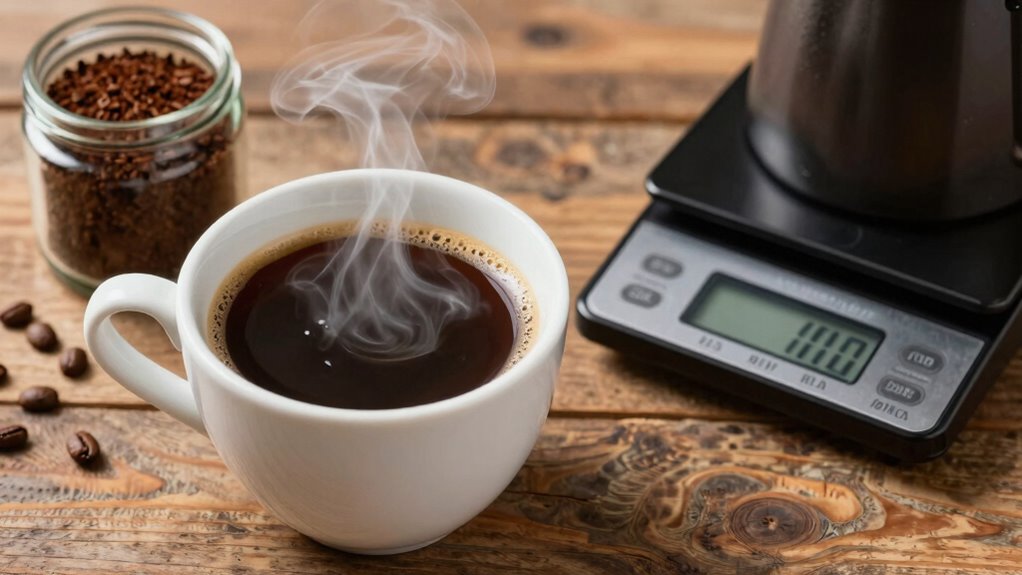
Adjusting the coffee-to-water ratio is a simple yet effective way to reduce bitterness in your brew. When your coffee is too strong, it can taste over-extracted and bitter. By increasing the water or decreasing the coffee amount, you can mellow the brewing strength and improve flavor balance.
Consider these tips:
- Use more water for a milder, less bitter taste
- Reduce coffee grounds for a lighter brew
- Experiment with different coffee-to-water ratios
- Aim for a balanced brewing strength that suits your taste
- Avoid overly concentrated brews that extract bitter compounds
Small adjustments in your coffee to water ratio can make a significant difference, resulting in a smoother, more enjoyable cup. Remember, a proper brewing strength prevents bitterness without compromising flavor.
Tips for Consistent Coffee Quality and Avoiding Bitterness
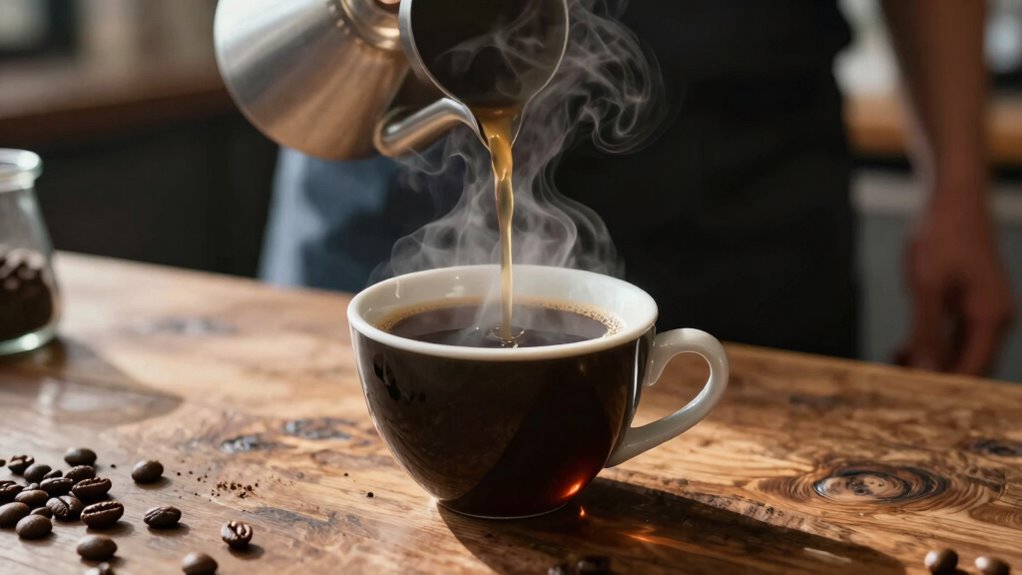
To keep your coffee tasting great every time, focus on using the right grind size and brewing time. A too-fine grind or overextended brew can increase bitterness, so aim for consistency. Paying attention to these details helps you avoid unwanted flavors and enjoy a smoother cup.
Proper Grind Size
Choosing the right grind size is essential for brewing a balanced cup and avoiding bitterness. When your grind is inconsistent, it affects extraction, leading to over-extraction and undesirable flavors. To guarantee maximum flavor, focus on maintaining coffee freshness and grind consistency.
Consider these tips:
- Use a burr grinder for uniform particles
- Adjust grind size based on brewing method
- Grind just before brewing to preserve freshness
- Avoid overly fine grinds for drip or pour-over methods
- Regularly clean your grinder to prevent oil buildup
Getting the grind right helps control extraction, reducing bitterness caused by over-extraction. Consistent grind size ensures each brew tastes its best, highlighting the coffee’s true flavor without bitterness. Remember, a well-maintained grinder and freshly ground beans are key to a smooth, balanced cup.
Correct Brewing Time
Proper brewing time is crucial for extracting the right flavors from your coffee without turning it bitter. Too short, and your coffee may lack aroma and depth; too long, and bitterness develops. Aim for consistent brewing times based on your method, whether drip, French press, or espresso. Maintaining the right brewing temperature (around 195-205°F) guarantees ideal extraction without overdoing it. Use this table to guide your timing:
| Brewing Method | Ideal Time (Minutes) | Notes |
|---|---|---|
| Drip | 4-5 | Controls temperature well |
| French Press | 4 | Longer steep for richer aroma |
| Espresso | 25-30 seconds | Quick extraction preserves aroma |
| AeroPress | 2-3 | Short, intense brew |
| Cold Brew | 12-24 hours | No heat, slow extraction |
Adjust timing to perfect your taste and avoid bitterness.
Is Your Coffee’s Bitterness Due to Technique or Beans?
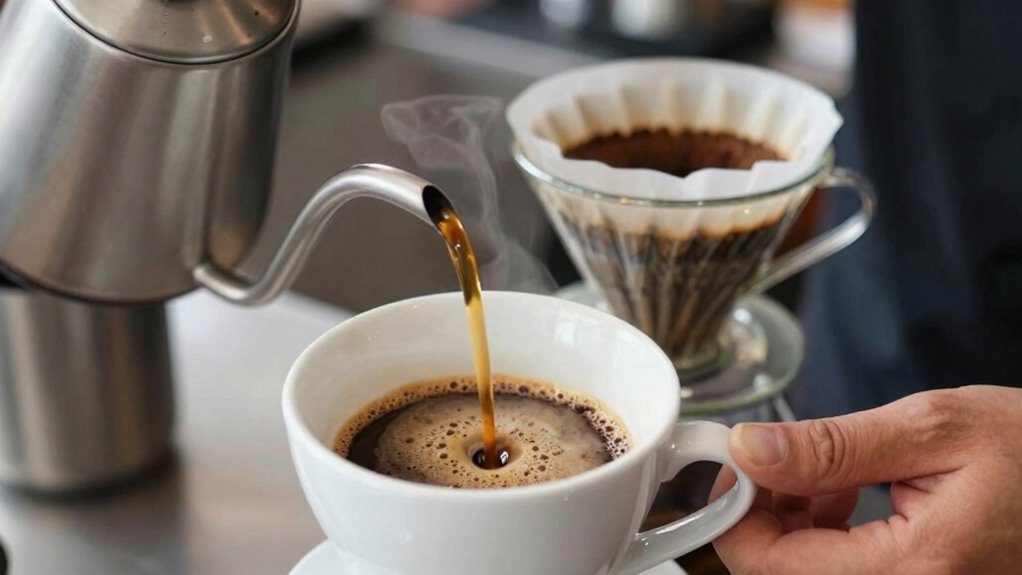
Sometimes, the bitterness in your coffee comes down to the beans themselves rather than how you prepare it. The coffee bean origin and roasting level greatly influence flavor. Beans from certain regions, like robusta or over-roasted beans, naturally have a more bitter taste. Dark roast levels tend to bring out bitter notes, even if your brewing technique is perfect. To identify if your beans are the culprit, consider these factors:
- Coffee bean origin
- Roasting level
- Freshness of beans
- Storage methods
- Bean variety
If you’re using dark roasted beans from a region known for bitter profiles, adjusting your choice might reduce bitterness. Sometimes, switching to a lighter roast or different origin can make a noticeable difference.
Frequently Asked Questions
Can Adding Milk or Sugar Reduce Coffee’s Bitterness Effectively?
Adding milk can help reduce coffee’s bitterness by mellowing the strong flavors, while sugar’s effect is to sweeten the brew, balancing out the bitterness. You should experiment with different amounts of milk addition and sugar to find the perfect balance for your taste. Just remember, the right amount makes a noticeable difference, so start small and adjust until your coffee tastes smooth and enjoyable.
Does the Type of Water Mineral Content Influence Bitterness?
You might wonder if water mineral content affects bitterness, and it does. Hard water with high mineral content, like calcium and magnesium, can enhance extraction, making your coffee taste more bitter. Conversely, water with a balanced mineral profile improves flavor without harshness. Ensuring your water has the right hardness and mineral balance helps you brew smoother, less bitter coffee, allowing the true flavors of your beans to shine through.
Are Darker Roasts Inherently More Bitter Than Lighter Roasts?
Darker roasts are generally more bitter than lighter roasts because of their roast level, which enhances bitterness perception. As the beans roast longer, they develop more complex flavors, including bitter notes. Your taste buds interpret these intensified flavors differently, making darker roasts seem more bitter. However, individual preferences and brewing methods also influence bitterness perception, so you might find some lighter roasts equally or more bitter depending on how you brew and taste.
How Does Altitude at Origin Affect Coffee Bitterness?
Ever wonder how altitude influence impacts coffee bitterness? High-altitude regions cause beans to mature more slowly, allowing complex flavor development and reducing bitterness. Conversely, lower altitudes speed up bean maturation, often resulting in a more bitter taste. When beans grow at higher elevations, the extended maturation process enhances acidity and smoothness, making your coffee less bitter. So, altitude plays a key role in shaping your brew’s flavor profile.
Can Brewing Equipment Cleanliness Impact Coffee’s Perceived Bitterness?
Yes, brewing equipment cleanliness considerably impacts your coffee’s bitterness. If you neglect brew cleaning and equipment maintenance, leftover residue can add unwanted flavors, making your coffee taste more bitter. Regularly cleaning your coffee maker ensures oils and mineral deposits don’t build up, preserving purer flavors. Proper equipment maintenance prevents bacteria and mold growth, helping you enjoy a smoother, less bitter cup every time. Keep your machine clean for the best taste.
Conclusion
Remember, bitterness in your coffee isn’t just about the beans—it’s like a puzzle where your technique is the missing piece. By paying attention to grind size, water temperature, brew time, and freshness, you can turn your cup from a bitter disappointment into a smooth, flavorful delight. Think of your brewing process as a dance—when all steps are in harmony, you’ll savor every sip without the bitterness overshadowing the true flavor of your beans.
NFL season / tailgating Picks
team gear
As an affiliate, we earn on qualifying purchases.