When setting up your espresso machine, you might overlook key details like choosing the right grind size and water temperature. Using a medium grind instead of a very fine one can lead to weak or bitter shots, and ignoring temperature adjustments can cause under- or over-extraction. Small adjustments matter, so don’t skip checking calibration or initial setup steps. Keep these common pitfalls in mind, and you’ll soon master the basics for a great espresso experience. If you keep exploring, you’ll learn how to fine-tune your brew even more.

Get kitchen staples and gadgets delivered free with Prime
- Fast, free delivery on millions of items
- Prime Video, Amazon Music and more included
- Member-only deals all year
Key Takeaways
- Neglecting to adjust grind size properly, often using medium instead of very fine for espresso.
- Failing to verify and set the correct water temperature before brewing.
- Overlooking the importance of consistent grind size, leading to unpredictable shot quality.
- Using incorrect grind consistency can cause under or over-extraction and flavor imbalance.
- Not taking time to calibrate the machine’s temperature controls for optimal extraction.
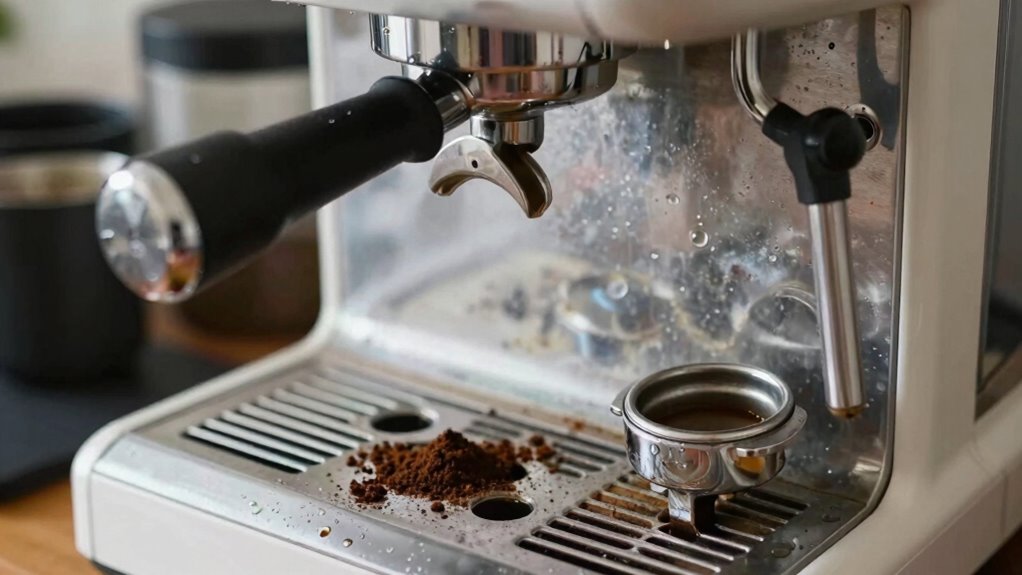
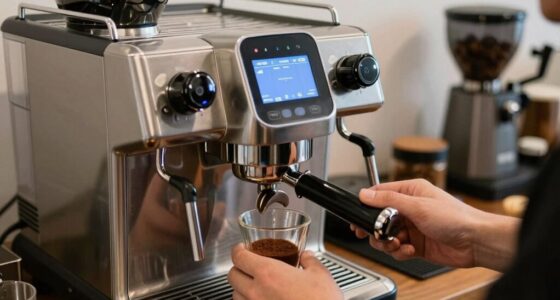
Are you making common mistakes during your espresso machine’s initial setup? If so, you’re not alone. Many beginners overlook key details that can affect the quality of their espresso from the very start. Two of the most frequent errors involve choosing the wrong grind size and setting the water temperature incorrectly. These small but vital adjustments can make or break your brewing experience.
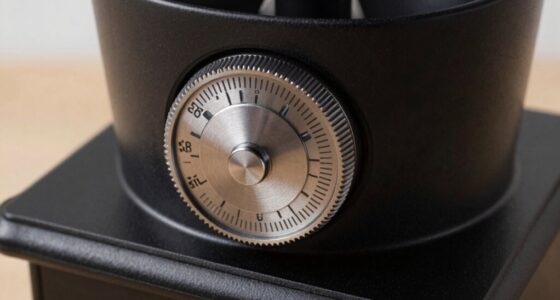
First, let’s talk about grind size. It’s tempting to stick with a medium grind, thinking it’ll work fine, but espresso requires a very fine grind to extract the flavors properly. If your grind is too coarse, water will flow through too quickly, resulting in a weak, watery shot that lacks richness. Conversely, if it’s too fine, the water struggles to pass through, leading to over-extraction, bitterness, and a slow, clumpy flow. The right grind size should feel similar to powdered sugar—fine but not powdery. Adjusting your grind size is often a process of trial and error, but getting it right from the start helps you avoid wasting coffee and frustration. Additionally, understanding the importance of a consistent grind can help produce more predictable results. Consistency in grind size is essential for achieving a balanced extraction.
Water temperature is another critical factor that many overlook during setup. The optimal temperature for brewing espresso is generally between 195°F and 205°F (90°C to 96°C). If your machine is set too low, your espresso will taste flat and underdeveloped, lacking depth and sweetness. On the other hand, if the water is too hot, it can cause over-extraction, leading to a burnt or bitter taste. Many machines have adjustable temperature controls, but beginners tend to ignore or overlook this feature. It’s worth taking the time to ensure your machine is properly calibrated to the right temperature before brewing. Doing so guarantees that your coffee grounds will extract evenly and develop the complex flavors you’re aiming for. Remember, temperature calibration plays a crucial role in achieving balanced espresso. Proper calibration can save you from many common brewing pitfalls.
As an affiliate, we earn on qualifying purchases.
Frequently Asked Questions
How Often Should I Clean My Espresso Machine?
You should clean your espresso machine regularly, ideally after every few uses, to maintain grinding consistency and guarantee the best flavor. Daily cleaning prevents oil buildup and residue that can affect calibration. Deep cleaning weekly helps keep the machine functioning smoothly. Regular maintenance also involves checking machine calibration periodically to ensure consistent results. By staying on top of cleaning and calibration, you’ll enjoy better-tasting espresso and extend your machine’s lifespan.
What Type of Coffee Beans Is Best for Espresso?
For the best espresso, choose fresh coffee beans with good coffee bean freshness, ideally used within a month of roasting. Opt for medium to dark roasts, which typically produce richer flavors. Adjust your grind size to a fine setting—too coarse results in weak shots, while too fine can clog your machine. Regularly experiment with grind size adjustment to perfect your espresso, ensuring a balanced, flavorful extraction every time.
Can I Use Bottled Water in My Espresso Machine?
Yes, you can use bottled water in your espresso machine, but it’s important to take into account water quality. Bottled water with a balanced mineral content can improve your espresso’s flavor and prevent mineral buildup. However, avoid bottled water with high mineral content or added flavors, as they can clog your machine or alter taste. Always choose a clean, high-quality water source to guarantee peak performance and the best espresso experience.
How Do I Troubleshoot Low Pressure Issues?
When facing low pressure issues, don’t throw in the towel too quickly. Check your pressure gauge calibration to guarantee accurate readings. Clean and maintain your steam wand, as it can affect overall pressure if clogged. Also, verify that your grind size isn’t too coarse and that the portafilter is tamped properly. These steps can help boost pressure, ensuring your espresso flows smoothly and tastes perfect every time.
Is It Necessary to Pre-Warm the Machine Before Use?
Yes, it’s necessary to pre-warm your machine before use. You should run a machine warm-up and perform a pre-brew routine to guarantee all components are at ideal temperature. This helps maintain consistent espresso quality and prevents issues like low pressure or uneven extraction. By giving your machine a proper warm-up, you ensure it’s ready to brew the perfect shot, enhancing flavor and overall performance.
espresso machine water temperature calibrator
As an affiliate, we earn on qualifying purchases.
As an affiliate, we earn on qualifying purchases.
Conclusion
Getting your espresso machine set up correctly is like laying a solid foundation for a beautiful building—without it, everything else can crumble. Avoid these common mistakes, and you’ll be brewing rich, flavorful shots that make your mornings brighter. Remember, patience and attention to detail turn an ordinary machine into a gateway to coffee paradise. So, take your time, follow the steps, and let your passion brew through every cup—your perfect espresso awaits.
As an affiliate, we earn on qualifying purchases.
espresso machine calibration tools
As an affiliate, we earn on qualifying purchases.
As an affiliate, we earn on qualifying purchases.
Halloween Picks
halloween
As an affiliate, we earn on qualifying purchases.