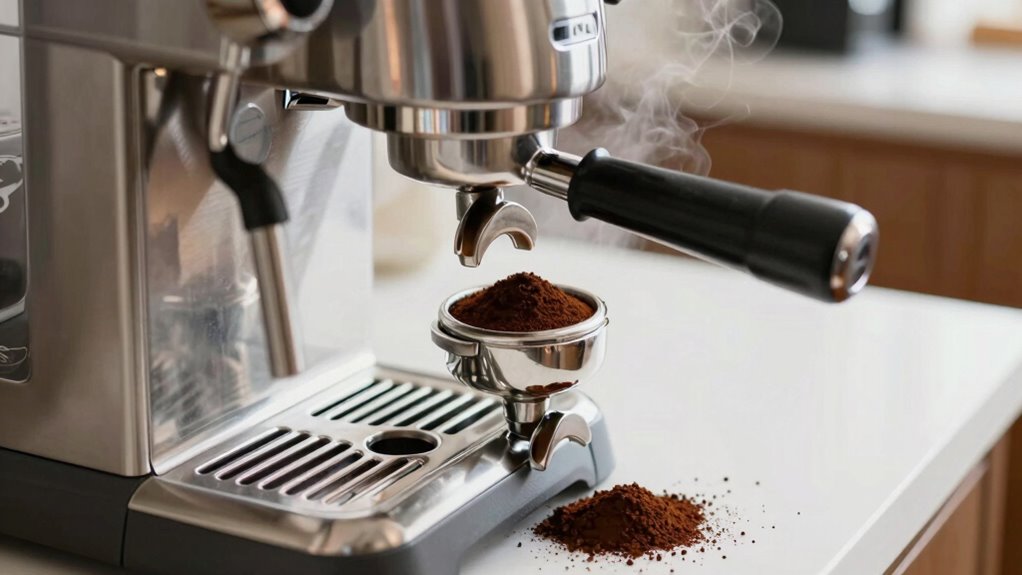
To avoid ruining your coffee, start by properly calibrating your grinder before each use, making incremental adjustments and noting what works best. Keep your grind size consistent to ensure even extraction and better flavor control. Monitor your water temperature with a thermometer or adjustable controls, aiming for 195°F to 205°F. By focusing on these essentials, you’ll prevent common mistakes and improve your espresso quality. If you keep these tips in mind, you’ll discover how to perfect your brew step by step.
Key Takeaways
- Calibrate your grinder properly before brewing, adjusting grind size gradually for optimal extraction.
- Use a thermometer to set and maintain water temperature within 195°F to 205°F for consistent flavor.
- Record effective grind settings for different beans to ensure uniformity and avoid over- or under-extraction.
- Make small, incremental adjustments to grind size and temperature, testing results each time.
- Focus on maintaining consistency in grind size and water temperature to prevent bitterness or sourness.
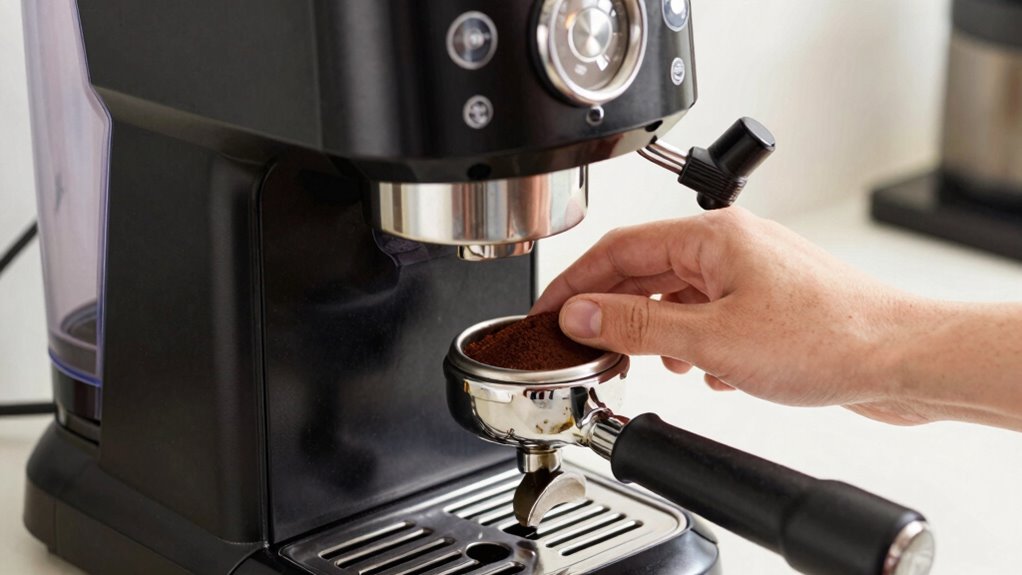
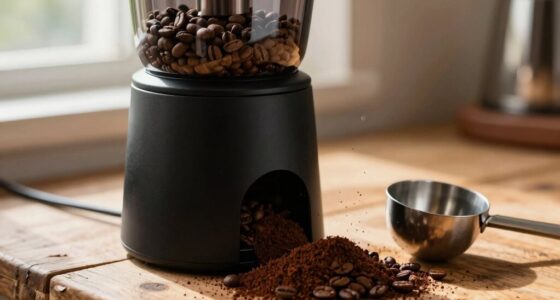
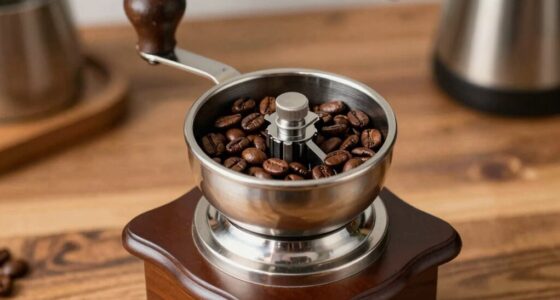
Getting started with an espresso machine that includes a grinder can be exciting, but it’s easy to make beginner mistakes that affect your coffee’s quality. One of the most common pitfalls is neglecting proper grinder calibration. If your grinder isn’t set correctly, your coffee grounds won’t be consistent, which impacts extraction and flavor. You might find your espresso too bitter or too weak. To avoid this, spend time calibrating your grinder before brewing. Adjust the grind size gradually—finer for a stronger extraction, coarser for a lighter one—and test each setting. Keep notes on what works best for your beans and machine. Consistent grind size is vital because it ensures uniform extraction, giving you better control over your espresso’s taste.
Another critical factor often overlooked by beginners is water temperature. The water you use should be just right—typically between 195°F and 205°F (90°C to 96°C). Too hot, and you risk over-extraction, which makes your espresso bitter and harsh. Too cold, and your coffee under-extracts, resulting in a weak, sour flavor. Many entry-level espresso machines have adjustable temperature controls, so you should familiarize yourself with how to set these properly. If your machine lacks precise control, consider using a thermometer to monitor the water temperature during brewing. Proper water temperature guarantees ideal extraction of flavors and oils from your coffee grounds, making a noticeable difference in your results. Additionally, understanding the importance of proper calibration can significantly improve your brewing consistency and overall coffee quality.
Frequently Asked Questions
How Often Should I Clean My Espresso Machine Grinder?
You should clean your espresso machine grinder every 1-2 weeks, depending on usage, to maintain ideal performance. Regular cleaning helps prevent residue buildup, which can affect flavor and grinder calibration. Follow a consistent cleaning schedule, including burr removal and cleaning, to avoid clogging and ensure even grinding. This routine keeps your machine running smoothly and guarantees fresh, flavorful espresso every time, saving you from costly repairs or flavor issues down the line.
Can I Use Pre-Ground Coffee Instead of Grinding Fresh Beans?
You can use pre-ground coffee, but beware of its limitations. Pre-ground coffee often loses freshness quickly, which means your espresso might lack flavor and aroma. Grinding fresh beans ensures maximum freshness and a richer taste. If you’re in a pinch, pre-ground is okay, but for the best results, grinding your own beans just before brewing makes all the difference, revealing full flavor and aroma that pre-ground coffee simply can’t match.
What’s the Best Grind Size for Beginners?
As a beginner, you should start with a medium grind size for your espresso machine. This offers the best balance for grind consistency and allows proper extraction. Keep in mind, using fresh beans impacts the grind; fresher beans require a slightly coarser grind to avoid over-extraction. Experiment gradually to find what works best for your machine and taste preferences, and always aim for consistent, even grounds.
How Do I Troubleshoot Common Espresso Machine Issues?
Think of your espresso machine as a delicate orchestra; when it’s out of tune, the symphony falters. To troubleshoot common issues, start with espresso calibration—adjust grind size and tamping pressure. If water flows slowly or tastes off, it’s time for machine descaling, clearing mineral build-up. Regular maintenance keeps your machine humming smoothly, preventing problems before they start. Stay attentive, and your espresso will always hit the perfect note.
Is It Necessary to Tamp the Coffee Grounds Tightly?
Yes, you should tamp the coffee grounds with the right tamping pressure. Applying consistent tamping pressure guarantees even extraction and a balanced shot. Don’t tamp too tightly, as it can cause over-extraction, or too loosely, leading to under-extraction. Maintaining grind consistency is also essential, so your grounds have the right texture for proper tamping. Practice applying steady pressure, and you’ll improve your espresso quality without ruining your coffee.
Conclusion
To avoid ruining your coffee experience, remember these beginner tips and stay patient as you learn. Did you know that over 60% of new espresso enthusiasts give up within their first month? Don’t let that be you! By mastering the basics and avoiding common mistakes, you’ll enjoy richer, better-tasting espresso every time. Keep experimenting, stay curious, and soon making that perfect cup will become second nature. Your perfect espresso is just a few steps away!