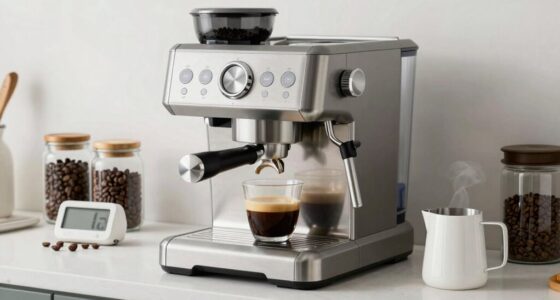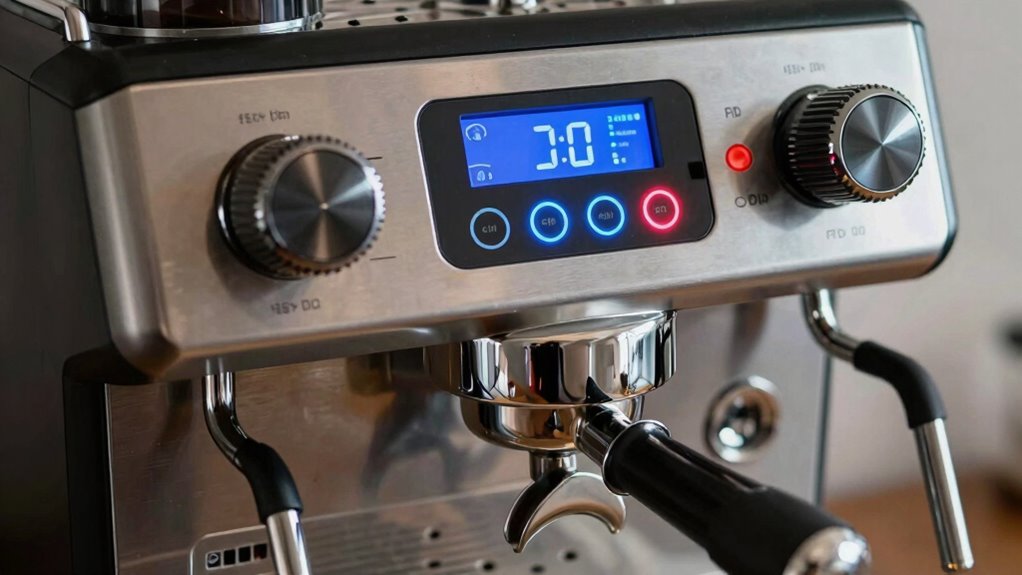

PID temperature control on an espresso machine keeps the water at a consistent, precise temperature, which helps you get better, more balanced shots. It adjusts the heater continuously, eliminating temperature swings common with simple thermostats. This feature is especially useful if you want perfect extraction or brew in changing environments. While some see it as marketing hype, when you understand how it stabilizes temperature, you’ll see its real value. Keep exploring to learn more.
Key Takeaways
- PID maintains precise and stable brew temperatures, reducing fluctuations common with simple thermostats.
- It is especially helpful for consistent shot quality, fine-tuning flavors, and in environments with temperature variations.
- Proper calibration of PID settings or thermostat offset is essential for optimal temperature stability.
- While some see PID as a marketing feature, it genuinely improves extraction consistency and flavor control.
- High-quality manual controls can achieve similar results; PID’s main advantage is enhanced temperature stability.

If you’re serious about making consistently excellent espresso, implementing PID temperature control on your machine can be a game-changer. The main advantage of a PID (Proportional-Integral-Derivative) controller is its ability to maintain precise brew temperature stability. Unlike traditional thermostats, which can cycle on and off and cause temperature swings, a PID system continuously adjusts the heating element, keeping the water at a consistent temperature. This consistency is critical because even slight variations in temperature can profoundly affect extraction quality, flavor, and aroma. When your brew temperature remains stable, you gain control over the extraction process, resulting in a more balanced and flavorful espresso shot every time.
However, to truly harness the benefits of a PID, you need to understand manual calibration techniques. Most machines with PID controllers allow you to fine-tune the temperature settings, but this requires some hands-on adjustment. You’ll want to start by measuring your machine’s actual brew temperature with an accurate thermometer—often a digital or IR thermometer works best. Once you know the true temperature, you can calibrate your PID to match your desired target. This process involves tweaking the PID settings or the thermostat offset to eliminate any discrepancies. Regular calibration is essential because factors like mineral buildup, machine aging, or ambient temperature changes can affect your boiler’s temperature accuracy over time. Additionally, understanding temperature stability can help you optimize your brewing process for better results.
Many espresso enthusiasts see PID temperature control as a worthwhile investment, but some argue it’s more of a marketing feature than a necessity. It’s true that many machines come with built-in temperature controls, but these can be limited in precision. If you’re aiming for consistency and want to dial in your shots with exacting accuracy, a PID is invaluable. Still, it’s important to recognize that a high-quality machine with manual controls, proper calibration, and good brewing techniques can produce excellent espresso without a PID. The real benefit lies in your ability to maintain stable brew temperatures, which directly impacts shot quality.
Frequently Asked Questions
Can PID Control Damage My Espresso Machine?
Yes, if misused or improperly installed, PID control can potentially damage your espresso machine, affecting its durability. Incorrect settings might lead to overheating or undue stress on components, increasing repair costs. However, when correctly set and maintained, PID systems help regulate temperature precisely, protecting your machine and saving you money in the long run. Always follow manufacturer guidelines and seek professional help if you’re unsure about installation or adjustments.
How Does PID Differ From Traditional Temperature Regulation?
Did you know that traditional thermostats can have temperature fluctuations of up to 10°F? Unlike these, a PID controller offers superior temperature stability, maintaining a precise setpoint. It actively adjusts heating elements, unlike simple thermostats that turn on or off. This means your espresso stays consistently hot, ensuring better flavor. So, the main difference is that PID provides more accurate, stable temperature regulation compared to traditional thermostat control.
Is PID Control Necessary for Home Espresso Machines?
You don’t necessarily need PID control for your home brewing espresso machine, but it can improve consistency and temperature stability. If you want precise shots and better flavor, investing in PID helps maintain ideal temperature, which can also extend your machine’s longevity by reducing stress on components. While not essential, PID offers a noticeable upgrade for serious home baristas who value precision and durability in their equipment.
What Maintenance Does a PID System Require?
Oh, the glamorous world of PID maintenance—fancy, yet surprisingly simple. You just need to periodically check calibration accuracy and guarantee the system stays clean from dust and coffee spills. Replacing batteries or sensors might be necessary if accuracy drifts, but otherwise, a little attention keeps your PID system running smoothly. This maintenance boosts system longevity, ensuring your espresso machine remains a reliable, high-tech marvel for years to come.
Does PID Improve Overall Espresso Flavor Quality?
Yes, a PID system can improve your espresso flavor quality by enhancing taste consistency and flavor clarity. It maintains stable water temperatures, reducing fluctuations that can cause sour or bitter tastes. When you use a PID, you’ll notice more precise control over extraction temperatures, leading to richer, more balanced espresso shots. This consistency helps you develop your preferred flavor profile and guarantees each cup delivers the same great taste.
Conclusion
Think of PID temperature control like a seasoned captain steering your espresso ship through unpredictable waters. When it’s tuned right, it keeps your brew steady and perfect, guiding you smoothly past temp fluctuations. But if it’s just a flashy compass without proper calibration, it’s like chasing false stars—marking time rather than guiding true. So, know when to trust your PID, and enjoy the journey to that flawless shot.