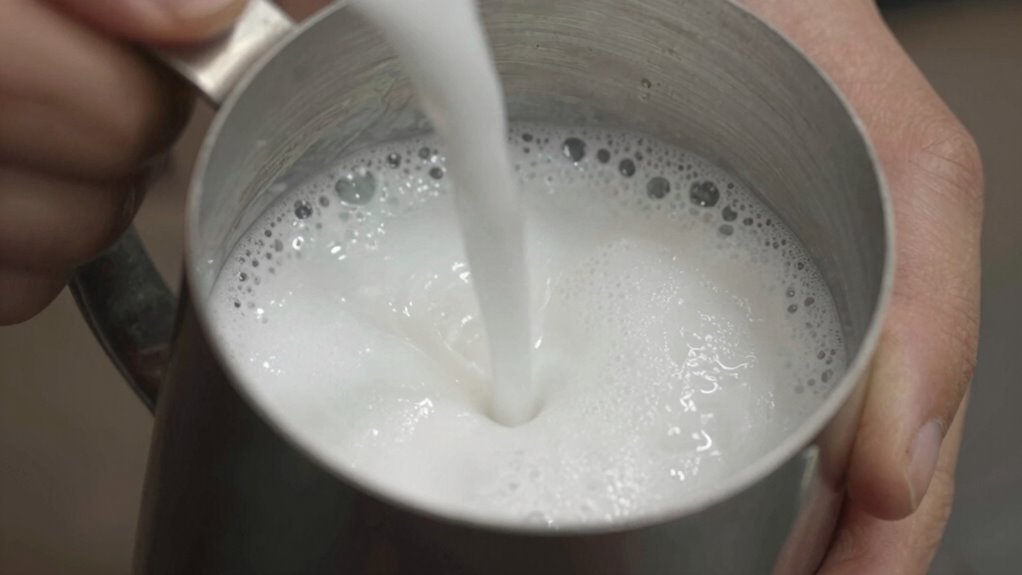

If you rush the frothing process or overheat the milk, your foam will turn thin and dull instead of glossy and velvety. Avoid increasing the steam pressure too quickly or overheating past 160°F, as this breaks down proteins needed for smooth foam. Use a thermometer and take your time to heat the milk evenly around 140-150°F. If you want consistently perfect microfoam, understanding the right technique makes all the difference—keep going to discover how!
Listen free for 30 days with Audible
Thousands of audiobooks and originals — cancel anytime.
As an affiliate, we earn on qualifying purchases.
Key Takeaways
- Overheating milk above 160°F breaks down proteins, resulting in thin, dull foam.
- Using a dirty or clogged steam wand reduces pressure, producing weak, inconsistent froth.
- Failing to monitor or control milk temperature prevents proper microfoam development.
- Poor technique, such as improper steam wand positioning, causes uneven or thin foam.
- Using low-quality or cold milk hampers the formation of glossy, velvety microfoam.
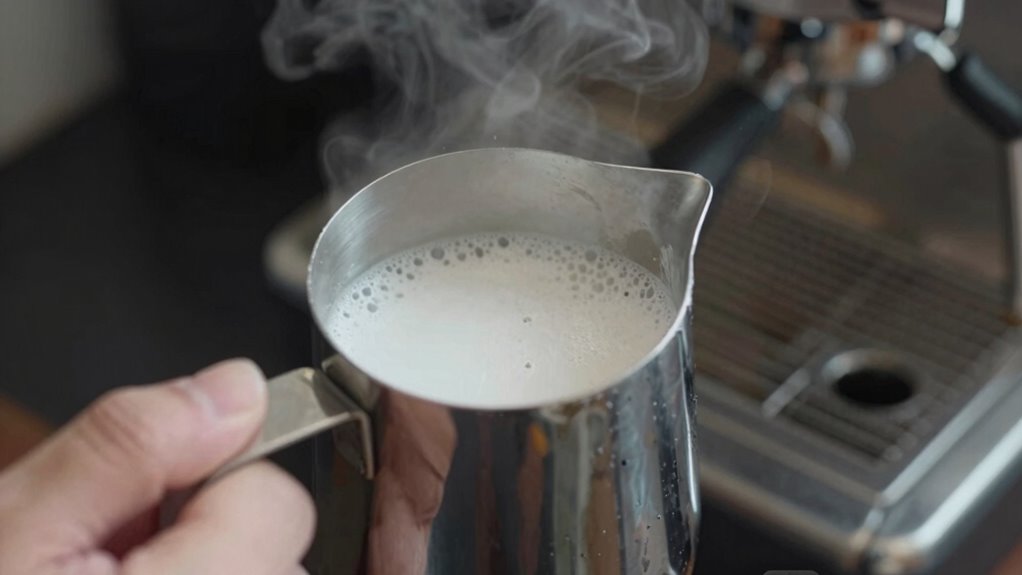
Frothing milk has become a popular ritual for coffee enthusiasts, transforming simple beverages into artful creations. But if your foam turns out thin and dull instead of glossy and velvety, you might need to rethink your approach. The key to perfect milk froth isn’t just about pouring milk into your cup; it’s about understanding the nuances of your espresso machine, especially espresso machine maintenance and milk temperature control. These factors play an essential role in achieving that ideal, glossy foam every time.
Perfect milk froth depends on proper machine maintenance and precise temperature control for glossy, velvety foam.
First, consider your espresso machine maintenance. If your machine isn’t clean, milk residues or mineral deposits can interfere with the steaming process. Regularly descale your machine and clean the steam wand thoroughly after each use. A dirty wand or clogged nozzle prevents proper steam flow, leading to weak or inconsistent foam. When your machine is well-maintained, it provides the consistent steam pressure needed to create the rich, glossy foam you’re after. If you notice your foam is thin, it might be time to check for buildup or blockages, which could be compromising the quality of your milk frothing. Proper espresso machine maintenance is crucial for maintaining optimal steam pressure and ensuring consistent results. Additionally, understanding the steam wand technique can greatly influence your foam’s texture and glossiness. Developing good steam wand technique can help you achieve a more stable microfoam with a desirable shine.
Next, focus on milk temperature control. The secret to thick, glossy foam lies in steaming milk to just the right temperature—around 140°F to 150°F. If the milk is too cold, it won’t froth properly, resulting in thin, bubbly foam. Conversely, overheating milk past 160°F breaks down the proteins that give foam its structure, making the foam thin and chalky. Use a thermometer to monitor the milk’s temperature during steaming, and stop once you hit the ideal range. Proper temperature control guarantees the milk proteins can stretch and create that smooth, shiny foam that makes your latte art pop. Maintaining consistent milk temperature is essential for producing high-quality microfoam. Developing a mindful and patient steaming technique can dramatically improve your foam quality and consistency over time. Remember that milk foam quality is also heavily influenced by the freshness and type of milk you choose, which can further enhance the glossiness and texture. Additionally, choosing fresh, high-quality milk can contribute significantly to achieving that perfect, glossy finish.
As an affiliate, we earn on qualifying purchases.
Frequently Asked Questions
Can the Type of Milk Affect Foam Thickness?
Yes, the type of milk affects foam thickness because different milk alternatives have varying protein and fat levels, impacting frothing. Whole milk creates thicker, glossy foam, while skim milk produces lighter, airy foam. Non-dairy options like almond or soy milk may need different frothing techniques, and some might not froth well at all. Experiment with your frothing techniques based on the milk you use to achieve the desired foam consistency.
Does the Temperature of the Milk Impact Foam Quality?
Yes, the temperature of the milk impacts foam quality. When you store your milk properly, keeping it cold, it froths better because cold milk produces denser, creamier foam. Use effective frothing techniques, like positioning the steam wand just below the surface, to introduce enough air. Warmer milk tends to create thin, weak foam, so maintaining proper storage temperature and mastering your frothing technique are key for glossy, long-lasting foam.
How Does Frothing Time Influence Foam Consistency?
Frothing duration directly impacts foam consistency, so pay attention to your frothing time. Longer frothing durations cause excessive milk agitation, which can break down foam and make it thin and less glossy. Ideally, you should froth just enough to create a smooth, velvety texture without overdoing it. Keep an eye on the milk’s texture and stop once you achieve that rich, glossy foam, ensuring your drink looks and tastes perfect.
Is There a Preferred Pitcher Shape for Better Frothing?
Choosing a pitcher with good ergonomics helps you control the frothing process better, leading to a more consistent foam texture. Look for one with a comfortable handle and a spout designed for precision pouring. A narrow, tapered shape often encourages better aeration and smoother foam, while a wider base can help you incorporate air evenly. Ultimately, selecting a pitcher that feels comfortable in your hand makes it easier to achieve glossy, velvety foam.
Can Adding Foam Stabilizers Improve Foam Glossiness?
Ironically, adding foam stabilizers might seem like a shortcut for glossy foam, but they can actually hinder your flavor enhancement goals. Stabilizers often produce a thicker, less glossy foam, undermining proper frothing techniques. Instead, focus on perfecting your technique, using the right pitcher shape, and controlling temperature. These steps naturally create a shiny, velvety foam that enhances both flavor and presentation without relying on stabilizers.
espresso machine steam wand cleaner
As an affiliate, we earn on qualifying purchases.
As an affiliate, we earn on qualifying purchases.
Conclusion
Now that you know how your frothing habits impact the foam’s quality, it’s clear that small adjustments can make a big difference. Are you ready to ditch the thin, lackluster foam and embrace that glossy, creamy finish you crave? With a little patience and attention, you can elevate your coffee experience and impress every time. After all, isn’t a perfect froth worth a few mindful tweaks?
milk frothing pitcher with temperature gauge
As an affiliate, we earn on qualifying purchases.
As an affiliate, we earn on qualifying purchases.
As an affiliate, we earn on qualifying purchases.
Fall Picks
fall essentials
As an affiliate, we earn on qualifying purchases.