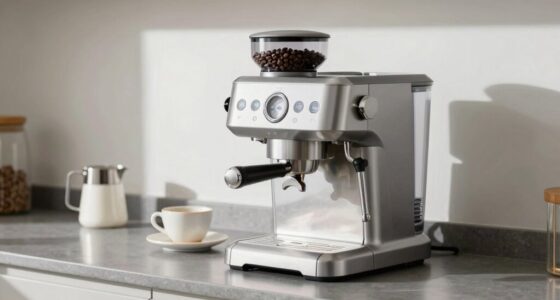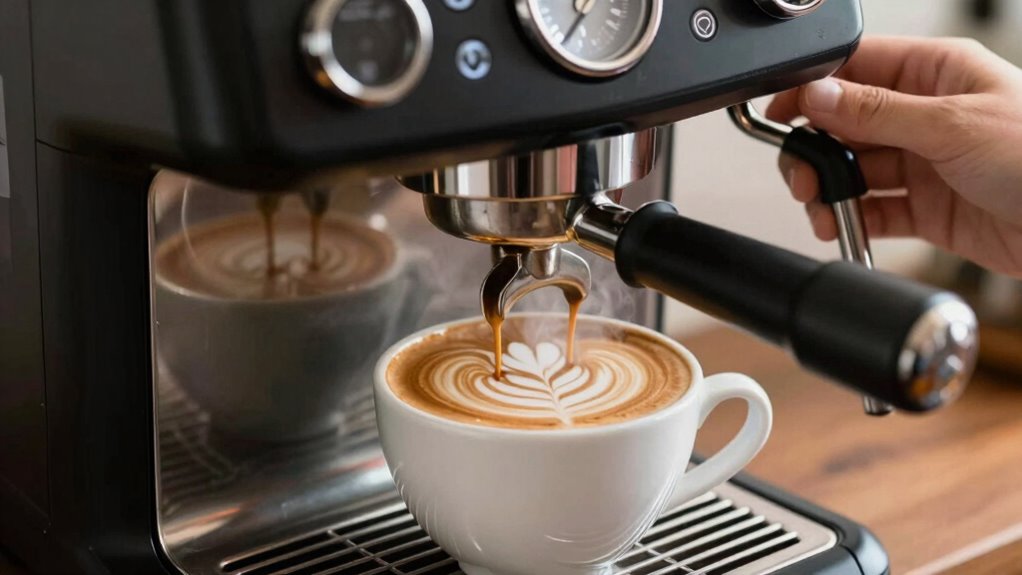

To achieve great latte art with your semi-automatic espresso machine, focus on precise timing and settings. Grind your coffee finely, tamp evenly, and extract the shot for about 25-30 seconds until you see a rich, caramel-colored crema. Use steam to heat and microfoam your milk to around 150°F, creating silky microfoam. Pour from a height, then lower the pitcher gradually, controlling speed and wrist movement. Keep practicing these essentials to master your technique and wow with your designs.
Key Takeaways
- Grind coffee finely and evenly, then tamp with consistent pressure for optimal extraction timing of 25-30 seconds.
- Use a steam wand to froth milk to around 150°F, creating shiny, velvety microfoam suitable for latte art.
- Start pouring espresso into the cup before adding milk to establish a stable base for designs.
- Pour milk from a height initially to blend, then lower the pitcher gradually to control flow and form patterns.
- Maintain a steady, rhythmic pour and precise timing to produce consistent contrast and sharp latte art designs.

If you want to create stunning latte art with a semi-automatic espresso machine, you’re in the right place. Mastering the right milk frothing technique and timing your espresso extraction are essential steps to achieving those impressive designs. First, focus on milk frothing. You need to heat your milk to around 150°F (65°C) and create a silky, velvety microfoam. Turn your steam wand on and submerge just the tip into the milk, keeping the pitcher at a slight angle. Start steaming with a gentle, consistent motion, allowing air to incorporate into the milk until it reaches the desired temperature. As the milk expands and becomes smooth, aim for a shiny, paint-like texture. This microfoam is indispensable because it allows the milk to flow smoothly and form the contrast needed for latte art. Proper landscape design of your milk pouring technique can make a significant difference in your results.
Next, pay close attention to your espresso extraction. A semi-automatic machine requires you to manually control the grind size, tamping pressure, and extraction time. Grind your coffee beans finely but evenly, then tamp with consistent pressure to ensure uniform extraction. When you start pulling the shot, watch for a steady, rich stream of espresso that takes about 25-30 seconds to pour. A good extraction produces a deep, caramel color with a slight crema on top, which forms the base for your latte art. The timing of the extraction influences the flavor and crema, both indispensable for creating a stable canvas for your design. Too short, and the shot will be weak; too long, and it may turn bitter. Developing a rhythm with your machine ensures consistency in each shot, making it easier to craft beautiful latte art.
Once your milk is perfectly frothed and your espresso correctly extracted, combine the two. Pour the espresso into your cup, then start pouring the microfoam from a height, then lower the pitcher to guide the milk into the center. As your cup fills, tilt the pitcher slightly and move it closer to the surface, controlling the flow to create your pattern. The key to success is timing your pour, watching the contrast between the milk and espresso, and practicing your wrist movements. With patience and attention to detail, you’ll refine your technique, producing latte art that impresses every time. Remember, consistency in milk frothing and precise timing during espresso extraction are the foundation of stunning latte art at home.
Frequently Asked Questions
Can I Make Latte Art With Decaffeinated Espresso?
Yes, you can make latte art with decaffeinated espresso. Just keep in mind that decaffeinated options may have a slightly different flavor profile, often milder or less bold. To get the best results, use freshly brewed decaf espresso with good crema, and steam your milk to the right temperature. With proper technique, your latte art will look great, even with decaffeinated coffee.
What Type of Milk Produces the Best Foam for Latte Art?
You’ll find that whole milk creates the best foam for latte art, thanks to its ideal fat and protein content. If you prefer plant-based options, oat milk usually froths well with a creamy texture, making your designs pop. Almond milk tends to produce lighter foam, which might be harder to manipulate for intricate latte art. Experiment with these to see which gives you the best results at home.
Is It Necessary to Use a Thermometer for Perfect Milk Temperature?
You don’t need a thermometer for perfect milk temperature, but it’s highly recommended. A thermometer helps you consistently reach the ideal 150°F to 155°F, ensuring your milk’s smooth and shiny for latte art. Without it, you might accidentally overheat or underheat the milk, affecting foam quality. Using a thermometer makes it easier to control milk temperature, resulting in better froth and more professional-looking latte art every time.
How Do I Clean My Semi-Automatic Espresso Machine Properly?
Think of your machine as a garden needing regular watering and pruning. To clean it, run water through the brew group, use machine descaling solutions monthly to prevent mineral buildup, and replace water filters regularly. Keep the drip tray and portafilter clean with gentle scrubbing. This routine keeps your espresso machine humming smoothly, ensuring every shot tastes fresh and vibrant, just like a well-tended garden in full bloom.
Can I Customize the Steam Pressure Settings on My Machine?
You can’t typically customize the steam pressure on most semi-automatic espresso machines, as they come with fixed settings designed for maximum performance. However, you can influence steam pressure indirectly by adjusting the steam wand’s valve or knob, if available. To get the best results for latte art, focus on mastering your machine’s existing steam pressure, controlling steaming time, and practicing proper technique rather than trying to alter internal settings.
Conclusion
Mastering latte art at home with a semi-automatic espresso machine is totally doable once you nail the right settings and timing. Did you know that baristas spend years perfecting their craft, yet with just a few adjustments, you can achieve professional-looking designs? Consistency is key—practice your frothing and pouring technique regularly. Stick with it, and you’ll impress everyone with your homemade latte art in no time!