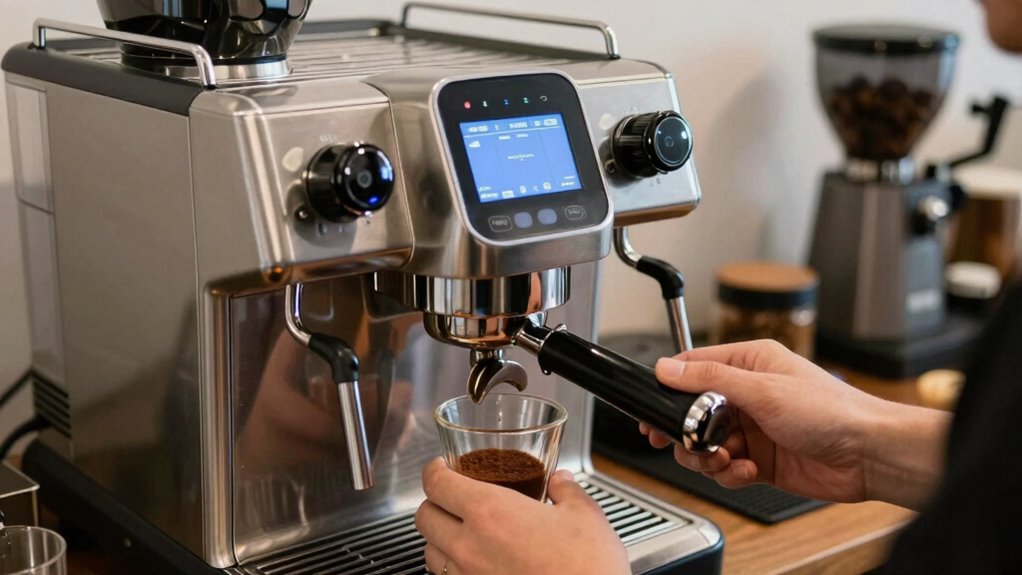

To avoid ruining your coffee with a super automatic espresso machine, start by using a medium-fine grind and adjust gradually to prevent over- or under-extraction. Make certain milk is cold and froth it with care for smooth foam. Keep your machine clean to avoid off-flavors, familiarize yourself with settings, and practice patience to perfect your technique. Mastering these steps helps you get better results—if you keep exploring, you’ll learn even more tips to elevate your brew.
Key Takeaways
- Always use freshly ground coffee with the correct grind size to prevent over-extraction or under-extraction.
- Regularly clean and descal the machine to avoid buildup that can spoil flavor and damage components.
- Ensure milk is cold and froth at the right temperature to produce smooth, velvety foam.
- Familiarize yourself with the machine’s settings and manual to optimize brewing and frothing processes.
- Practice patience and make small adjustments to improve quality and avoid ruining your espresso.

Getting started with a super automatic espresso machine can be exciting, but it’s easy to fall into common beginner mistakes that can affect your coffee’s quality. One of the most critical areas to master early on is your grinding techniques. Your machine relies heavily on the grind size to produce the perfect shot, so don’t overlook this step. If your coffee is too coarse, the water will flow through too quickly, resulting in weak, under-extracted espresso. Conversely, if it’s too fine, the water struggles to pass through, leading to over-extraction and bitter flavors. To avoid these issues, start with a medium-fine grind and adjust gradually based on your taste and extraction time. Remember, consistency is key, so invest in a good burr grinder if possible, and always grind just before brewing to preserve freshness. Proper calibration of your grinder ensures optimal extraction, affecting both flavor and aroma.
Another common mistake beginners make is rushing the milk frothing process. Milk frothing tips are crucial for creating that creamy, velvety foam that elevates your coffee experience. Before frothing, ensure your milk is cold—this makes it easier to achieve a rich, dense foam. Use the steam wand properly by submerging it just below the surface of the milk and starting with a gentle steam to avoid splattering. Keep the pitcher at a slight angle, and don’t rush; slowly move the pitcher to incorporate air at the beginning, then lower the wand to heat the milk evenly. Once you see the milk doubling in volume and forming a smooth, glossy foam, turn off the steam. Practice makes perfect, so don’t be discouraged if your first few attempts aren’t ideal. Proper technique results in better texture and flavor, enhancing your overall coffee experience.
Additionally, pay attention to your machine’s maintenance. Regular cleaning of the brew head, milk frothing components, and water reservoir prevents buildup that can spoil your coffee. A neglected machine can lead to off flavors or mechanical issues, which can be costly in the long run. Finally, familiarize yourself with your machine’s settings and read the manual thoroughly. Understanding how to adjust parameters such as coffee strength, temperature, and frothing settings will help you customize your drinks and avoid wasting ingredients. Also, considering the role of contrast ratio in your machine’s display and image quality can ensure you’re using the best visual indicators to monitor brewing and frothing processes effectively.
In short, mastering grinding techniques and milk frothing tips early on sets a strong foundation for making excellent espresso with your super automatic machine. Take your time, experiment patiently, and don’t be afraid to learn from mistakes. With practice, you’ll consistently brew rich, flavorful coffee that rivals your favorite cafe.
Frequently Asked Questions
How Often Should I Descale My Super Automatic Espresso Machine?
You should descale your super automatic espresso machine every 1 to 3 months, depending on your water hardness and usage. Follow the maintenance schedule recommended by the manufacturer, as this guarantees peak performance and prevents damage. If you notice a decline in coffee quality or longer brewing times, it’s time to increase your descaling frequency. Regular descaling keeps your machine running smoothly and extends its lifespan.
What Types of Coffee Beans Are Best for My Machine?
Think of choosing coffee beans like selecting the finest ingredients for a gourmet dish. Opt for fresh, whole beans with high coffee bean freshness, and grind them to the right size—medium for most machines—to release full flavor. Your machine performs best with beans designed for espresso, so look for those labeled for espresso or finely ground. This approach guarantees a rich, balanced brew every time.
Can I Use Flavored Syrups With a Super Automatic Espresso Machine?
Yes, you can use flavored syrups with your super automatic espresso machine. Just make sure to choose syrups that are specifically made for espresso drinks and avoid those with added solids or oils that can clog your machine. Experiment with flavor combinations, but always store your syrups properly to keep them fresh and prevent spoilage. Using syrups thoughtfully enhances your coffee experience without risking damage to your machine.
How Do I Troubleshoot Common Grinding or Tamping Issues?
If you’re having trouble with grinding consistency or tamping pressure, first check if your grinder settings are correct for your beans. Make certain the grind is not too coarse or fine, as it affects extraction. When tamping, apply even pressure—about 30 pounds—and make sure the coffee bed is level. Clean the grinder and portafilter regularly to prevent clogs, and test again to see if the issue improves.
Is It Necessary to Clean the Milk Frothing System Regularly?
Think of your milk frothing system as the heart of your coffee ritual; neglect it, and your brew suffers. Regular milk system maintenance and frothing system cleaning are essential to keep your machine performing at its best. By cleaning your frothing system often, you prevent milk residue buildup, mold, and bacterial growth, ensuring each cup is fresh and delicious. Don’t let grime steal your coffee’s glory—maintain and clean consistently.
Conclusion
Avoiding these beginner mistakes might seem small, but they can make a big difference in your coffee experience. Think of it like baking—precision matters, yet a little flexibility can lead to better results. By paying attention now, you’ll enjoy rich, flavorful espresso instead of ruined shots. Remember, even the best machines need your care. Mistakes are just steps toward mastery, turning everyday routines into moments worth savoring. Ultimately, perfect coffee starts with small, mindful choices.