
Hard water minerals like calcium and magnesium can dull your coffee’s flavor and damage your brewer over time. To test this easily at home, collect a water sample and use a simple test kit following its instructions. If your water is hard, consider using filters, descalers, or reverse osmosis systems to soften it. Maintaining your equipment and adjusting your brewing methods can also improve taste—stick with us to discover all the best solutions.
Key Takeaways
- Test your tap water with a home mineral testing kit to determine hardness levels affecting coffee flavor.
- Use water filtration systems like reverse osmosis or ion-exchange filters to reduce mineral content.
- Regularly descale your coffee machine every 1-3 months, especially with hard water, to prevent mineral buildup.
- Dilute hard water with filtered or distilled water to lower mineral concentration and improve taste.
- Adjust brewing variables, such as grind size and temperature, to optimize extraction with your water quality.
Why Hard Water Can Ruin Your Coffee’s Flavor: And How to Fix It
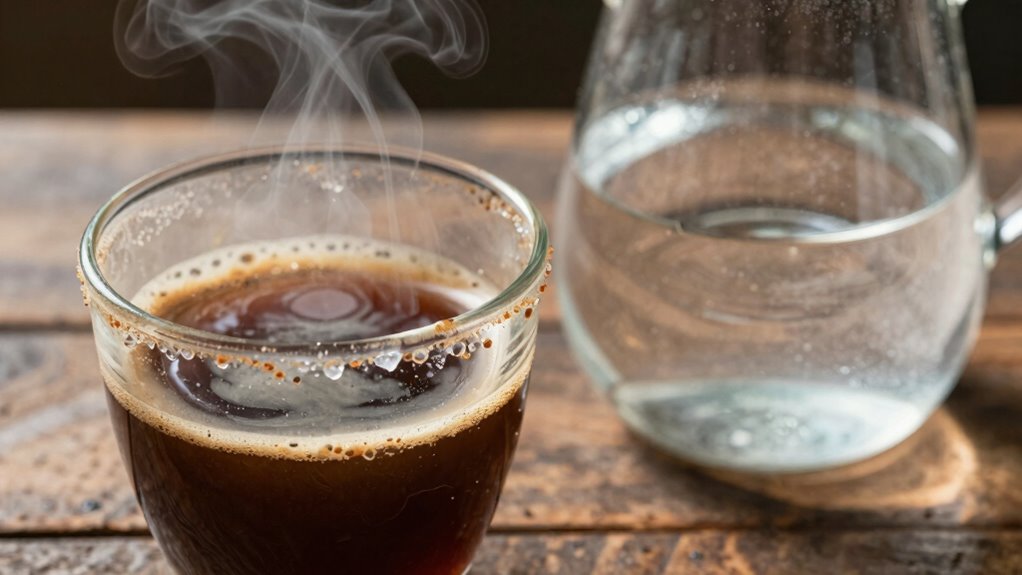
Hard water can considerably harm your coffee’s flavor because it contains high levels of minerals like calcium and magnesium. These minerals cause flavor interference, dulling the rich, nuanced notes you expect in your brew. The mineral impact can make your coffee taste flat, bitter, or metallic, overshadowing the beans’ natural flavors. When minerals interact with coffee’s oils and acids, they create a less enjoyable drinking experience. Over time, mineral buildup can also clog your coffee maker, reducing its efficiency. To fix this, you’ll want to reduce mineral content by using filtered or softened water. Monitoring water quality is essential to ensure your coffee retains its intended flavor profile, allowing you to fully enjoy the subtle complexities of each brew without the unwanted interference of hard water. Incorporating water testing kits can help you regularly check mineral levels and maintain optimal brewing conditions, especially when considering water hardness levels that impact flavor.
How to Test Your Water Hardness at Home in Simple Steps
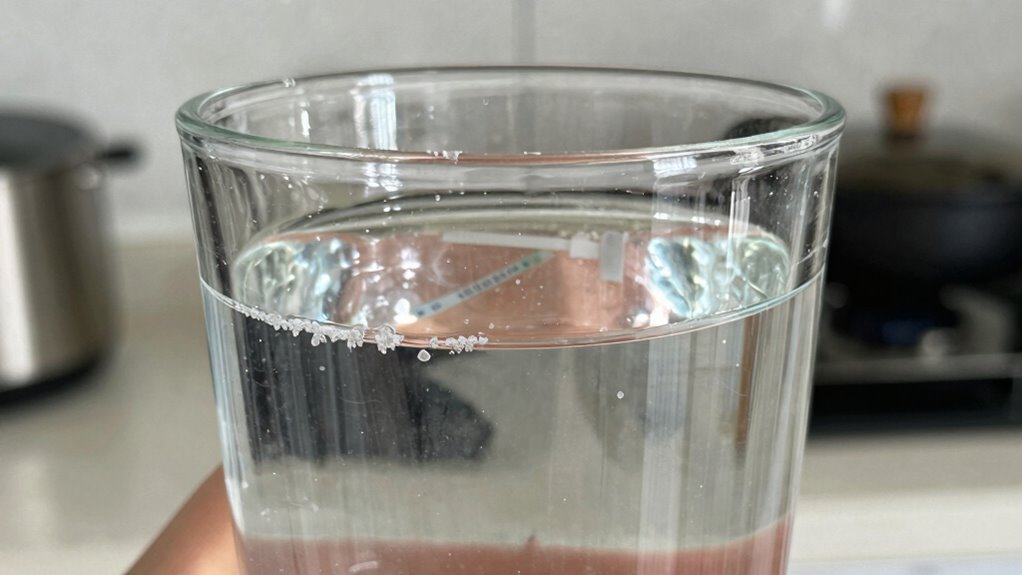
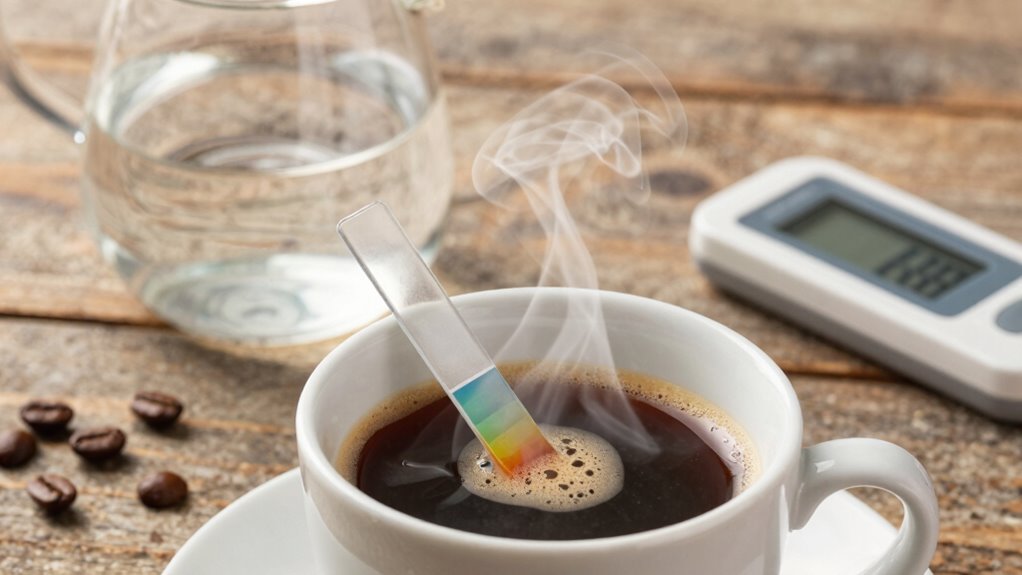
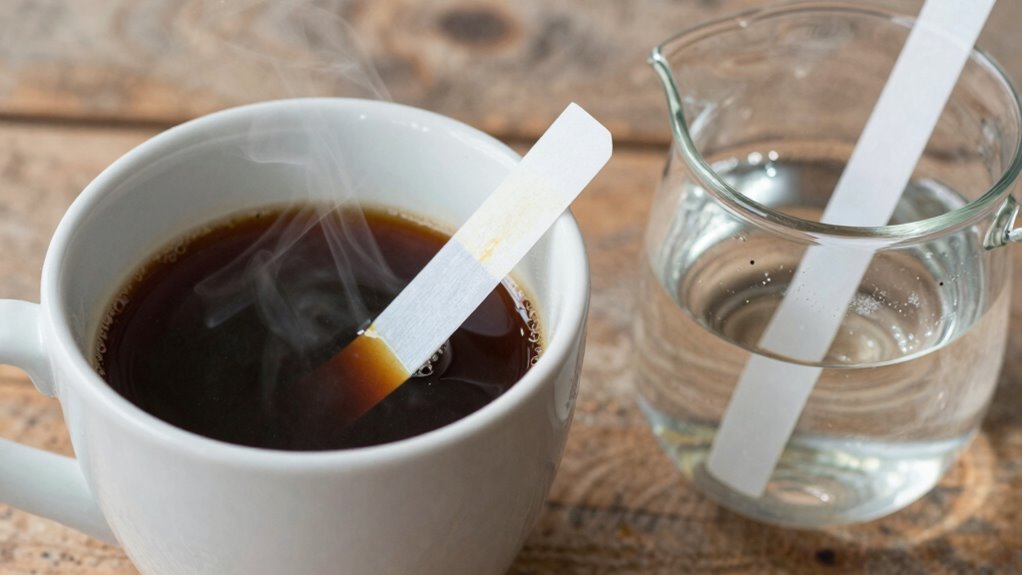
Ever wondered how to quickly determine if your water is hard without expensive equipment? Water testing at home is simple and effective. Start by collecting a small sample of your tap water in a clean container. Use a water testing kit, which you can find online or at a hardware store, designed specifically for mineral analysis. Follow the instructions to add reagents or drops that react with minerals like calcium and magnesium. The color change will indicate the level of water hardness. Keep a chart handy to interpret the results accurately. This quick test helps you understand your water’s mineral content without professional lab analysis, making it easier to decide on the best fix options for better coffee quality. Understanding water hardness is key to choosing the right treatment method for your home. To ensure accurate results, it’s helpful to familiarize yourself with common water hardness levels and what they mean for your daily use. Additionally, knowing the effects of hard water on appliances and taste can guide you toward more effective solutions. In fact, research on water treatment methods shows that selecting the appropriate system can significantly improve your water quality and coffee experience. Recognizing the impact of water mineral content helps you choose the most suitable filter or softening system for your needs.
What Your Water Test Results Mean and Which Fixes Are Best
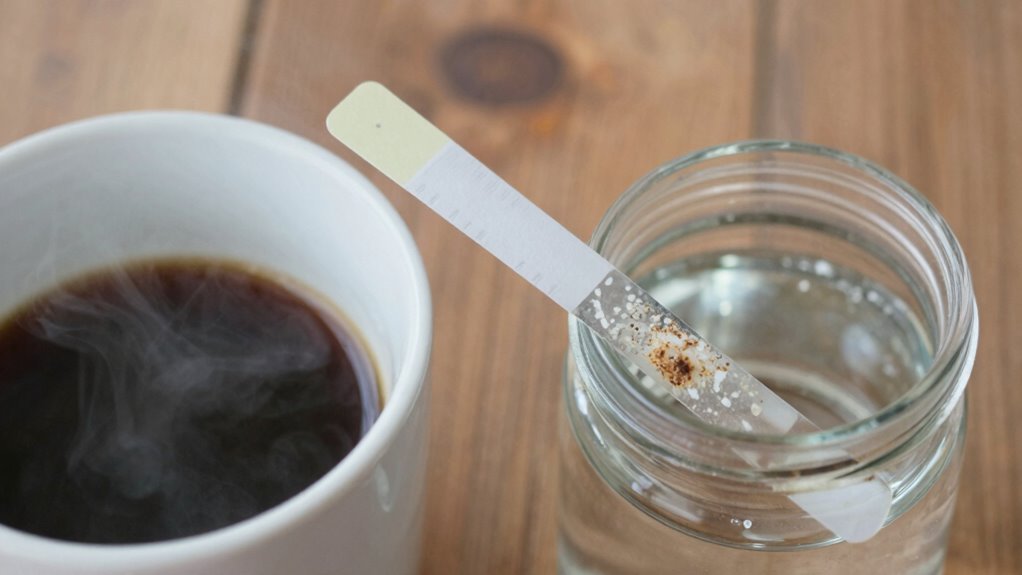
Understanding your water test results is essential for choosing the right solution to improve your coffee. High water mineral content, especially calcium and magnesium, indicates hard water that can ruin your brew. Low mineral levels may suggest softer water, which might lack flavor. Test accuracy is vital—improper testing can lead to wrong fixes. For accurate results, follow proper testing procedures and consider using a reliable pool testing kit designed for precise measurements. Additionally, water hardness levels can vary depending on your location and water source, making proper testing even more important. Keep in mind that test accuracy can be affected by testing conditions, so ensuring correct procedures will help you interpret your results more reliably. Recognizing regional water variations can also aid in understanding your test outcomes more comprehensively. Proper testing methods help prevent misinterpretation of results, ensuring you choose the most effective fix for your water.
Easy Ways to Soften Hard Water and Improve Your Coffee Taste
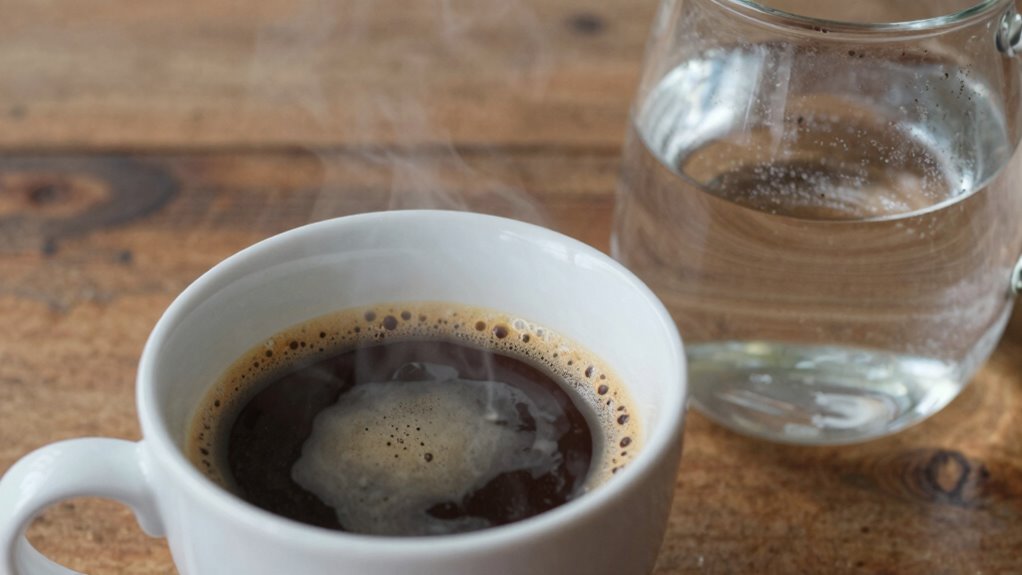
If your water test shows high mineral levels, softening it can make a noticeable difference in your coffee’s flavor and prevent scale buildup. Reducing water mineral content helps improve taste by minimizing the bitterness and metallic notes caused by minerals like calcium and magnesium. One easy way to soften water is by using a water conditioner or descaler, which binds or removes minerals. Another option is to dilute hard water with filtered or distilled water, lowering mineral concentration without affecting brewing temperature. Adjusting brewing temperature can also help, as hot water extracts more minerals, so cooler brewing can reduce mineral impact. Additionally, proper ventilation considerations in your brewing area can help prevent mineral residue buildup on equipment. Maintaining good water quality and regular cleaning of your coffee maker are essential to prevent mineral deposits and ensure consistent flavor. Being aware of water hardness levels and how they influence extraction helps you make informed decisions to optimize your coffee experience. Incorporating water testing into your routine allows you to monitor mineral content and choose the best softening method for your setup. These simple steps enhance your coffee’s flavor and extend your equipment’s lifespan, all while keeping your water mineral content in check.
Which Water Filtration System Is Best for Coffee Lovers?
Choosing the right water filtration system can substantially enhance your coffee’s flavor by reducing mineral content and impurities that interfere with taste. For coffee lovers, activated carbon filters are effective at removing chlorine and organic compounds, improving flavor clarity. Reverse osmosis systems eliminate most water minerals, ideal if your water is very hard. Some filters, like ion-exchange systems, target specific water mineral ions, softening water without stripping all minerals. Consider your water’s hardness level and taste preferences when choosing a filtration system. Understanding water chemistry can help you select the most suitable solution for optimal coffee quality, especially since water mineral composition directly impacts the final flavor profile of your brew. Additionally, knowing your water hardness can guide you toward the most effective filtration method for your needs. Recognizing how water treatment methods influence mineral levels can further refine your choice, and being aware of filter maintenance ensures sustained water quality over time.
How to Maintain Your Coffee Equipment to Prevent Mineral Buildup
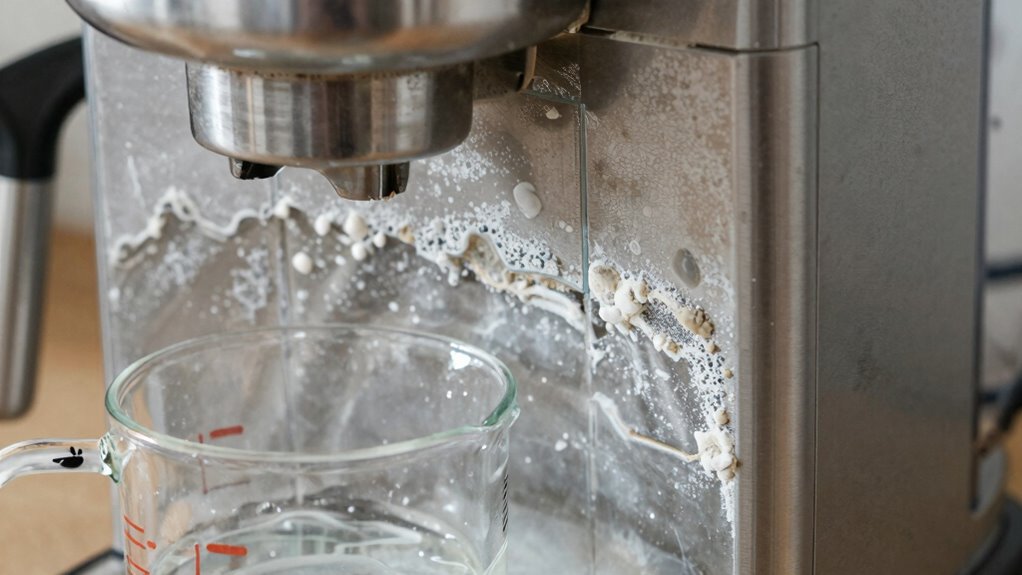
To keep your coffee equipment in top shape, you should follow a regular descaling schedule to remove mineral deposits. Using filtered water diminishes mineral buildup from the start, and cleaning your machine after each use prevents residue from hard water. These simple steps help ensure your coffee tastes great and your equipment lasts longer. Additionally, choosing a water purifier designed to reduce mineral content can further protect your machine from mineral buildup.
Regular Descaling Schedule
Regularly descaling your coffee equipment is essential to prevent mineral buildup that can impair performance and affect the taste of your brew. A consistent descaling schedule helps with scale prevention, ensuring your machine runs smoothly and produces great coffee. How often you need to descale depends on your water hardness and usage, but a good rule of thumb is every 1-3 months. Ignoring this step allows mineral deposits to accumulate, leading to clogged pipes and flavor issues. To keep your machine in top shape:
- Set reminders for descaling based on your water test results
- Use descaling solutions recommended by the manufacturer
- Rinse thoroughly after each descaling to remove residue
Sticking to a regular schedule keeps mineral buildup at bay and extends your equipment’s lifespan.
Use Filtered Water
Using filtered water in your coffee machine is one of the most effective ways to prevent mineral buildup. Filtered water benefits include reducing scale, improving taste, and extending your equipment’s lifespan. Water filtration options range from pitcher filters to under-sink systems, making it easy to find a solution that fits your needs. Here’s a quick comparison:
| Filter Type | Benefits |
|---|---|
| Pitcher Filters | Affordable, portable, simple to use |
| Under-Sink Filters | Higher capacity, consistent filtration |
| Reverse Osmosis | Removes most minerals, purest water |
| Faucet Attachments | Convenient, quick filtration |
Choosing the right water filtration option helps maintain your machine’s performance and ensures your coffee always tastes fresh.
Clean Equipment After Use
After filtering your water to reduce mineral content, the next step is maintaining your coffee equipment by cleaning it promptly after each use. Regular cleaning helps with residue removal and prevents mineral buildup that can affect your brew’s flavor. If you neglect this, minerals can accumulate and clog your machine, making it less efficient. To keep your equipment in top shape, rinse and wipe down components after brewing. Descale your coffee maker periodically using a descaling solution or vinegar to break down mineral deposits. Proper equipment maintenance ensures consistent taste and prolongs your machine’s lifespan.
- Rinse brew baskets and carafes immediately after brewing
- Wipe down the exterior and control panels
- Descale regularly to prevent mineral buildup
Final Tips: Adjust Your Brew for Perfect Coffee Every Time
To perfect your coffee every time, start by using filtered water to reduce mineral content and improve flavor. Next, adjust your grind size to match your brewing method, ensuring ideal extraction. Small tweaks like these make a big difference in achieving consistently great coffee.
Use Filtered Water
Filtered water can make a considerable difference in your coffee’s flavor and consistency. By using water filtration, you remove unwanted minerals that can distort taste and cause scale buildup in your equipment. This guarantees your coffee’s true flavors shine through and your machine stays in top shape. To maximize benefits, consider these tips:
- Use a quality water filter pitcher or built-in filtration system.
- Regularly replace filters to maintain effective mineral removal.
- Test your water periodically to ensure ideal mineral levels.
Filtering your water helps prevent over-hardness and reduces impurities, resulting in a smoother, more balanced brew. It’s a simple step that greatly improves overall coffee quality and extends your equipment’s lifespan, making every cup taste just right.
Adjust Coffee Grind
Adjusting your coffee grind is a key step in fine-tuning your brew to match your taste and equipment. The right coffee grind size influences extraction consistency, ensuring your coffee isn’t over- or under-extracted. If your coffee tastes weak or sour, try a finer grind to increase extraction; if it’s bitter or too strong, coarsen the grind. Consistent grind size helps maintain even extraction, especially when water hardness varies. Use a burr grinder for uniform particles, and adjust based on your brewing method. Remember, small adjustments make a big difference in flavor. Regularly tweaking your coffee grind allows you to optimize extraction, resulting in a richer, balanced cup every time, regardless of water quality.
Frequently Asked Questions
Can Hard Water Affect Other Beverages Besides Coffee?
Yes, hard water can affect other beverages too. It can alter beverage flavor by introducing minerals that compete with the ingredients’ natural tastes. Poor water quality impacts tea, juice, or even cocktails, making them less enjoyable. You should test your water regularly to guarantee it’s not too hard, and consider using filtered or softened water to preserve the true flavors of all your favorite drinks.
How Often Should I Test My Water Hardness?
You should test your water hardness at least once every few months to stay ahead of potential issues. Regular water testing reveals your hardness levels and helps you catch changes early, preventing scale buildup and flavor problems in your coffee. Don’t wait until it’s too late—make testing a routine part of your maintenance. Keep your water quality in check, and your beverages will taste consistently better.
Are There Natural Methods to Reduce Water Hardness at Home?
Yes, you can use DIY filtration and natural softening methods at home. For DIY filtration, try using activated charcoal or a homemade sand filter to remove minerals that cause hardness. Natural softening options include adding lemon juice or vinegar to your water, which can help precipitate minerals. These methods are simple, cost-effective, and eco-friendly ways to reduce water hardness and improve your coffee experience.
Will Softened Water Impact the Flavor of Tea or Other Drinks?
Softened water can improve tea quality by reducing mineral buildup, which enhances water flavor and allows the true taste of your tea to shine. However, if the water is overly softened or contains added salts, it might alter the flavor, making drinks taste flat or slightly salty. To preserve the best flavor, use properly softened water and consider testing it to confirm it maintains the desired taste profile for your drinks.
Is Mineral Buildup From Hard Water Harmful to My Coffee Machine?
Yes, mineral buildup from hard water can harm your coffee machine. Scale buildup inside the machine causes it to work harder, which can lead to premature wear or even damage. Over time, this mineral accumulation reduces efficiency and may result in costly repairs. To protect your machine, regularly descale it and consider using softened water. Doing so helps prevent scale buildup and keeps your coffee machine functioning smoothly for longer.
Conclusion
Remember, hard water is like a silent thief stealing flavor from your coffee. By testing, fixing, and maintaining your equipment, you’re painting a clearer picture of perfect brews. Think of your water as the canvas—softening it transforms dull strokes into vibrant masterpieces. With simple steps, you’ll turn every cup into a work of art, ensuring your coffee stays rich, flavorful, and truly worth savoring.