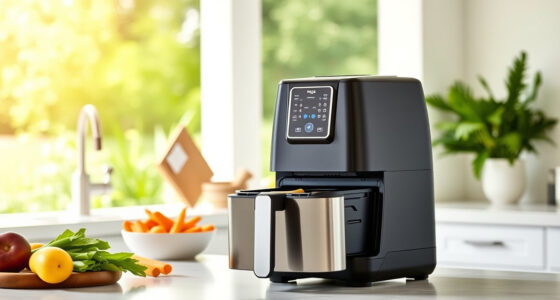
Choosing an air fryer for healthy cooking is less about finding a machine that makes food healthy and more about choosing a format you will use well. Basket-style and oven-style air fryers can both cook with little or no added oil, but they suit different kitchens and routines. A basket model concentrates heat around a smaller batch, which often makes weeknight portions quick and crisp. An oven-style model spreads food across racks and may also toast, roast, or dehydrate, though it takes more space and can involve more setup.

Get kitchen staples and gadgets delivered free with Prime
- Fast, free delivery on millions of items
- Prime Video, Amazon Music and more included
- Member-only deals all year
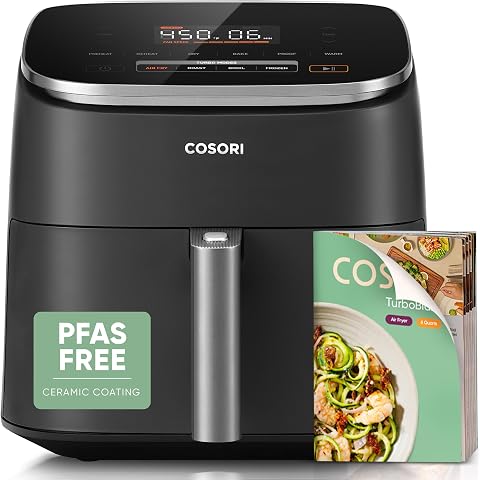
Cosori TurboBlaze 9-in-1 Air Fryer, 6 Qt, PFAS-Free Ceramic Coating
- ✔ Capacity: 6 qt (5.7 L)
- ✔ Temperature range: 90°F–450°F
- ✔ Time range: 1 minute–24 hours

bella Fits-anywhere Slim 4-Qt Air Fryer, Oatmilk
- ✔ Capacity: 4 qt
- ✔ Food capacity: Up to 3.3 lb
- ✔ Power: 1300 watts

Dash Compact Air Fryer, 2 Quart, Cool Grey
- ✔ Capacity: 2 qt (1.2 L)
- ✔ Wattage: 1650 watts
- ✔ Voltage: 110 volts
The real tradeoff is convenience against capacity and versatility. Choose a basket-style air fryer if you mostly cook for one to three people and want a simple route to vegetables, fish, or crisp potatoes. Consider an oven-style unit if you regularly prepare food for a larger household or want one appliance to handle several jobs. Neither format makes fried foods nutritious by itself: ingredients, portion size, and cooking choices matter more than the appliance label.
At a Glance
| Criteria | Basket-style air fryer | Oven-style air fryer | Winner |
|---|---|---|---|
| Oil use and nutrition | Can brown food with little or no added oil; nutrition depends on the food and portion | Can also cook with little or no added oil; extra functions do not change the food’s nutrition | Tie |
| Crispness and consistency | Often gives small batches direct, even airflow; shaking may help | Multiple racks offer room, but rack position and rotation can affect browning | A |
| Speed for everyday portions | Usually quick to preheat and cook modest portions | Larger cavity may take longer to heat; useful when cooking more at once | A |
| Capacity and batch cooking | Best suited to smaller batches; crowded food may cook unevenly | Better for multiple portions and spread-out batches, subject to model size | B |
| Cooking versatility | Focused on air frying, with some models adding basic functions | Often includes toast, bake, roast, or dehydrate settings | B |
| Counter space and storage | Compact footprint, though the basket needs clearance and storage space | Takes more counter space and can be awkward to store | A |
| Cleaning and upkeep | A removable basket and tray are often straightforward to wash | More racks and accessories can mean more parts to clean | A |
| Value for typical use | Strong value if air frying is the main job | Worth the higher cost if its capacity and extra functions replace other appliances | Depends |
Cosori TurboBlaze 9-in-1 Air Fryer, 6 Qt, PFAS-Free Ceramic Coating
For households that want an air fryer to handle regular meals, the Cosori TurboBlaze offers the most balanced combination in this group: a 6-quart square basket, a PFAS-free ceramic coating on the basket and crisper plate, and temperatures up to 450°F. Compared with the 4-quart bella, its extra capacity can reduce the need to cook a meal in multiple rounds. And against the Dash, it is much better suited to full portions rather than snacks or one-person sides.That capacity does come with a larger countertop presence. The unit calls for five inches of clearance behind and above, so buyers with crowded counters should measure the intended spot before choosing it. The higher 450°F ceiling offers more range than bella’s 400°F maximum, while the listed 120 V, 60 Hz supply is a practical compatibility detail to check. Dishwasher-safe parts and a customizable preheat function help make this a convenient everyday pick. We rank it first for buyers who want a roomy basket and PFAS-free ceramic, not for those who need the smallest appliance.
Pros:
- 6-quart square basket offers the largest stated capacity in this lineup.
- PFAS-free ceramic coating on both basket and crisper plate.
- Temperature range reaches 450°F, higher than the bella model’s 400°F limit.
- Basket and crisper plate are dishwasher-safe.
Cons:
- Requires five inches of clearance behind and above the unit.
- Its 6-quart capacity and 13.2-pound weight make it less compact than the bella or Dash.
Best for: Households seeking a larger PFAS-free ceramic-coated basket for regular meals and varied cooking temperatures.
Not ideal for: Buyers with very limited counter clearance or those who only prepare occasional snacks and single portions.
Bottom line: We recommend the Cosori TurboBlaze for buyers who want the strongest mix of capacity, PFAS-free ceramic, temperature range, and convenient cleanup.
“We recommend the Cosori TurboBlaze for buyers who want the strongest mix of capacity, PFAS-free ceramic, temperature range, and convenient cleanup.”
bella Fits-anywhere Slim 4-Qt Air Fryer, Oatmilk
The bella Fits-anywhere Slim is the choice for buyers who want a more space-conscious appliance without dropping to the Dash’s snack-sized 2-quart basket. Its 4-quart capacity and slim 8.22-inch width give it a useful middle ground: more room for everyday sides than the Dash, with a narrower profile than the 6-quart Cosori. The ceramic nonstick basket and crisping tray are dishwasher-safe, which supports frequent use without making cleanup a separate project.Its EverGood ceramic coating is made without PFAS, PFOA, PTFE, lead, or cadmium, a specific materials distinction from the Dash’s PTFE interior. The tradeoff is less headroom than Cosori: the bella tops out at 400°F and the basket may limit a single batch for larger households. Six presets cover air frying, baking, roasting, broiling, reheating, and dehydrating, but the cooking range is not as broad as Cosori’s stated 90°F–450°F span. We place bella second because it gives space-conscious buyers a practical capacity and coating balance, while Cosori remains more versatile for larger meal prep.
Pros:
- Slim 8.22-inch width helps conserve counter and storage space.
- Ceramic coating is made without PFAS, PFOA, PTFE, lead, or cadmium.
- Basket and crisping tray are dishwasher-safe.
- Six presets cover several cooking methods, including dehydrating.
Cons:
- 4-quart capacity is smaller than Cosori’s 6-quart basket and can constrain larger batches.
- Maximum temperature of 400°F is lower than Cosori’s 450°F ceiling.
Best for: People with limited counter width who want a mid-size basket, ceramic coating, and dishwasher-safe cleanup.
Not ideal for: Larger households that want to cook generous batches at once or cooks who want a temperature ceiling above 400°F.
Bottom line: We recommend the bella when a slim footprint and specified ceramic materials matter more than maximum batch size or high-heat range.
“We recommend the bella when a slim footprint and specified ceramic materials matter more than maximum batch size or high-heat range.”
Dash Compact Air Fryer, 2 Quart, Cool Grey
When counter space is the main constraint, the Dash Compact is the easiest fit in this lineup. At 2 quarts and 5.8 pounds, it is designed for snacks and small meals, not for matching the Cosori’s larger family-ready capacity or the bella’s more flexible 4-quart middle ground. A compact basket can help keep portions modest and avoid heating a larger appliance for a small serving, but that benefit only holds if small-batch cooking fits the household.The main healthy-cooking compromise is its PTFE nonstick interior, whereas both larger options specify ceramic coatings and the Cosori and bella state material exclusions for their surfaces. The Dash also requires hand washing, unlike the dishwasher-safe parts on the other two models. Adjustable temperature control, a timer, auto shut-off, and a cool-touch handle provide straightforward essentials, but the listed temperature range is in Celsius and reaches 200°C. We give it a compact role rather than an overall recommendation: choose it for occasional individual portions, and skip it if you want a PFAS-free ceramic surface, dishwasher cleanup, or fewer cooking rounds.
Pros:
- Compact 2-quart size and 5.8-pound weight suit small kitchens.
- Adjustable temperature control and timer provide basic cooking flexibility.
- Auto shut-off and cool-touch handle support simpler handling.
- Removable basket keeps the cooking compartment easy to access.
Cons:
- 2-quart capacity is limited to snacks and small meals compared with bella and Cosori.
- PTFE nonstick interior differs from the ceramic coatings specified for the other two picks.
- Basket requires hand washing.
Best for: Single cooks or people in very small kitchens who mainly make snacks and small portions.
Not ideal for: Families, buyers who need larger batches, or anyone prioritizing a PFAS-free ceramic coating and dishwasher-safe parts.
Bottom line: We recommend the Dash only when compact size for small portions outweighs the ceramic-coating and easy-cleanup advantages of the larger picks.
“We recommend the Dash only when compact size for small portions outweighs the ceramic-coating and easy-cleanup advantages of the larger picks.”
As an Amazon Associate we earn from qualifying purchases.
Key Differences
Both formats can reduce the need for added oil compared with deep frying, but that does not make every air-fried meal healthy. A basket model tends to suit a clear, repeatable routine: load a portion, cook, and shake or turn it if needed. Because food sits in a compact chamber, it is often easier to get a crisp result on a small serving without managing several levels. That makes it a practical choice for vegetables, lean proteins, and frozen foods when time is short.
An oven-style model earns its place through room and range. Racks let you spread ingredients out, and extra settings can help if you want to toast, bake, or roast in the same appliance. Those features matter most when you use them often. They matter less if the machine mostly cooks one serving of fries. More space can also mean more preheating, rack rotation, and washing, so a larger appliance is not automatically the faster or easier choice.
For most people seeking a straightforward way to cook modest portions with less oil, the basket format is the better starting point. Pay more for an oven-style unit when its capacity or additional functions solve a real household need. For either type, prioritize a size that fits your meals, controls you can use easily, and parts that are simple to clean. Avoid buying on the promise of health alone; the ingredients you choose and how much you eat remain the decisive factors.
Detailed Comparison
Oil use and nutrition (minor difference)
Winner: Tie. Difference: minor. Both styles circulate hot air and can brown many foods with little or no added oil, so neither has a reliable health advantage based on format alone. A basket does not remove the calories or salt in a heavily processed product, and an oven-style unit does not make a large serving healthier simply by spreading it across racks. In practice, choose either format to reduce reliance on deep frying, then focus on ingredients, portions, and seasoning.
Crispness and consistency (Basket-style air fryer wins — moderate)
Winner: Basket-style. Difference: moderate. In many basket models, food sits in a compact chamber with airflow close around it. That can make small batches of potatoes, vegetables, or breaded items easier to brown evenly, although shaking or turning may still be needed. Oven-style models can crisp well, but food placed on several racks may cook at different rates, making rack position and rotation more relevant. If crisp texture is your main reason for buying, the basket has the practical edge.
Speed for everyday portions (Basket-style air fryer wins — moderate)
Winner: Basket-style. Difference: moderate. A smaller cooking chamber generally suits a single meal or side dish and may need less time to preheat than a larger oven-style cavity. The time saved is most noticeable when preparing one or two portions, not when a household needs several rounds in a compact basket. Oven-style models can make up ground when they cook more food at once. For a quick lunch or weeknight side, the basket is usually simpler to start and finish.
Capacity and batch cooking (Oven-style air fryer wins — major)
Winner: Oven-style. Difference: major for larger households, minor for one person. Racks and a wider cavity give oven-style models more room to spread food out or prepare several components together. The actual usable capacity varies by model, and filling racks too densely can still obstruct airflow. A basket may handle a family side dish, but it can require cooking in rounds if everyone needs a portion. Choose the oven format when batch size is a regular constraint; if you usually cook for yourself or one other person, its extra room may go unused.
Cooking versatility (Oven-style air fryer wins — moderate)
Winner: Oven-style. Difference: moderate. Oven-style appliances commonly include toast, bake, or roast functions, and some offer dehydration or other settings. That can reduce the need for separate countertop appliances if those jobs are part of your routine. Basket-style units are more focused on air frying, although functions vary between models. Extra buttons are useful only when they match real cooking habits. If you mainly want crisp vegetables and proteins, the basket’s narrower focus is no drawback.
Counter space and storage (Basket-style air fryer wins — moderate)
Winner: Basket-style. Difference: moderate. Basket models generally take up less room than oven-style units, a clear benefit in a small kitchen or on a crowded counter. Still, measure the space around the appliance: both need ventilation, and a basket’s drawer needs room to pull out. Oven-style models can be large enough to stay out permanently, which is inconvenient if the counter is shared. If you need to store the appliance between uses, the basket is usually easier to accommodate.
Cleaning and upkeep (Basket-style air fryer wins — moderate)
Winner: Basket-style. Difference: minor to moderate. A basket model often has a removable basket and tray, giving you a small set of parts to wash after cooking. Oven-style units may add racks, trays, and crumb-catching surfaces, so cleanup can take longer, especially after greasy foods. Dishwasher safety and nonstick care depend on the specific model; check the manual before washing parts or using abrasive tools. For daily use, fewer accessories usually mean less cleanup friction.
Value for typical use (major difference)
Winner: Depends. Difference: major when the extra functions go unused. Basket-style models often cost less and give better value to buyers who want a dedicated air fryer for regular small meals. An oven-style model can justify a higher price if it replaces a toaster oven, handles family-sized batches, or gets frequent use across several cooking modes. Paying more for capacity you rarely fill or settings you never select is poor value. Compare the appliance’s real jobs against the space and cleaning it adds.
Basket-style air fryer: Pros and Cons
Pros:
- Often crisp and consistent for modest portions
- Quick, simple routine for everyday air frying
- Usually takes less counter space
- Fewer parts can make cleanup easier
Cons:
- Smaller batches may require cooking in rounds
- Crowding the basket can compromise airflow and browning
- Typically offers fewer functions than oven-style models
Oven-style air fryer: Pros and Cons
Pros:
- More room for family portions and spread-out food
- Often combines air frying with toast, bake, or roast functions
- Can cook multiple components or batches together
Cons:
- Usually occupies more counter space
- Racks and accessories can add cleaning work
- A larger cavity may take longer to heat for small meals
Who Should Choose What
Choose Basket-style air fryer if:
- You usually cook for one to three people and want a crisp result quickly.
- You want an appliance focused on air frying and have limited counter space.
- You prefer a simple cleanup routine and do not need several cooking modes.
Choose Oven-style air fryer if:
- You regularly cook for a household and a small basket forces multiple rounds.
- You want one countertop appliance for air frying plus jobs such as toast or baking.
- You have enough counter space and will use the larger capacity and functions often.
Skip both if: Skip both if you rarely cook with either appliance, lack safe counter space, or expect air frying alone to make a diet healthy. A standard oven, stovetop, or another tool you already own may serve your routine better.
Value for Money
A basket-style model is usually the better value when air frying is the main job and portions are small. It costs less in many model ranges, uses less counter space, and avoids paying for functions that may sit idle. Its value falls if you repeatedly cook in batches because the capacity does not match your household.
Pay more for an oven-style air fryer when you will use its rack space or additional functions several times a week. If it replaces an appliance you would otherwise buy or frees you from cooking in multiple rounds, the higher price can make sense. If you mainly want occasional fries or one portion of vegetables, the premium is difficult to justify. Compare specific models by usable cooking area, accessories, cleaning requirements, and warranty rather than relying on advertised capacity alone.
Final Verdict
For most people buying an air fryer specifically for healthier everyday cooking, choose a basket-style model sized for your usual portions. It is generally easier to use for quick meals, tends to crisp small batches well, and is simpler to fit into a compact kitchen. The most important deciding factor is how much food you cook at once.
Choose an oven-style model if larger batches or genuinely useful extra cooking modes will change how you cook. Its higher cost earns its keep when it replaces other appliances or makes regular family meals easier. If neither format fits your counter or routine, keep using the kitchen equipment you already own. Whichever you choose, healthier results come from the food and portions you put in, not the appliance’s name.
Frequently Asked Questions
Are air fryers healthier than deep fryers?
They can help reduce added oil because they circulate hot air instead of submerging food in oil. The nutritional result still depends on the ingredients, coating, salt, and portion size. Air-fried vegetables and a large serving of processed snacks are not equivalent choices.
Which air fryer style is better for vegetables?
Both can cook vegetables with little oil. A basket model is convenient for a small batch and often needs a shake partway through. An oven-style model provides more room to spread out several portions, though you may need to rotate racks for even browning.
Is an oven-style air fryer worth paying more for?
It can be if you regularly cook larger batches or use its toast, bake, or roast functions enough to replace another appliance. If you mainly want quick servings of crisp food, a basket model is usually better value.
Does air frying remove calories from food?
No. Using less added oil can reduce calories compared with deep frying, but the appliance does not remove calories from the ingredients. Portion size and food choice still determine much of the meal’s nutritional impact.