When people compare electric pressure cookers, the practical choice is often between an electric multicooker and a traditional stovetop pressure cooker. Both trap steam to cook food under pressure, reducing cooking time for dishes such as beans, braises, grains, and stocks. The real decision is whether you want a countertop appliance that manages heat and timing, or a pot that uses your stove and gives you more direct control.

Get kitchen staples and gadgets delivered free with Prime
- Fast, free delivery on millions of items
- Prime Video, Amazon Music and more included
- Member-only deals all year
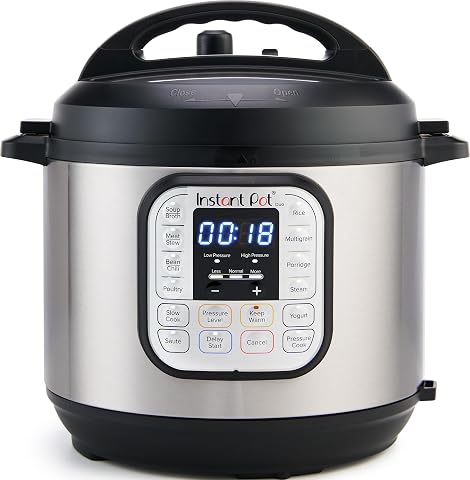
Instant Pot Duo 6-Quart 7-in-1 Electric Pressure Cooker
- ✔ Capacity: 5.68 liters (6 quarts)
- ✔ Cooking functions: Pressure cook, slow cook, sauté, steam, rice, yogurt, keep warm
- ✔ Smart programs: 13

DUMOS 16-in-1 Electric Pressure Cooker, 6-Quart, Silver
- ✔ Capacity: 6.34 quarts
- ✔ Functions and programs: 16 functions; 12 one-touch presets
- ✔ Power: 1000 watts

DUMOS 16-in-1 Electric Pressure Cooker, 6-Quart, Black
- ✔ Capacity: 6.34 quarts
- ✔ Functions and presets: 16 functions; 12 one-touch presets
- ✔ Inner pot: Ceramic
Electric models suit cooks who value hands-off operation, preset programs, and functions such as slow cooking or rice cooking in one appliance. Stovetop models suit cooks who already feel comfortable managing a burner and want faster pressure changes, a pot that can serve as ordinary cookware, and less reliance on electronics. Neither choice makes every meal faster: preheating and pressure release add time, and the best fit depends on how you cook and what space you have.
At a Glance
| Criteria | Electric pressure cookers | Stovetop pressure cookers | Winner |
|---|---|---|---|
| Ease of use | Automated temperature management, timers, and presets simplify operation. | Requires attention to burner heat and pressure indicators. | A |
| Heating and pressure control | Usually heats and changes pressure more slowly; settings are managed through the control panel. | Generally reaches pressure and responds to heat changes faster; the cook controls the burner. | B |
| Hands-off cooking | Strong advantage: the cooker regulates heat and switches to keep-warm or a timed mode. | Less hands-off: heat must be adjusted and cooking time monitored. | A |
| Functions and versatility | Often combines pressure cooking with functions such as slow cooking, rice cooking, and sautéing. | Primarily a pressure cooker and ordinary pot, with fewer automated cooking modes. | A |
| Kitchen space | Needs countertop or storage space and a power outlet. | Uses a burner and can be stored with other cookware when not in use. | Depends |
| Cost and value | Usually costs more upfront, though it may replace several small appliances. | Often costs less, particularly when compared with feature-rich electric models. | B |
| Durability and repair | Electronics and seals can need replacement; the unit may be harder to repair than a basic pot. | Simple construction can last for many years; seals and valves still require care and replacement. | B |
Instant Pot Duo 6-Quart 7-in-1 Electric Pressure Cooker
The Instant Pot Duo earns the top spot for being the most clearly specified all-rounder in this lineup. Its seven named modes cover pressure cooking alongside slow cooking, sautéing, steaming, rice, yogurt, and warming, so we can see what the appliance is intended to replace. The 13 one-touch programs give routine meals a straightforward starting point, while custom control is less central to its pitch than it is for the DUMOS models.The stainless steel insert is the main practical distinction from both DUMOS cookers. Its tri-ply bottom is intended to support searing and sautéing in the pot, a useful step when building flavor before pressure cooking. By comparison, DUMOS specifies a ceramic insert that resists sticking and scratching; that may appeal to cooks who prioritize that surface, but the supplied descriptions do not make an equivalent claim about searing. The Instant Pot also weighs 14.6 pounds, making it the heaviest listed option, and its listed 120-volt requirement is worth checking against the intended kitchen setup.We would choose this model for a buyer who wants a recognized, multi-purpose format with its core functions spelled out. It is not the obvious pick for someone whose main priorities are a delay start or a ceramic surface, since those are specifically described on the DUMOS listings. Its one-year manufacturer warranty is stated, but buyers should weigh that alongside the feature fit rather than treat the warranty as a substitute for it.
Pros:
- Seven named cooking functions cover pressure cooking and common multicooker tasks.
- 13 one-touch programs provide convenient starting points for routine cooking.
- Tri-ply-bottom stainless steel insert is specified for searing and sautéing.
- One-year manufacturer warranty is stated.
Cons:
- At 14.6 pounds, it is heavier than either listed DUMOS model.
- No delay-start feature is stated in the supplied details.
- The listed 120-volt requirement may not suit every power setup.
Best for: Cooks who want a versatile 6-quart-class pressure cooker with named functions, one-touch programs, and a stainless steel insert suited to sautéing.
Not ideal for: Those who specifically want a ceramic inner pot, a stated 24-hour delay start, or the lightest cooker in this comparison.
Bottom line: We recommend the Instant Pot Duo as the strongest general-purpose choice for buyers who value a clearly described feature set and stainless steel cooking pot.
“We recommend the Instant Pot Duo as the strongest general-purpose choice for buyers who value a clearly described feature set and stainless steel cooking pot.”
DUMOS 16-in-1 Electric Pressure Cooker, 6-Quart, Silver
The silver DUMOS 16-in-1 makes a strong case for cooks who plan meals ahead and want a ceramic insert. Its 24-hour delay start lets us schedule a cooking start, and keep-warm is available for holding food after a cycle. The listing describes 12 one-touch programs within a 16-function appliance, including pressure cooking, rice, steaming, and yogurt; those details help clarify the range without suggesting every function is automatic.Compared with the Instant Pot Duo, this DUMOS trades the named stainless steel tri-ply bottom for a ceramic inner pot described as resistant to sticking and scratching. That can be appealing for cooks who want an alternative surface, though the supplied information does not establish that it browns as effectively as the Instant Pot’s searing-oriented insert. It is also lighter at 11.9 pounds. Removable parts are described as dishwasher safe, which gives this version a useful cleanup advantage in the listing, though buyers should confirm which specific pieces are included in that claim.This model’s key limitation is that its 6.34-quart listed capacity remains substantial for smaller households. It is also very close to the black DUMOS listing: both share the M-60F6 designation, program count, ceramic pot, and main dimensions. The silver version is the better fit if its stated dishwasher-safe removable parts and silver finish match your priorities. We would not choose it on the assumption that its cooking functions differ substantially from the black one.
Pros:
- Delay start can be set up to 24 hours ahead.
- Ceramic inner pot is described as resisting sticking and scratching.
- Keep-warm function helps hold food after cooking.
- Removable parts are listed as dishwasher safe.
Cons:
- The 6.34-quart capacity may be more than smaller households need.
- The supplied description does not name each dishwasher-safe component.
- The 16 functions are not all described as one-touch programs.
Best for: Meal planners who want a ceramic inner pot, a delay start, keep-warm, and a lightweight cooker for family-size batches.
Not ideal for: Buyers who prioritize a stainless steel insert for sautéing, need a compact single-portion appliance, or want every removable part individually identified for dishwasher cleaning.
Bottom line: We favor the silver DUMOS for cooks who value planned starts and ceramic-pot convenience more than a specified stainless steel searing surface.
“We favor the silver DUMOS for cooks who value planned starts and ceramic-pot convenience more than a specified stainless steel searing surface.”
DUMOS 16-in-1 Electric Pressure Cooker, 6-Quart, Black
The black DUMOS M-60F6 shares the silver model’s central proposition: a 6-quart-class cooker with 16 functions, 12 one-touch presets, a ceramic pot, delay start, and keep-warm. What gives this listing a distinct role is its extra detail about overheat protection and dry-boil monitoring, along with a dishwasher-safe removable lid and sealing ring. These stated specifics may help a buyer compare safety and cleanup requirements, although the listing does not establish that the silver cooker lacks equivalent protections.Against the Instant Pot Duo, the DUMOS offers scheduling and a ceramic cooking surface, while the Instant Pot specifies a tri-ply stainless steel bottom for searing and sautéing. That distinction is more meaningful than the DUMOS color: the black and silver listings share the same model number, dimensions, weight, capacity, and core program details. We rank this version third because the silver listing describes dishwasher-safe removable parts more broadly, while the black listing’s advantage is a narrower set of clearly named components and monitoring features.At 11.9 pounds, it is lighter than the Instant Pot, yet its 6.34-quart capacity is still best suited to batch cooking or multiple servings rather than minimal countertop use. We would select it when the named dry-boil monitoring and explicit lid and ring cleaning information are useful decision points. Because the product descriptions differ in detail, buyers comparing both DUMOS versions should verify the current packaging and manual rather than assume that one color has a unique underlying design.
Pros:
- Lists overheat protection and dry-boil monitoring.
- Dishwasher-safe removable lid and sealing ring are specifically identified.
- Includes delay start up to 24 hours and keep-warm.
- Ceramic inner pot is described as resisting sticking and scratching.
Cons:
- Its core specifications closely match the silver DUMOS listing, limiting the distinction between them.
- The 6.34-quart capacity may be limiting for larger gatherings and excessive for single portions.
- Only 12 of the 16 functions are described as one-touch presets.
Best for: Buyers who want the DUMOS ceramic-pot format and place particular importance on stated dry-boil monitoring and dishwasher-safe lid and sealing ring.
Not ideal for: People seeking a clearly different cooking platform from the silver DUMOS, a stainless steel pot for sautéing, or a smaller-capacity cooker.
Bottom line: We recommend the black DUMOS when its stated monitoring and named dishwasher-safe parts are the deciding details in an otherwise near-identical DUMOS option.
“We recommend the black DUMOS when its stated monitoring and named dishwasher-safe parts are the deciding details in an otherwise near-identical DUMOS option.”
As an Amazon Associate we earn from qualifying purchases.
Key Differences
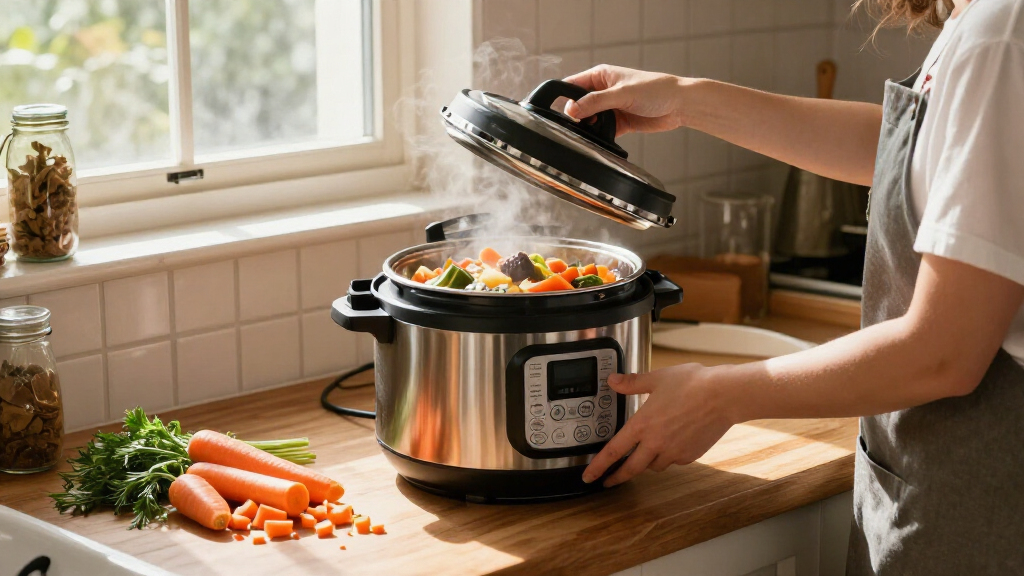
The biggest difference is how much responsibility the cooker takes on. An electric pressure cooker regulates its own heating and usually provides a timer, preset programs, and a keep-warm setting. That reduces the need to watch the pot, but it also means accepting the appliance’s pace and controls. A stovetop cooker puts heat management in the cook’s hands. It can respond more quickly when the burner changes, but that control comes with more attention during cooking.
Those differences affect everyday value as much as cooking performance. Electric multicookers often do useful jobs beyond pressure cooking, which can justify their higher price if those modes will see regular use and countertop space is available. A stovetop cooker is a stronger value for someone who mainly wants pressure cooking, already owns suitable cookware, or prefers a straightforward pot that works on a stove. Before choosing either, account for preheating, pressure release, capacity, and the space needed to use and store the cooker.
Detailed Comparison
Ease of use (Electric pressure cookers wins — moderate)
Electric pressure cookers win by a moderate margin for cooks who want fewer steps to manage. A control panel can offer preset programs and set a cooking time; the appliance then regulates its heating. That is helpful when the cook wants to prepare ingredients and step away, though settings and manufacturer-specific controls still take some learning. A stovetop cooker is simple in construction, but the cook must bring it to pressure, adjust the burner, and track the cooking time. Choose electric for a gentler learning curve; choose stovetop if burner management already feels routine.
Heating and pressure control (Stovetop pressure cookers wins — moderate)
Stovetop models win by a moderate margin on direct responsiveness. A burner can bring the pot to pressure quickly, and turning the heat down changes the input promptly. This can be useful for cooks who want to control the process closely. Electric models handle their own heating, but they may take longer to reach pressure and are less immediate when a setting changes. Neither format removes the time needed for food to come to pressure or for pressure to release. The advantage matters most when the cook values control and understands how to use it.
Hands-off cooking (Electric pressure cookers wins — major)
Electric models win by a major margin for unattended cooking. They manage heat after the cook sets the program and can switch to keep-warm automatically. A stovetop cooker needs closer supervision so the burner stays at an appropriate level, and the cook must manage when to lower the heat and end cooking. Electric automation is especially useful for busy households and cooks who want a timer to handle routine steps. It does not make pressure cooking instant: the cooker still needs to build and release pressure.
Functions and versatility (Electric pressure cookers wins — moderate)
Electric models win by a moderate margin when a household will use several cooking modes. Many multicookers can pressure cook, slow cook, sauté, steam, or prepare rice, though functions vary by model and may not replace dedicated appliances equally well. A stovetop pressure cooker can also serve as a regular pot, but it does not offer automated programs for other methods. Paying for extra functions makes sense when they fit meals the household already cooks; otherwise, a simpler stovetop pot can do the central job for less.
Kitchen space (minor difference)
The winner depends on the kitchen and storage habits, so this is a minor difference without more context. An electric model needs a suitable counter or cupboard, room to use it, and a nearby outlet. It can reduce clutter if it replaces appliances the household would otherwise keep. A stovetop cooker can be put away with ordinary cookware and does not claim a dedicated outlet, but it still needs a place to store a sizable pot. Choose based on where the cooker will live and whether its other functions earn the space.
Cost and value (Stovetop pressure cookers wins — moderate)
Stovetop models usually win on purchase price, by a moderate margin, especially against electric multicookers with many modes. Lower upfront cost is compelling if pressure cooking is the only need. Electric models can be better value for someone who will regularly use their additional settings or appreciates built-in timing enough to use the appliance more often. The higher price is not automatically justified by a faster meal: pressure build-up and release remain part of the cooking time. Compare the features you will actually use, not the longest feature list.
Durability and repair (Stovetop pressure cookers wins — moderate)
Stovetop models usually win by a moderate margin for long-term simplicity. Their basic pot, lid, gasket, and valve design has fewer electronic controls to fail. Seals and valves still need regular inspection and eventual replacement, so a simple pot is not maintenance-free. Electric units add electronics and heating components; a worn seal may be replaceable, but other failures can make repair less practical than replacing the appliance. Check parts availability for either format, especially if you expect to keep a cooker for many years.
Electric pressure cookers: Pros and Cons
Pros:
- Automates heating and timed cooking.
- Often offers several cooking modes in one countertop appliance.
- Useful keep-warm settings can simplify meal timing.
Cons:
- Needs dedicated storage or counter space and an outlet.
- May take longer to build pressure and respond to setting changes.
- Electronics can be harder or costlier to repair.
Stovetop pressure cookers: Pros and Cons
Pros:
- Often lower purchase price.
- More direct heat control and typically faster pressure changes.
- Simple construction can support long service with routine seal and valve care.
Cons:
- Needs more attention to burner heat and timing.
- Offers fewer automated programs and extra cooking modes.
- Requires a compatible stove and a cook comfortable managing pressure.
Who Should Choose What
Choose Electric pressure cookers if:
- You want to set a cooking program and focus on other tasks.
- You will use functions such as slow cooking, steaming, or rice cooking often enough to justify the appliance.
- You have suitable counter or storage space and value built-in timing.
Choose Stovetop pressure cookers if:
- You want a straightforward pressure cooker at a lower upfront cost.
- You are comfortable adjusting a burner and monitoring cooking.
- You value responsive heat control, simple construction, and a pot that also works as regular cookware.
Skip both if: You rarely cook foods that benefit from pressure and do not want a sizeable appliance or pot to store; a regular saucepan, rice cooker, or slow cooker may suit your meals better.
Value for Money
A stovetop pressure cooker is usually the better value when the goal is simply to pressure cook, particularly for someone who already owns a suitable burner and does not mind monitoring heat. An electric model earns its higher price when its automation makes pressure cooking practical more often, or when its additional modes replace tools the household would otherwise buy and store. Pay more for the electric cooker only if you will use those conveniences regularly. A feature you rarely use adds cost and takes space without improving the meals you make most.
Final Verdict
For most cooks choosing between a straightforward pressure cooker and a feature-rich electric multicooker, electric is the easier recommendation when hands-off cooking and multiple modes matter. It handles heat and timing itself, which lowers the effort of routine meals. Choose a stovetop model if lower upfront cost, direct control, and a durable basic pot matter more than automation. The deciding factor is whether convenience will make you use pressure cooking often enough to justify the electric model’s extra cost and space.
Frequently Asked Questions
Is an electric pressure cooker faster than a stovetop one?
A stovetop model generally reaches pressure and responds to heat changes faster. Total meal time still depends on the food, amount, preheating, and release method; both styles need time to build and release pressure.
Which type is easier for a beginner?
An electric model is usually easier because it manages heating and offers timed programs. A beginner still needs to learn the controls, fill limits, and safe pressure release. A stovetop model can also be straightforward once the cook learns to regulate the burner and read its pressure indicator.
Is an electric pressure cooker worth the higher price?
It is worth paying more if you will use its automation and extra cooking modes often. If you mainly want to cook under pressure and are comfortable watching a burner, a stovetop cooker usually offers better value.
Can an electric pressure cooker replace several appliances?
It can cover some tasks, such as slow cooking, rice cooking, steaming, or sautéing, depending on the model. Whether it replaces another appliance depends on the functions you use and how well the model performs those jobs.