
To prevent your bread maker’s performance from declining, regularly clean removable parts like the bread pan and kneading paddle with warm, soapy water, then dry thoroughly. Wipe the interior and exterior with a damp cloth, avoiding harsh chemicals, and use a vinegar solution for odors and mold. Inspect the heating element and power cord periodically. Proper care, combined with consistent maintenance, helps keep your machine running smoothly for longer—continue to learn the best tips for upkeep.

Get kitchen staples and gadgets delivered free — and shop member deals
- Fast, free delivery on millions of items
- Access to Prime Big Deal Days deals on October 6–7
- Prime Video, Amazon Music and more included
Key Takeaways
- Regularly clean removable parts and interior to prevent residue buildup that can affect performance.
- Inspect and clean the heating element and kneading paddle area to ensure efficient operation.
- Use a vinegar solution for deep cleaning, odor removal, and disinfection.
- Keep the machine in a dry, cool place and check the power cord for damage regularly.
- Perform routine maintenance and inspections to identify and address issues early.

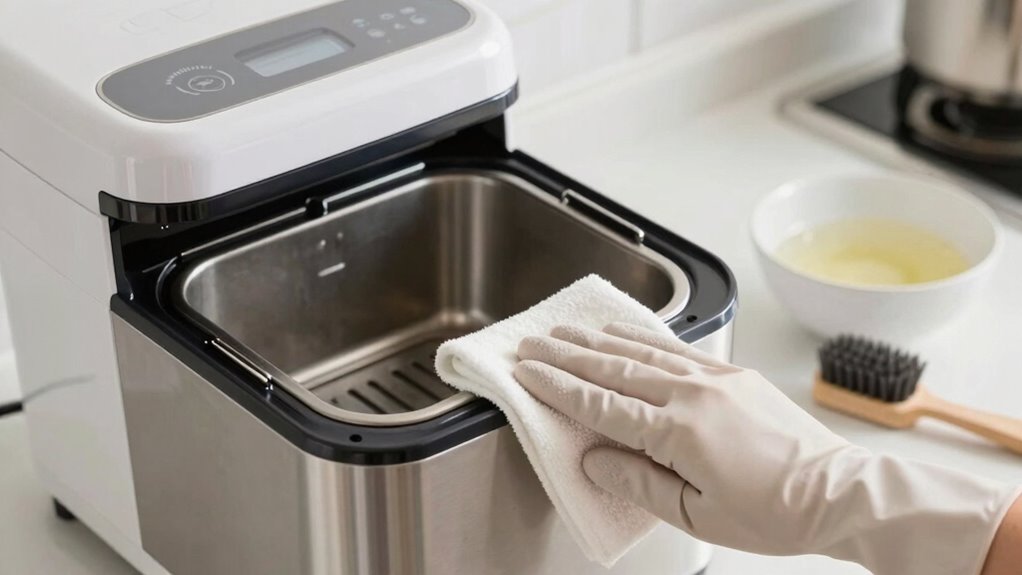
Ever wondered how to keep your bread maker in top shape? Proper cleaning and maintenance are essential to guarantee your appliance continues to produce delicious bread and operates smoothly over time. When you neglect to clean your bread maker regularly, residue from previous bread, flour, and dough can build up, affecting both the taste of your bread and the machine’s performance. A clean machine not only guarantees better bread but also prevents the need for frequent bread machine troubleshooting, saving you time and frustration. Start by unplugging your bread maker and removing any removable parts, such as the bread pan and kneading paddle. Wash these parts with warm, soapy water, making sure to scrub away any stuck dough or crumbs. Dry them thoroughly before reinserting, because leftover moisture can cause rust or mold. Wipe down the interior of the machine with a damp cloth, avoiding harsh chemicals that might damage the components. Pay special attention to the heating element and the area where the kneading paddle attaches, as these spots tend to accumulate residue that could hinder performance. Regular inspection and cleaning of these areas can extend the lifespan of your bread maker and maintain its efficiency.
For the exterior, a simple wipe with a damp cloth keeps dust and grime at bay, helping your bread maker look good and operate at its best. Regular cleaning of the interior and removable parts is particularly important if you experiment with various bread maker recipes, which often involve different ingredients that can leave stubborn stains or residues. If you notice any unusual smells or signs of mold, it’s best to give the machine a deeper clean with a vinegar solution—mix equal parts water and white vinegar, then wipe down all surfaces. This natural disinfectant can eliminate lingering odors and bacteria. Additionally, understanding the importance of regular maintenance can help prevent issues and keep your bread maker functioning optimally for years to come. Proper maintenance also involves keeping the power cord in good condition, as electrical issues can affect performance and safety. Furthermore, routine inspection can help identify potential problems early before they develop into costly repairs.
To ensure your bread maker stays in good shape, consider cleaning the heating element periodically, as buildup can reduce heating efficiency. Beyond cleaning, routine maintenance plays a key role in preventing issues that lead to bread machine troubleshooting. Keep the machine in a dry, cool place to avoid moisture damage, and periodically inspect the power cord for any signs of wear. If you notice the machine isn’t kneading properly or the bread isn’t rising as it should, simple fixes like cleaning the kneading paddle or resetting the machine can often solve the problem without much fuss. Properly maintaining your bread maker ensures it stays responsive to your bread recipes, delivering perfect loaves every time. With consistent cleaning and attentive care, your bread maker will remain a reliable kitchen companion, helping you enjoy fresh, homemade bread for years to come.
As an affiliate, we earn on qualifying purchases.
Frequently Asked Questions
How Often Should I Replace the Bread Maker’s Non-Stick Coating?
You should replace the bread maker’s non-stick coating if it starts peeling, flaking, or shows significant signs of wear. Typically, a replacement schedule isn’t fixed, but checking the coating every 6 to 12 months helps maintain performance. If you notice reduced non-stick effectiveness, it’s time to evaluate a new coating or replacing the bread maker. Regular inspections ensure your appliance works efficiently and safely over time.
Can I Use Metal Utensils to Clean the Bread Pan?
You should avoid using metal utensils to clean the bread pan because they can scratch the non-stick surface and damage the coating. Instead, opt for gentle cleaning tools like soft sponges or cloths. Using metal utensils may seem effective, but they can cause harm over time, leading to reduced performance. Stick with non-abrasive cleaning tools to keep your bread maker in top shape and guarantee consistent baking results.
What Are Common Signs Indicating My Bread Maker Needs Repairs?
If your bread maker isn’t mixing dough properly, making unusual noises, or the display isn’t responsive, these are signs it needs repairs. Regularly following a maintenance routine helps extend its longevity. Keep an eye on any burning smells or leaks too. Addressing these issues promptly ensures your bread maker stays in top shape, preventing costly repairs and maintaining best performance over its lifespan.
How Do I Troubleshoot Uneven Bread Baking Results?
To troubleshoot uneven bread baking, start by checking dough kneading. Make sure the dough is mixed thoroughly for even yeast distribution, which affects rising and baking. If kneading seems inconsistent, clean the paddle and pan regularly. Also, verify that ingredients are added in the correct order, and that the bread maker’s temperature sensors are functioning properly. Properly maintained and evenly kneaded dough helps achieve consistent, well-baked bread.
Are There Specific Cleaning Products to Avoid for Bread Maker Maintenance?
You should avoid chemical cleaners and abrasive scrubs when maintaining your bread maker. These harsh products can damage the non-stick surfaces and internal components, reducing its lifespan and performance. Instead, use a damp cloth with mild soap or vinegar solution for cleaning. Regular, gentle cleaning preserves your bread maker’s effectiveness, ensuring it buffs out bread evenly every time without risking corrosion or surface damage.
bread machine kneading paddle replacement
As an affiliate, we earn on qualifying purchases.
As an affiliate, we earn on qualifying purchases.
Conclusion
By giving your bread maker a gentle touch of care and regular upkeep, you’re ensuring it stays your trusty kitchen companion for many loaves to come. Think of it as a little dance—keeping everything smooth and in harmony lets your machine perform its best, slice after slice. With just a bit of attention, you’ll keep the magic alive, turning simple ingredients into warm, delicious bread whenever you desire. Happy baking!
bread maker vinegar cleaning solution
As an affiliate, we earn on qualifying purchases.
As an affiliate, we earn on qualifying purchases.
As an affiliate, we earn on qualifying purchases.
NFL season / tailgating Picks
team gear
As an affiliate, we earn on qualifying purchases.