To prevent overheating and mess in your small kitchen, place your countertop ice maker near a water source to reduce hose length and ensure efficient operation. Select a well-ventilated, open spot to keep the appliance cool and prevent overheating. Use a sturdy, level surface to keep it stable and catch any drips. Keep it away from heat sources and clutter for safety and ease of use. For more helpful tips, keep exploring to optimize your setup.
Key Takeaways
- Place the ice maker in an open, well-ventilated area to prevent overheating during operation.
- Keep the appliance near water sources to minimize hose length and water waste.
- Use sturdy, level surfaces to ensure stability and prevent accidental spills or falls.
- Position away from heat sources like stoves or ovens to avoid heat-related damage.
- Ensure easy access for refilling and maintenance, reducing clutter and promoting safe, efficient use.
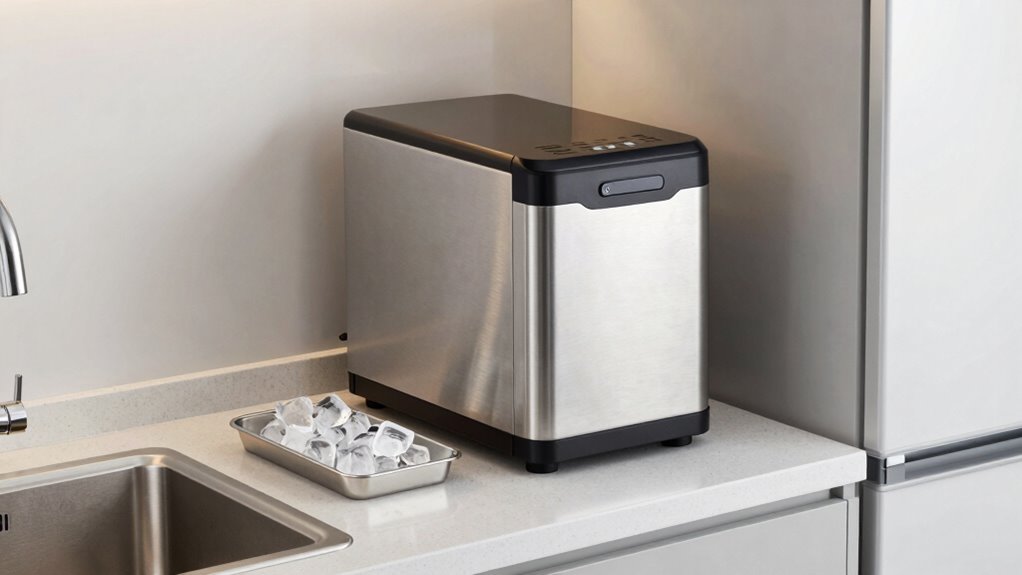
Are you struggling to make the most of your small kitchen? When space is limited, every inch counts, especially when it comes to installing appliances like a countertop ice maker. Proper placement isn’t just about convenience; it’s about ensuring the appliance functions efficiently without causing overheating or messes. To maximize your setup, focus on placement rules that promote water efficiency and maintain your countertop aesthetics. By doing so, you’ll create a streamlined look that’s both practical and visually appealing.
Maximize small kitchen space with strategic placement for efficiency and aesthetic appeal.
First, consider the location of your countertop ice maker relative to other appliances and your sink. Position it close enough to water sources to minimize the length of water supply hoses, which helps reduce water waste. This not only improves water efficiency but also prevents potential leaks that could lead to water damage or mold. Keep in mind that a cluttered or cramped space can hinder airflow and ventilation, risking overheating. Placing your ice maker in an open spot with good airflow ensures it remains cool during operation, prolonging its lifespan and maintaining *ideal* performance.
Next, think about the surface where you’ll set the ice maker. A sturdy, level countertop is essential to prevent vibrations that could cause spills or damage. If your countertop has a glossy or decorative finish, choose a placement that minimizes contact with water splashes or condensation, preserving its aesthetic appeal. You might also consider adding a small tray or mat underneath the unit to catch any drips or excess water, keeping your countertop clean and maintaining its visual integrity. This simple addition enhances water efficiency by preventing unnecessary messes and reduces cleanup time. Additionally, selecting an appropriate appliance placement ensures optimal operation and safety.
Another critical factor is accessibility. Place the ice maker where you can easily reach it for refilling water and removing ice, but also where it won’t obstruct your workflow. Overcrowding the counter can lead to accidental knocks or spills, creating messes that are hard to clean and disrupting the overall look of your kitchen. Additionally, maintain a safe distance from heat sources like stovetops or ovens, as excessive heat can impact the appliance’s performance and increase the risk of overheating.
Finally, consider the overall flow of your small kitchen. Efficient placement reduces clutter and makes your space feel larger and more organized. When your ice maker is well-positioned, it blends seamlessly with your kitchen’s design, enhancing the overall countertop aesthetics. Proper placement also ensures your appliance operates quietly and efficiently, saving water and energy while keeping your small kitchen sleek and functional. In the end, strategic placement isn’t just about convenience—it’s about creating a space that’s efficient, attractive, and hassle-free.
Frequently Asked Questions
How Long Does It Take for a Countertop Ice Maker to Produce Ice?
Your countertop ice maker typically takes about 6 to 15 minutes for ice production time, depending on its capacity. If you have a larger ice maker capacity, it might produce ice a bit faster, but generally, you’ll see a batch of ice within this timeframe. Keep in mind that initial startup might take a little longer, but once it’s running smoothly, you’ll get ice quickly and efficiently.
Can I Place the Ice Maker Outdoors or in a Garage?
You can place your countertop ice maker outdoors or in a garage if it’s designed for such environments. Check the manufacturer’s guidelines first, as outdoor placement and garage installation may expose it to temperature fluctuations and humidity, risking overheating or malfunction. Guarantee proper ventilation and keep it away from direct sunlight or heat sources. If unsure, consider a model specifically rated for outdoor use to prevent damage and ensure ideal performance.
What Are the Power Requirements for Installing a Countertop Ice Maker?
Power requirements for your countertop ice maker are precise and paramount. You’ll need to guarantee a dedicated electrical outlet providing the correct voltage—typically 110V or 120V—and enough amperage to handle the appliance’s power needs. Prioritize power safety by avoiding extension cords and grounding connections properly. Proper placement and power setup prevent problems like overheating, ensuring your ice maker runs reliably, safely, and smoothly, producing ice efficiently without interruption.
How Often Should I Clean and Maintain the Ice Maker?
You should clean your ice maker every 3 to 4 weeks to prevent mold and mineral buildup. Follow a consistent cleaning schedule, using vinegar or manufacturer-recommended solutions. Maintenance tips include unplugging it before cleaning, wiping down surfaces, and checking for clogs or leaks regularly. Doing this keeps your ice maker running smoothly, ensures fresh ice, and extends its lifespan. Regular upkeep is key to hassle-free operation.
Are There Safety Features to Prevent Overheating During Extended Use?
Yes, your countertop ice maker has safety features like overheat prevention and safety sensors that activate if it gets too hot. These sensors automatically shut off the device to prevent damage and guarantee safety during extended use. To keep these features effective, avoid blocking air vents and follow manufacturer guidelines for operation time. Regular maintenance also helps the safety sensors work properly, protecting your appliance from overheating.
Conclusion
Now that you know the key placement rules, your small kitchen setup is almost perfect. But here’s the catch: the slightest mistake could lead to overheating or a messy disaster. Are you ready to test your new setup and see if it truly keeps your ice maker cool and clean? The secret to seamless, hassle-free ice making is just one smart placement away. Stay tuned—you might just discover the game-changing tip that makes all the difference.