
One common mistake is not using a dedicated, properly grounded outlet, which can lead to overloads and fire hazards. Placing your microwave on cluttered or unstable surfaces increases the risk of accidents and damage. Additionally, blocking vents or placing it too close to cabinets can cause overheating and reduce efficiency. Proper height and ventilation guarantee safety and longevity. Keep these setup tips in mind, and you’ll avoid future issues—discover more ways to set up your microwave correctly.
Open a free Amazon Business account
Business pricing, bulk buying and tax-exempt orders.
As an affiliate, we earn on qualifying purchases.
Key Takeaways
- Using an overloaded or improperly grounded outlet increases fire risk and electrical issues.
- Placing the microwave directly on the counter without sufficient ventilation causes overheating.
- Setting the microwave on unstable surfaces can lead to damage or accidents.
- Installing the microwave at an awkward height hampers accessibility and increases spill risks.
- Blocking vents or placing the microwave too close to cabinets hinders heat dissipation and airflow.
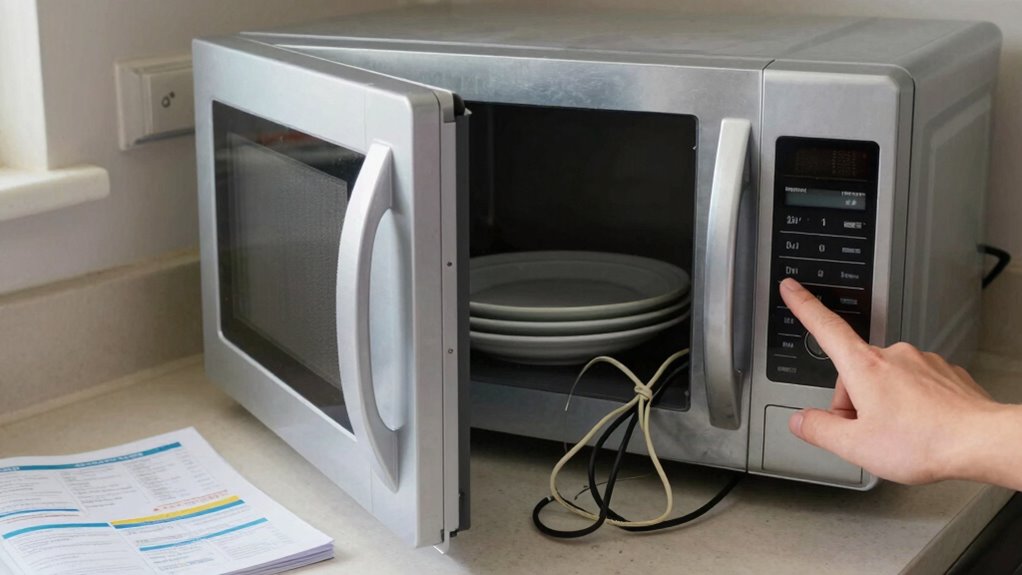
Setting up a new microwave might seem straightforward, but many people make common mistakes that can affect its performance and safety. One of the first errors involves overlooking the importance of power outlet placement. You might assume any outlet will do, but microwaves need a dedicated, properly grounded outlet to operate safely. Using an outlet shared with other appliances can lead to overloading, which increases the risk of electrical issues or even fires. To avoid this, choose a nearby outlet that can handle the microwave’s wattage without strain. If you’re unsure, it’s best to have a qualified electrician install a dedicated outlet, especially if your kitchen doesn’t already have one in the right spot.
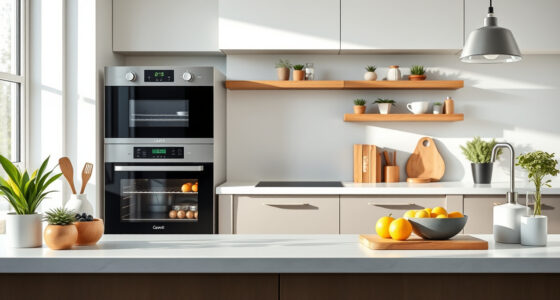
Another frequent mistake relates to countertop clearance. When setting up your microwave, it’s tempting to place it directly on the counter without considering the needed space around it. Adequate clearance isn’t just about aesthetics; it’s critical for safety and proper functioning. You should leave enough space around the microwave for ventilation, typically a few inches on all sides. Overheating can occur if the vents are blocked or if the unit is crammed into a tight space, leading to overheating and potential damage. Additionally, ensure there’s enough room above the microwave if it’s placed under a cabinet—many models require some clearance to prevent heat buildup. Proper placement also involves considering the safety guidelines to ensure your microwave operates efficiently and safely. Ensuring proper ventilation around the microwave helps prevent overheating and prolongs its lifespan. Moreover, correct placement can also help in reducing noise during operation, making your kitchen environment more pleasant.
People also underestimate the importance of stable placement. You might be tempted to set your microwave directly onto a cluttered or uneven surface, but this can cause instability during operation. A sturdy, flat surface ensures that the microwave remains steady, reducing the risk of accidents or damage. Consider using a microwave stand if your countertop is crowded or uneven. This not only provides stability but also improves airflow and makes cleaning easier. Proper stability is especially important if you frequently move or adjust the microwave, as it minimizes wear and tear on the appliance and surrounding surfaces.
Finally, some overlook the importance of accessibility. You want your microwave to be at a comfortable height—not too high or too low—to avoid spills or strain when handling hot food. Position it where you can easily reach the controls and view the display without stretching or bending excessively. Proper placement also makes cleaning simpler and minimizes the risk of knocking it over or misusing it. Additionally, ergonomic considerations can greatly enhance your overall experience and safety when using the microwave regularly.
As an affiliate, we earn on qualifying purchases.
Frequently Asked Questions
How Do I Reset My Microwave to Factory Settings?
To reset your microwave to factory settings, first unplug it and wait a few minutes to guarantee power is completely cut off. Then, plug it back in and consult your user manual for specific reset instructions, as some models have a dedicated reset button or combination of buttons. Remember, microwave safety is vital, so always handle kitchen appliances carefully. Resetting can fix issues and improve performance, guaranteeing safe and efficient use.
Can I Use Metal Utensils in My Microwave Safely?
Using metal utensils in your microwave is like inviting a lightning strike—it’s unsafe. Metal containers and foil reflect microwave energy, causing sparks and potential fires. For microwave safety, stick to microwave-safe glass or plastic. If you need to stir or serve, use microwave-safe utensils. Remember, metal and microwave safety don’t mix, so avoid metal to keep your appliance and home safe.
What Should I Do if My Microwave Isn’T Heating?
If your microwave isn’t heating, first unplug it and check for obvious issues like a blown fuse or damaged door latch. Avoid trying microwave repairs yourself; instead, contact a professional technician. Always follow safety precautions to prevent injury or further damage. Remember, improper repairs can be dangerous. A qualified repair service guarantees your microwave is safe and functions correctly, saving you time and potential hazards down the line.
How Often Should I Clean My Microwave?
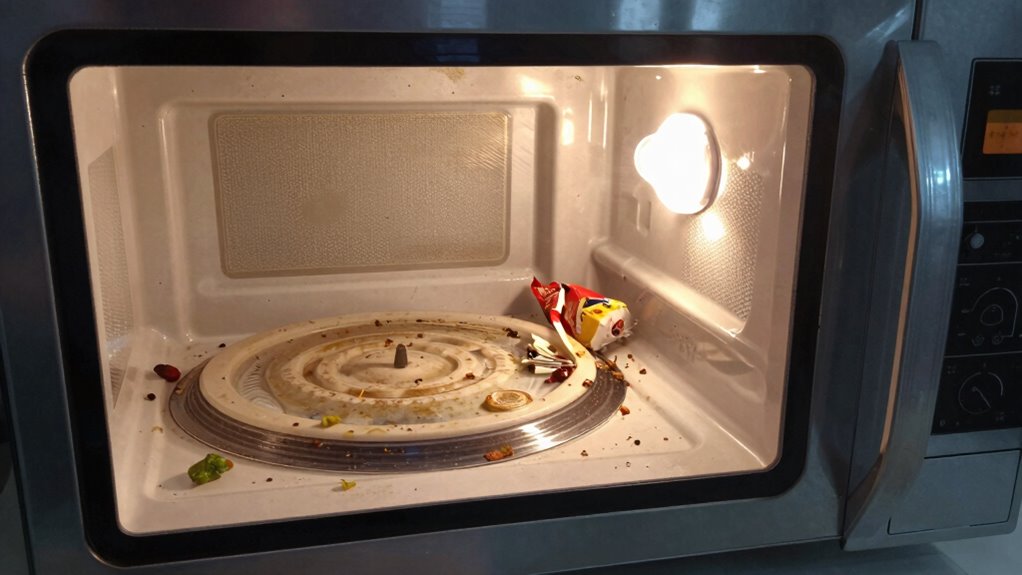
Think of cleaning your microwave like tending a garden—regular upkeep keeps it fresh. You should clean it at least once a week to maintain the best performance and prevent buildup. This cleaning frequency also helps with odor removal, so your microwave stays smelling fresh. Wipe down the interior with a damp cloth and mild soap, and don’t forget to clean the turntable regularly for the best results.
Is It Safe to Operate an Empty Microwave?
No, it’s not safe to operate an empty microwave. Doing so can cause damage to the appliance, as the microwave’s energy has nothing to absorb, potentially leading to sparks or even a fire. For proper kitchen safety and appliance maintenance, always make certain there’s something inside before turning it on. Regularly check your microwave for issues and keep it clean to prevent hazards and keep it functioning efficiently.
As an affiliate, we earn on qualifying purchases.
Conclusion
Starting off on the right foot with your microwave is key to avoiding common mishaps. Did you know that nearly 30% of microwave users accidentally damage their appliance during initial setup? By following proper placement and setup tips, you can extend your microwave’s lifespan and guarantee safe, efficient use. Don’t rush the process—taking a little extra time now saves you headaches later. Make your microwave work for you, not against you, from day one.
As an affiliate, we earn on qualifying purchases.
As an affiliate, we earn on qualifying purchases.
Fall Picks
fall essentials
As an affiliate, we earn on qualifying purchases.