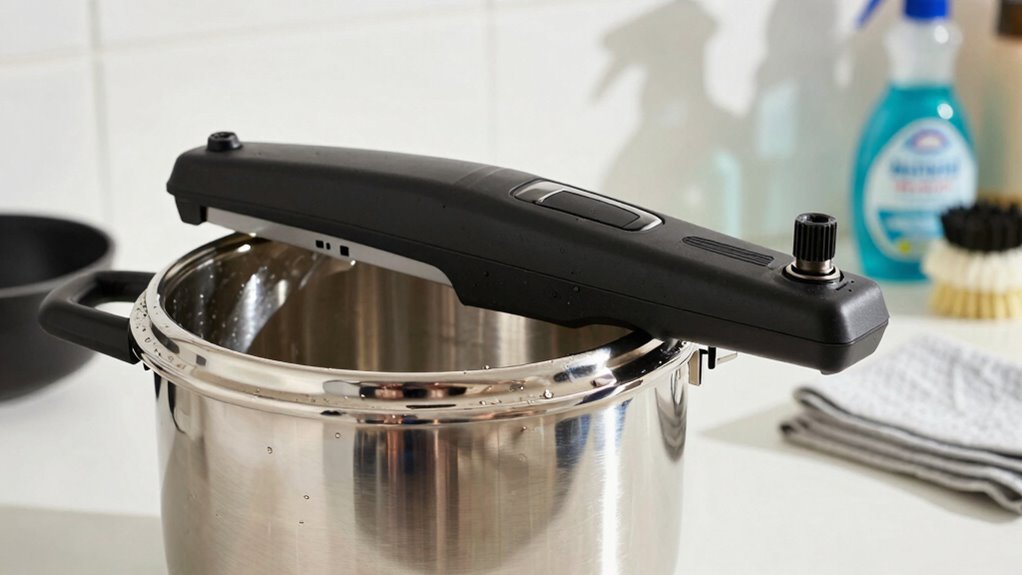

To keep your pressure cooker performing well, regularly follow the manufacturer’s cleaning and maintenance instructions. Inspect and clean the pressure release valve to prevent clogs, and check the gasket for cracks or deformation, replacing it if needed to prevent leaks. Clean the lid, gasket, and pot with warm, soapy water after each use, and store the lid slightly ajar to prevent odors. Proper maintenance extends your cooker’s lifespan, and if you continue, you’ll discover more tips to guarantee it works efficiently over time.

Get kitchen staples and gadgets delivered free with Prime
- Fast, free delivery on millions of items
- Prime Video, Amazon Music and more included
- Member-only deals all year
Key Takeaways
- Regularly inspect and clean the pressure release valve to prevent debris buildup and ensure proper pressure regulation.
- Check and replace the gasket if it shows signs of wear to maintain a proper seal and avoid pressure loss.
- Perform routine maintenance, including cleaning all parts and inspecting for corrosion or damage.
- Wash the lid, gasket, and pot thoroughly after each use with warm, soapy water and avoid abrasive cleaners.
- Store the pressure cooker with the lid slightly ajar to prevent mold, odors, and ensure long-term performance.
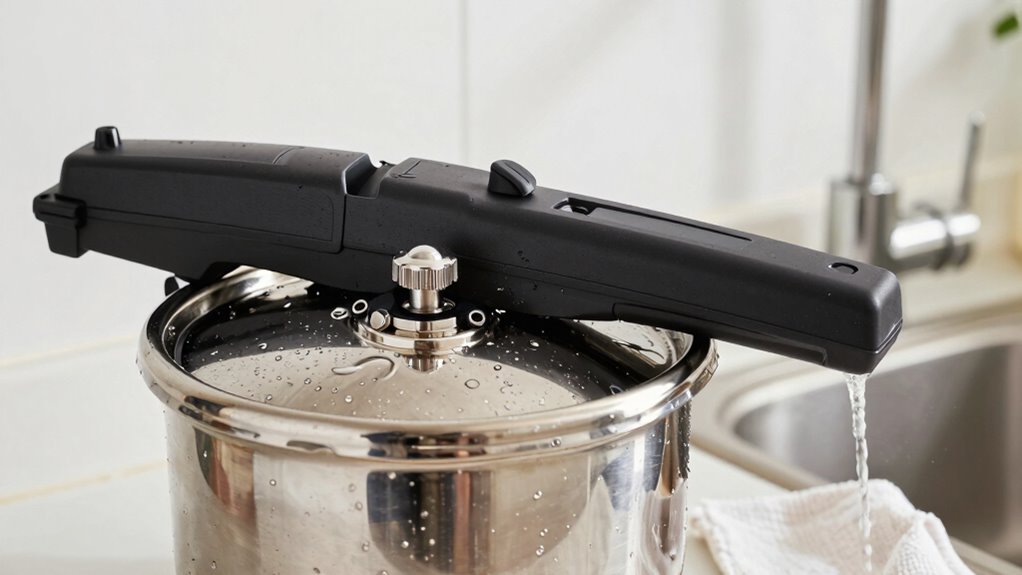
Keeping your pressure cooker clean and well-maintained is essential for safe and efficient cooking. Over time, residues can build up, and parts can wear out, which may compromise its performance. To guarantee it works properly, you need to pay attention to key maintenance tasks, especially the pressure release system and gasket condition. Properly releasing pressure after cooking is critical for safety and longevity. Always follow the manufacturer’s instructions for pressure release, whether it’s natural or quick release. When you release pressure correctly, you prevent excess buildup that could damage the valve or cause dangerous malfunctions. After each use, inspect the pressure release valve to make sure it’s free of debris and functioning smoothly. If the valve gets clogged or sticky, clean it gently with warm water and a soft brush. This simple step makes certain that pressure releases properly and your cooker doesn’t get stuck under high pressure.
Another essential aspect of maintenance is the gasket. The gasket, or sealing ring, keeps the lid airtight during cooking, so it’s important to keep it in good shape. Over time, the gasket can become cracked, brittle, or deformed, which causes steam to escape and reduces cooking efficiency. Regularly remove the gasket to inspect it closely. If you notice any tears, hardening, or loss of flexibility, it’s time to replace it. Gasket replacement is straightforward and usually inexpensive, but it makes a big difference in maintaining proper pressure and safety. When replacing the gasket, guarantee it fits snugly around the lid and sits properly in its groove. Proper seating prevents steam leaks and helps your pressure cooker perform at its best. Additionally, regular maintenance of all components helps ensure consistent performance and safety. Performing periodic inspection of parts can help catch potential issues early before they affect the cooker’s operation. Incorporating routine checks can further extend the lifespan of your appliance. Regularly applying a protective coating to metal surfaces can also prevent corrosion and extend the longevity of your pressure cooker. Using proper cleaning techniques that avoid harsh abrasives can further preserve the integrity of your cooker’s surfaces and components.
Beyond the gasket and pressure release components, keeping the interior and exterior clean also preserves performance. Wash the lid, gasket, and pot thoroughly after each use with warm, soapy water. Avoid abrasive cleaners that can scratch surfaces. Pay special attention to the valve and sealing areas, removing any food particles or residue. Regular cleaning prevents build-up that could interfere with pressure regulation. Also, check for corrosion or damage and address issues immediately. When stored, keep the lid slightly ajar to prevent mold and odors from developing inside. This simple habit prolongs the life of your pressure cooker and guarantees it remains safe to use.
pressure cooker gasket replacement kit
As an affiliate, we earn on qualifying purchases.
As an affiliate, we earn on qualifying purchases.
Frequently Asked Questions
How Often Should I Replace the Pressure Cooker’s Gasket?
You should replace your pressure cooker’s gasket every 12 to 18 months to guarantee ideal sealing. Regular gasket replacement is essential for maintaining your pressure cooker’s lifespan and safety. Inspect the gasket for cracks, tears, or hardening, and replace it if you notice any damage. Doing this prevents steam leaks, keeps pressure consistent, and helps your cooker perform efficiently over time. Proper maintenance extends your pressure cooker’s useful life.
Can I Use Metal Utensils Inside a Pressure Cooker?
You shouldn’t use metal utensils inside a pressure cooker because it can damage the cookware and compromise cooking safety. Stick to silicone, wooden, or plastic utensils that are compatible with your pressure cooker’s material. Metal utensils can scratch the surface, leading to potential leaks or corrosion. Always prioritize utensil compatibility to guarantee safe cooking and maintain your pressure cooker’s performance over time.
Is It Safe to Cook With a Damaged Pressure Valve?
Imagine your pressure cooker as a trusted partner in the kitchen. If you notice a damaged pressure valve, don’t risk it—stop cooking immediately. It’s vital to conduct a thorough pressure valve inspection to guarantee safety. Using a damaged valve can lead to dangerous pressure buildup. Always follow safety precautions, and replace or repair the valve before resuming cooking. Your safety and that of your loved ones depend on it.
What’s the Best Way to Remove Mineral Deposits?
To remove mineral deposits, start with descaling techniques like filling your pressure cooker with equal parts water and vinegar. Bring it to a boil, then let it sit for about 30 minutes to loosen mineral buildup. Afterward, scrub any remaining deposits with a soft brush or sponge. Rinse thoroughly with water to make sure all vinegar and loosened deposits are gone. Regular descaling helps maintain ideal pressure cooker performance and prolongs its lifespan.
How Do I Know if My Pressure Cooker Is Still Safe to Use?
You can tell if your pressure cooker is safe to use by checking for any cracks, warped parts, or damaged gaskets, which can compromise cooking safety. Make sure the pressure release valve works properly and that the lid seals tightly. Regular maintenance tips include cleaning the valve and gasket and inspecting for corrosion. If in doubt, consult the manufacturer’s guidelines or get it professionally checked to keep your cooking safe and efficient.
pressure cooker pressure release valve
As an affiliate, we earn on qualifying purchases.
As an affiliate, we earn on qualifying purchases.
Conclusion
To keep your pressure cooker performing like a well-oiled machine, regular cleaning and maintenance are essential. Think of it as tending a garden—you need to prune, water, and care for it consistently. By following proper cleaning routines and inspecting parts regularly, you’ll prevent buildup and guarantee safe, efficient cooking. With a little effort, your pressure cooker will stay reliable and ready to serve up delicious meals, just like a trusted friend always there when you need it.
As an affiliate, we earn on qualifying purchases.
pressure cooker maintenance parts
As an affiliate, we earn on qualifying purchases.
As an affiliate, we earn on qualifying purchases.
Halloween Picks
halloween
As an affiliate, we earn on qualifying purchases.