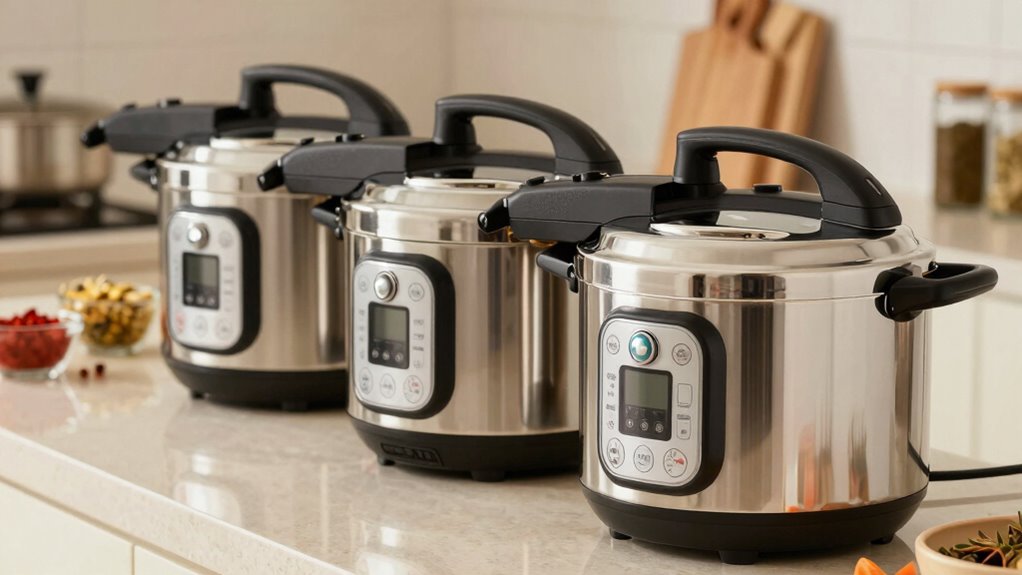

Before buying a pressure cooker, check its safety features like reliable locking lids, safety valves, and pressure release systems to prevent accidents. Consider energy efficiency with even heat distribution and automatic controls to save power. Make sure it fits your cooking needs by matching size and capacity, and opt for models that are easy to clean and maintain. Focus on user-friendly controls and multiple pressure settings. Keep these key features in mind—more details follow to help you choose wisely.
Key Takeaways
- Prioritize models with reliable safety features like locking lids, safety valves, and pressure release systems for secure operation.
- Choose energy-efficient pressure cookers with good heat retention and precise controls to save on utility bills.
- Match the size and capacity of the cooker to your household’s meal needs for optimal performance and convenience.
- Ensure the cooker has intuitive controls, easy-to-clean parts, and multiple pressure settings for user-friendly use.
- Verify safety mechanisms are robust and non-negotiable to protect yourself and your family during cooking.
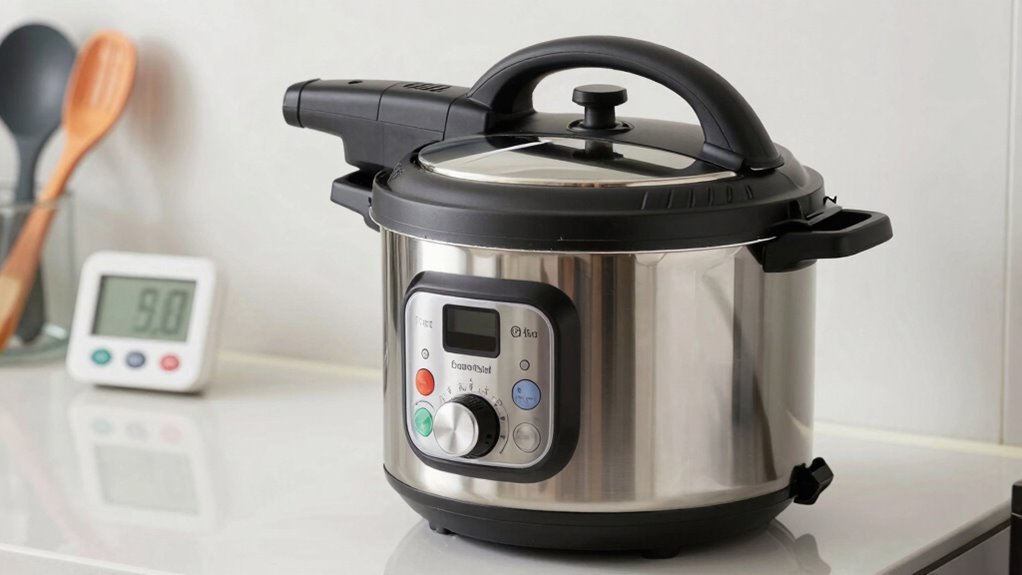
Choosing a pressure cooker might seem straightforward, but rushing into a purchase without knowing what to look for can lead to frustration and wasted money. The key is to look beyond brand names and flashy features and focus on the essentials that guarantee your cooking is safe, energy-efficient, and convenient. First, consider cooking safety. You want a pressure cooker that has reliable safety mechanisms, such as locking lids, safety valves, and pressure release systems. These features prevent accidents like over-pressurization or lid mishandling, which could cause injuries or damage. A good pressure cooker should have multiple safety layers, including a sturdy locking system that won’t open until pressure drops to safe levels, and a vent or relief valve that automatically releases excess pressure. These safety features are non-negotiable because they protect you and your kitchen.
Prioritize safety features like locking lids, safety valves, and pressure release systems for secure, worry-free cooking.
Next, energy efficiency plays a vital role in choosing a pressure cooker. A well-designed cooker can cut cooking times considerably, saving both energy and money over the long run. Look for models with good heat retention and even heat distribution, which ensure your food cooks quickly and thoroughly without wasting fuel. Modern pressure cookers often come with pressure indicators or digital controls that allow precise adjustments, preventing unnecessary energy use. An energy-efficient model not only reduces your utility bills but also minimizes your environmental impact, making it a smart pick for eco-conscious households. Additionally, understanding pressure regulation features can significantly impact your cooking experience and safety. Proper pressure regulation helps maintain consistent cooking conditions and reduces the risk of accidents. Moreover, some models feature automatic pressure control, which simplifies operation and enhances safety.
Size and capacity are also important to contemplate. You’ll want a pressure cooker that fits your typical meal sizes. If you cook for one or two, a smaller model suffices; if you regularly prepare large meals or batch cook, opt for a larger capacity. Keep in mind that a bigger cooker might require more energy, so balance size with efficiency. Furthermore, assessing ease of maintenance features ensures your cooker remains in good condition and safe to use over time. It’s also beneficial to consider durability aspects to choose a model that lasts through daily use.
Ease of use is another key factor. Features like intuitive controls, clear pressure indicators, and simple cleaning mechanisms make your experience more enjoyable. A cooker with a well-designed lid and straightforward locking system minimizes the risk of user error. Additionally, check for compatibility with your cookware and whether it suits your cooking style—some models come with multiple pressure settings for different recipes. Choosing a user-friendly model with easy operation can significantly enhance your overall cooking experience.
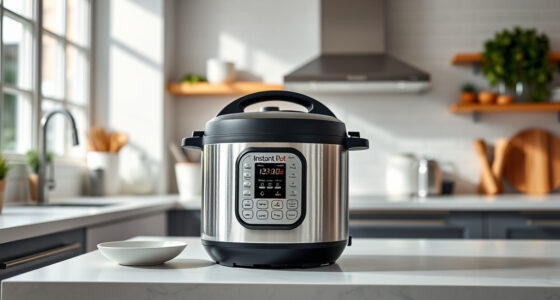
pressure cooker with safety lock and pressure release valve
As an affiliate, we earn on qualifying purchases.
As an affiliate, we earn on qualifying purchases.
Frequently Asked Questions
Are Pressure Cookers Safe for Everyday Use?
Yes, pressure cookers are safe for everyday use if you choose models with reliable pressure release mechanisms and safety valves. These features prevent excessive pressure buildup, reducing explosion risks. Always follow the manufacturer’s instructions, confirm the safety valves are clean and functioning, and never overfill the cooker. When used properly, pressure cookers make cooking faster and safer, giving you peace of mind during regular meal prep.
How Energy-Efficient Are Modern Pressure Cookers?
Modern pressure cookers are quite energy-efficient, helping you save on energy consumption. Their design guarantees rapid cooking, which boosts cooking efficiency by reducing the time you spend in the kitchen. When you use a high-quality pressure cooker, you’ll notice less energy waste compared to traditional methods. This makes them an eco-friendly choice, especially if you want quicker meals without increasing your energy bills.
Can Pressure Cookers Be Used for Canning?
Yes, pressure cookers can be used for canning. You should follow proper canning techniques and guarantee your pressure cooker is designed for this purpose. Use the correct sealing methods to prevent spoilage and ensure safety. Maintain the right pressure and temperature, and monitor your jars closely during processing. Always follow tested recipes and guidelines to preserve food safely, making your pressure cooker a versatile tool for both cooking and preserving.
What Is the Typical Lifespan of a Pressure Cooker?
A pressure cooker typically lasts 5-10 years if you’re diligent with maintenance tips and prioritize cooking safety. Think of it as a trusty sidekick that needs regular check-ups—clean seals, replace valves when worn, and avoid overuse. Proper care keeps it cooking safely and prolongs its life. With attentive maintenance, your pressure cooker can serve you well through many culinary adventures, making it a reliable kitchen hero.
Are There Specific Brands Known for Durability?
You should consider brands known for durability, like Instant Pot, Fissler, and All American, because their reputation for quality is well-established. These brands use high-quality materials like stainless steel, which withstands daily use and resists corrosion. By choosing a brand with a solid reputation and superior material quality, you guarantee your pressure cooker lasts longer, performs reliably, and provides safe cooking experiences over many years.
energy-efficient electric pressure cooker with multiple pressure settings
As an affiliate, we earn on qualifying purchases.
As an affiliate, we earn on qualifying purchases.
Conclusion
Before you dash to the store like a knight rushing to save Camelot, make sure your pressure cooker checks all nine essential features. Think of it as wielding Excalibur—only the best will do for your kitchen quests! Don’t settle for a mere trinket; choose one that’s safe, durable, and easy to use. With these tips, you’ll be cooking up a storm in no time—no need for Merlin’s magic, just smart choices!
large capacity stainless steel pressure cooker for family
As an affiliate, we earn on qualifying purchases.
As an affiliate, we earn on qualifying purchases.
easy-to-clean pressure cooker with digital controls
As an affiliate, we earn on qualifying purchases.
As an affiliate, we earn on qualifying purchases.