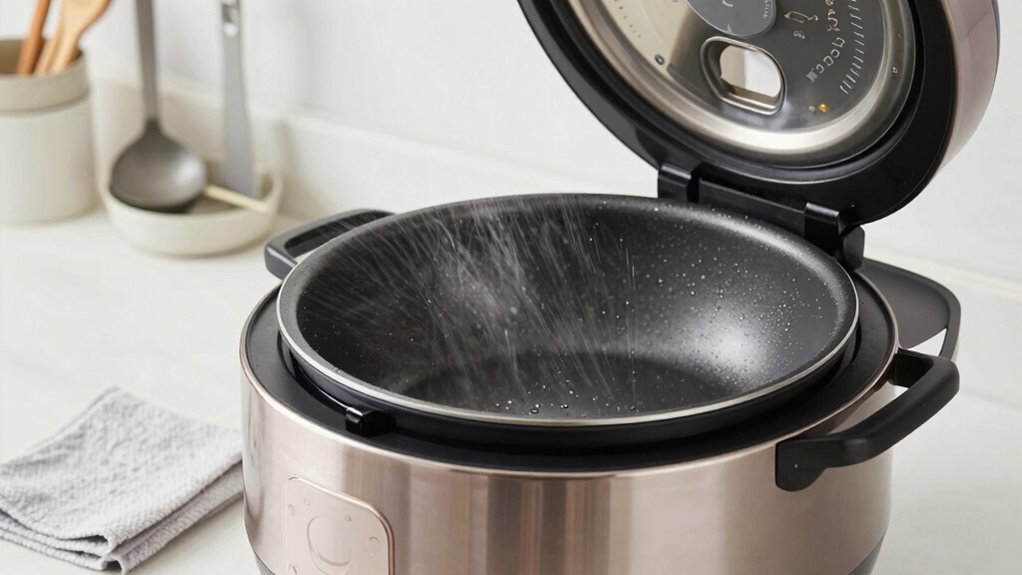
To keep your rice cooker performing well, unplug it and let it cool before cleaning. Wash the inner pot with warm, soapy water and dry thoroughly. Wipe the lid, steam vent, and exterior with a damp cloth, using a small brush or toothpick to clear clogs. Regular cleaning prevents buildup, odors, and malfunctions, ensuring even cooking and energy efficiency. If you want to learn more tips for maintaining peak performance, keep exploring these expert techniques.
Key Takeaways
- Unplug and thoroughly clean the inner pot, lid, steam vent, and exterior regularly to prevent residue buildup.
- Use gentle tools like a small brush or toothpick to clear the steam vent and prevent clogs.
- Dry all parts completely before reassembling to avoid mold growth and odors.
- Inspect components periodically for signs of buildup or damage, addressing issues early.
- Follow proper cleaning techniques to preserve non-stick surfaces and ensure consistent, even cooking.
Ever wondered how to keep your rice cooker clean and functioning smoothly? The key is regular maintenance, which not only guarantees your appliance lasts longer but also improves how well it cooks rice. When you pay attention to cleaning and caring for your rice cooker, you support better cooking rice results and boost energy efficiency. A well-maintained rice cooker uses less power because it doesn’t have to work harder to compensate for buildup or malfunctioning parts.
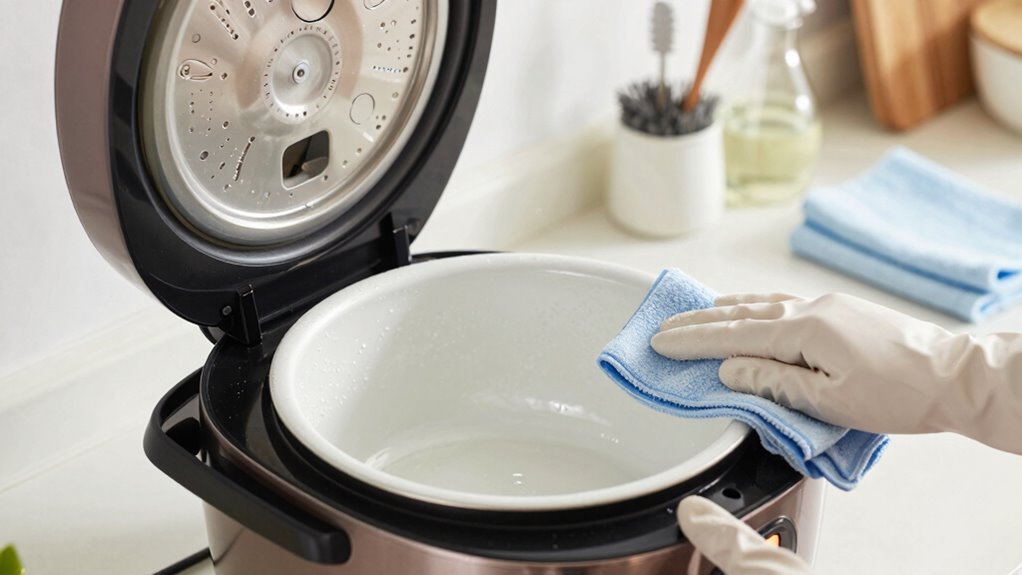
Start by unplugging your rice cooker and letting it cool down completely before cleaning. Remove the inner pot and wash it with warm, soapy water, using a soft sponge to avoid scratching the non-stick surface. Rinse thoroughly and dry completely before placing it back. Wipe down the lid, steam vent, and exterior with a damp cloth to remove any residue or splatters. These parts often collect sticky rice bits or oils, which can interfere with the cooker’s performance if left unchecked. Keeping these parts clean means your rice cooker continues to operate efficiently, saving energy and ensuring your rice is cooked evenly every time. Regular inspection of appliance components can help identify potential issues early, preventing costly repairs and ensuring optimal performance.
Unplug, cool, and clean your rice cooker to ensure optimal performance and even cooking.
Pay special attention to the steam vent, as it can get clogged with rice starch or debris. Use a small brush or toothpick to clear out any blockages. A clogged vent can cause steam to escape improperly, affecting the cooking process and potentially increasing power consumption. Regularly inspecting and cleaning this small but critical part helps maintain energy efficiency and prevents uneven cooking. Additionally, understanding the importance of appliance maintenance can help prolong the life of your rice cooker and keep it functioning like new. Performing routine cleaning procedures also reduces the buildup of residues that could lead to unpleasant odors or mold growth inside the cooker. Regularly checking for clogged vents can further ensure your rice cooker performs at its best. Incorporating proper cleaning techniques into your routine can make a significant difference in maintaining peak performance over time.
rice cooker inner pot cleaning brush
As an affiliate, we earn on qualifying purchases.
As an affiliate, we earn on qualifying purchases.
Frequently Asked Questions
How Often Should I Replace the Rice Cooker’s Inner Pot?
You should consider replacing your rice cooker’s inner pot when you notice significant scratches, warping, or stains that won’t clean. Typically, the usage lifespan of an inner pot is 2-3 years with regular use. Inner pot replacement helps guarantee even heating and peak performance. Keep an eye on its condition, and if it impacts cooking quality or safety, it’s time for a new one to maintain your rice cooker’s efficiency.
Can I Use Metal Utensils in My Rice Cooker?
Using metal utensils in your rice cooker isn’t recommended for cooking compatibility. While they might seem sturdy, they can scratch the non-stick surface and damage the inner pot, much like using a rough brush on delicate paint. Instead, opt for silicone or wooden utensils, which are gentle and designed for safe contact. This way, you preserve your rice cooker’s performance and guarantee it lasts longer, keeping your rice perfectly cooked.
Is It Safe to Wash the Rice Cooker’s Heating Element?
It’s not safe to wash the rice cooker’s heating element directly. Electrical safety is essential, and exposing the heating element to water can cause damage or shocks. Instead, use gentle cleaning techniques, like wiping the surface with a damp cloth after unplugging and cooling the cooker. Avoid submerging the heating element in water, and always make sure it’s completely dry before use to maintain peak performance.
What’s the Best Way to Remove Stubborn Stains?
Did you know stubborn stains can reduce your rice cooker’s efficiency by up to 20%? To remove them, use a mixture of baking soda and water as a natural cleaner. Apply it to the stains, let it sit for a few minutes, then scrub gently with a soft cloth or sponge. These cleaning tips will help you tackle stubborn stains effectively, keeping your rice cooker in top shape and performance high.
How Do I Prevent Unpleasant Odors in My Rice Cooker?
To prevent unpleasant odors in your rice cooker, focus on regular odor elimination and effective cleaning techniques. After each use, wipe the interior with a damp cloth and occasionally run a cycle with water and vinegar to neutralize smells. Avoid leaving leftover rice or water inside. Proper ventilation helps, too. These simple steps keep your rice cooker fresh, ensuring it performs well and smells clean every time you use it.
steam vent cleaning tool for rice cooker
As an affiliate, we earn on qualifying purchases.
As an affiliate, we earn on qualifying purchases.
Conclusion
Regularly cleaning and maintaining your rice cooker can boost its performance and extend its lifespan. By keeping the inner pot, lid, and heating element spotless, you prevent buildup that can cause uneven cooking or malfunctions. Did you know that improper maintenance can reduce a rice cooker’s efficiency by up to 30%? Staying consistent with cleaning routines will guarantee your cooker continues to deliver perfect rice every time, saving you money and hassle in the long run.
non-stick rice cooker pot
As an affiliate, we earn on qualifying purchases.
As an affiliate, we earn on qualifying purchases.
rice cooker maintenance kit
As an affiliate, we earn on qualifying purchases.
As an affiliate, we earn on qualifying purchases.