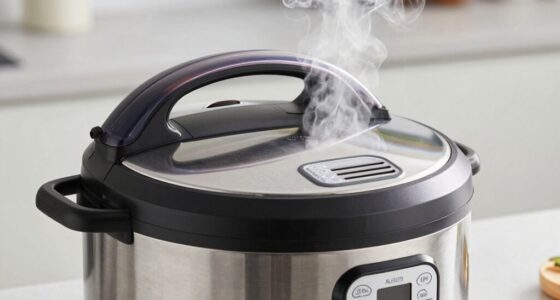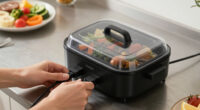
One common mistake is estimating water amounts instead of measuring carefully, which can lead to uneven or mushy rice. Not rinsing the rice thoroughly before cooking also results in clumping and a poor texture. Additionally, many forget to familiarize themselves with their rice cooker’s functions, causing undercooked or overcooked results. Focusing on proper measurement, rinsing, and understanding your device can make all the difference. Keep exploring to learn how to perfect your rice-cooking skills.
Key Takeaways
- Using improper water-to-rice ratios without following manufacturer guidelines.
- Skipping rinsing rice, leading to clumping and uneven texture.
- Estimating water levels instead of measuring precisely with the rice cooker’s cup.
- Ignoring the rice cooker’s specific functions and settings.
- Overlooking the importance of thoroughly cleaning and preparing the cooker before use.

Getting your rice cooker set up properly is vital to ensuring perfectly cooked rice every time, but many people make simple mistakes right at the start. One common error is not paying attention to the amount of cooking water you add. The right water-to-rice ratio is essential for achieving the desired texture, whether you prefer fluffy or stickier rice. Too much water can make the rice mushy, while too little leaves it undercooked and dry. To avoid this, you need to understand the importance of measuring techniques for your rice and water. Using the rice cooker’s measuring cup, which often differs slightly from standard cups, helps you get consistent results. Always use the cup that comes with your appliance, and measure your rice carefully before adding it to the cooker.
Use the rice cooker’s measuring cup and precise water ratios for perfectly cooked rice every time.
Many beginners overlook the significance of proper measuring techniques, which can lead to uneven cooking. It’s tempting to estimate or eyeball the water amount, but this often results in mistakes. Instead, measure your rice with the provided cup, then add the appropriate amount of water based on the rice-to-water ratio recommended by the manufacturer or a trusted recipe. This attention to detail guarantees your rice cooks evenly and comes out just right. Remember that different types of rice may require different water levels, so don’t assume a one-size-fits-all approach. Always check the instructions that come with your rice or the packaging for guidance. Additionally, understanding the importance of accurate measurement is crucial for consistent results every time. Properly measuring rice and water helps prevent common mistakes and ensures optimal cooking outcomes. Ensuring you have the correct measurements is also part of maintaining a proper setup, which contributes significantly to the quality of your cooked rice. proper setup also involves understanding how rice quality can impact cooking results, so selecting good-quality rice is equally important. Furthermore, paying attention to water temperature can influence how evenly your rice cooks, especially with different rice varieties.
Another common mistake is ignoring the importance of rinsing your rice before cooking. Rinsing removes excess starch, which can cause clumping or overly sticky rice. When you rinse, you also improve the overall texture and cleanliness of the rice. Use cold water and rinse until the water runs clear, then drain thoroughly before measuring and adding it to the rice cooker. This small step can make a notable difference in the final outcome. Proper rinsing techniques are often overlooked but are fundamental to achieving the perfect rice texture. Finally, many people neglect to set the correct cooking mode or fail to understand their rice cooker’s functions. Read the instruction manual carefully and familiarize yourself with the settings. Proper setup from the start means you’ll avoid undercooked or overcooked rice, saving you time and frustration. By paying attention to cooking water, perfecting measuring techniques, rinsing your rice properly, and understanding your appliance’s features, you set yourself up for success. The key is precision and following recommended procedures, which will make every batch of rice you cook a success.
As an affiliate, we earn on qualifying purchases.
Frequently Asked Questions
Can I Cook Other Grains Besides Rice in My Rice Cooker?
Yes, you can cook alternative grains like quinoa, barley, or oats in your rice cooker. Just adjust the water-to-grain ratio and cooking time as needed. Use the proper setting if available, or try the basic setting and monitor the grains. Different grains require different techniques, so experiment to find what works best. Your rice cooker can be versatile beyond just rice, making it a handy tool for various grains.
How Often Should I Clean and Descale My Rice Cooker?
Think of your rice cooker as a trusted friend who deserves regular care. You should clean it after every use to prevent build-up. Follow a consistent cleaning schedule, and descale it every 1-3 months, depending on your water hardness. Regular descaling frequency keeps it running smoothly and extends its lifespan. So, don’t ignore those routine upkeep tasks—they’re key to perfect rice and appliance longevity.
Is It Safe to Leave the Rice Cooker Unattended While Cooking?
It’s generally safe to leave your rice cooker unattended while cooking, but you should follow safety precautions. Always guarantee the appliance is in good condition and properly maintained to prevent accidents. Avoid overfilling the cooker, and keep it on a flat, stable surface. Regular appliance maintenance, like cleaning and checking the cord, reduces risks. While modern rice cookers are designed to be safe, staying nearby helps you monitor the process and respond quickly if needed.
What’s the Best Way to Measure Rice and Water Ratios?
For measuring rice and water ratios, you should use the cup that comes with your rice cooker for accuracy, as it guarantees consistent measurements. Rinse the rice thoroughly to remove excess starch, then fill to the corresponding line for water, maintaining water consistency. This method guarantees proper cooking and fluffy rice. Always follow your rice cooker’s specific instructions for best results and to avoid over- or under-cooking.
Can I Use My Rice Cooker for Steaming Vegetables or Seafood?
Yes, you can definitely use your rice cooker for steaming vegetables and seafood. Many rice cookers come with steaming trays designed specifically for vegetable steaming and seafood steaming. When you use these trays, your cooker can double as a steamer, preserving flavors and nutrients. Just make sure you add enough water for steaming, and keep an eye on cooking times to avoid overcooking. It’s a versatile way to prepare healthy, flavorful meals.
As an affiliate, we earn on qualifying purchases.
Conclusion
Avoiding setup mistakes means more than just following instructions; it means ensuring your rice cooker functions perfectly, your rice turns out fluffy, and your mornings become easier. Double-check your measurements, choose the right setting, and keep your cooker clean. By paying attention to these simple steps, you set yourself up for success every time. Don’t rush the process—prepare properly, use correctly, and enjoy consistently delicious rice with confidence. Your perfect bowl is just a setup away.
best rice cooker for perfect rice
As an affiliate, we earn on qualifying purchases.
As an affiliate, we earn on qualifying purchases.
As an affiliate, we earn on qualifying purchases.