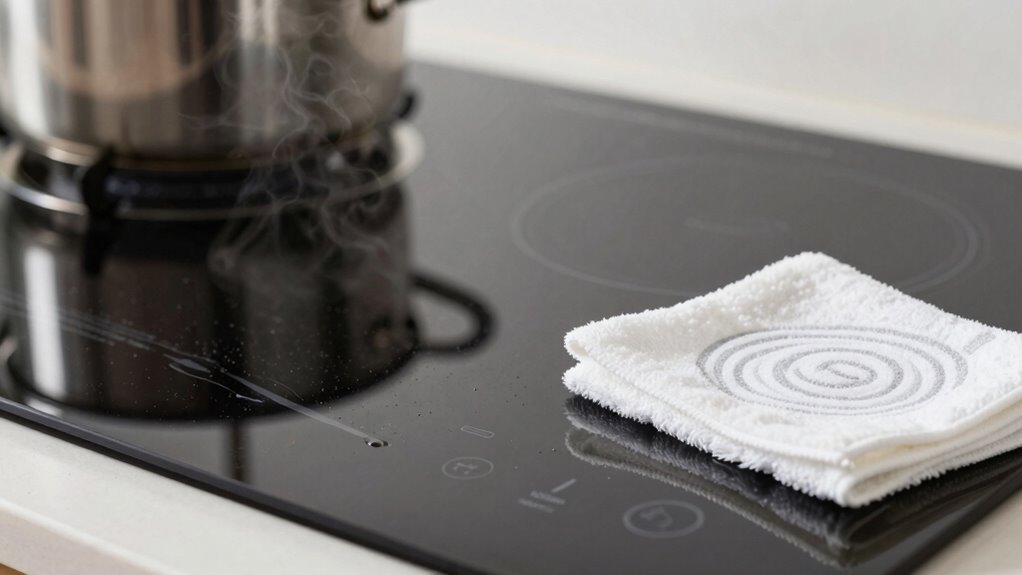

To keep your induction cooktop performing well, clean the surface daily with a soft, damp cloth once it’s cooled, avoiding harsh chemicals or abrasive scrubbers. Use a cooktop cleaner for stubborn stains and verify cookware bottoms are flat and clean for even heating. Regularly inspect vents and internal parts for dust and grease buildup to prevent overheating. For more tips on maintaining peak performance, continue exploring simple steps to protect your investment.

Get kitchen staples and gadgets delivered free with Prime
- Fast, free delivery on millions of items
- Prime Video, Amazon Music and more included
- Member-only deals all year
Key Takeaways
- Clean the surface daily with a soft, damp cloth and use appropriate cooktop cleaner for stubborn stains.
- Ensure cookware bottoms are clean, flat, and properly contacting the surface to promote even heat transfer.
- Regularly inspect and clean air vents and fan components to prevent overheating and maintain efficiency.
- Avoid placing heavy or sharp objects on the glass to prevent scratches and cracks.
- Perform routine maintenance on internal components and vents to ensure consistent performance and longevity.
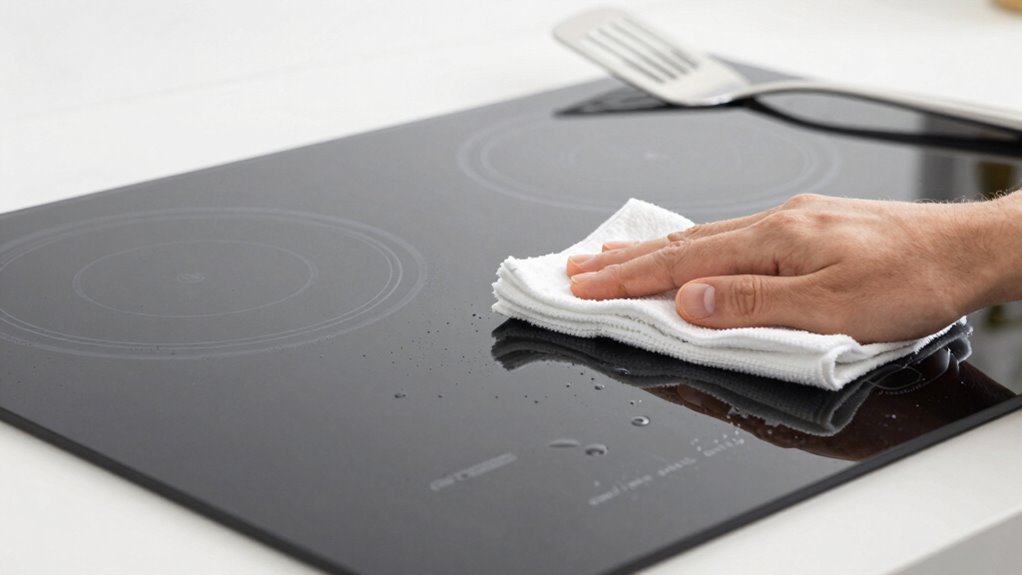
Induction cooktops are a sleek and efficient addition to your kitchen, but they require proper cleaning and maintenance to keep them functioning at their best. Regular upkeep not only preserves their appearance but also guarantees cooking safety and energy efficiency. When your cooktop is clean, you reduce the risk of food spills or debris igniting or causing uneven heating, which could compromise safety. Additionally, a spotless surface allows for even heat distribution, making your cooking more effective and saving you energy in the long run.
Keeping your induction cooktop clean ensures safe, efficient, and even cooking every time.
To maintain peak performance, you should clean your induction cooktop after each use. Once it cools down, wipe the surface with a soft, damp cloth. Avoid abrasive scrubbers or harsh chemicals, as they can scratch or damage the glass surface. For stubborn stains or burnt-on residue, use a cooktop cleaner specifically formulated for induction surfaces. Apply a small amount, let it sit for a few minutes, and then gently wipe with a microfiber cloth. This routine not only keeps the surface looking pristine but also helps sustain the energy efficiency of your appliance. When the surface is free of grime and debris, heat transfers more effectively, reducing energy waste and ensuring faster cooking times.
Pay close attention to the condition of the cookware you use on your induction cooktop. Make sure the bottoms are clean and flat. Dirty or warped pots and pans can cause uneven heating, which not only affects cooking performance but also risks damaging the cooktop surface over time. Proper cookware contact enhances cooking safety because it minimizes hot spots that could lead to accidental burns or spills. Using appropriate cookware maintenance practices can extend the lifespan of your pots and pans as well as your cooktop. Additionally, choosing cookware with compatible materials ensures optimal energy transfer and prevents unnecessary wear.
Regularly inspect and clean the air vents and fan components if your induction stove has them. Dust and grease buildup can cause overheating, which diminishes energy efficiency and may trigger safety shut-offs. Keeping these parts clean ensures your cooktop runs efficiently and safely. Proper ventilation maintenance is crucial for preventing overheating and maintaining overall appliance longevity.
Lastly, avoid placing heavy or sharp objects on the surface that could scratch or crack it. Protecting the glass surface guarantees consistent performance and prolongs its lifespan. Following these simple cleaning and maintenance tips will help your induction cooktop operate at peak performance, saving energy and maintaining a safe cooking environment. Proper care ensures you get the most out of your investment, keeping your kitchen both efficient and safe.
As an affiliate, we earn on qualifying purchases.
Frequently Asked Questions
Can I Use Abrasive Cleaners on My Induction Cooktop?
No, you shouldn’t use abrasive cleaners on your induction cooktop, as they can scratch the surface and damage its smooth glass finish. Instead, opt for gentle, non-abrasive cleaners and soft cloths. Also, make sure your cookware is compatible with induction cooking, as using incompatible cookware can lead to uneven heating and potential damage. Proper cleaning and cookware choice help maintain your cooktop’s performance and prolong its lifespan.
How Often Should I Deep Clean My Induction Stove?
Back in the day, regular upkeep kept kitchens humming. You should deep clean your induction stove once a month, especially if you cook frequently. Follow maintenance tips like using non-abrasive cleaners and wiping spills promptly to safeguard performance. Regular cleaning frequency prevents buildup and ensures your cooktop functions efficiently. Don’t forget, a well-maintained stove not only lasts longer but also cooks more evenly, making every meal a delight.
What Should I Do if My Cooktop Develops Cracks?
If your cooktop develops cracks, stop using it immediately and prioritize safety. For crack repair, consult a professional to assess the damage and determine if surface sealing can prevent further deterioration. Avoid DIY fixes, as improper repair might worsen the issue or void warranties. Keep the area clean and dry, and consider replacing the cooktop if cracks are extensive, ensuring safe and ideal performance.
Are There Specific Cookware Types That Damage Induction Surfaces?
Certain cookware types can damage induction surfaces if they’re incompatible or have rough bottoms. Stick to cookware with flat, smooth bottoms made from magnetic materials like cast iron or stainless steel to guarantee compatibility and surface damage prevention. Avoid glass, ceramic, or aluminum pots, as they can scratch or crack the surface. Using the right cookware helps maintain peak performance and extends your cooktop’s lifespan.
How Do I Prevent Scratches on My Induction Cooktop?
Ever wonder how to keep your cooktop surface pristine? To prevent scratches, always use cookware with smooth, flat bottoms, and avoid dragging pots across the surface. Use soft cloths or sponges for cleaning, steering clear of abrasive scrubbers. Regularly inspect for debris that could cause scratches. Remember, scratch prevention isn’t just about aesthetics; it also guarantees your induction cooktop performs efficiently for years to come.
microfiber cloth for glass cooktop
As an affiliate, we earn on qualifying purchases.
As an affiliate, we earn on qualifying purchases.
Conclusion
Properly cleaning and maintaining your induction cooktop ensures it performs at its best for years. Regular care can extend its lifespan and save you money on repairs. Did you know that neglecting your stove can reduce its efficiency by up to 30%? By staying consistent with cleaning and maintenance, you keep your cooktop running smoothly and efficiently. Invest a few minutes now, and enjoy flawless cooking experiences long into the future.
As an affiliate, we earn on qualifying purchases.
induction cooktop vent cleaning tool
As an affiliate, we earn on qualifying purchases.
As an affiliate, we earn on qualifying purchases.
Halloween Picks
halloween
As an affiliate, we earn on qualifying purchases.