One common mistake is not placing your induction cooktop on a stable, heat-resistant surface, which can cause safety hazards. Another error is using the wrong cookware—non-magnetic or uneven-bottom pans waste energy and reduce efficiency. Many forget to check that the power supply matches the cooktop’s requirements, risking electrical issues. Proper setup also includes cleaning the surface regularly and understanding safety features. Keep these tips in mind, and you’ll set yourself up for success from the start.

Get kitchen staples and gadgets delivered free with Prime
- Fast, free delivery on millions of items
- Prime Video, Amazon Music and more included
- Member-only deals all year
Key Takeaways
- Installing the cooktop on an unstable or heat-sensitive surface, risking damage or safety hazards.
- Using incompatible cookware with non-magnetic or warped bottoms, reducing efficiency and causing overheating.
- Neglecting to verify power supply matches the cooktop’s voltage and wattage requirements.
- Failing to clean the surface before use, leading to dirt interference with electromagnetic fields.
- Ignoring safety features like safety locks or emergency shut-off controls, increasing accident risk.
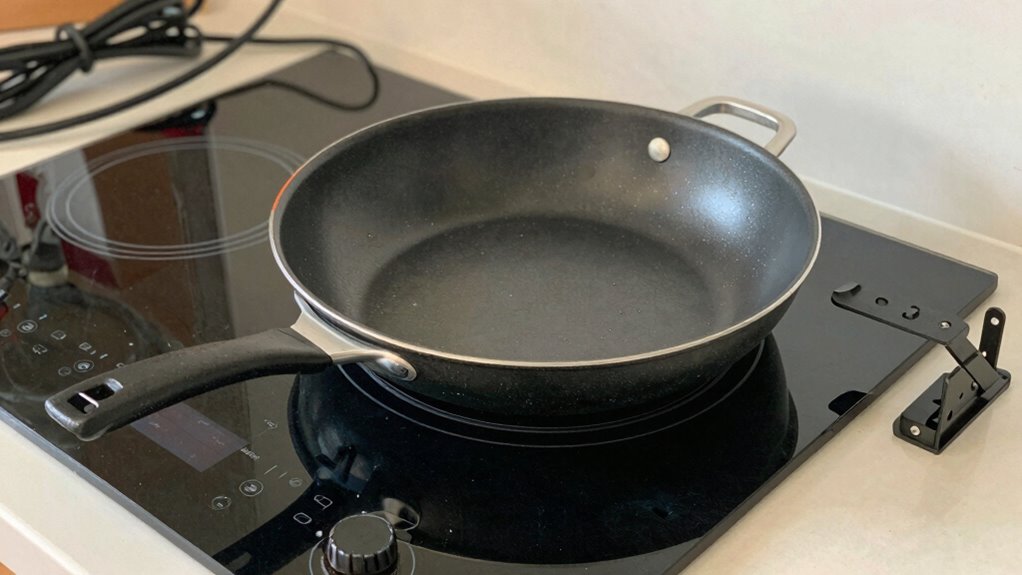
Setting up your induction cooktop for the first time can seem straightforward, but many beginners make common mistakes that can affect performance and safety. One of the most vital areas to focus on is guaranteeing proper cooking safety. Without proper setup, you risk accidents like burns or fires, especially if you don’t familiarize yourself with the device’s safety features. For instance, ignoring the manufacturer’s instructions for power cords or placement can lead to overheating or electrical issues. Always check that your cooktop is installed on a stable, heat-resistant surface and that the power supply matches the recommended voltage and wattage. Neglecting these steps can compromise safety and reduce the lifespan of your appliance.
Ensure proper setup and safety features to prevent accidents and prolong your induction cooktop’s lifespan.
Energy efficiency is another essential aspect often overlooked during initial setup. Many users fail to understand how to maximize their cooktop’s energy-saving potential. Proper cookware selection is key to achieving this goal, as using cookware that’s compatible with induction technology—specifically, magnetic-based pots and pans—ensures optimal performance. Using cookware that isn’t compatible forces the cooktop to work harder, wasting electricity and increasing cooking times. Additionally, ensure your cookware has a flat, smooth bottom for maximum contact with the surface. This improves heat transfer and reduces energy consumption. Improper cookware can also cause uneven heating, which affects cooking results and wastes energy. Understanding the importance of induction-compatible cookware can help you make better choices for efficiency. Regularly checking your cookware for compatibility and condition helps maintain optimal performance and safety.
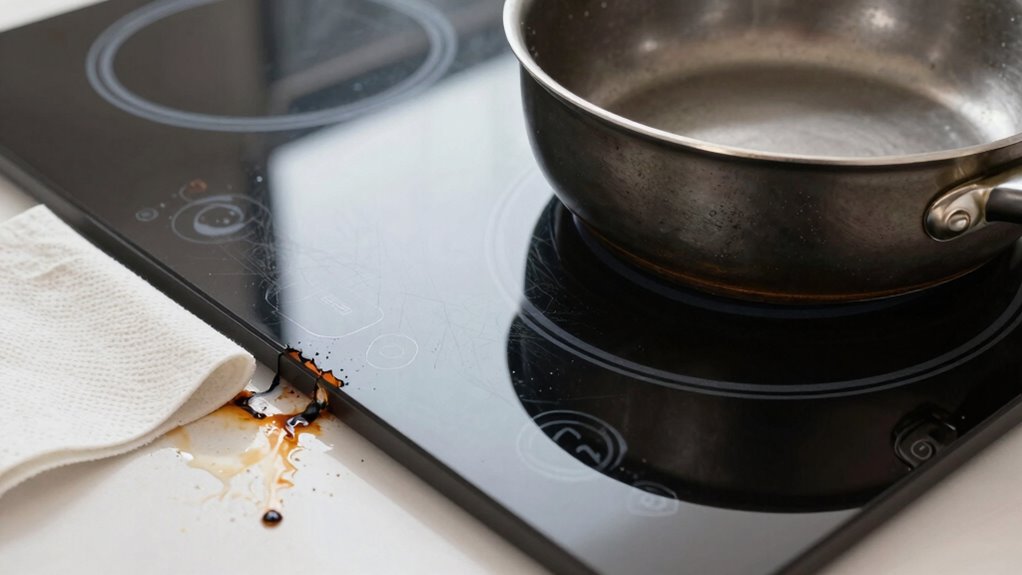
Another common mistake involves not properly cleaning the surface before use. Any dirt, dust, or residue can interfere with the electromagnetic field, reducing efficiency and potentially causing damage. Before using your induction cooktop, wipe it clean with a soft, damp cloth, and avoid abrasive cleaners that can scratch the surface. Proper cleaning not only preserves the appliance’s appearance but also guarantees safe and efficient operation. Furthermore, understanding the importance of proper setup and maintenance can help prolong the lifespan and performance of your induction cooktop. Incorporating routine cleaning and inspections can prevent buildup that hampers performance and safety. Regular maintenance also helps in identifying potential issues early, ensuring your appliance operates smoothly over time. Keeping the surface free of debris is a simple yet crucial step in maintaining efficiency and safety.
Many beginners also neglect to familiarize themselves with the controls and safety features of their induction cooktop. Take the time to read the user manual, understand how to turn the device on and off, set timers, and activate safety locks. These features are designed to protect you and your family, especially in homes with children. Failing to understand these functions can lead to accidental activation or difficulty stopping the cooktop in an emergency, risking injury or damage. Being knowledgeable about these controls can significantly enhance your safety and user experience. Learning about safety features and controls ensures you can use your cooktop confidently and respond quickly in case of an emergency.
induction cooktop heat-resistant surface
As an affiliate, we earn on qualifying purchases.
As an affiliate, we earn on qualifying purchases.
Frequently Asked Questions
Can I Use Any Cookware on an Induction Cooktop?
You can’t use any cookware on an induction cooktop unless it’s compatible. Use pots and pans with a magnetic base to guarantee efficient energy use and proper heat transfer. This compatibility is essential for effective cooking techniques and maximizing energy efficiency. If your cookware isn’t magnetic, it won’t heat up, wasting energy and time. Always check for a magnetic test before cooking to avoid setup mistakes and get the best induction performance.
How Do I Know if My Cookware Is Induction-Compatible?
Think of induction compatibility as a secret handshake—if your cookware passes the test, it’s ready for induction. To check, use a magnet; if it sticks firmly, your cookware material, like cast iron or stainless steel, is induction-compatible. Don’t fall for induction myths that all cookware works; only certain materials do. So, test with a magnet and verify your cookware’s material to guarantee a smooth cooking experience.
Is It Necessary to Read the User Manual Before Setup?
Yes, you should read the user manual before setup. It provides essential installation tips and safety guidelines that guarantee you set up your induction cooktop correctly and safely. Knowing the proper installation process helps prevent damage and accidents. By familiarizing yourself with the manual, you’ll understand how to connect the power source and use your cooktop efficiently, making your cooking experience smooth and safe from the start.
What Safety Precautions Should I Take During Installation?
Skip safety precautions during installation, and you’ll probably enjoy more installation errors than a toddler with a crayon. Always turn off the power and use proper grounding to prevent electrical safety issues. Keep the area dry and use insulated tools to avoid shocks. Double-check your connections, and don’t rush—these steps help you avoid hazards and guarantee your induction cooktop works safely and smoothly from the start.
How Do I Troubleshoot if the Cooktop Doesn’t Power On?
If your induction cooktop doesn’t power on, start by checking for power issues—ensure it’s properly plugged in and the circuit breaker isn’t tripped. Next, do compatibility checks; confirm your cookware is induction-compatible, with a magnetic base. Also, inspect the control panel for any error messages or signs of malfunction. If problems persist, consult the user manual or contact a professional technician to diagnose electrical or hardware issues.
induction compatible cookware set
As an affiliate, we earn on qualifying purchases.
As an affiliate, we earn on qualifying purchases.
Conclusion
So, next time you fire up that shiny induction cooktop, remember—don’t let your rookie mistakes turn your kitchen into a culinary disaster zone. Avoid using the wrong pots, neglecting proper placement, or ignoring manufacturer instructions. Otherwise, you might just end up with a stove that’s more “Oops!” than “Ooh, delicious.” Keep it smart, keep it safe, and your cooking adventures will be less “disaster zone” and more “chef’s kiss.” Happy cooking!
induction cooktop safety features
As an affiliate, we earn on qualifying purchases.
As an affiliate, we earn on qualifying purchases.
induction cooktop cleaning sponge
As an affiliate, we earn on qualifying purchases.
As an affiliate, we earn on qualifying purchases.
Fall Picks
fall essentials
As an affiliate, we earn on qualifying purchases.