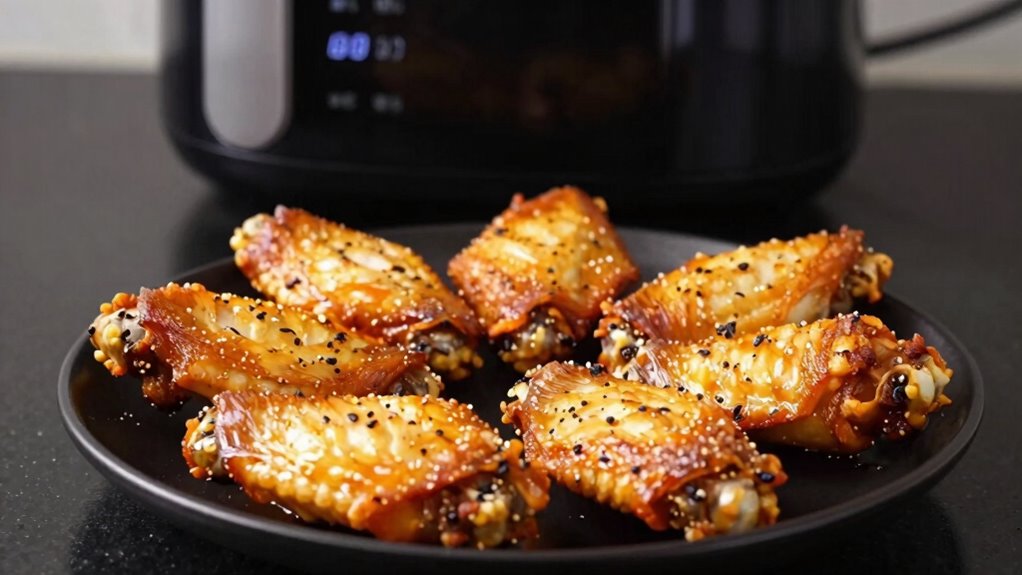

To keep your air fryer wings crispy, make sure you dry them thoroughly before cooking to remove excess moisture. Toss them in a light coat of oil and season well, then arrange in a single layer without overcrowding to guarantee proper airflow. Use the right temperature (375°F to 400°F) and cook long enough, flipping halfway. Rest your wings briefly and finish under the broiler for added crunch. Check out these tips for perfect crispy wings every time.
Key Takeaways
- Ensure wings are thoroughly dried to prevent steaming and promote crispness.
- Toss wings in a light oil coat and season well for even browning and flavor.
- Arrange wings in a single layer without overlapping to allow proper airflow.
- Cook at 375°F to 400°F for 25-30 minutes, flipping halfway for even crisping.
- Rest wings briefly after cooking and consider broiling for extra crunch.
Dry Wings Thoroughly Before Cooking
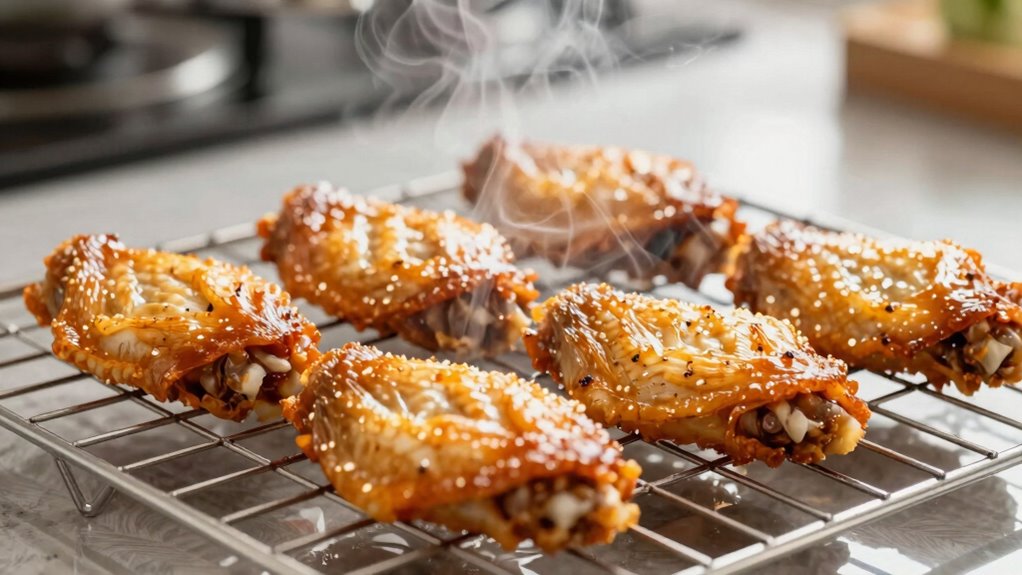
To guarantee your wings turn out crispy in the air fryer, you need to start with dry wings. Moisture removal is essential for achieving that perfect crunch, so pat your wings thoroughly with paper towels. Excess moisture on the surface can cause steaming rather than crisping, leading to soggy results. Take your time pressing out any water, focusing on all sides of each wing. If you notice they’re still damp, add more paper towels and continue drying until no moisture drips. This simple step helps the hot air circulate evenly and promotes crispiness. Remember, dry wings are the foundation for crispy, delicious results, so don’t skip this vital step in your preparation process.
Apply Light Oil and Proper Seasoning for Crispy Results
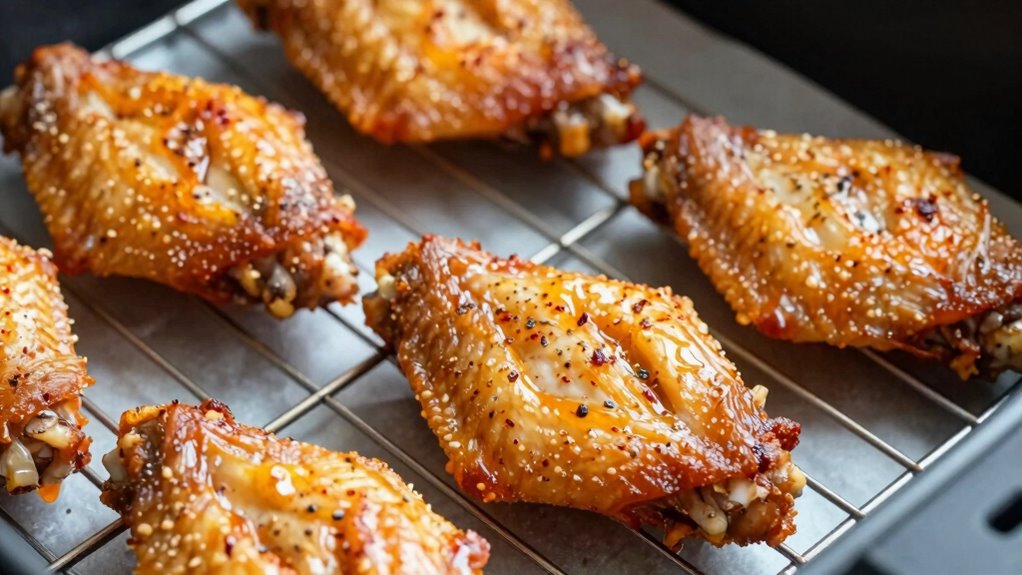
Applying a light coat of oil to your wings helps them crisp up in the air fryer by promoting even browning and preventing sticking. Use oil application methods like tossing the wings in a bowl with a small amount of oil or using a spray for even coverage. Proper seasoning techniques are essential for flavor and crispiness; season your wings generously with salt, pepper, and spices before cooking. Incorporate seasonings that adhere well to the oil-coated surface to maximize flavor. Be careful not to overdo the oil—too much can lead to sogginess. The goal is a thin, even layer that helps the seasonings stick and promotes crisp edges. Utilizing energy-efficient cooking methods can also enhance your wings’ texture while reducing energy consumption. Additionally, choosing the right air fryer model can impact how evenly your wings cook and crisp up. Developing an understanding of cooking techniques and smart kitchen appliances can further improve your results and help you achieve consistently crispy wings. Paying attention to precise temperature control can make a significant difference in achieving optimal crispiness.
Arrange Wings in a Single Layer Without Crowding
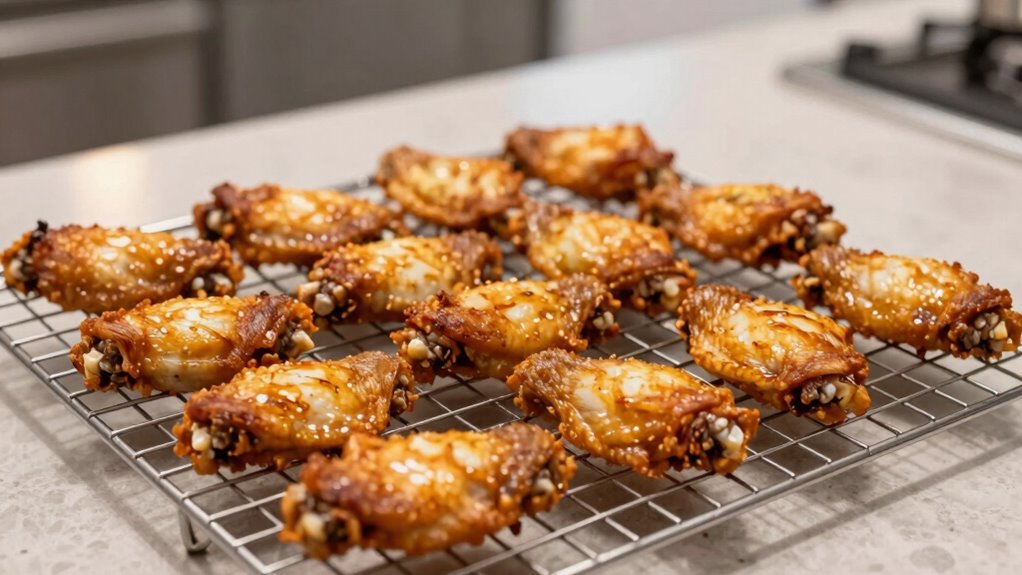
When preparing your wings for the air fryer, make sure to arrange them in a single layer without overcrowding the basket. Proper wing placement allows hot air to circulate evenly, ensuring crispiness. Use effective layering techniques by spacing wings apart, avoiding stacking or overlapping. This approach not only improves airflow but also aligns with ergonomic principles of workflow that promote efficiency and better results. To help visualize, consider this simple guide:
| Wing Placement | Layering Technique | Result |
|---|---|---|
| Flat side down | Single layer | Crispy edges |
| No overlap | Space between wings | Even cooking |
| Avoid stacking | Keep apart | Uniform crispness |
| Spread wings | Avoid crowding | Better air circulation |
| Place wings | Use multiple batches | Consistent results |
Additionally, proper placement can help prevent sticking and ensure each wing achieves optimal crispiness. Being mindful of airflow during placement is crucial for achieving the desired texture. Incorporating proper spacing between wings further enhances the circulation of hot air, leading to more evenly cooked and irresistibly crispy wings. Maintaining consistent air circulation is essential for optimal results. Following these tips guarantees your wings cook evenly and turn out irresistibly crispy.
Use Correct Temperature and Cooking Time for Crispy Wings

Achieving crispy wings in the air fryer depends heavily on using the right temperature and cooking time. Set your air fryer to around 375°F to 400°F for maximum crispiness, and cook wings for 25-30 minutes, flipping halfway. Too low a temperature can result in soggy wings, while too high may burn them before crispy perfection. Regular air fryer maintenance ensures consistent heat and prevents uneven cooking. Remember to store wings properly—use airtight containers and avoid overcrowding in your fridge—so they stay fresh and dry before cooking. Proper wing storage tips help prevent excess moisture, which can hinder crispiness. Additionally, proper airflow during cooking promotes even heat distribution and crispiness. Ensuring your air fryer maintains proper heat distribution can significantly impact the final texture of your wings. You can also consider preheating your air fryer to ensure consistent cooking conditions from the start. Also, paying attention to cooking techniques can help you achieve that perfect crispy exterior every time. Follow these guidelines for temperature, time, and storage, and you’ll consistently enjoy perfectly crispy, delicious wings.
Rest Wings Briefly and Broil for Extra Crunch

After removing the wings from the air fryer, let them rest for a few minutes to allow the juices to redistribute. Resting tips like this help keep your wings moist while maintaining crispiness. You can also maximize texture by choosing the right resting time for your wings. Once rested, place the wings under your broiler for a minute or two. Broiling tricks like this can give your wings an extra crunch that’s hard to achieve with air frying alone. Keep a close eye so they don’t burn; the high heat quickly crisps up the skin. This finishing step enhances texture and flavor, making your wings even more satisfying. Proper resting techniques are essential for achieving the perfect crispy exterior and juicy interior. Paying attention to air fryer temperature control can also help ensure consistent results when working to achieve that perfect crisp. Understanding thermal carryover is key to preventing wings from becoming soggy after cooking. Remember to safety checklists such as ensuring proper placement and avoiding fire hazards when broiling. Resting briefly and broiling for a quick crunch is a simple way to elevate your wing game and get that perfect crispy exterior every time.
Frequently Asked Questions
Can the Type of Chicken Affect Crispiness?
Yes, the type of chicken affects crispiness. Higher-quality chicken with less moisture cooks better, resulting in crispier wings. Using the right cooking temperature is essential, so set your air fryer to around 375-400°F. Thinner cuts or fresh, dry chicken will crisp up faster than frozen or lower-quality meat. Always pat your chicken dry before cooking to reduce moisture, ensuring your wings come out perfectly crispy every time.
Should I Preheat My Air Fryer Before Cooking Wings?
Yes, you should preheat your air fryer before cooking wings. Preheating guarantees consistent heat, which is essential for crispy wings. It’s a key part of air fryer prep because it helps the wings cook evenly and develop that desirable crunch. Skipping preheat can lead to uneven cooking and soggy wings. So, always give your air fryer a few minutes to reach the right temperature before tossing in your wings.
Does Marinating Wings Impact Their Crispiness?
Marinating wings can impact their crispiness because marinade moisture adds extra water, which can hinder the wings from becoming crispy. While marinades enhance flavor absorption, they may make the skin soggy if not properly dried beforehand. To keep wings crispy, pat them dry after marinating and avoid excessive liquids. This way, you preserve flavor while ensuring the skin crisps up nicely in the air fryer.
How Does Altitude Influence Air Fryer Cooking Results?
Altitude adjustment affects your air fryer cooking because lower air pressure at higher altitudes causes longer cooking times and can affect crispiness. You might think it’s negligible, but the effects of air pressure really matter. To get crispy wings, increase cooking time slightly and consider adjusting temperature. Keep an eye on your food, and remember, altitude influences your results, so tweak your method for perfect, crispy wings every time.
Can Using Frozen Wings Save Time Without Sacrificing Crispiness?
Using frozen wings can save time, but it might affect crispiness. To get the best results, opt for fresh wings or thaw frozen ones properly—either in the fridge overnight or using a quick cold water method. Avoid microwaving to thaw, as it can make wings soggy. Proper thawing helps you achieve that crispy exterior, whether you start with frozen or fresh wings.
Conclusion
So, after all that, your wings still aren’t crispy? Ironically, it’s often the simple steps we overlook—like drying them thoroughly or avoiding crowding—that make all the difference. Sometimes, it’s about patience, tweaking the heat, and giving them that quick broil for extra crunch. Who knew that achieving perfect, crispy wings was just a few small adjustments away? Now, go ahead, enjoy those perfectly crispy wings—you’ve earned it!