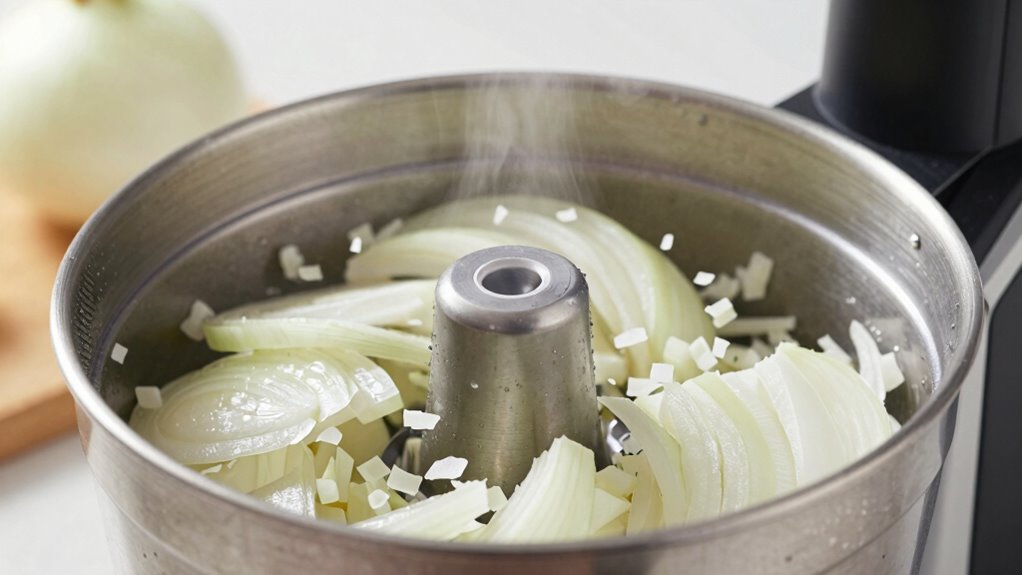

To chop onions without turning them bitter in a food processor, start by chilling the onions beforehand to slow enzyme activity. Use the pulse setting and short bursts of 2-3 seconds, stopping frequently to check the texture and prevent overprocessing. Keep the onions dry and cold until just before chopping, and consider adding a splash of lemon juice or vinegar to maintain their flavor. If you want to master perfect cuts and flavor preservation, there’s more to explore.
Key Takeaways
- Keep onions cold and refrigerated before processing to slow enzyme activity that causes bitterness.
- Use short pulses with the food processor’s pulse setting to prevent overprocessing and bitterness.
- Add acidic ingredients like lemon juice or vinegar during chopping to preserve flavor and reduce sulfur compound release.
- Ensure onions are dry and evenly chopped before processing for consistent texture and less sulfur release.
- Stop and check texture frequently to avoid overprocessing into mush, which can lead to bitterness.
How to Prepare Onions for Chopping in a Food Processor
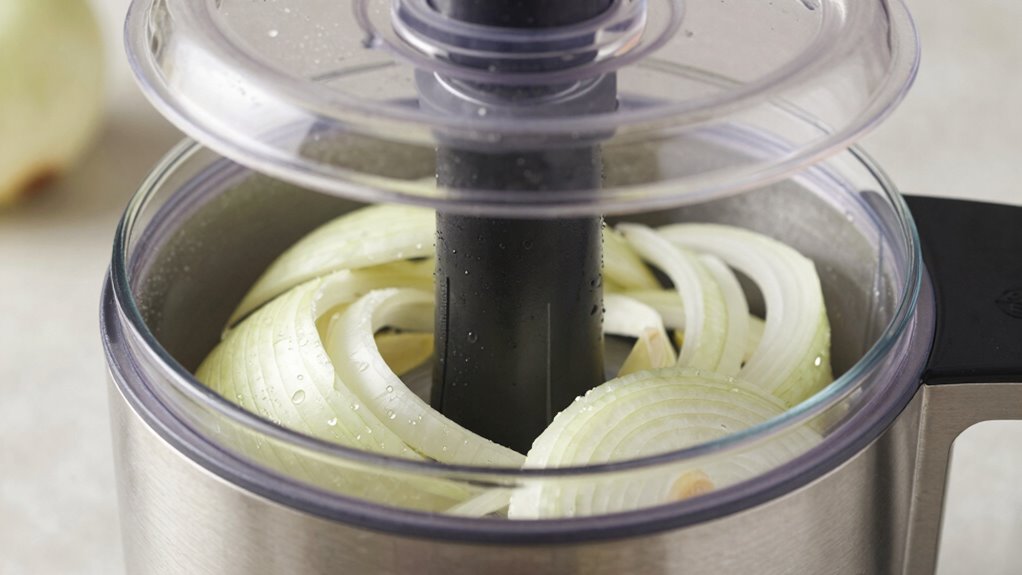
Before you start chopping, it’s important to properly prepare your onions to guarantee a smooth process and prevent bitterness. First, ensure your onions are stored correctly; keep them in a cool, dry place away from moisture to maintain freshness. When you’re ready to prepare, peel off the outer layers, discarding any papery skin. Rinse the onions briefly, then pat them dry with a clean towel to avoid excess moisture, which can cause slipping and compromise kitchen safety. Cutting onions on a stable surface with a sharp knife reduces the risk of slips or injuries. Proper onion storage and careful handling not only make chopping easier but also help prevent potential hazards, ensuring a safe and efficient process when using your food processor. Additionally, understanding the properties of Free Floating onion cells can help you achieve a more uniform chop and reduce the release of sulfur compounds that cause bitterness. Awareness of cell structure can guide you in achieving better results and minimizing odor release during chopping. Using a food processor with sharp blades and proper technique can further reduce bitterness and ensure a cleaner, more consistent chop. Proper handling also minimizes the release of sulfur compounds, which are responsible for the pungent odor and bitterness often associated with chopped onions. Employing techniques for minimizing odor can enhance your overall chopping experience and final flavor.
How to Choose the Best Settings on Your Food Processor for Onions

To get perfect onion pieces, you need to select the right blade speed and processing method. Using the pulse setting allows more control and prevents overprocessing, while continuous speed can be too aggressive. Remember, avoiding overprocessing is key to keeping your onions from turning bitter.
Blade Speed Settings
Choosing the right blade speed setting on your food processor is essential for chopping onions without turning them bitter. For onions, a lower blade speed minimizes heat generation and reduces the release of sulfur compounds that cause bitterness. If your processor has adjustable speed options, start on a slow or low setting to gently break down the onions. This helps prevent over-processing and excessive heat buildup. Keep in mind that your motor power influences how effectively the blades cut at different speeds; more powerful motors handle higher speeds better without overheating. Use a moderate speed for more control, especially if you’re aiming for evenly chopped onions without a mushy texture. Adjusting blade speed carefully guarantees you get the desired consistency without compromising flavor. Additionally, selecting energy-efficient and sustainable appliances can contribute to a more environmentally friendly kitchen. Incorporating proper maintenance practices, like regular blade sharpening, can also improve chopping efficiency and reduce processing time. Being aware of kitchen appliance features can help you choose the most suitable settings for your food processor. Understanding home theatre projectors can also help you set up an optimal environment for cooking videos or tutorials in your kitchen space. Moreover, understanding thermal effects of processing can help you avoid overheating your ingredients and preserve their natural flavors.
Pulse Versus Continuous
When chopping onions in a food processor, deciding between pulse and continuous settings can make a significant difference in the final texture and flavor. Using the pulse function gives you more control, allowing you to stop and check the consistency, which helps prevent overprocessing and bitterness. Continuous mode speeds up the process but risks turning onions into a mushy, bitter mess if you’re not careful. Proper onion storage before processing maintains freshness and prevents excess moisture, which can affect how the processor handles them. Regular food processor maintenance, like cleaning the blades and bowl, ensures smooth operation and consistent results. By choosing the right setting and keeping your equipment in good shape, you’ll achieve perfectly chopped onions without bitterness. Additionally, understanding Youngster Choice can give insights into optimizing your kitchen techniques and equipment use for the best results.
Avoid Overprocessing
Selecting the right setting on your food processor is key to preventing overprocessing onions. Overprocessing can release excess enzymes, making onions bitter. To avoid this, consider these tips:
- Use the pulse setting for short bursts, giving you control over the texture.
- Keep onions cold and well-stored in the fridge, which slows enzyme activity.
- Incorporate proper knife techniques when prepping onions, reducing the need for overprocessing.
- Ensure that your piercing tools are clean and appropriate for food preparation to avoid contamination.
- Familiarize yourself with food processing techniques to better understand how different settings impact onion texture and flavor. Understanding the enzymatic activity in onions can help you choose the best processing method to preserve their sweetness and prevent bitterness.
- Recognize that pressure control features in some food processors can help optimize processing and minimize unwanted enzyme release, leading to better flavor preservation.
- Recognizing how halal standards influence ingredient choices can also ensure your food preparation aligns with dietary guidelines, promoting both quality and compliance.
Pulse or Continuous? Which Chopping Method Preserves Flavor?
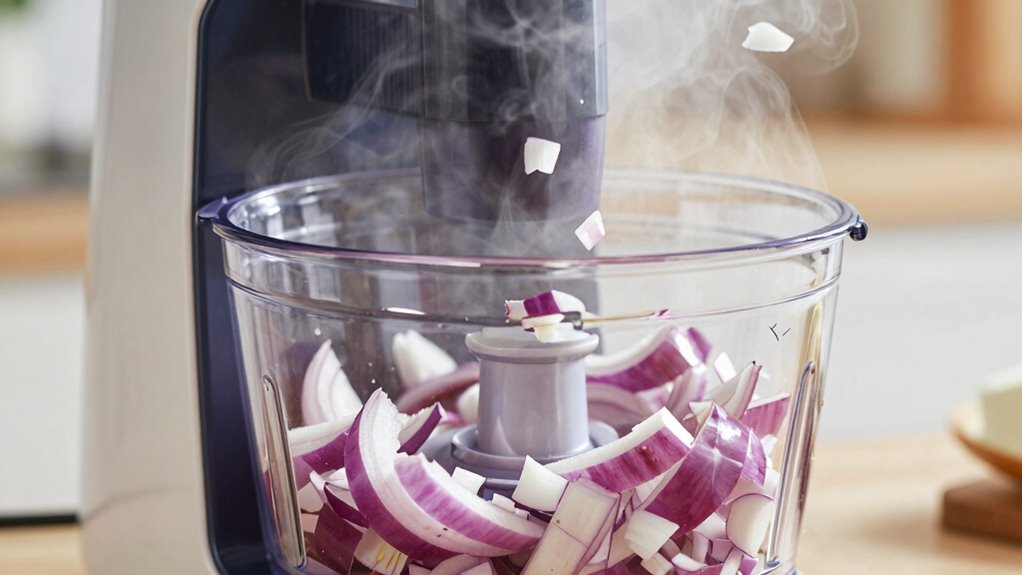
Using the pulse function on your food processor can help you control the texture and prevent over-processing, which is essential for preserving onion flavor retention. Pulsing allows you to chop the onions in short bursts, maintaining their onion aroma and preventing them from becoming too fine or slimy. Continuous chopping generates more heat and exposes the onions to prolonged mechanical action, increasing the risk of bitterness and flavor loss. If you want to keep the onions flavorful and aromatic, pulse gently until they reach your desired consistency. This method gives you more control, reduces the chance of over-processing, and helps preserve the natural taste and smell of the onions. For ideal flavor retention, avoid running the processor continuously for extended periods.
Techniques for Pulsing and Stopping to Get Perfectly Diced Onions
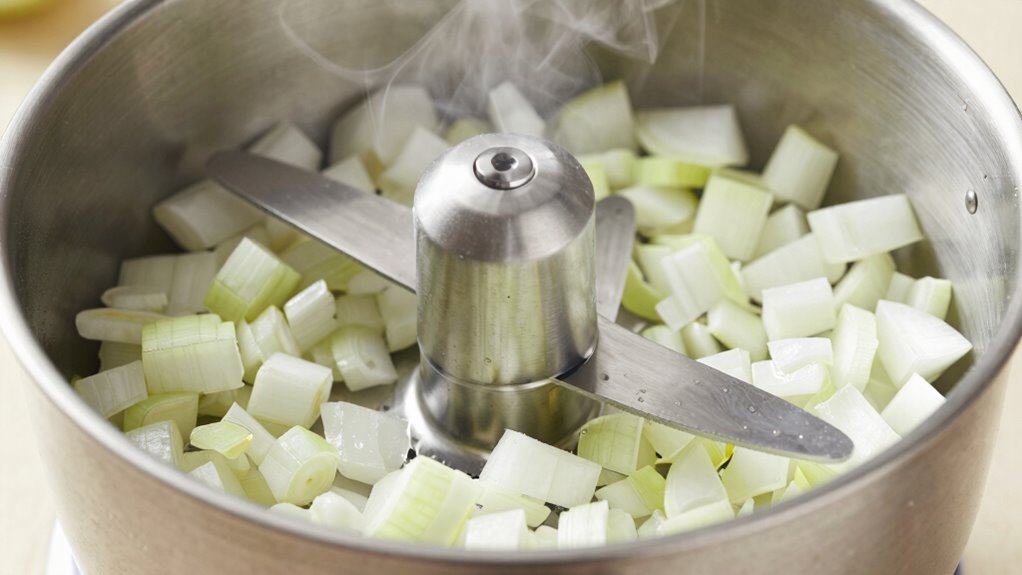
To achieve perfectly diced onions through pulsing, mastering the timing and rhythm of your processor is key. Use short bursts instead of continuous runs to prevent over-processing and bitterness. Keep these tips in mind:
- Pace your pulses: Pulse 2-3 seconds at a time, checking the texture between each burst.
- Stop frequently: Pause to assess the size of the onion pieces, ensuring even chopping. Incorporating consistent technique can help improve your results over time.
- Use proper onion storage: Keep onions refrigerated before chopping to reduce moisture and improve control, which complements your knife skills and results in more uniform pieces.
- Understanding precious metal investments can help you approach your kitchen tools with a strategic mindset, ensuring you get the best results without overdoing it. Developing a cleaning and maintenance routine for your food processor can also extend its lifespan and maintain optimal performance. Additionally, using a quality food processor with sharp blades can make a significant difference in achieving uniform and perfect diced onions.
Practicing controlled pulsing helps avoid the pitfalls of overprocessing, preserving flavor and achieving consistent, perfectly diced onions every time.
How to Keep Onion Flavor and Sweetness During Processing
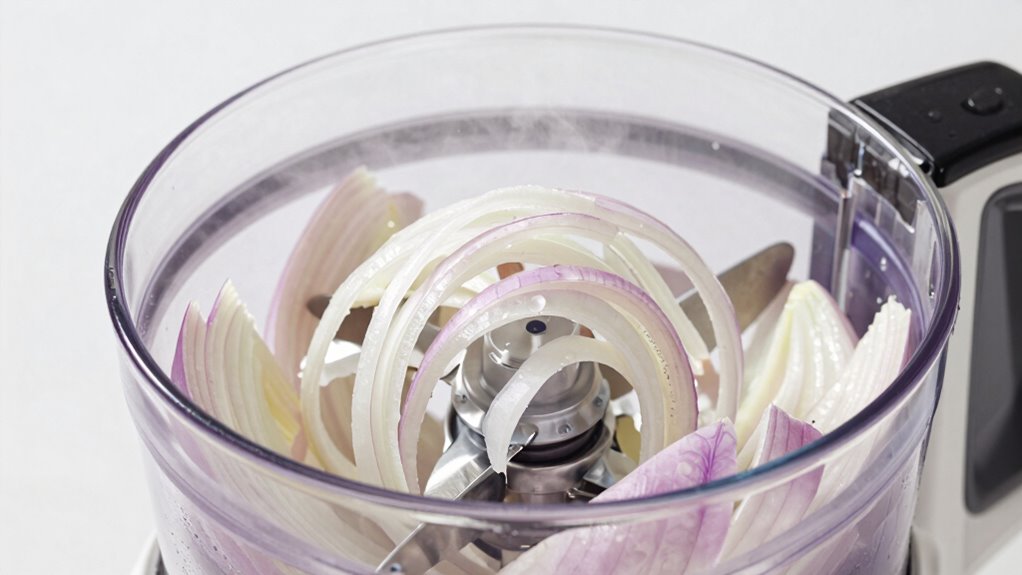
To preserve the onion’s natural flavor and sweetness, start with cold onions—they’re less likely to release bitter compounds. Adding a splash of acidic ingredients, like lemon juice or vinegar, also helps maintain their bright taste. Keep these tips in mind to guarantee your onions stay sweet and flavorful during processing. Using antioxidants can further help protect the onion’s natural sugars and prevent bitterness. Incorporating smart kitchen appliances such as food processors with precise temperature controls can also assist in maintaining optimal conditions for preserving flavor. Additionally, choosing fiber-rich ingredients when preparing onions can support overall flavor retention during processing.
Use Cold Onions
Chopping onions at a colder temperature helps preserve their natural sweetness and vibrant flavor. Proper onion storage in the fridge keeps them cold, which slows down enzyme activity that can cause bitterness during processing. To maximize flavor retention, follow these tips:
- Keep onions refrigerated until just before chopping.
- Use cold water or ice packs around the onions for extra chill.
- Avoid letting onions warm up to room temperature before processing.
Using cold onions reduces the release of sulfur compounds that can turn your food bitter. This simple step ensures your onions stay sweet and flavorful, even after being chopped in a food processor. Maintaining a low temperature during prep is key to preserving their natural taste and avoiding unwanted bitterness.
Add Acidic Ingredients
Adding a splash of acidic ingredients like lemon juice or vinegar during processing can help preserve the onions’ natural sweetness and prevent bitterness. Adding lemon juice before or during chopping slows down enzyme activity that causes bitterness, maintaining a sweeter flavor. Incorporating vinegar, especially in small amounts, can also help neutralize sulfur compounds that lead to a bitter taste. Be cautious not to overdo it, as too much acidity may alter the flavor profile. Simply squeeze a teaspoon of lemon juice or add a splash of vinegar to the food processor before chopping. This technique helps keep your onions flavorful and sweet, even when processed rapidly. Experimenting with the right amount ensures you enjoy a balanced, non-bitter onion base for your recipes.
Troubleshooting Mushy or Uneven Chopped Onions
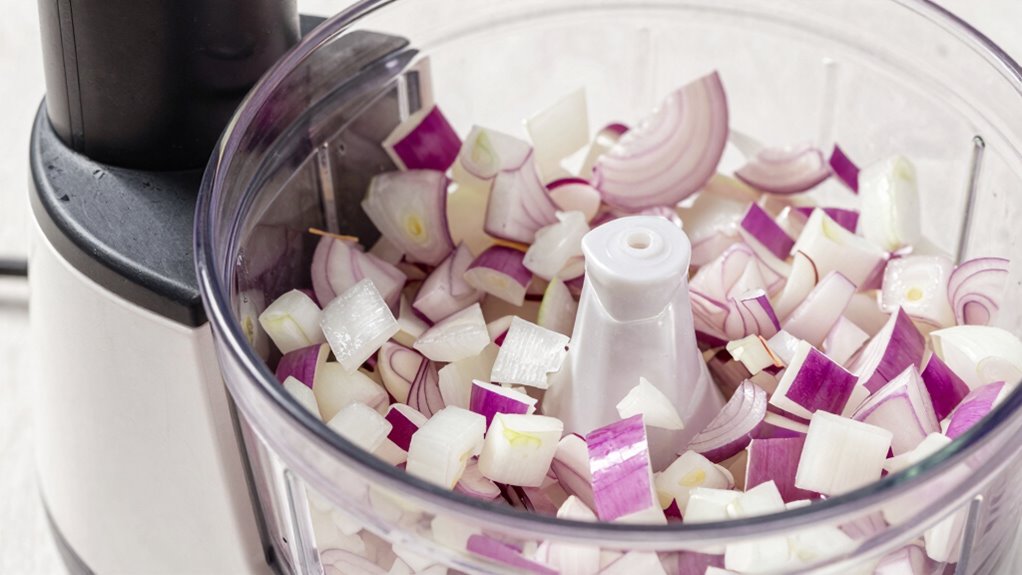
If your onions turn out mushy or uneven after processing, it’s usually because the food processor’s blades are overworking the onions or the pulse timing is off. To improve flavor preservation and guarantee texture consistency, try these tips:
- Use short pulses instead of continuous blending to control the chop size.
- Check your onion pieces before processing; start with dry, even chunks.
- Pulse in small intervals, stopping frequently to assess the texture and prevent over-processing.
These steps help you avoid mushy results and achieve the desired chop consistency. Adjusting your technique ensures better control, maintaining the onions’ flavor and texture integrity. Proper pulsing and prep make all the difference in getting perfect chopped onions without turning them bitter or mushy.
Common Mistakes to Avoid When Chopping Onions in a Food Processor
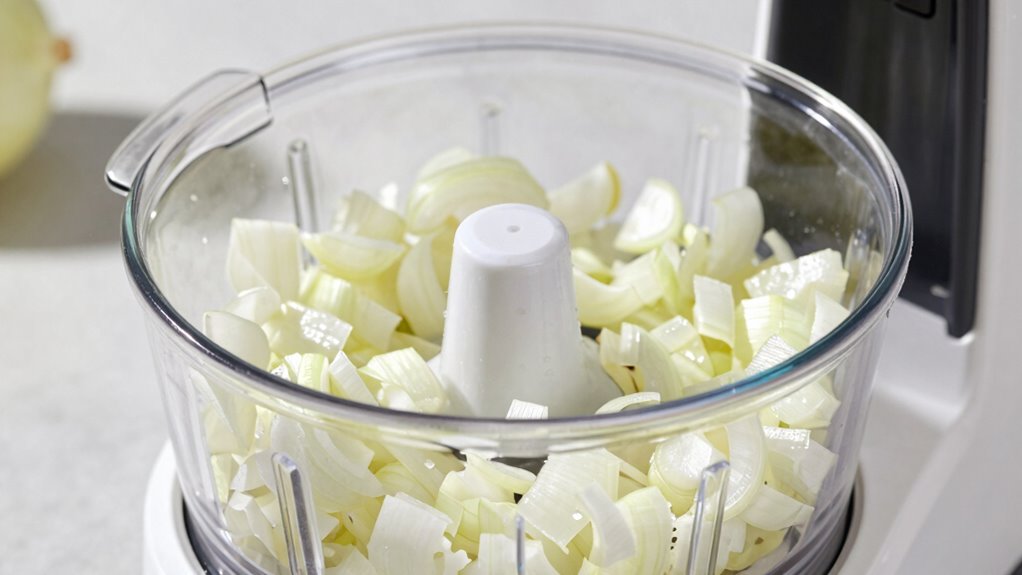
One common mistake is overprocessing the onions, which can quickly turn them mushy and cause uneven results. To avoid this, don’t run the food processor longer than necessary. Proper onion storage is also essential; keep onions dry and in a cool, dark place to prevent spoilage that can affect chopping quality. Additionally, neglecting food processor maintenance can lead to dull blades or malfunction, increasing the risk of uneven chopping or bitterness. Always clean your processor thoroughly after each use to remove onion residue, which can cause lingering odors or affect future results. By paying attention to how you store onions and maintaining your food processor, you reduce the chances of overprocessing and guarantee consistently good results every time.
Frequently Asked Questions
Can I Use a Regular Blender Instead of a Food Processor for Onions?
Yes, you can use a regular blender instead of a food processor for onion chopping. Just be aware that blenders, compared to food processors, may turn onions into a puree or uneven pieces. To get better results, pulse the onions in short bursts, and avoid overfilling. When choosing between blender vs food processor, the key is mastering onion chopping techniques to prevent bitterness and achieve your desired texture efficiently.
How Do I Prevent Onion Fumes From Irritating My Eyes During Chopping?
Sure, fighting onion eye irritation is like a never-ending battle, but here’s the secret weapon: chill your onions first! Fumes prevention is key, so breathe through your mouth, use a sharp knife to minimize fumes, and consider wearing goggles—yes, like a mad scientist. Also, chopping near an open window or running a fan helps whisk away those fiery fumes, saving your eyes from tears and your sanity.
Is There a Difference Between Chopping Onions in a Food Processor and Manually?
Yes, there’s a difference between chopping onions in a food processor and manual chopping. Using a food processor is quicker and creates a finer, more uniform texture, ideal for sauces or soups. Manual chopping gives you more control over the size and texture, which can be coarser or more uneven. Your choice depends on the desired consistency and the time you want to spend; both methods have their advantages.
How Long Can I Store Chopped Onions Before They Spoil?
You can store chopped onions in an airtight container in the fridge for up to 7-10 days. To prevent spoilage, keep them cold and make certain they’re well-sealed. Avoid leaving them out at room temperature, as this speeds up spoilage. For longer storage, consider freezing chopped onions—just use a freezer-safe container. Proper storage duration and spoilage prevention help maintain their freshness and flavor.
Does the Type of Onion (Red, Yellow, White) Affect Processing Methods?
You’ll find that the type of onion influences your processing techniques and flavor. Red onions tend to be milder and sweeter, so they blend nicely without overpowering dishes, while yellow onions add depth and a robust flavor. White onions are crisp and sharp, perfect for quick processing. Adjust your technique accordingly—use shorter pulses for delicate reds and longer for yellows—so you preserve their unique onion flavor without turning them bitter.
Conclusion
By mastering these tips, you’ll turn your food processor into a magic wand, chopping onions without turning them bitter. Just remember, patience and gentle pulses are your secret weapons. With a little care, you’ll keep their natural sweetness shining through, like sunshine after rain. So go ahead—chop confidently, and let your onions do the talking—sweet, perfectly diced, and ready to elevate your dish. Your kitchen adventures just got a whole lot tastier!