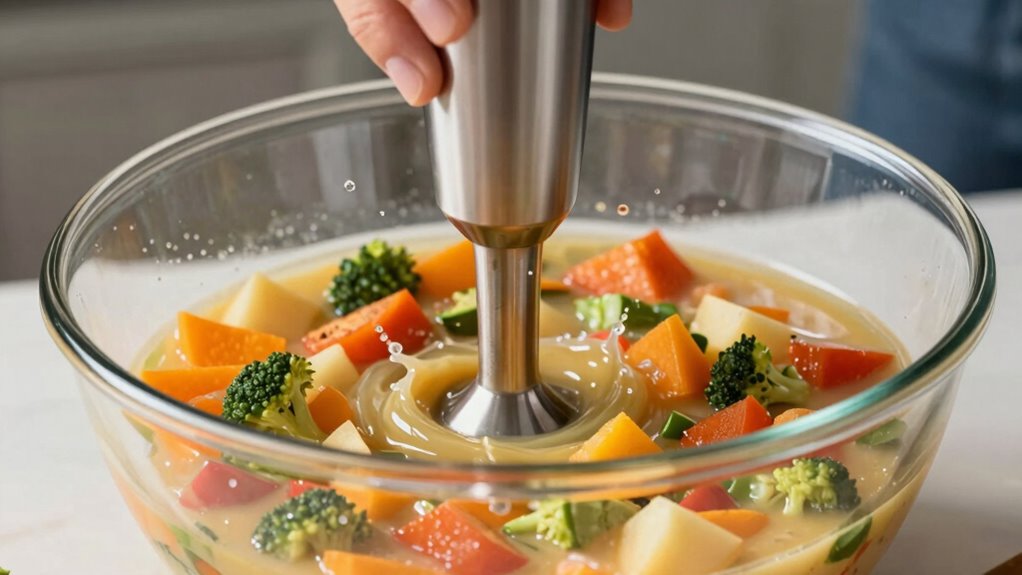

To avoid splashing when you first turn on your immersion blender, make sure the blades are fully submerged before powering up, and start at a low speed. Hold the blender steady and move it slowly in gentle circles. Use a tall, narrow container to contain splashes, and avoid lifting or moving the blender abruptly. Paying attention to proper technique prevents messes and keeps your kitchen clean—if you’re curious, there’s more to learn for safe, splash-free blending.
Key Takeaways
- Fully immerse the blades in ingredients before turning on the blender.
- Start at a low speed, then gradually increase to prevent sudden splashes.
- Use a tall, narrow container with rounded sides to contain splatter.
- Keep the blender close to the container bottom or sides during operation.
- Move the blender slowly in circular motions, avoiding abrupt lifts or quick movements.

Kraftsman Stand Mixer All Metal - Heavy Duty Kitchen Standing Mixer 5.3 Quart with 4 Stainless Steel Attachments, DC Motor & Multifunctional Power Hub, 8-Speed & Timer, Lower Noise (Black)
Achieve Great Mixing, Kneading and Whipping Results: Equipped with DC Pure Copper motor, not traditional AC Motor, this...
As an affiliate, we earn on qualifying purchases.
Why Does Your Immersion Blender Splash When You Turn It On?

When you turn on your immersion blender and notice splashing, it’s usually because the blades are starting to spin too quickly or are positioned too close to the container’s sides or bottom. This sudden movement can create a whirlpool effect, causing liquids to splash out. Poor blender durability can lead to unstable blades or a weaker motor, making these issues worse. Additionally, a noisy motor often signals that the blender is working harder than it should, which can increase splashing risk. To minimize this, make sure the blades are submerged properly and start at a low speed, gradually increasing as needed. Keeping the blender in good condition and being mindful of its noise level helps prevent splashing and prolongs its lifespan. Proper maintenance also plays a key role in ensuring your blender operates smoothly and reduces splashing incidents. Regularly inspecting the motor and blades helps prevent blender malfunction and maintains optimal performance. Using appropriate speed settings can further reduce the likelihood of splashing during operation, and understanding the design features of your immersion blender can help you operate it more effectively.

900W Stand Mixer 8 QT Kitchen Dough Mixers LED Touch Screen Adjustable Speed Electric Household Mixers With Bowl,Dough Hook,Whisk And Beater For Baking, Cake,Pizza And Most Home Cooks
900W Blender Powerplant: Powered by a commercial-grade pure copper motor, this electric kitchen mixer delivers the highest 190RPM...
As an affiliate, we earn on qualifying purchases.
How to Choose the Right Container to Minimize Splashes
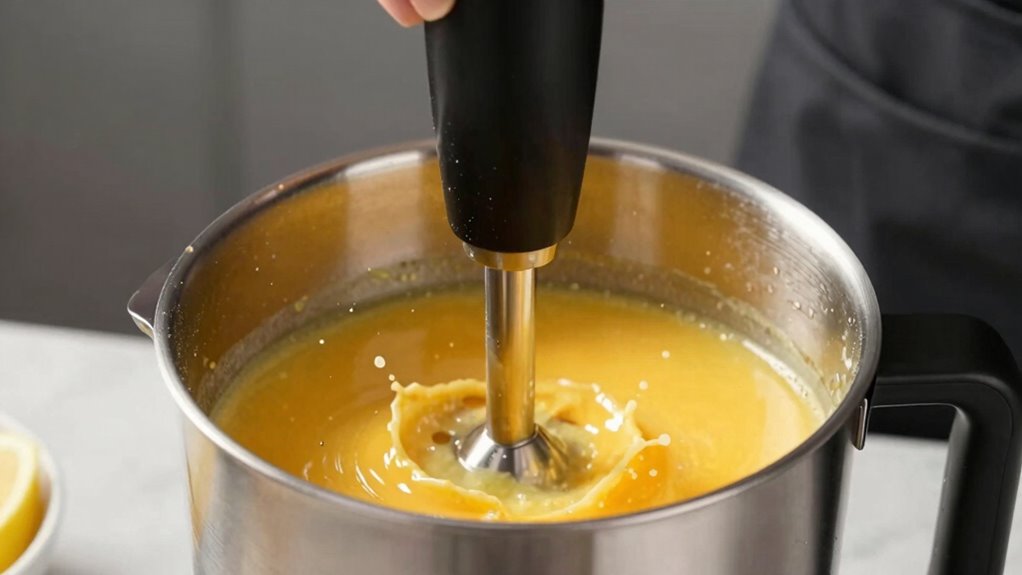
Choosing the right container can considerably reduce splashing when using your immersion blender. Opt for a container with a size that comfortably fits your ingredients, leaving enough room for blending without overflowing. A deeper, narrower container helps contain splashes better than wide, shallow ones. The container shape matters too: rounded sides guide ingredients toward the blades, minimizing splatter, while straight sides can cause splashes to bounce back. Using a tall, narrow vessel ensures the blades are immersed properly without excessive movement. Avoid using small bowls or wide pots that force you to operate the blender at awkward angles. Selecting a container with an appropriate size and shape is essential for precise control and will keep splashes to a minimum, making blending safer and less messy.
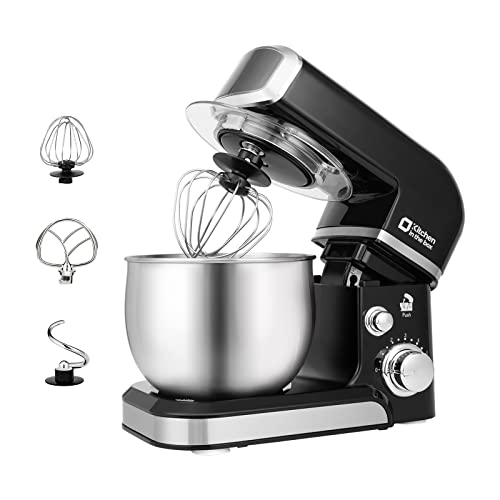
Kitchen in the box Stand Mixer,3.2Qt Small Electric Food Mixer,6 Speeds Portable Lightweight Kitchen Mixer for Daily Use with Egg Whisk,Dough Hook,Flat Beater (Black)
Compact Designed And More Color Options - The stand mixer is less than 7lbs with dimension 12.9*7*10.2 In,...
As an affiliate, we earn on qualifying purchases.
How to Position Your Blender for Less Mess
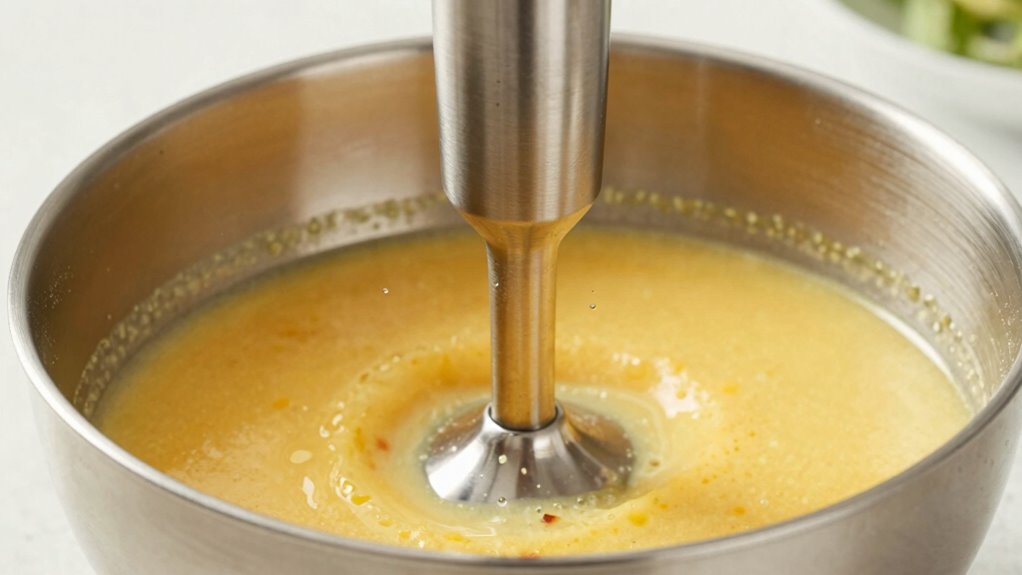
Positioning your immersion blender correctly can substantially reduce splatter and make your blending safer. Keep safety precautions in mind by maintaining a steady hand and controlling the depth of the blender. Submerge the blades fully into the ingredients to avoid splashes outside the container. Use a tall, narrow vessel to contain splatter and minimize mess. During operation, keep the blender close to the bottom or sides of the container, rather than lifting it out and pushing down repeatedly. Regular maintenance tips include cleaning the blades thoroughly after use to prevent buildup that can cause uneven splattering. Proper positioning not only decreases mess but also prolongs your blender’s lifespan by reducing strain on the motor. Additionally, understanding outdoor safety principles can help you manage unexpected situations during blending or outdoor activities. Being aware of piercing precautions can also prevent accidental injuries if you or others are nearby during operation. Incorporating smart kitchen tools like timers or safety alerts can further enhance your blending experience. For example, using blending techniques effectively can help you achieve smoother results with less effort. Remember that selecting the right container size can further improve your blending efficiency and reduce mess. With these tips, you’ll blend more efficiently and safely.

Polup White Kitchen Pantry Cabinet, 71 Inch Tall Metal Storage Cabinet with Doors and Shelves, Pantry Cabinets for Kitchen Storage, Freestanding Cupboard for Living, Dining Room, Assemble Required
KINDLY REMINDER: Metal Storage Cabinet, Not Engineered Wood
As an affiliate, we earn on qualifying purchases.
How to Turn On Your Immersion Blender Without Making a Mess

To turn on your immersion blender without making a mess, start by fully submerging the blades before powering it up. Keep a steady, moderate speed to avoid splattering and maintain control. Using proper submersion techniques guarantees a cleaner, safer blending experience. Additionally, ensuring your kitchen tools are used correctly helps prevent common mishaps and promotes safer cooking. Being familiar with food safety practices can also enhance your confidence when handling electrical appliances in the kitchen. For example, understanding the juice extraction techniques can help you prepare ingredients properly before blending.
Proper Submersion Techniques
Before turning on your immersion blender, make sure the blade is fully submerged in your ingredients. Proper submersion techniques are key to blender safety and preventing splashes. To do this effectively:
- Keep the blender close to the bottom of the container.
- Maintain steady contact with the ingredients to avoid splashing.
- Move the blender slowly in a circular motion.
- Do not lift the blender out suddenly while it’s on.
- Be mindful of wave and wind conditions that can influence water movement and affect your blending process. Additionally, understanding filtration principles can help you achieve a smoother blend and minimize splattering.
Steady Operating Speed
Starting your immersion blender at a steady, moderate speed helps prevent splashes and keeps control over the mixture. Using the speed control feature allows you to gradually increase power, reducing sudden jolts that can cause messes. Maintaining motor stability is essential; a consistent speed prevents uneven blending and minimizes splattering. Once you’ve turned it on, hold the blender steady and avoid pressing the trigger all the way down immediately. Instead, start with a gentle speed, then slowly dial it up as needed. This approach gives you better control and helps keep your ingredients contained. Proper technique in operating your immersion blender not only ensures safety but also enhances the quality of your blending. Steady operating speed ensures smooth blending, reduces splashing, and makes the process safer and cleaner. Remember, patience and gradual adjustments are key to mastering splash-free immersion blending. Additionally, practicing controlled movements helps maintain a steady flow and prevents accidental splashes.
Should You Use a Lid or Cover When Blending?
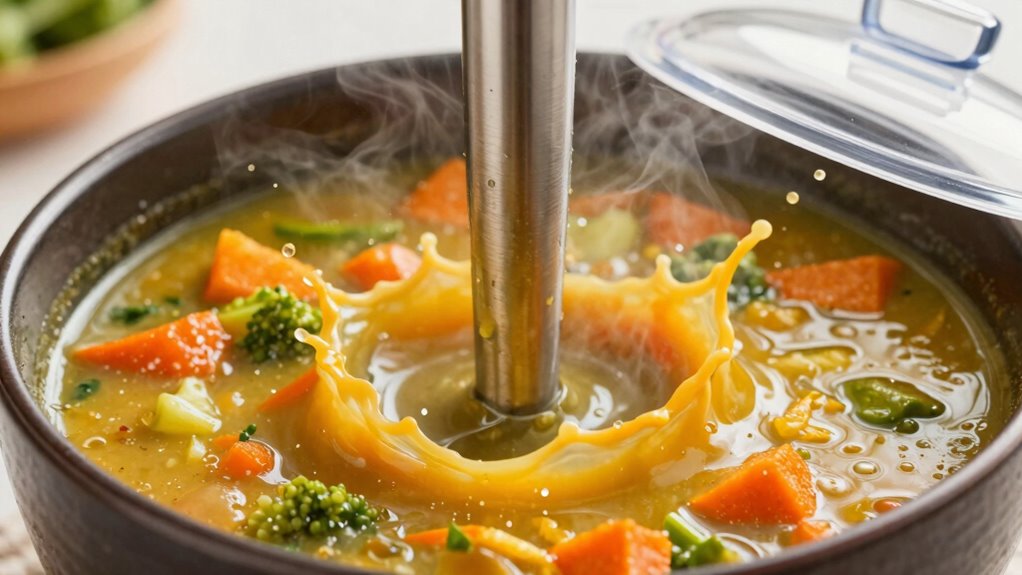
Using a lid or cover while blending with an immersion blender is a smart safety measure and can prevent messes. It helps contain splashes, especially when blending hot liquids or thick mixtures. To maximize safety precautions, consider these tips:
- Use a cover or a tall jar to keep splatters contained.
- Keep your hands away from the blade to avoid accidental injuries.
- Turn the blender on at a low speed first, then increase gradually.
- After blending, clean the lid or cover immediately to maintain proper storage tips and hygiene.
- Incorporating safety preventive measures can further reduce the risk of accidents while operating your immersion blender. Additionally, selecting appropriate equipment designed for hot liquids can enhance safety and performance. Using a blender lid, designed specifically for hot and thick mixtures, can significantly improve your safety experience. Choosing equipment with safety features, such as splash guards or locking lids, can provide extra protection during use. Implementing proper handling techniques can also help prevent accidental spills and injuries during operation. Using a lid not only minimizes messes but also keeps your workspace cleaner. It’s a simple step to ensure safety and maintain the longevity of your immersion blender.
How to Blend Gently and Keep Your Kitchen Clean
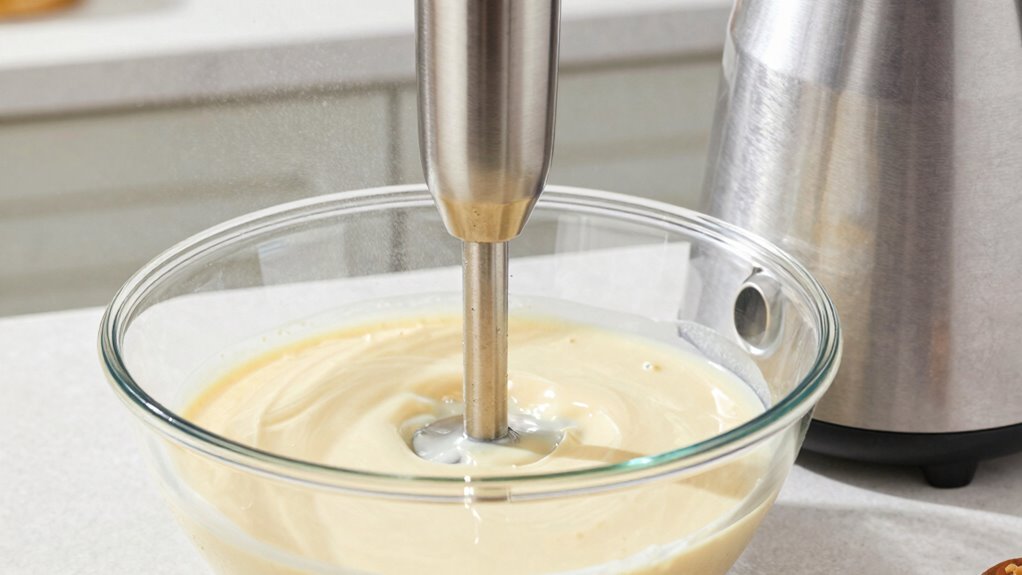
To blend gently and keep your kitchen clean, focus on controlling the speed and duration of your blending. Using a low or medium speed minimizes blender noise and reduces splattering, making the process smoother. Move the immersion blender slowly through ingredients, allowing them to blend evenly without sudden splashes. Keep the blender submerged and steady to prevent splattering outside your bowl. Regular appliance maintenance, like cleaning the blades and checking for buildup, ensures smooth operation and less noise during use. If you notice increased blender noise or difficulty blending, it may be time to inspect and clean your device. Gently blending not only keeps your kitchen tidy but also prolongs the lifespan of your immersion blender, making each use more efficient and enjoyable. Proper technique is essential for safe and effective blending.
Common Mistakes That Cause Splashing and How to Avoid Them
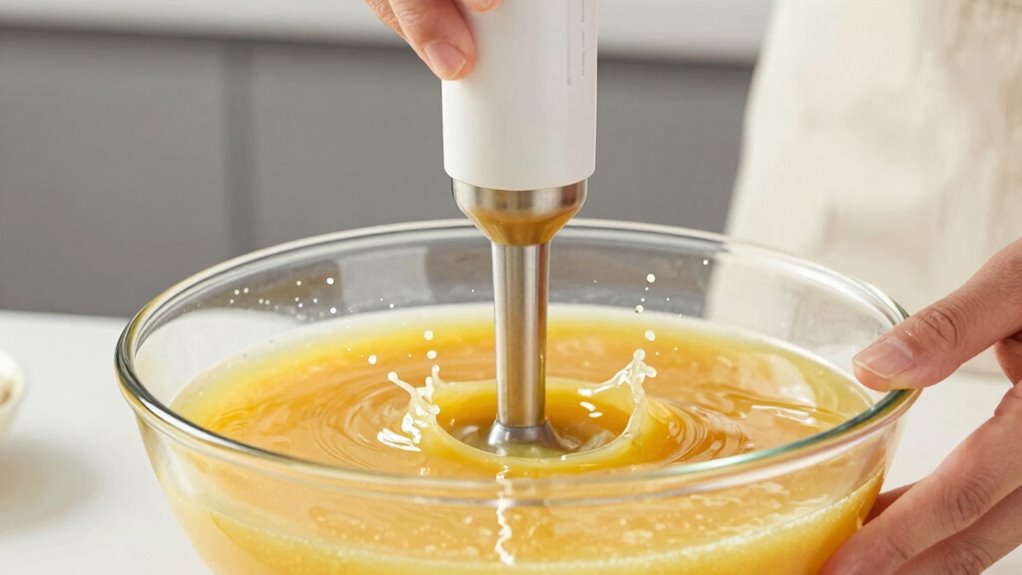
One common mistake that leads to splashing is moving the immersion blender too quickly or forcefully. To avoid this, focus on slow, steady movements and keep the blender fully submerged before turning it on. Ignoring safety precautions can increase the risk of splashing and accidents. Also, relying solely on the immersion blender when dealing with large quantities might cause messes; consider using alternative tools like a regular blender for bigger batches. Here are some tips to prevent splashing:
- Start blending at a low speed.
- Keep the blender tip fully submerged.
- Move the blender gently in a circular motion.
- Avoid lifting the blender out abruptly during operation.
Following these steps helps keep splashing to a minimum and ensures safe, effective blending every time.
How to Quickly Clean Up Spills After Blending
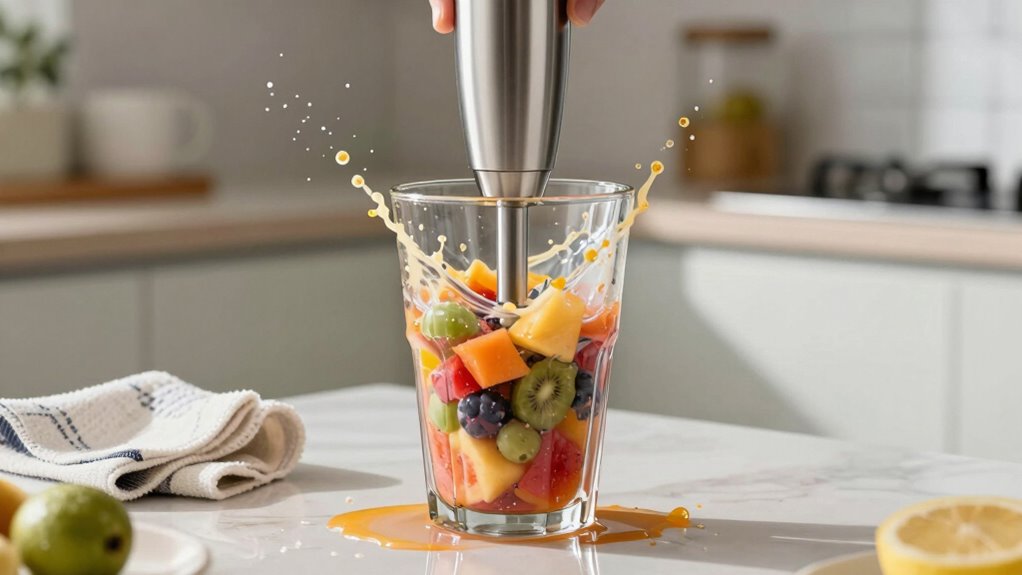
Spills can happen even when you’re careful, but quick cleanup prevents stains and keeps your workspace tidy. Immediately wipe up any splatters with a damp cloth to avoid messes from drying and becoming harder to remove. Regular blender maintenance is essential; clean the immersion blender thoroughly after each use to prevent buildup and lingering spills. Keep your storage solutions organized so you can quickly access cleaning supplies like sponges and towels. For larger spills, use a gentle cleaner and avoid harsh abrasives that could damage surfaces. Staying proactive with these cleanup steps helps maintain a clean kitchen environment and prolongs your blender’s lifespan. Quick, efficient cleanup ensures you’re ready for your next blending session without fuss or fussing over stains.
Tips for Safe, Mess-Free Immersion Blending Every Time
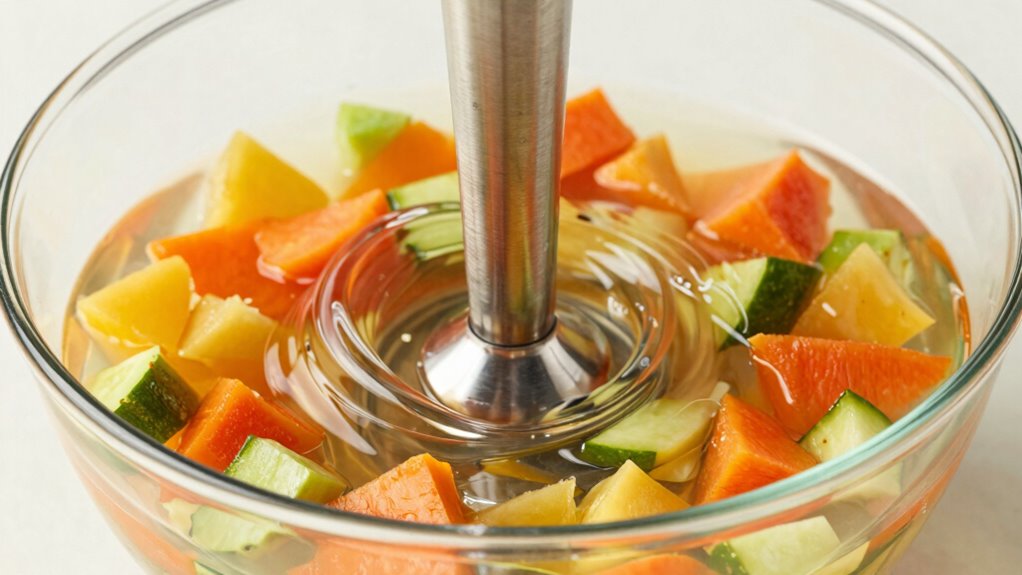
Achieving safe, mess-free immersion blending starts with proper technique and attention to detail. First, make certain your blender is well-maintained by cleaning the blades and checking accessory attachments regularly. To prevent splashing, follow these tips:
- Use a tall, narrow container to contain splatters.
- Submerge the blender gradually to avoid sudden splashes.
- Keep a steady, slow motion when turning on and blending.
- Always hold the blender firmly, especially when using accessory attachments.
Frequently Asked Questions
Can I Use My Immersion Blender on Hot Liquids Safely?
Yes, you can use your immersion blender on hot liquids safely, but you should follow safety tips. Always start on a low speed to prevent splashing, and keep the blender fully submerged before turning it on. Make sure to hold the lid or container securely, and avoid overfilling. Let hot liquids cool slightly if needed, and be cautious to prevent burns or spills during blending.
What Safety Precautions Should I Take When Blending Hard Ingredients?
When blending hard ingredients, you should take safety precautions like ensuring your blade is sharp and properly maintained to prevent slipping. Always unplug the blender before cleaning or adjusting the blade. Keep the device dry and avoid exposing electrical parts to water to maintain electrical safety. Start blending at a low speed, and hold the blender firmly to prevent sudden movements that could cause splashing or injury.
How Long Should I Blend to Avoid Splashing?
Did you know that most splashes happen within the first 10 seconds? To prevent this, keep your blending duration short, around 15-20 seconds at a time, and pause to check progress. This splash prevention technique guarantees you avoid messes and overprocessing. Move the blender gradually through the ingredients, and don’t forget to steady it for consistent results, minimizing splashes and keeping your workspace clean.
Is It Better to Hold the Blender or the Container Steady?
You should hold the immersion blender steady with one hand, keeping your hand firm on the handle, while stabilizing the container with your other hand. This helps prevent stability issues that cause splashing. Proper hand positioning guarantees the blender stays submerged and controlled, reducing the risk of splashes. Keep a firm grip and stay centered, especially when blending thicker or harder ingredients, for a safer, smoother experience.
Can I Use My Immersion Blender in Non-Standard Containers?
You can use your immersion blender in non-standard containers, but choose wisely. Stick to containers made of sturdy materials like glass or heavy-duty plastic to prevent accidents. Make sure your blender attachments are compatible with the container’s size and shape to avoid splashing or spills. Keep the container steady, and don’t overfill it—these steps help you blend efficiently, safely, and without mess, even in unconventional containers.
Conclusion
Now that you know how to prevent splashing, aren’t you ready to blend like a pro? By choosing the right container, positioning your blender carefully, and blending gently, you’ll keep your kitchen clean and safe. Remember, practice makes perfect, and a little extra caution goes a long way. So, why not give it a try and enjoy smooth, mess-free blending every time? Your clean countertops will thank you!