
Using your microwave’s power levels correctly guarantees food heats evenly and stays tender. The “50% rule” involves setting your microwave to half power to reheat leftovers gently, preventing overcooking and dryness. This setting works best for delicate or moist foods like casseroles or seafood. When you choose the right power level, you get better results and avoid common reheating issues. Keep going, and you’ll discover more tips for perfect microwave reheating every time.
Key Takeaways
- Using half power prevents overheating, keeping leftovers tender and moist during reheating.
- The “50% rule” helps achieve even heating and reduces splatters and mess.
- Many microwaves lack a direct 50% setting; adjust by setting lower power or doubling cook time.
- For delicate foods like seafood or casseroles, half power preserves texture and flavor.
- Proper power level use minimizes uneven heating, overcooking, and maintains food quality.
Why Microwave Power Settings Matter for Reheating
When reheating food in a microwave, choosing the right power setting is crucial to guarantee even heating and prevent overcooking or cold spots. Your microwave’s wattage determines how much power it delivers during operation, affecting how quickly and evenly your food heats. Power modulation allows you to adjust the wattage, giving you control over the heating process. Using a higher wattage setting might heat your food faster but risks uneven results, while a lower setting promotes gentler, more consistent reheating. Understanding your microwave’s wattage helps you select the proper power level, ensuring your food heats thoroughly without drying out or becoming rubbery. Proper power levels are essential for achieving tender, evenly warmed leftovers every time. Being aware of your microwave’s power settings can help you fine-tune your reheating technique for optimal results, especially as modern smart appliances often include features that assist with precise power control. Additionally, knowing about microwave calibration can help you maintain accurate power levels over time for consistently better reheating.
How the “50% Rule” Helps Reheat Food Tenderly

The “50% Rule” offers a simple but effective way to reheat food more gently and evenly. By setting your microwave to half power, you reduce the risk of overheating delicate foods, helping them stay tender and moist. This method promotes microwave safety by preventing splatters and uneven heating that can cause burns or messes. Additionally, reheating at 50% power can improve energy efficiency, as it often takes less time overall and minimizes waste. It encourages a more controlled heating process, giving you better control over the texture and consistency of your leftovers. Using this rule also helps preserve flavors and nutrients, ensuring your food remains enjoyable and safe to eat. Incorporating microwave power levels can further enhance your reheating results. Understanding proper microwave techniques can help you optimize settings and prevent common issues. Proper knowledge of repair fundamentals can help you troubleshoot microwave issues if they arise. Recognizing the importance of temperature control is key to achieving consistent and safe reheating results. Overall, the 50% rule makes reheating more effective and safer.
When to Use Half Power Versus Full Power for Leftovers
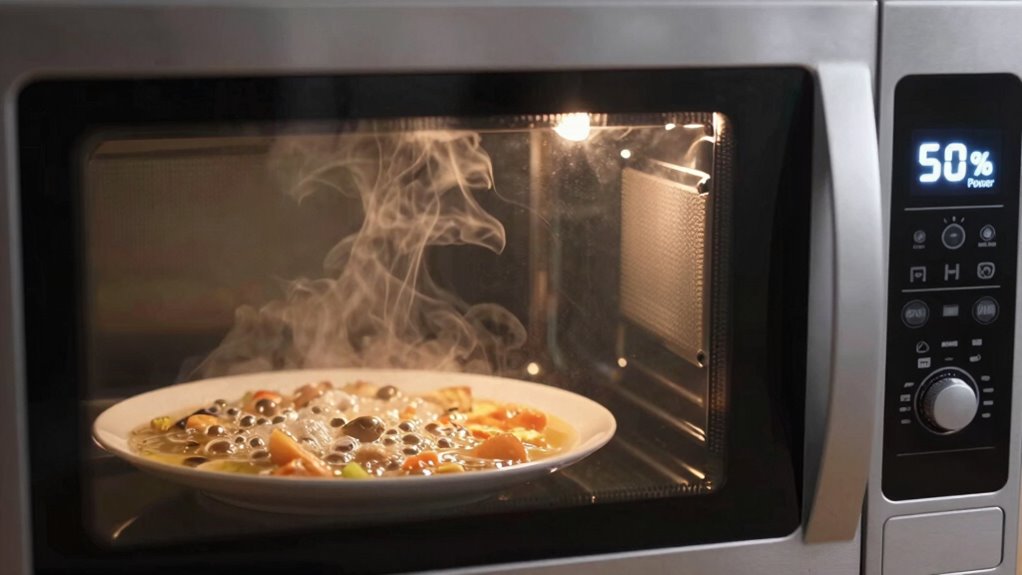
Choosing between half power and full power depends on the type of leftovers you’re reheating and their delicate nature. For moist, tender dishes like casseroles or seafood, use half power to prevent drying out or overcooking. Denser foods like pasta or rice reheated at full power can be quick and effective. Consider the microwave wattage and reheating techniques to maintain quality. Here’s a quick comparison:
| Food Type | Power Setting | Reason |
|---|---|---|
| Moist, delicate | Half power | Gentle heat prevents overcooking and dryness |
| Dense, firm | Full power | Faster reheats, less risk of uneven heating |
| Soups, stews | Half power | Even heating without boiling over |
| Pasta, rice | Full power | Quick reheating, preserves texture |
| Baked goods | Half power | Prevents drying out and toughening |
Additionally, employing reheating techniques such as stirring or pausing can improve overall results. Choose wisely based on your reheating techniques and microwave wattage to keep leftovers tender. Using the appropriate power level can also help preserve food texture and reduce waste, making your reheating more efficient and effective. Furthermore, understanding the microwave power levels can help you better control heat distribution and improve overall results. Proper usage of different power settings can also save energy and extend the lifespan of your microwave.
How to Set Your Microwave to 50% Power for Consistent Results
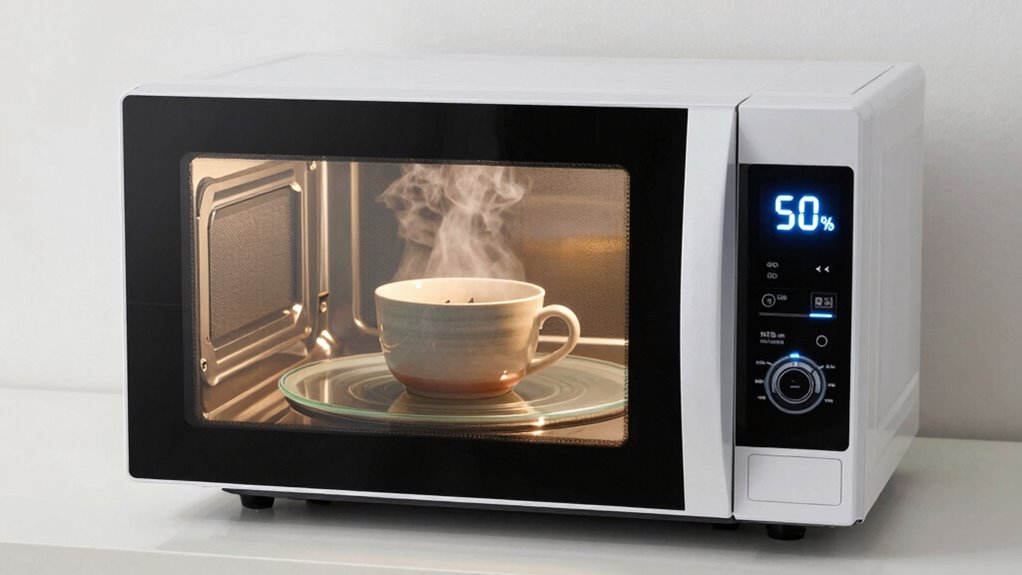
Adjusting your microwave to 50% power guarantees consistent reheating results, especially when warming delicate leftovers. To do this, you need to understand your microwave’s efficiency and proper power calibration. Most microwaves don’t have a direct 50% setting; instead, you’ll adjust the cook time or use the power level button if available. For models with a power level option, select “50%” directly. If not, set the timer for double the usual time at full power, then check for doneness. Accurate power calibration ensures your microwave operates at the intended power level, allowing you to rely on the 50% setting for tender reheats. Properly setting your microwave minimizes uneven heating and preserves your leftovers’ texture. Additionally, understanding how smart appliances can assist with consistent heating can optimize your kitchen routines. When setting your microwave, keep in mind that power levels are often a percentage of maximum output, and calibrating your appliance ensures more reliable results.
Common Mistakes When Reheating and How Power Levels Can Help
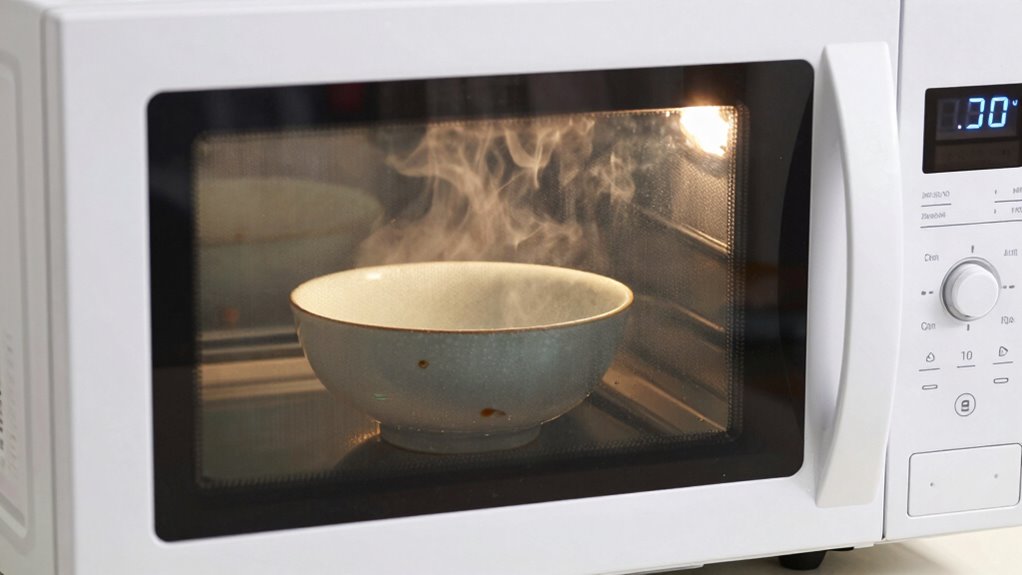
Many people make the mistake of reheating food at full power without considering how it affects texture and evenness. Using high power can cause uneven heating, making some parts overcooked while others stay cold. Plate placement is vital; placing your food in the center ensures even heat distribution. Container selection also matters—use microwave-safe containers that promote heat circulation. Additionally, understanding indoor air quality can help you create a healthier kitchen environment, free from fumes or residues that may linger during cooking. Here’s a quick guide:
| Mistake | Effect | Solution |
|---|---|---|
| Reheating at full power | Uneven heating, soggy textures | Use lower power settings |
| Ignoring plate placement | Cold spots or hot edges | Center food on the plate |
| Choosing non-microwave-safe | Chemical leaching, mess | Select microwave-safe containers |
| Forgetting to stir or cover | Hot spots, splatters | Stir halfway, cover loosely |
Frequently Asked Questions
Can Power Levels Affect the Nutritional Value of Reheated Food?
Yes, power levels can affect the nutritional value of reheated food. When you use lower microwave power, it helps guarantee even heating, which promotes microwave safety and minimizes nutrient loss. Higher power levels might cause uneven heating, potentially degrading some nutrients. By adjusting power levels properly, you preserve more nutrients, ensuring your reheated food remains nutritious while also reducing the risk of overcooking or safety issues.
Are There Specific Foods That Always Benefit From Lower Microwave Power?
Think of certain foods like delicate fish or creamy sauces—they always benefit from lower microwave power. By doing so, you avoid overcooking, which helps preserve food texture and flavor. Using lower power prevents uneven heating and keeps food from becoming rubbery or mushy. You’re in the driver’s seat, ensuring your leftovers stay just as tasty and tender as when first cooked, proving patience pays off.
How Do Microwave Wattage Differences Impact the 50% Rule Effectiveness?
Microwave wattage differences considerably impact the 50% rule’s effectiveness because higher wattage microwaves cook faster, risking uneven heating, while lower wattage ones require longer times for consistent results. To maintain cooking consistency, you should adjust the power level based on your microwave’s wattage, ensuring gentle, even reheating. This approach helps prevent overcooking and guarantees tender, evenly heated food every time.
Is It Safe to Reheat All Leftovers at Half Power?
Reheating leftovers at half power is like giving your food a gentle spa treatment—it’s often safe if you follow proper microwave safety and reheating guidelines. While not all leftovers require this approach, it helps prevent overheating and preserves texture. Always make certain food reaches a safe internal temperature, and be cautious with certain dishes. Using the 50% rule can be a helpful guideline, but adjust based on the food and microwave wattage.
Can Using Power Levels Extend the Microwave’s Lifespan?
Using power levels can indeed extend your microwave’s lifespan by promoting better microwave maintenance and reducing stress on components. When you operate at lower power, it minimizes overheating and wear, leading to improved energy efficiency. This gentle use helps prevent damage, keeps your microwave functioning ideal longer, and saves you money on repairs or replacements over time. So, always consider adjusting power levels for both performance and longevity.
Conclusion
Think of your microwave as a painter’s brush—adjusting the power levels is like choosing the right stroke for a perfect masterpiece. Using the 50% rule guarantees your leftovers stay tender and flavorful, avoiding the jagged edges of overcooking. When you set your microwave thoughtfully, you’re not just reheating; you’re crafting a culinary canvas with smooth, even strokes. Master this, and every reheat becomes a work of art.